





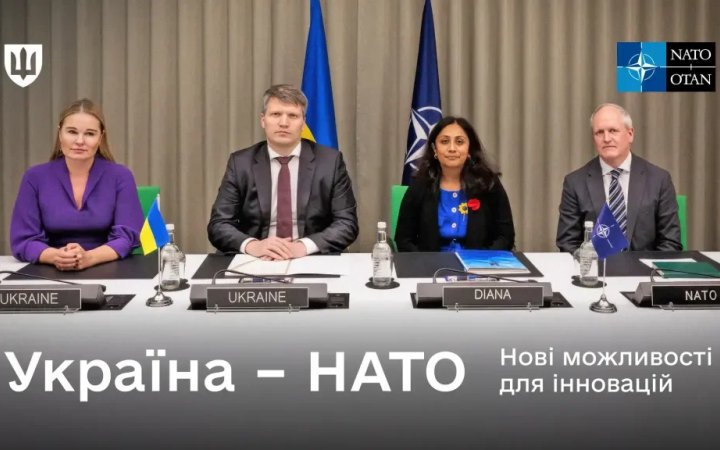
Ukraine and NATO’s Defence Innovation Accelerator (DIANA) have agreed to deepen co-operation on the development, testing and deployment of defence technologies. The relevant memorandum was signed by Ukraine’s Deputy Defence Minister Serhii Boiev and DIANA representatives.
Ukraine’s Ministry of Defence reports this.
This is the first agreement of its kind between DIANA and a NATO partner country. It is intended to strengthen interaction between Ukraine’s innovation ecosystem and that of the Alliance.
Ukraine has experience of rapidly developing, testing and refining technologies in the conditions of modern warfare. At the same time, DIANA provides access to NATO’s defence expertise and infrastructure, helping Ukrainian developers take promising solutions from idea to practical application.
The memorandum will also make it possible to better adapt Ukrainian developments to Alliance standards, expand opportunities for their testing and remove obstacles to scaling up.
Separately, the agreement provides for additional funding for joint Ukraine–NATO projects.
Areas of co-operation include the creation and development of a catalogue of innovative defence technologies. It is planned to include, among other things, drones, electronic warfare systems, radars and ground-based robotic systems.
The catalogue will contain information on existing and prospective developments, their readiness level, test results and potential applications. This data will be used to set priorities for development, procurement and scaling up of technologies.
The memorandum also provides for deeper co-operation with NATO institutions, in particular the NATO–Ukraine Joint Analysis, Training and Education Centre (JATEC) and DIANA. This includes taking into account Ukraine’s combat experience and the needs of the Defence Forces when setting technological priorities, running innovation competitions and testing developments.
In addition, the parties plan to synchronise catalogues of innovative technologies in Ukraine and NATO countries, exchange information, identify shared needs and organise joint competitions and tests.
Such co-operation is expected to help Ukraine attract support from international partners in line with the needs of the Defence Forces and play a more active role in shaping NATO’s innovation priorities.