





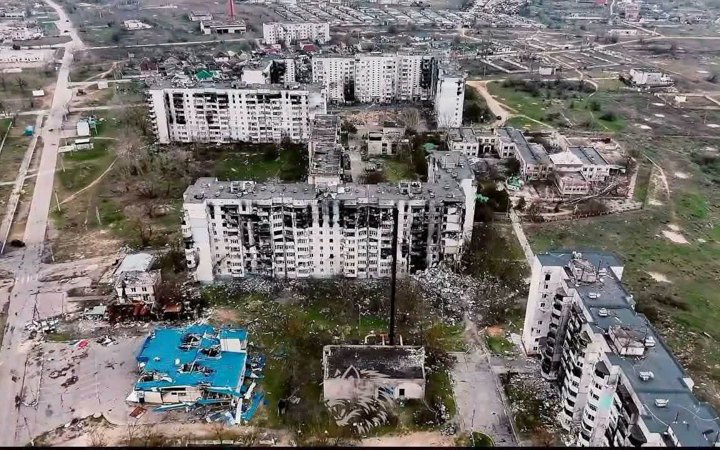
The Russian army used the ceasefire in Oleshky to set up its positions.
As the General Staff reported, under the ceasefire introduced for a humanitarian operation in Oleshky, units of Ukraine’s Defence Forces ensured compliance with the ceasefire and acted strictly within the agreements reached.
As a result, humanitarian supplies were delivered to their destination, and people who wished to leave Oleshky returned to territory controlled by Ukraine.
Meanwhile, the enemy used the humanitarian pause to fortify its positions.
During the ceasefire, a rotation of Russian units, the fortification of positions, an expansion of anti-drone measures on roads, and a build-up of logistics, including the delivery of ammunition, were recorded, the General Staff said.
- From 27 October, a humanitarian ceasefire was established in occupied Oleshky and the surrounding area. The agreement was reached with the mediation of US First Lady Melania Trump.
- The ceasefire lasted until 22:59 on 1 November. No violations of the agreement were recorded.
- On 29 October, a Ukrainian delegation travelled to Oleshky. On the morning of 30 October, it arrived with humanitarian aid. Russians and representatives of Belarus also arrived. Ukraine asked for the evacuation process to be overseen by the American side.
- For the evacuation from Oleshky, 25 buses with 750 seats were prepared.
- Ukrainians evacuated from temporarily occupied Oleshky and the surrounding community in Kherson region crossed the state border in Chernihiv region on 31 October.
- During the humanitarian mission, 167 civilians were also evacuated in Oleshky on the right bank of Kherson region. Among them were 22 children and 21 people with limited mobility.