





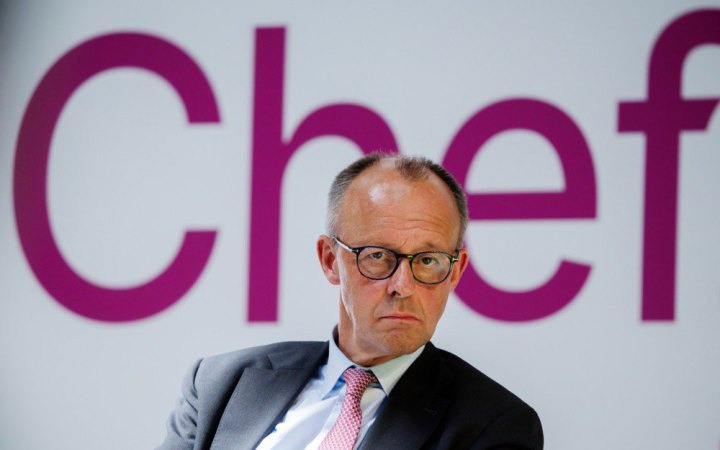
Germany’s Federal Chancellor Friedrich Merz has threatened to block the European Union’s next seven-year budget for 2028–2034 unless all member states agree on joint funding for Ukraine.
The Financial Times reports this, citing a letter from Merz to European Council President António Costa.
“A joint commitment by all of us, without exception, to make a fair contribution to covering Ukraine’s funding gap is a necessary precondition,” the Chancellor wrote.
According to the newspaper, Merz has linked Germany’s support for the next EU budget to the willingness of all countries in the bloc to contribute to financial assistance for Kyiv.
It is expected that Ukraine’s funding shortfall in 2027 will amount to €70bn. The European Union plans to cover around two-thirds of this sum, roughly €45bn. The European Commission is considering various mechanisms for raising the money, including additional joint borrowing.
At the same time, Hungary, Slovakia, Bulgaria and the Czech Republic have signalled reluctance to take part in further financial support for Ukraine. Hungary, Slovakia and the Czech Republic had also previously secured an exemption from paying interest on an EU loan to Ukraine worth €90bn, agreed in December 2025.
Merz insists that the European Union must find a solution that will guarantee Ukraine multi-year funding from 2028. This also concerns servicing interest on existing debt obligations linked to supporting Kyiv.
In addition, Berlin wants to change the decision-making mechanism on financial assistance for Ukraine, moving from unanimous voting to a qualified majority. This would make it possible to avoid such decisions being blocked by individual states.
Merz wants the issue of funding for Ukraine to be discussed before the informal EU leaders’ summit, scheduled for 13 November in Dublin.
- The European Union will apply a special emergency assistance mechanism for Ukraine, which will make it possible to allocate funds quickly.