





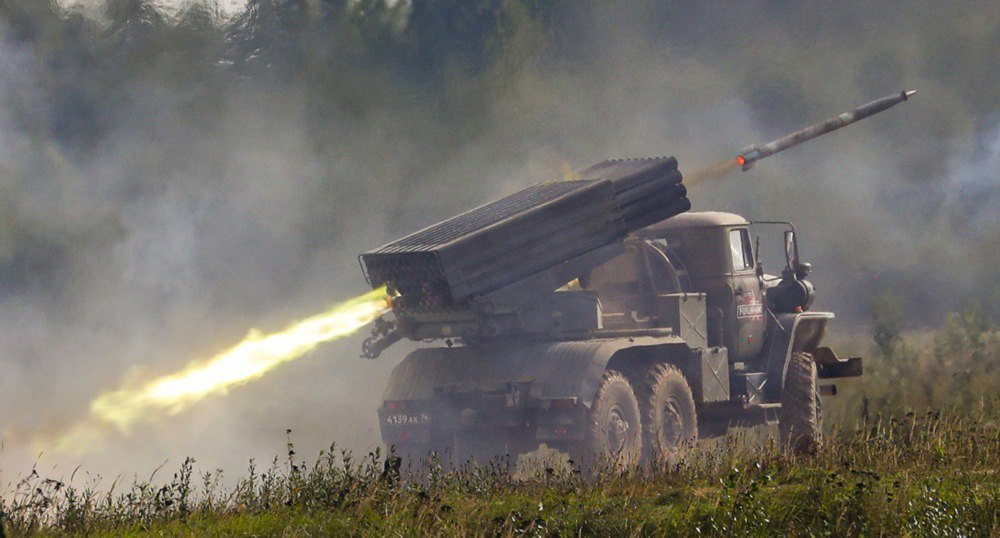
The enemy grouping has an almost classic Soviet structure of forces and their firepower assets. The firing range of the artillery present in the organisational structure of each military echelon corresponds to the depth of that echelon’s combat mission, and the structure of its ammunition load corresponds to the set of its tactical tasks. If an army artillery brigade does not need to illuminate or lay smoke, then its guns’ ammunition load does not include such rounds — only high-explosive fragmentation. Tricky rounds such as propaganda, incendiary, concrete-piercing, rocket-assisted, extended-range, precision-guided, with scatterable radio-jamming dispensers (yes, the hungover Soviet genius came up with those too), and so on are considered special; the requirement for an operation is calculated in individual rounds and they are issued to troops solely to accomplish a specific task immediately before it is carried out.
So, the depth of a regiment’s combat mission is 10–15 km, and the firing range of its artillery battalion is 15 km regardless of how far its firing positions are from the line of contact.
A division carries out a mission to a depth of up to 30 km; its artillery regiment with 2S19s fires to 24 km, and if rocket-assisted rounds are available — 30 km. If there is a Tornado-G multiple-launch rocket system battalion, or 9M521 and 9M522 rockets for the BM-21 — 40 km. Without manoeuvring battalions, the artillery regiment cannot support the division’s forward regiments across the full depth because it simply cannot reach, while the single Tornado-G battalion performs a limited range of tasks, is usually the division commander’s reserve, and is clearly not the sun that can warm everyone.
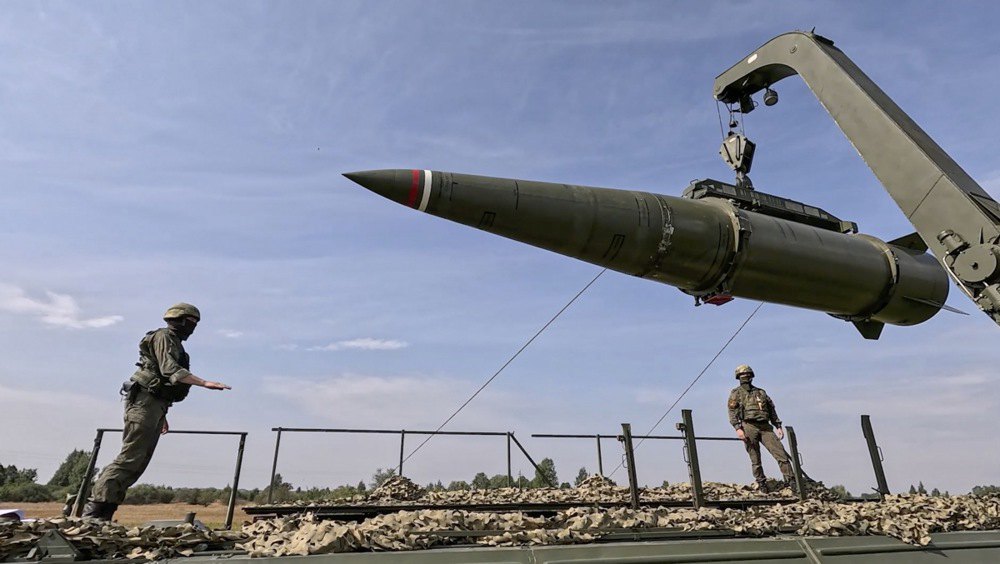
An army conducts an operation to a depth of up to 150 km, although textbooks do not forbid advancing 250–350 km. An artillery brigade with the same 2S19s fires the same 24/30 km. An Iskander operational-tactical missile brigade strikes targets out to 480 km. But again, it is an expensive system; the range of targets engaged with such weapons is not exactly broad, and the need to wage war against Ukraine’s infrastructure narrows it further. On the other hand, in the days of the ATO our “Saint Barbara” brigade fired Tochkas at checkpoints. Don’t ask why or what for. And here it becomes clearly visible that in the zone from 30 km and across the entire depth of the operational area up to 350 km, the army commander simply has nothing with which to reach targets.
There is always a wizard — his name is the senior commander — who has certain forces and means that are not enough for everyone, but he always gives the army commander on the main axis of attack something: in the military district there is a Smerch (or Tornado-S) rocket brigade that can hit targets at 120 km. 2S5, 2S7, and Uragan MLRS may also be present, but they too fire only up to 40 km, while the Uragan-1M with some new 220 mm rocket (there are no precise data, but NPO Splav reported that it had made it) — to 70 km.
And then the drones arrived. Artillery first began to spread out, dispersed, started manoeuvring and, ultimately, moved as far away from the front line as possible. Missile battalions disappeared from armies’ operational zones altogether, operating in some strange formations such as a tactical missile group from their own national territory and from occupied Crimea. The reach of artillery fire decreased, while the volume of tasks remained the same. Strike drones and loitering munitions took on part of the workload. Hunting individual logistics lorries at depths of more than 50 km from the front line introduced elements of a computer shooter into combat, but did not radically change approaches to strike planning.

There is still aviation, which in a classic operation up to 2022 carried out around 25% of fire missions.
The enemy’s strike aviation is grouped into Air Force and Air Defence armies, which have dual subordination — to the commanders of the military districts and to the Aerospace Forces command. Two such formations spoil our mood — the 4th Army (in southern Ukraine) and the 6th (in the east). Such an army includes three mixed air divisions, which have air regiments armed with strike aircraft. Example: the 4th Air Force and Air Defence Army includes the 1st, 4th and 27th Mixed Air Divisions. The 1st has the 368th Assault Aviation Regiment (Budyonovsk airfield, 24 Su-25s) and the 559th Bomber Aviation Regiment (Morozovsk airfield, 36 Su-34s). The 4th includes the 11th Mixed Aviation Regiment (Marinovka airfield, Su-34s, which Neptunes visited recently) and the 960th Assault Aviation Regiment (Primorsko-Akhtarsk airfield, Su-25s). The 27th has the 37th Mixed Aviation Regiment (Hvardiiske airfield in Crimea, 6 Su-24Ms, 14 Su-25s).
These are the forces that ought to be working in operational depth. But that has not happened since early spring 2022. Add aircraft and pilot losses, plus regular strikes on airfields closest to Ukraine, and they have to operate from bases as far from the border as possible — which means time, additional strain on airframes and engines, and physical exhaustion for pilots.
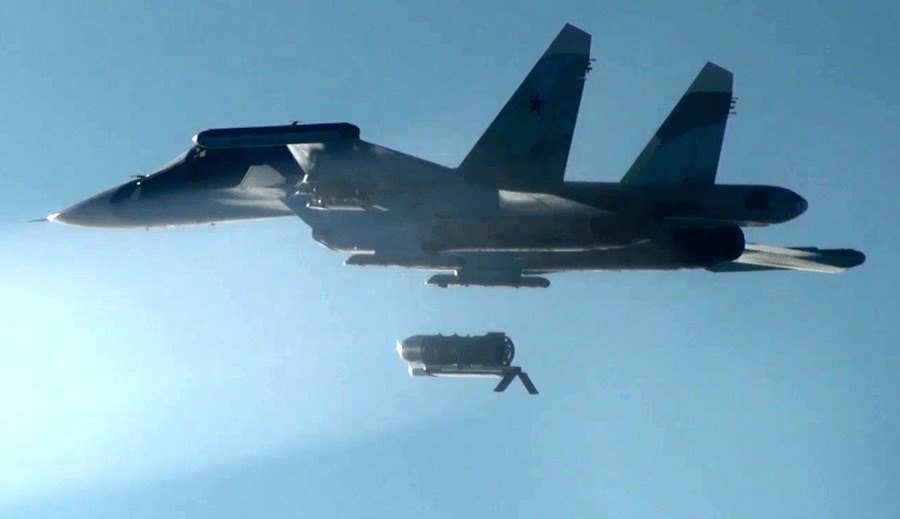
What is to be done with targets in the 30–350 km zone? And development began. Guided aerial bombs appeared with UMPK glide kits (universal planning and correction module). If you bolt a jet engine onto the UMPK, you can drop bombs out to 150 km. Some say even 200. But the 150–350 km band remains unreachable all the same. And the air defence of the Defence Forces regularly makes itself felt, so “Putin’s falcons” do not risk approaching launch lines closer than 100 km. Even so, in October alone these criminals (there are lists; everyone will be found sooner or later) used 8,000 guided bombs. Against the humanitarian aid distribution point at the school in Komyshuvakha, the enemy used several KAB-500 bombs and one FAB-3000 with a 1,400 kg warhead — directly on the shelter where people were.
There is also long-range aviation with air-to-surface cruise missiles, and sea-launched cruise missiles — what, are you still short of reforms? The enemy’s strategic bombers strike in groups of 10–15 aircraft, typically Tu-160s and Tu-95s. The Tu-95 carries six to eight Kh-101 cruise missiles on external pylons with a range of up to 5,500 km, but can also use Kh-55 and Kh-555. The Tu-22M3 carries three Kh-22 anti-ship missiles or three Kh-32 cruise missiles. The Tu-160 has up to 12 Kh-101, Kh-55 or Kh-555 missiles in internal bays. Naval platforms are currently keeping out of sight and do not fire Kalibrs often.
The economy has its own view:
• the enemy has 30–38 combat-capable Tu-95s (47–53 on paper), 13–17 Tu-160s (15–18 in total) and 9–15 Tu-22M3s;
• the cost of one flight hour of a strategic bomber is $40–60k; the flight time from Olenya airfield to the launch line is 2.5–4 hours, from Engels airfield 0.5–1.5 hours, and from Ukrainka airfield 8–12 hours. The same again on the way back. Il-78 aerial tankers sit at Dyagilevo airfield near Ryazan. Do the maths yourself — what costs what. The other day our forces destroyed a tanker aircraft. And the Ryazan oil refinery earlier still;
• the price tag for a Kh-101 missile is $1.2–2.5m, though estimates of $13m have also appeared (I think that’s a lie); Kh-555 / Kh-55 is roughly $2–4m; Kh-22 / Kh-32 is about $1m.
After practising with a calculator, the army commander should ask himself: “why the hell do I need a war at this price?!”, and his senior commander: “why would I throw around my budget and stockpiles?!”. Overall, it’s logical.
So what can cover this zone — where you either cannot reach, or can only reach for obscene money? And then we heard about the compact cruise missile S8000 “Banderol”: range up to 500 km, price $50–150k. The main carrier is the Mi-28 attack helicopter. There is only one squadron of these, operating from Dzhankoi airfield, so Banderols fly mainly over southern Ukraine. If launched from the ground, the range decreases by 100–200 km. That variant is used mostly from the northern and eastern directions. Note that $16,000 of this price is a Chinese turbojet engine, the Swiwin SW800Pro. It is freely available, made for model aviation sport. But it ends up in the hands of the wrong modellers.
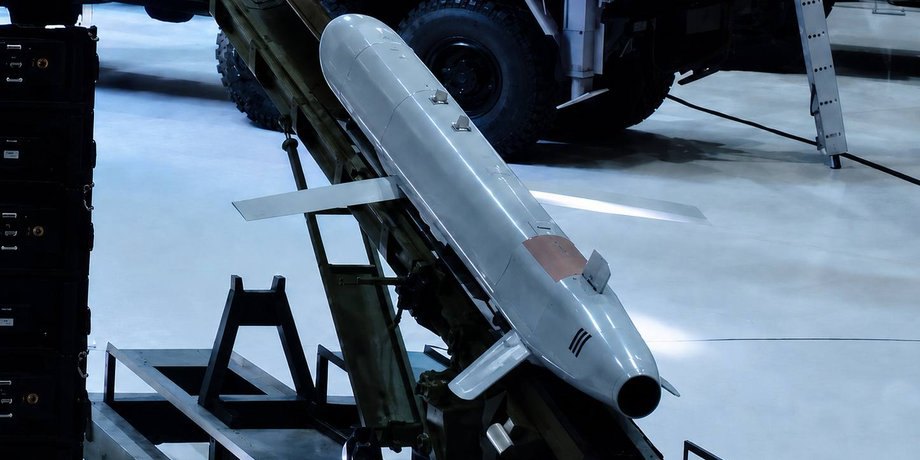
The next step is a similar compact missile, the “Dan-T”: range up to 450 km, ground launch up to 250 km, price 30% lower than Banderol — around $65–100k. They took a target missile used to train air defence crews and turned it into a cruise missile. The warhead, by the way, is 130 kg.
But the Russians did not stop there, and at the end of the year we heard about three new products — the Filin cruise missile, the S-71k Kover and the S-71m Monokhrom.
“Filin”: range 600–1,200 km, warhead 50 or 100 kg. The airframe and fuselage are made of composite materials (carbon and fibreglass), and some elements of the internal load-bearing structure are 3D-printed to reduce production costs. The wing is a simplified swept design, without complex variable-geometry mechanisms. The engine is the Russian R500 jet engine (manufacturer: Reynolds LLC). The engine has independent rotor and stator sections, which makes maintenance easier and simplifies mass production. Price: $70–120,000.
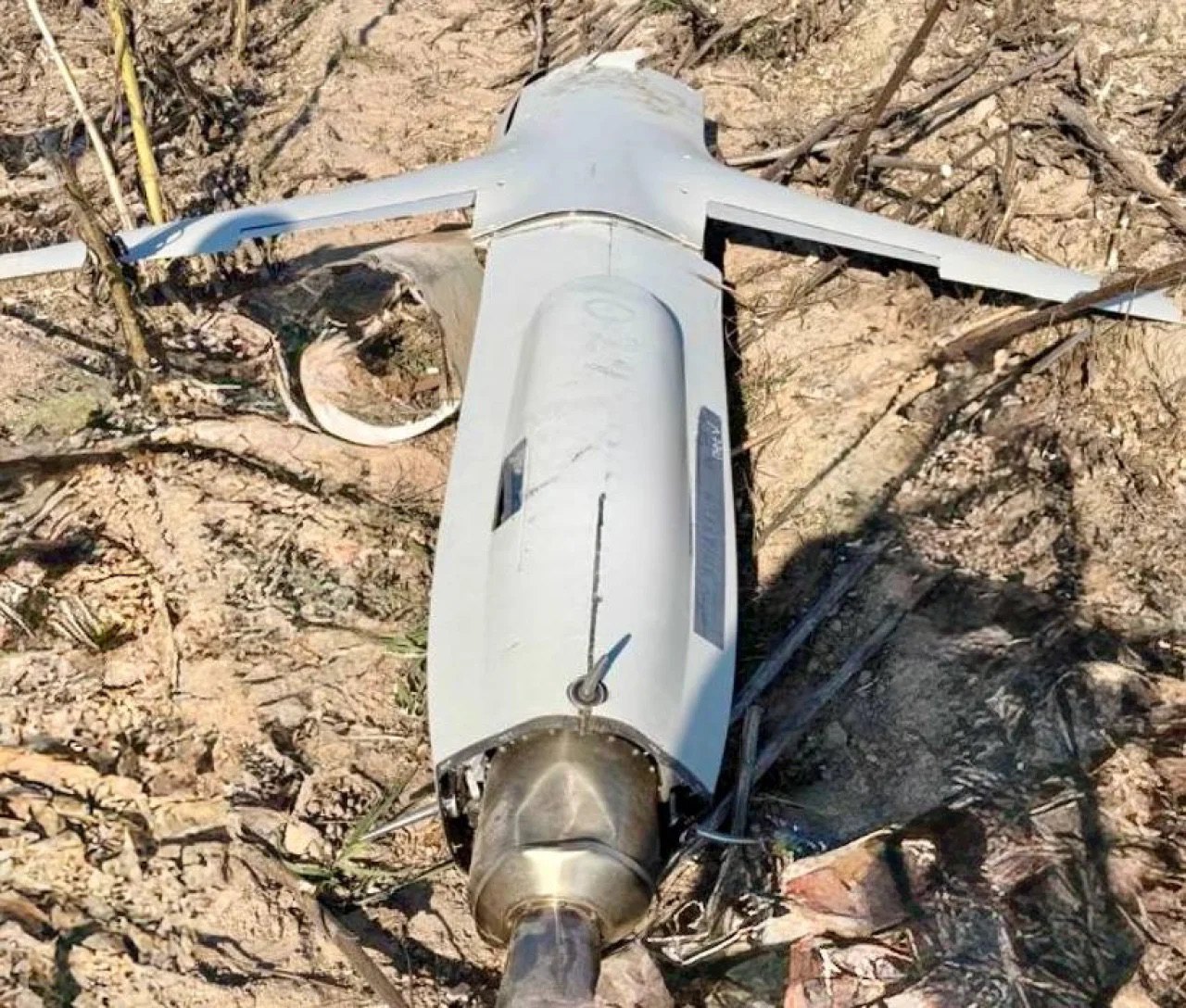
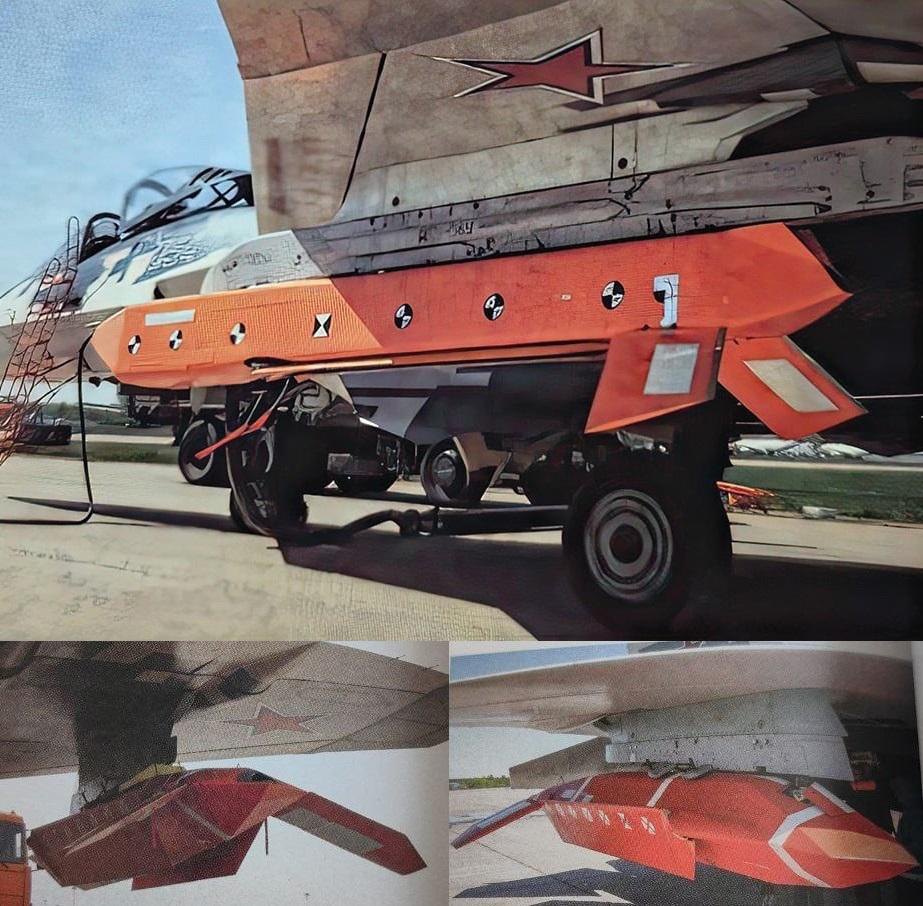
“Kover”: sometimes appears as “Rover”, but that is a transliteration error. This is an air-launched cruise missile with a range of up to 300 km for the Su-57 (internal bay) and, in future, the S-70 Okhotnik UAV. It has a warhead in the form of a standard OFAB-250 aerial bomb and the same R500 jet engine as the Filin. It attacks a target whose coordinates are preloaded into the onboard control system. The price is not yet known, but is lower than Filin’s.
“Monokhrom”: an air-launched cruise missile with a range of 200–400 km. Carrier: Su-57. Warhead: 100–250 kg, most likely the same OFAB-250. Smarter than Kover, as it has elements of autonomous target search (machine vision using Nvidia Jetson), so it is more expensive than all those mentioned, including Banderol, but cheaper than a classic cruise missile.
Thus, in a relatively short time the enemy solved the problem of striking targets in operational depth with low-cost weapons that have the potential for rapid scaling of production. All of this was done under sanctions and funding problems — but quite quickly.
According to Oleh Korostelov, General Designer of the Luch State Kyiv Design Bureau, the full development of the RK-360MC Neptune system (missiles, launchers, communications and mobility assets) cost Ukraine approximately $40m. In October alone, up to eight Su-34 bombers were destroyed with Neptunes at the Borisoglebsk and Marinovka airfields.
Read alsoThe Long Arm of the Armed Forces of Ukraine and Russian Airfields
According to Denys Shtilerman, co-owner of Fire Point, not “a single hryvnia from the state budget” was received for the development of the FP-5 “Flamingo” missile (without the launcher, communications and mobility assets); everything was done with company funds and private money, the amounts of which have not been disclosed.
On 2 November 2026, Shtilerman made a rather interesting statement, reporting that in 2024 UNITED24 allocated approximately UAH 300m to support the Fire Point ballistic programme, but the company returned the entire sum so there would be no grounds to claim that missile development was funded by the state or charitable foundations. Fire Point materials mentioned Brave1 support of around UAH 700m, which, according to Shtilerman’s statements, the company also returned. The Fire Point co-owner also gave another telling example: delivering a 200 kg warhead to 300 km with an FP-7 missile costs about $600,000, but the same task with an FP-2 strike drone, by his estimate, costs about $50,000. Therefore, there is no point in producing the FP-7. Whether there was any point in designing it at all, he did not say.
Somewhere offstage, engineers and designers at Yuzhnoye Design Office, the Yuzhmash plant, and the Elektroprylad Research and Production Association (Khartron) — who once designed and produced the R-36M2 “Voyevoda” intercontinental ballistic missile — are nervously smoking. Why they have been left out of funding for missile programmes is unclear.