





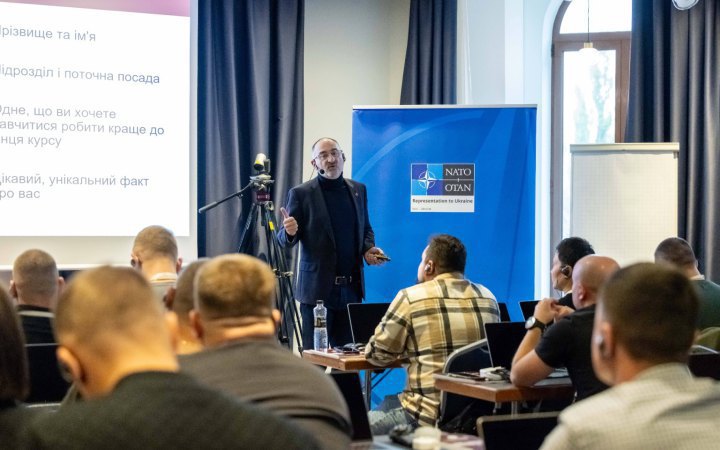
Training at the StratCom Academy: How to Win the Information War
The people best placed to answer this question are those who were at the origins of strategic communications in NATO and in Ukraine, because this is not simply about working with journalists, reporting on events at the front and the day-to-day life of a military formation. It is about a far broader framework in which words are a weapon just like tanks and drones — only in a different dimension of war: the information domain.
“Weapons are one tool, words are another. And combining these two tools creates a powerful weapon,” explains Mark Laity, Director of the StratCom Academy, who previously led strategic communications at NATO Headquarters’ military command.
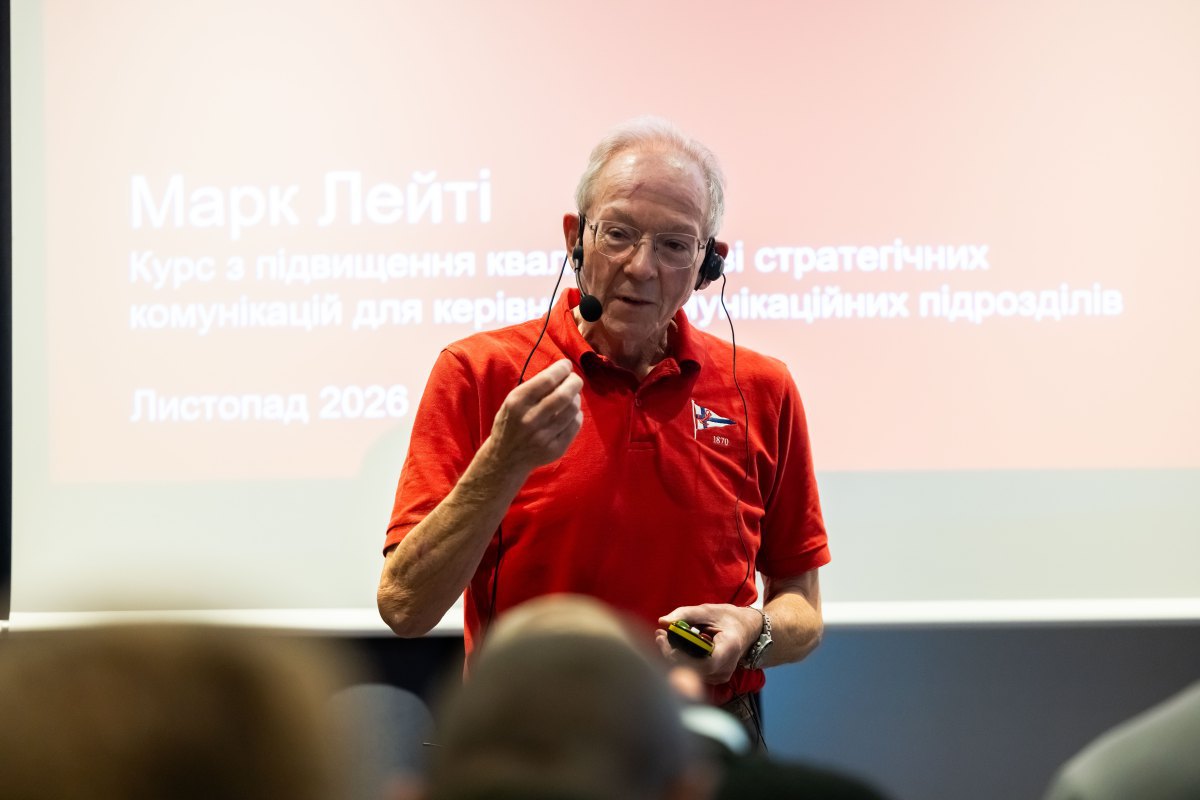
He came to Kyiv to teach, together with colleagues, Ukrainian heads of communications units how to counter Russian special operations that span both the war and Ukraine’s rear — including European countries. According to him, Russia has for years used information warfare to support its armed aggression against Ukraine. In particular, it seeks to demoralise Ukrainian society, undermine allied support and convince its own population that the war must continue.
“Strategic communications are fundamentally important both in wartime and in peacetime. You must be able to explain your actions to society, persuade allies, and ensure service personnel understand their mission. And you must also get the message across to Russians that Ukraine will never surrender,” Laity stresses.
For Ukraine, strategic communications and information warfare are not new areas of work. As Taras Dziuba, Head of the Information Communications Department of the State Service of Special Communications Administration, notes, back in 2001 Ukraine’s National Defence Academy established a department of information warfare. At first it studied military information operations, and later information and psychological operations.
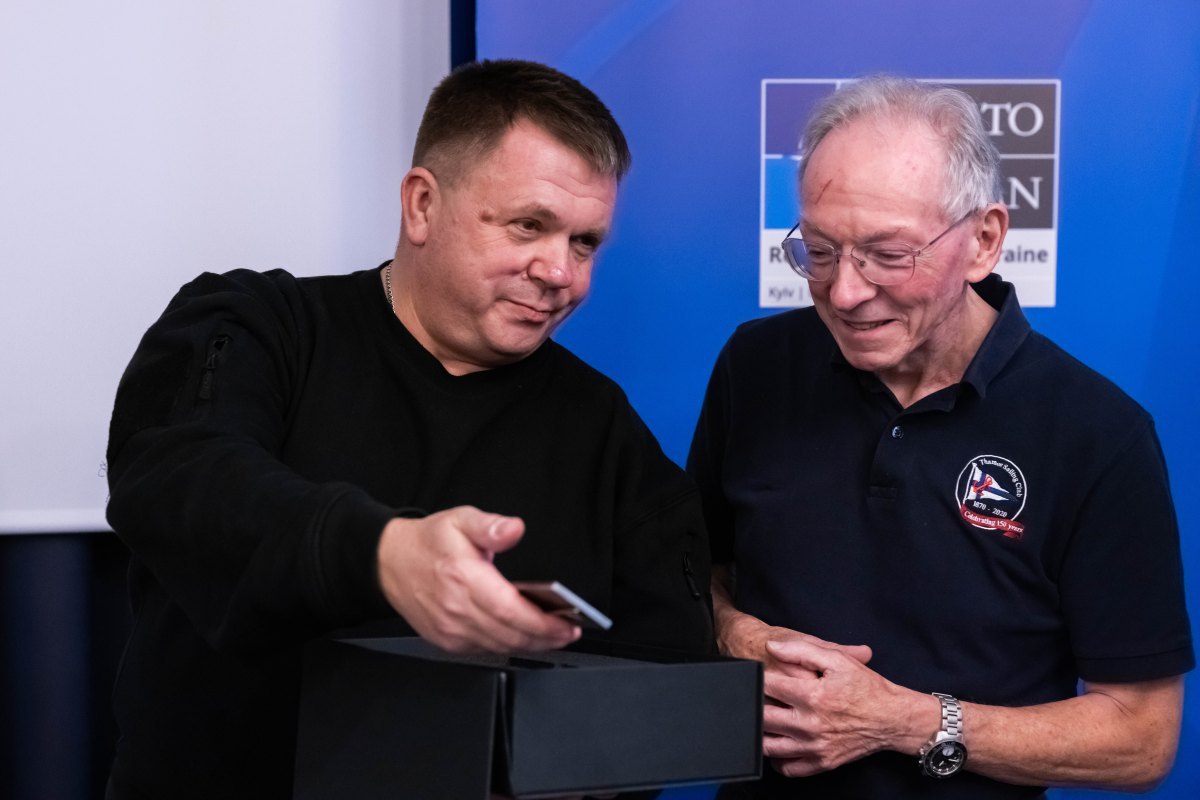
After Russia’s aggression began in 2014, Ukraine started building a system to counter the Russian Federation’s information operations. Dziuba says that since then Ukrainian specialists have gradually brought their strategic communications approaches closer to NATO’s.
“Since around 2014, we have practically learned to think in the same coordinate system as them. The only difference is that they do it institutionally and doctrinally — they immediately develop documents. We do not always manage to set out the relevant doctrines, policies or other documents. There is a certain lag there. But in practice we fully understand the system of planning and executing tasks,” he explains.
It is precisely this kind of comprehensive approach to strategic communications that NATO specialists are teaching Ukrainian service personnel. It is not only about engaging with the media or preparing information materials, but also about strategic planning, coordination between units, rapid information-sharing and aligning communications with the overall objectives of military and political leadership.
Laity explains: “We teach Ukrainian service personnel how to build structures and processes properly — to organise work so that information can be obtained quickly, discussed and its use agreed. But it is also important that all Ukrainian press officers understand leadership’s objectives and, accordingly, prepare information materials and answer journalists’ questions. Instead of simply reacting to the events of the day, you need to explain them in a broader context. How does this or that event fit into the state’s overall strategy? That is exactly the approach we teach.”
Is the Training Any Good? Ukrainian Press Officers Respond.
Mykhailo, a representative of one of the communications units of the Armed Forces of Ukraine, is not taking this kind of training for the first time. Previously, he took part in a basic strategic communications course organised with the support of the NATO Representation to Ukraine. The current course, he says, makes it possible to better understand how the Alliance’s strategic communications system works.
“It’s a great opportunity for us to share experience and understand how things work not in individual NATO member states, but directly at headquarters level — how decisions are found there, what procedures they have. In turn, we also share our experience of how it works for us. After all, over the years of war with Russia we have gained our own experience and developed our own practices. It’s a two-way cooperation,” he says.
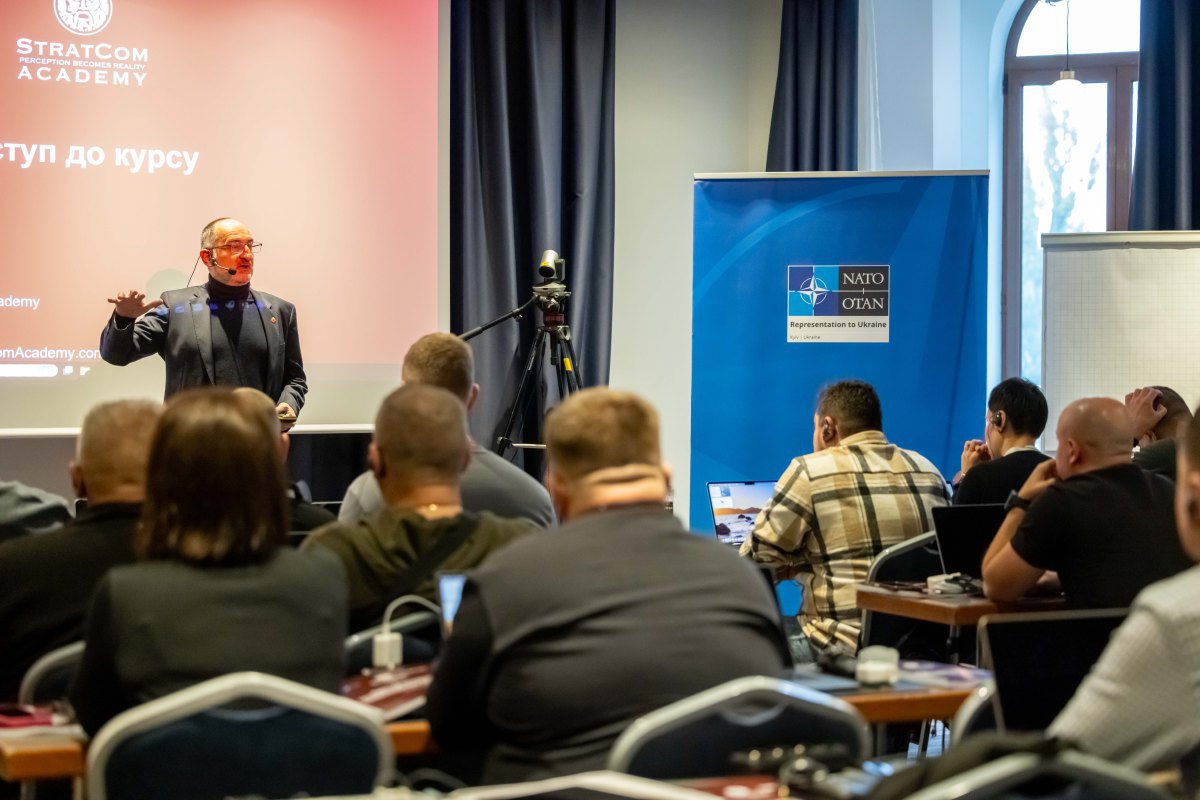
In Mykhailo’s view, this kind of training helps you look at your work from the outside — and that is crucial for a clear-eyed assessment.
“Most of the people here, we already communicate with them anyway. But for me — and I think for everyone — it’s a chance to step away a little from operational activity and look from the outside at what we do. When you’re constantly in the process, you can’t always notice what’s right, what’s wrong and what should be changed,” the serviceman says.
In addition, such courses help build horizontal links between Ukrainian communications professionals.
“It’s a chance to talk to colleagues and partners, perhaps find some new solution. To think about what we can do better, more, and to a higher standard. It’s a great opportunity to get new ideas and understand how to improve our work,” he concludes.
This is also emphasised by Ms Alla Bovt, Head of the Communications Section of the 16th Army Corps.
“I generally believe that horizontal links are one of the most important things. We become stronger thanks to one another. We openly share experience: someone has faced one set of challenges, someone another. We talk about how we got out of this or that situation. That’s how we help each other,” the servicewoman explains.
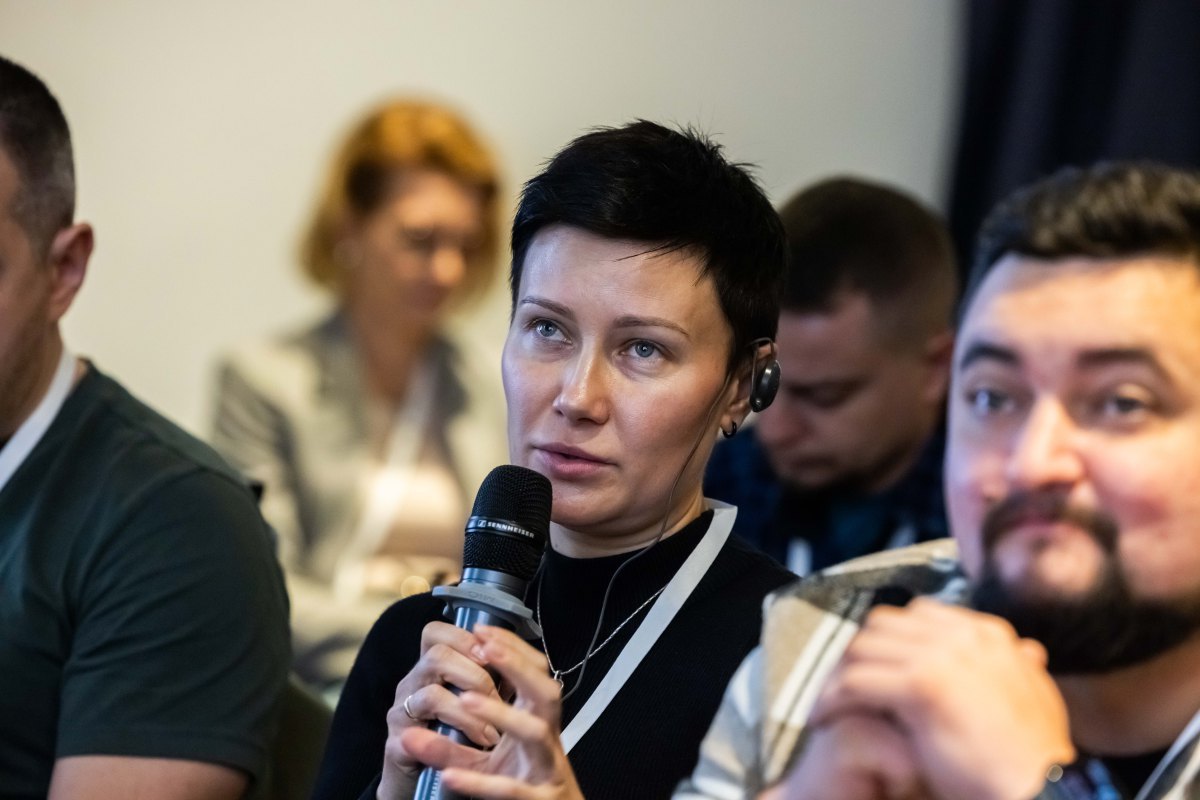
She says each unit has its own specifics, depending on the direction of combat operations, geography, available weaponry and other factors. Accordingly, the challenges communications professionals face differ too — and so do the ways of overcoming them.
“Every day we face new situations, new challenges. The situation is very dynamic; we have to manoeuvre on the spot and at the same time bear responsibility for our actions,” she says.
Because of this, the course has a strong atmosphere of mutual learning, where NATO specialists teach Ukrainians — and Ukrainians teach NATO specialists.
How Ukrainians Teach NATO Specialists About Communications
“I don’t want people to think that NATO is simply teaching Ukrainians. We talk to each other. We have experience that can be useful to you, but you also have experience that can be useful to us,” Mark Laity stresses.
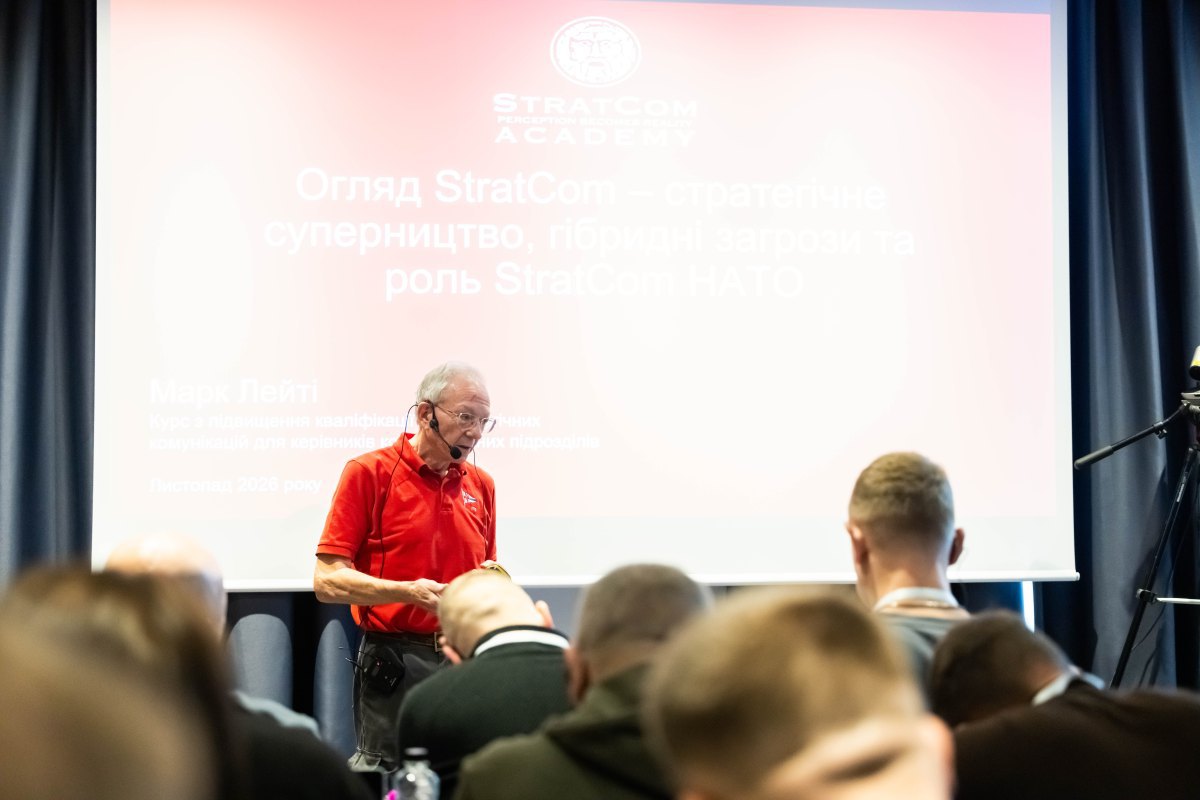
According to him, Ukrainian communications professionals have already become highly proficient in working with social media and visual content. By contrast, NATO specialists can share many years of experience in building structures, planning and organising communications processes.
Alla also notes this difference. She speaks positively about the systematic nature of NATO approaches, but stresses that Ukrainian service personnel are forced to work in entirely different conditions because of Russia’s full-scale war.
“It’s a good example of a fundamental, structured approach to work. Our NATO colleagues have an answer to every question. Every smallest detail is thought through, structured and integrated into their system of strategic communications doctrines,” Alla says.
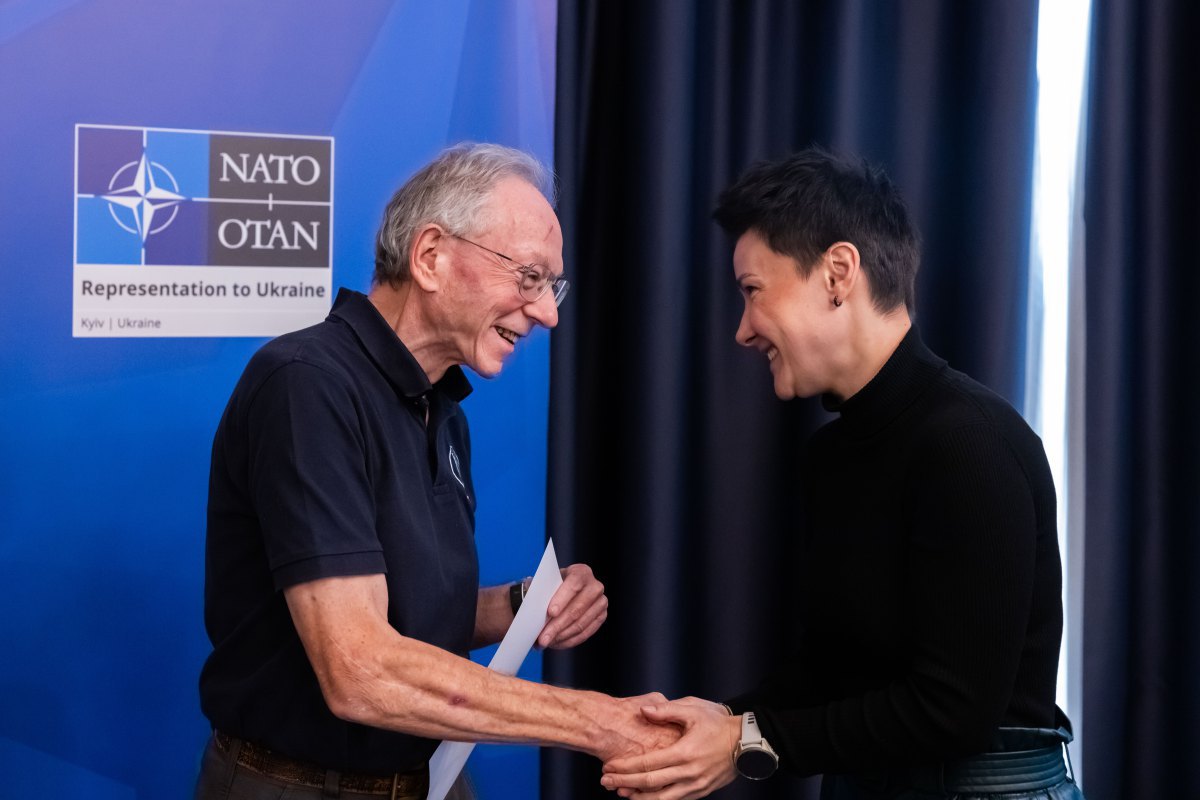
However, she says far from all of the Alliance’s approaches can be applied directly in the conditions of a full-scale war — above all because of the lack of time, as the situation at the front changes extremely quickly.
“There’s a big difference between the knowledge our colleagues give us and the real situation of a country that is in an active phase of war. These are very different challenges. First and foremost, it concerns the time devoted to planning. Right now, we simply don’t have that time,” she explains.
The Practical Side of Training: Responding Asymmetrically to Russian Propaganda
One of the biggest challenges Ukrainian military communications professionals face every day is countering Russian information operations. Mark Laity warns that, despite the absurdity of many Russian propaganda messages, the enemy’s capabilities should not be underestimated.
“What the Russians are doing is wrong and immoral. It’s a disgrace, it’s a crime. But they are not stupid. Never make the mistake of underestimating their capabilities. They have experience in information warfare, smart people, enormous resources, and they use them ruthlessly. They don’t care whether they’re telling the truth. They care only about achieving the desired effect,” the expert explains.
Alla also speaks about the scale of Russia’s information machine. According to her, the Russian Federation has a centralised system for disseminating messages, in which large pro-government Telegram channels set the required narratives and other resources quickly pick them up.
As an example, the servicewoman cites Russian claims about the so-called “Vovchansk cauldron”. She says Russian propagandists use loud headlines and emotional messages without evidence, which quickly spread through the information space.
“We refute it — but not always. There are things where refuting them is like proving the sky isn’t green. It’s such utter nonsense that it isn’t even worth refuting,” Alla says.
Instead, she says, Ukrainian service personnel focus on concrete results of combat work: destroyed enemy equipment, Russians taken prisoner and other facts confirmed by objective control materials.
Mykhailo also stresses the importance of truthful communication. He acknowledges that Ukraine is outmatched by Russia in resources for waging information war, but has a significant advantage.
“We may not have as many resources, but we have the main thing — the truth. When the truth is on your side, when you communicate the truth, you are already, a priori, in a more advantageous position. If there is a problem, we don’t hide it — we talk about it. Our job is to convey the truth, even if it is uncomfortable,” the serviceman says.
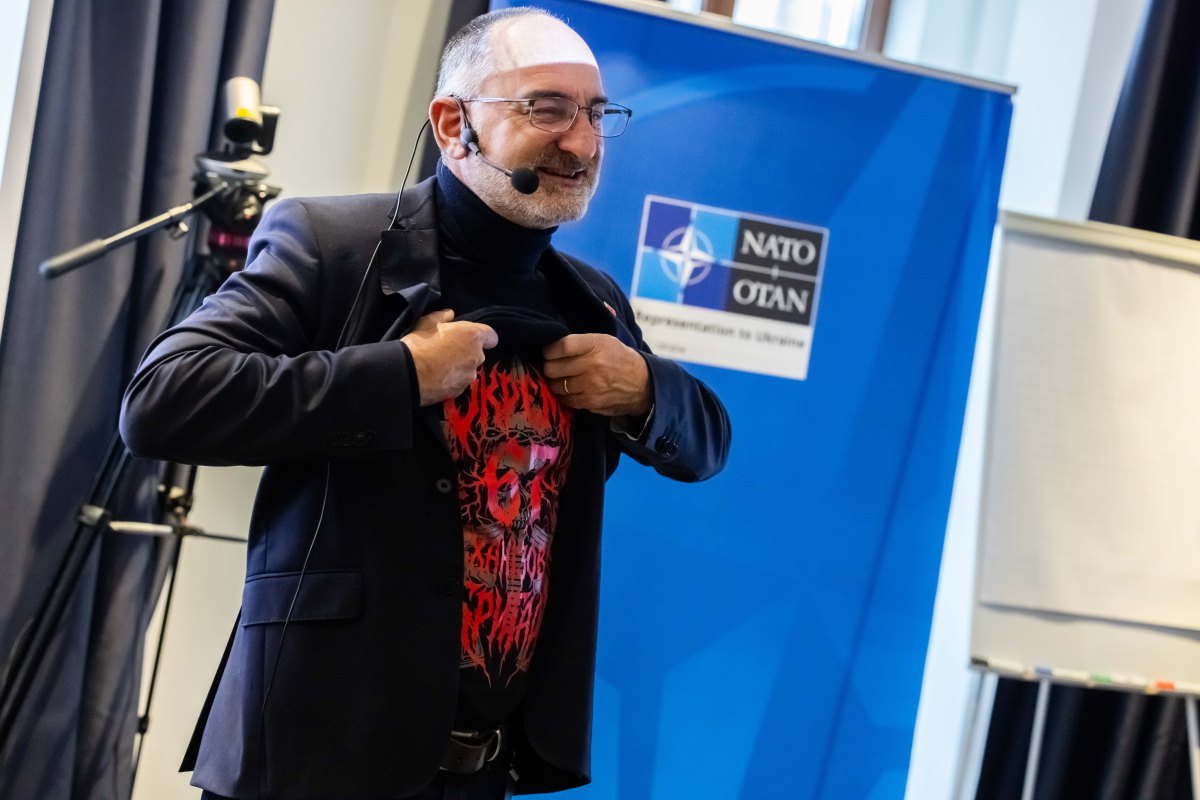
At the same time, Taras Dziuba is convinced that Ukraine should not try to respond symmetrically to Russia’s information aggression. That would require spending comparable resources that the state does not have. Instead, coordinating information policy with international partners may be more effective.
“To respond symmetrically, we would have to invest the same billions to level the playing field. We simply can’t do that physically, and right now it’s not advisable. Through the right information policy — a unified information policy with our partners — we can neutralise Russian influence in many respects,” Dziuba explains.
That is why cooperation with NATO is important not only for training Ukrainian communications professionals, but also for shaping shared approaches to countering information threats. After all, as Laity emphasises, Russia is trying to convince itself and others that it can wear down Ukraine and its allies. The task of strategic communications is to demonstrate — through words and actions — that this calculation is wrong.