





In Hungary, the publication of archives on citizens’ co-operation with the communist secret services has sparked a scandal. About 160 people, including an opposition politician, were mistakenly entered into an online database as informants for the communist authorities. In fact, they themselves had been under surveillance by the security services because of their activities against the regime, Bloomberg reports.
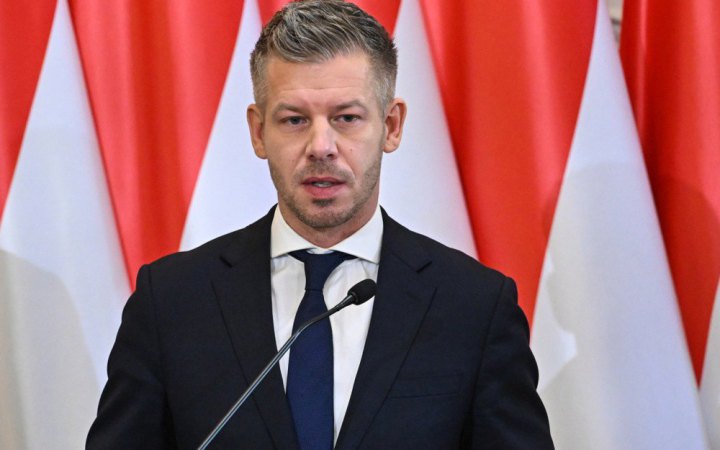
The release of the documents was meant to symbolise the start of a new, more open political phase after the removal from power of Viktor Orbán, who had led the country for 16 years. Prime Minister Péter Magyar said Hungary would be able to overcome the traumas of the past only if it acknowledged them and its own responsibility.
However, instead of the hoped-for social reconciliation, the decision fuelled controversy. Magyar had to apologise in parliament, and the head of the national security services archive offered to resign.
The problems concern the so-called “Box 6” cards, which were published in the online database this month.
They contain basic details about people approached by the communist secret police with an offer to spy and report on others. At the same time, the cards do not show whether a person agreed to co-operate, whether they passed on information, or whether they harmed anyone.
According to historians, around two-thirds of the archival documents have already been removed or destroyed. The remaining archives contain just over 50,000 names. In addition, the public database is missing tens of thousands of files, including documents relating to former prime minister Péter Medgyessy, who was described as an informant more than 20 years ago.
Historian János Rainer stresses that the cards should not be treated as a list of the guilty. He says someone who never wrote a single report has the same kind of card as someone who passed on thousands of reports over decades.
“This was probably the most radical step — simply publishing this database. I had reservations that it would cause confusion. This is not a list of criminals; it’s not that simple,” Rainer said.
Some people agreed to co-operate under pressure: they were threatened with expulsion from their educational institution, dismissal, or harassment of their relatives. Meanwhile, after the documents were published, people began sharing photos of the cards on social media and accusing those whose names appeared there.
Among those named in the documents are footballer József Bozsik, who played for Hungary’s legendary 1950s national team, as well as the host of a popular television quiz show. Both are already dead. Information is also being checked regarding a current Constitutional Court judge and a former central bank governor.
Separately, the publication mentions Nobel Prize-winning medical scientist Katalin Karikó. She has said that in the late 1970s she was threatened with being barred from continuing her research. Fearing for her career, she signed a document agreeing to co-operate; however, she says she later did not write reports and did not harm anyone.
In February, for the Day of Remembrance for the Victims of Communism, the authorities plan to publish the so-called B-files. They will contain information about the circumstances in which people were targeted for recruitment, and will make it possible to better understand why they agreed to co-operate or refused.
Over the past week, more than 10,000 people have contacted the archive to obtain additional information about the names in the published database. That is roughly the same number of requests as the archive received over the previous four years.
Sociologist Andrea Szabó, who studies political behaviour, said the publication of the documents was not the kind of social release people had hoped for. At the same time, she believes Hungarian society still has to work out how ordinary people came under pressure from an authoritarian system and became part of the surveillance machinery.
Researchers estimate that over four decades of communist rule, more than 100,000 Hungarians at various times served as informants for the security services.
Hungary’s Communist Past
From 1949 to 1989, Hungary was ruled by a one-party communist regime.
As in many other Eastern European countries during the Cold War, Hungary’s security services used an extensive network of informants to monitor citizens. People were often forced to inform on colleagues, friends and even relatives.
Estimates based on data from the state security archives suggest the authorities recruited about 150,000 informants, although information on two-thirds of them has not survived to the present day.
A significant portion of the documents was destroyed in 1956 during Hungary’s anti-Soviet uprising or concealed during the transition to democracy. There is speculation that some were taken to Moscow.