





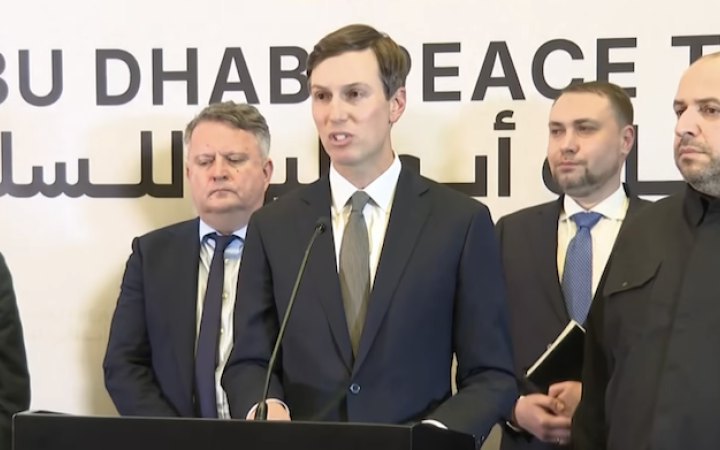
Ukrainian, American and European negotiating teams held another round of team-level talks. As a result, they agreed to meet in Berlin within the framework of the Coalition of the Willing to develop joint steps in the negotiation process.
President Volodymyr Zelenskyy said this in his evening address.
According to him, US representatives Steve Witkoff and Jared Kushner joined the online conversation. For the first time, the European side was represented in full by those who will take part in talks with Russia.
Participants included representatives of France, Germany, the United Kingdom, Italy and Poland, as well as the European Commission, the European Council and NATO.
Zelenskyy described the conversation as difficult, but noted that it resulted in an agreement to meet in Berlin.
"We need a достойне end to the war and guaranteed security for Ukraine. [...] In Berlin, within the framework of the Coalition of the Willing, we will meet and work out specific joint steps in the negotiation process", the president said.
- Recently, Ukrainian President Volodymyr Zelenskyy urged EU governments to step up their involvement in the peace process. He stressed that Europe must become a full and permanent participant in these negotiations.
- Ukraine has long insisted on the need to involve Europe, but the United States and Russia had not shown readiness to do so. In the previous round of talks, US representatives agreed on the importance of European participation; until then, Europeans had taken part only in consultations, not in direct negotiations.
- According to US representative Jared Kushner, Russia agreed to involve European partners in the next round of negotiations. This will make it possible to discuss not only territorial issues, but also Europe’s future security architecture after the war ends.