





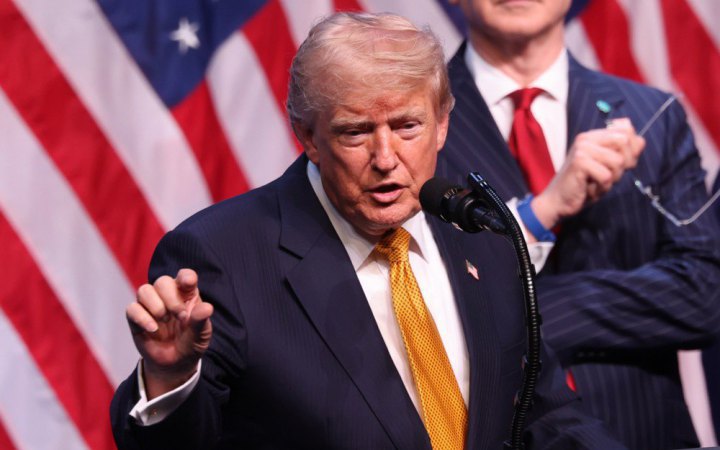
US President Donald Trump on 25 November initiated the introduction of new tariffs against 14 major trading partners, including China, Japan and the European Union.
The Trump administration proposed new maximum rates of between 20% and 40% to tackle excess industrial capacity in those countries, Reuters reports.
At the same time, the Office of the United States Trade Representative said it plans to cap the new tariffs at the lower rates the parties have agreed under existing or future trade deals.
This time, the Trump administration is relying on Section 301 of the Trade Act of 1974 to give the new restrictions a stronger legal basis.
Separately, the United States wants to introduce a new 10% tariff on imports of Brazilian Embraer commercial aircraft and raise tariffs on Brazilian sugar that exceeds quotas. These goods were previously exempted from the 25% tariffs introduced in July, but US Trade Representative Jamieson Greer explained the new steps by citing a lack of progress in talks with Brazil.
The highest proposed maximum rate, 20%, is for China — to be added to the roughly 25% tariffs that have been in place since Trump’s first presidential term. This figure matches the terms of the US–China trade truce, which expires on 10 January, but if it collapses the rate for Beijing will rise to 40%. For Vietnam, the rate would be 20% if the country reaches a deal with Washington, or 35% if talks fail.
According to Greer, the tariffs will take effect only after public hearings on 25 January. They will not be added to earlier tariffs of 10% or 12.5% introduced over weak enforcement of laws against forced labour, nor to sectoral tariffs on steel, aluminium and cars. The restrictions will also not affect Chinese imports worth about $30bn for which tariff reductions are being considered.
A spokesperson for China’s embassy in Washington rejected accusations of creating excess capacity, calling them a pretext for political manipulation, and urged both sides to honour the agreements between Trump and Chinese leader Xi Jinping.
For goods from Cambodia, Indonesia, Malaysia, Thailand and Bangladesh, the USTR proposed maximum rates of 18%. For Japan, South Korea, Taiwan, the EU and Switzerland, the tariff would be 15% taking existing duties into account. India, which has not yet concluded a trade deal with the United States, would face a rate of 17% if an agreement is signed or 25% if talks fail. For Singapore, the cap was set at 10%. Mexico and Norway were not included in the list because investigations into their trade practices are still ongoing.