






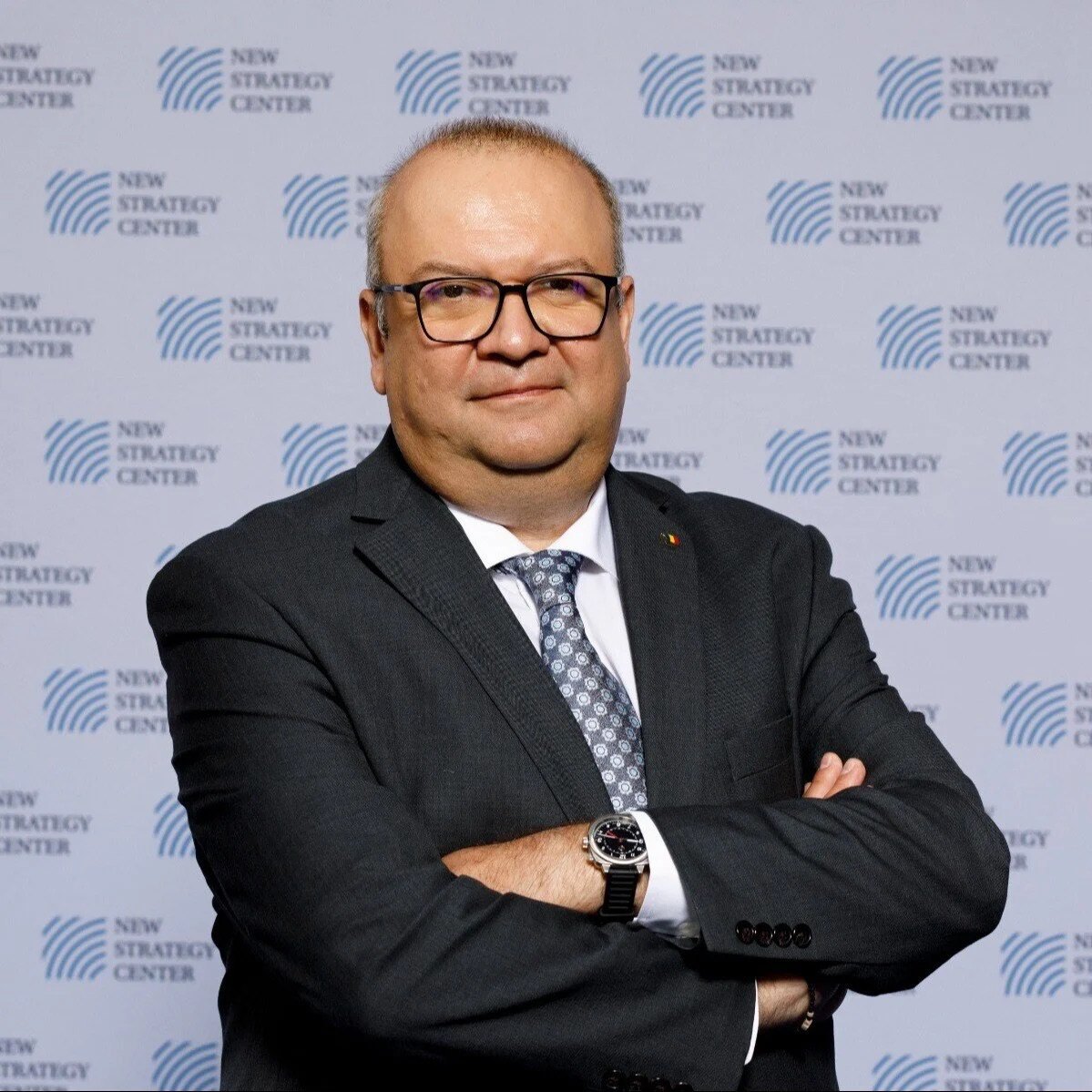
How do you assess the European Union’s security situation amid growing Russian pressure?
The issue lies in the complexity of reshaping transatlantic relations and adapting to the new US defence and security policy. It is clear that Europe must do more and take the necessary decisions. The problem is that such decisions require time. All European plans have their own timelines, and I am not sure whether Russia will be patient enough to wait for Europe to “normalise.” Much also depends on developments on the Ukrainian front. I would highlight three key points.
First, Europe must do significantly more and substantially accelerate all procedures. Second, we cannot assume that even if peace is achieved in the war against Ukraine, Russia will abandon its aggressive policy towards Romania.
Third, we must continue supporting Ukraine — primarily financially and militarily. At the same time, we should learn two things from Ukraine. The first is how asymmetric warfare is conducted. Ukraine has demonstrated that a country without a navy was able to destroy around 40 per cent of the fleet in the Black Sea. The second is technological capability, particularly the development of drones. Close cooperation in this field is possible, including with Romania.
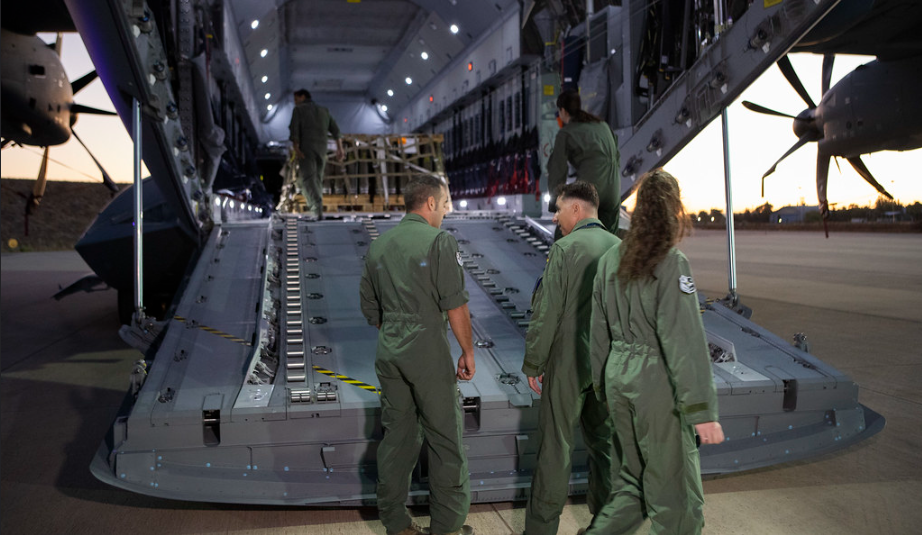
How does Romania manage to balance between the US and Europe, given that your country has long been a key pillar of American presence in the region?
We are also trying to adapt to the new US defence policy. You know that in October the US announced a reduction of its troops, who had been stationed here for ten years. I consider this a mistake—a strategic mistake on the part of the US. Currently, we have around 11,000 American troops in the Baltic region and Poland, and fewer than a thousand in Romania. This sends the wrong signal to Russia, as if the Black Sea were of lesser importance. That will only make Russia more aggressive.
We will continue investing in defence and need to speed this up. This means maintaining cooperation with the US and trying to keep the American contingent in Romania. At the same time, we need to intensify collaboration with European partners: with France, which leads NATO’s battle group in Romania; with Italy — in Bulgaria; and also with Germany.
Does Europe need a clear leader in security — say, France or Germany? What should this format look like?
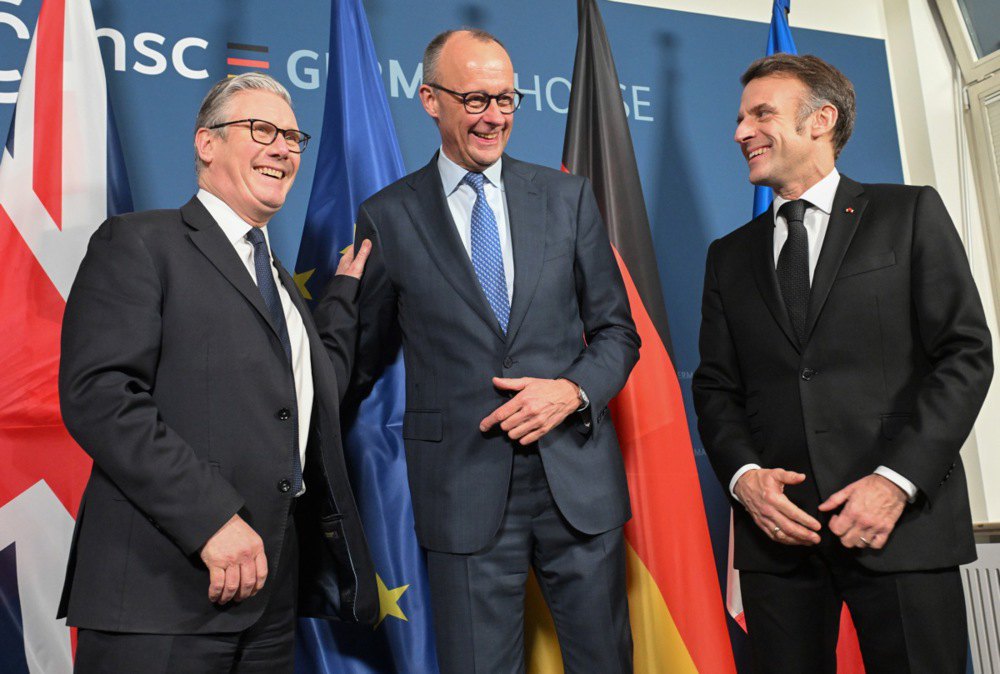
At the moment, President Macron and Chancellor Merz have assumed this leadership role. The United Kingdom should not be discounted either — it plays an important role. We will see how the situation develops after the French presidential elections (2027 — LB.ua).
Do you think Europe has only two to three years for serious preparation against new risks, in case the far-right comes to power in France?
I believe that today Europe’s main enemy is time. The risk is that, amid a partial US withdrawal from Europe, Russia may try to test whether NATO Article 5 works and exploit the weaknesses that still exist in Europe.
Do you still trust transatlantic relations today?
It is hard to predict exactly how transatlantic relations will develop, as this depends on very sensitive issues — including domestic political processes and the nature of relations between Russia and European states.
Do you think Russia and the US could hold behind-the-scenes negotiations over Ukraine — and the allies’ space — without Europe?
Russia aims to restore parity with the United States that existed with the former Soviet Union before the Gorbachev era. This is evident in current negotiations: it has managed to sideline European countries, including the UK. Talks now take place mainly in a bilateral format, of course involving the President of Ukraine when Ukraine is invited to the discussions. I believe Russia is trying to exploit the pragmatism and business-minded thinking of part of the US elite. We’ve seen President Zelenskyy’s statements about economic deals worth trillions of dollars — enormous sums. This could lead to closer alignment between Americans and Russians than we would like.
How do you assess Russian influence in Romania today?
No coalition of states capable of effectively supporting Ukraine can exist without Poland and Romania. If Russia succeeds in forming a government in Romania that—even if not openly pro-Russian—reduces support for Ukraine, Kyiv will face serious problems. Remember: when Russia blocked Ukrainian ports in the Black Sea, all Ukrainian exports went through the Danube and Romanian ports. What would have happened if Romania had then stopped its support? Russia understands this perfectly and will do everything—emphasising, everything possible—to undermine political and social stability in Romania through hybrid attacks, cyberattacks, and sabotage, in order to weaken societal and political support for Ukraine.
Recently, there was an attack in Budjak. Do you see this episode as part of the broader confrontation in the Black Sea region you mentioned?
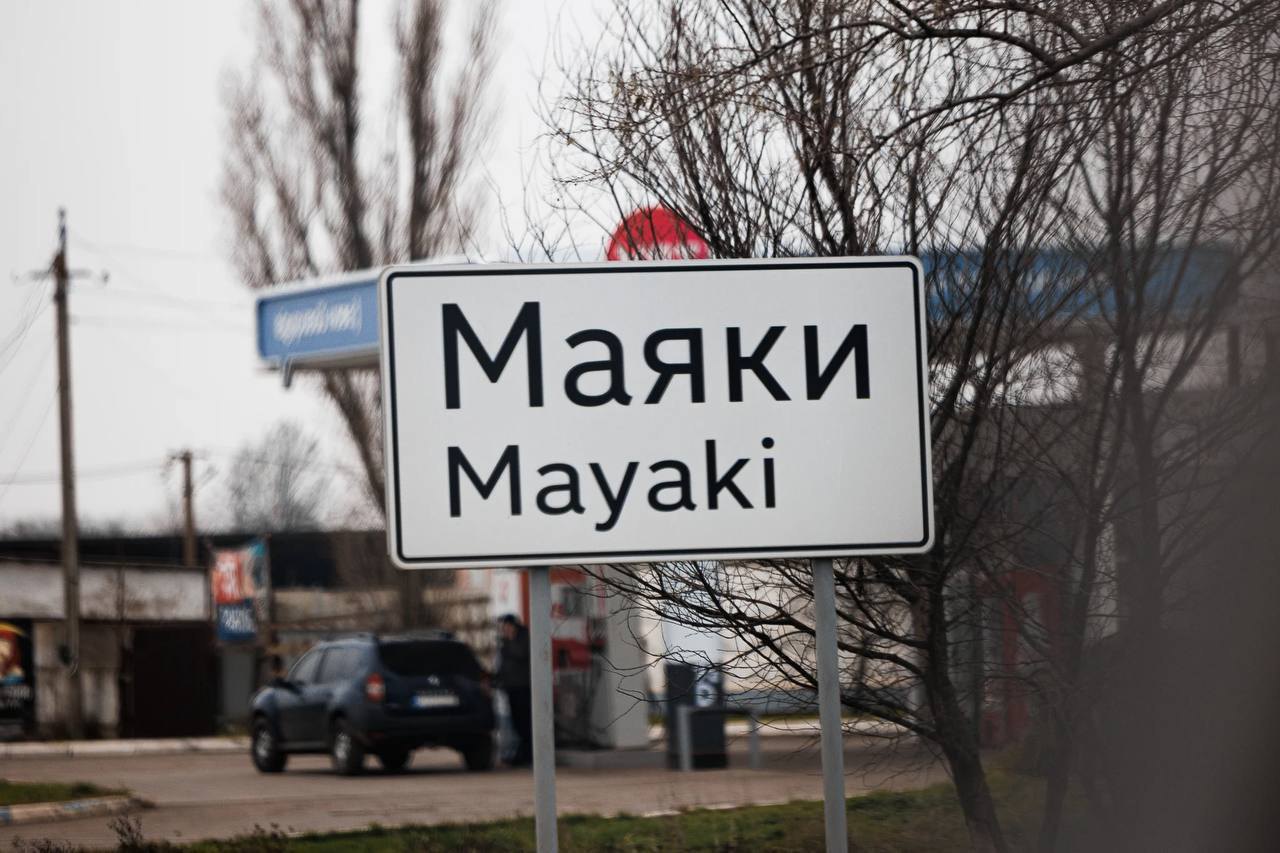
Budjak — particularly the Mayaky area — is a zone that Russia is trying to isolate from the rest of the Odesa region. It is also a territory connected to Romania. I do not have information on whether there is any coordination in this direction (between Ukraine and Romania — LB.ua).
Lately, there has been growing discourse about a possible unification of Moldova with Romania. Is this political rhetoric or a real plan?
President Maia Sandu mentioned this possibility in the context of a scenario in which Russia could advance toward Odesa. If the Russians reach Odesa, the idea of unification could become an option serving as a last resort for Moldova.