






Dear friends
European Commission President Ursula von der Leyen called Rubio's speech "reassuring." However, there were still many questions behind the scenes regarding current security challenges. Nevertheless, if we recall Vance's speech last year, it seems that Rubio's statements differ more in form than in substance.
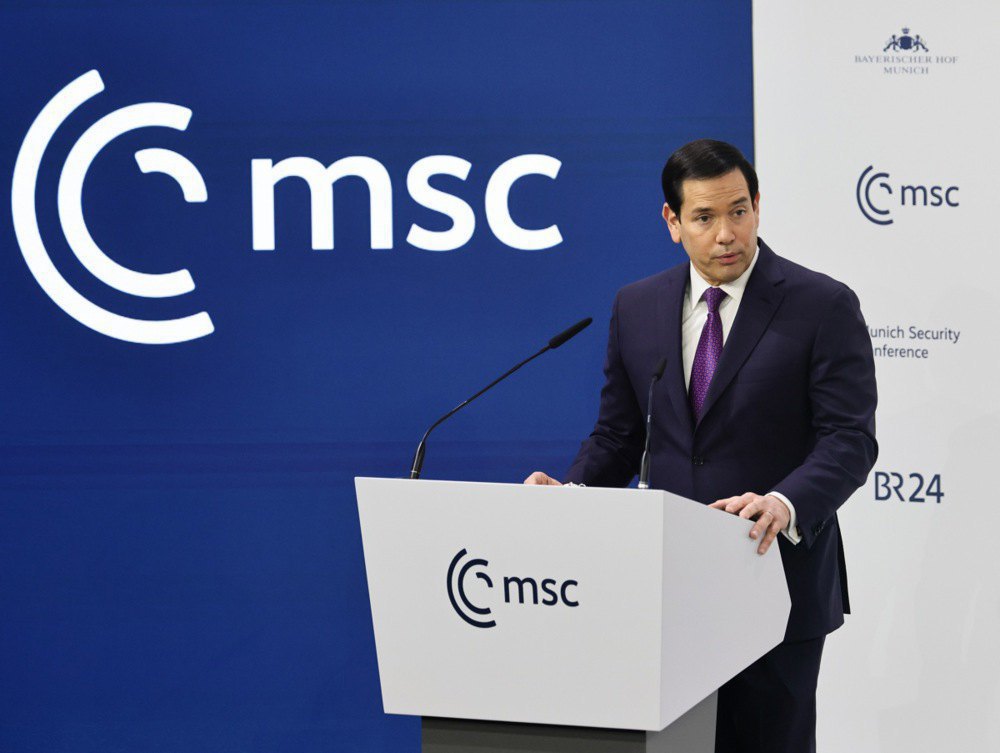
Vance’s speech last year was sharp, direct and unsettling. Rubio, by contrast, was courteous and diplomatic. He spoke respectfully, referring to Europeans as “friends” and “partners” whose future the administration of Donald Trump sincerely cares about. He invoked a shared past and civilisational kinship. Yet the core message remained unchanged: the American dream appears to be drifting away from the liberal world order towards a new future in which not everyone will find a place.
“They [the Americans] are accustomed to opening any door in Europe and still do not fully understand where this could lead. If they continue in this direction, in five to ten years we will see a completely different Europe,” said one of Ukraine’s senior officials familiar with the course of American consultations in Munich.
The Iron Curtain
In his speech, Rubio repeatedly invoked the image of the “Iron Curtain” as a line “between communism and freedom that ran through the heart of Germany”. He returned to this metaphor several times, describing it as a dividing wall between freedom and tyranny, the free world and communism.
Rubio emphasised that, thanks to American leadership in responding to Russian aggression against Ukraine, “it was possible to bring the two sides to the negotiating table”. However, in light of Washington’s efforts to end the war as swiftly as possible — including reported pressure on Ukraine and expectations of territorial concessions — these historical references sounded ambiguous and left many questions unanswered. For example, does the United States see a place for Ukraine on its side of a new “Iron Curtain”?
Having a watch does not necessarily mean knowing the time
Against the backdrop of Rubio’s address, the remarks of Ukrainian President Volodymyr Zelenskyy were particularly striking. In his speech, Zelenskyy referred to the book War by Bob Woodward, in which the author described the previous US administration’s approach to Russia’s war against Ukraine.
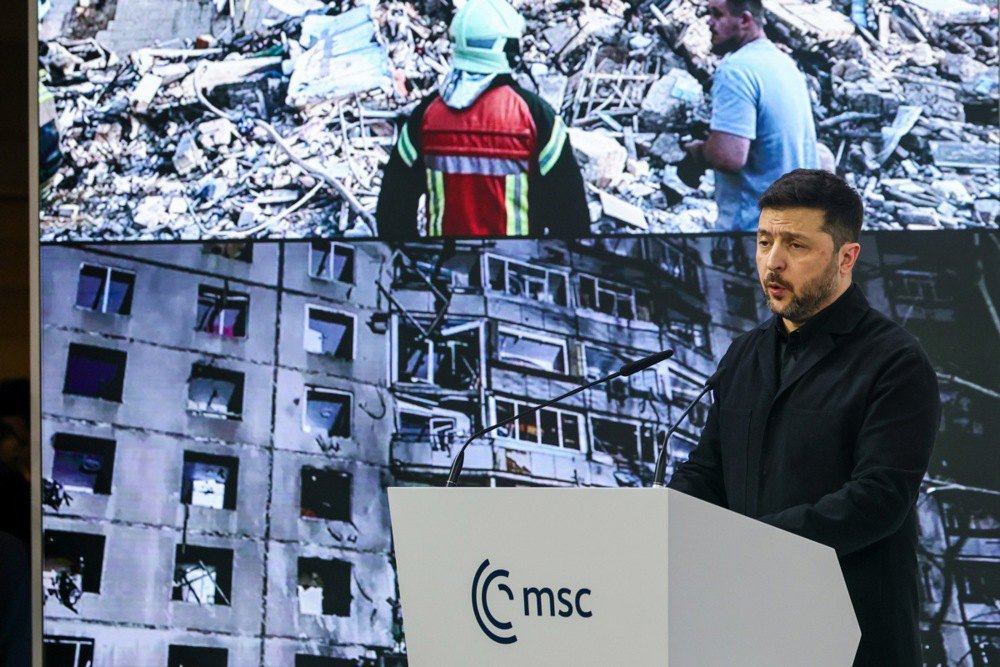
Woodward, as quoted by Zelenskyy, recalled the words of then US Secretary of Defense Lloyd Austin, who repeatedly stated in discussions on Russia’s war against Ukraine: “We own the clock,” and frequently reminded President Biden’s National Security Adviser Jake Sullivan of this assertion.
“But in war, war itself owns time — and uses that time against people, of course,” Zelenskyy emphasised. It was precisely this resource that formed the basis of the first question Rubio received after his speech: does it not appear that Russia is merely buying time in the current negotiations? In his reply, the US Secretary of State acknowledged that he did not know — and that no one knows — how serious Russia is about ending the war.
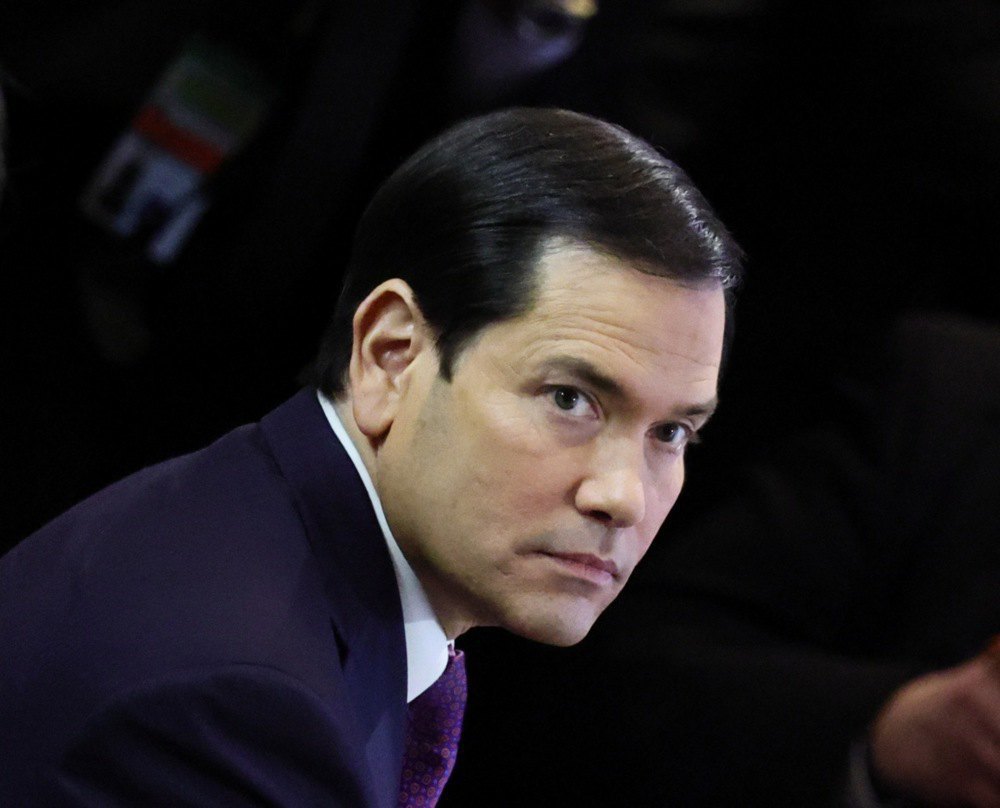
In a conversation with LB.ua, former US Special Representative for Ukraine Kurt Volker offered a more unequivocal assessment. He stressed that Moscow is currently using negotiations to gain time and that the present US administration is, in effect, enabling this approach.
“It is evident that [the US administration] are not exerting pressure on Russia. Yet that is precisely what is required. If one seeks progress or a ceasefire, pressure must be applied to Russia,” he said.
Sources within the Ukrainian delegation note that American partners continue to insist that a military end to the war “simply does not exist”, while also acknowledging that the talks have become more constructive.
Another official close to the president observed that “it is one thing to reach an understanding in Anchorage, but quite another to compel Ukraine to accept it.”
Point of no return
Although Marco Rubio’s tone had a calming effect, the crisis of confidence in Euro-Atlantic relations — and particularly within NATO, with the United States as its principal ally — has not eased, but rather deepened.
On the eve of the Munich Security Conference, Politico published survey results indicating a sharp decline in trust towards the United States among its allies. In Germany, 50 per cent of respondents described the US as an unreliable partner; in Canada, the figure stood at 57 per cent; and in France, 44 per cent — more than double the proportion expressing the opposite view. The highest level of trust was recorded in the United Kingdom, yet even there 39 per cent of respondents expressed scepticism.
Against this backdrop, the statement by Chancellor Friedrich Merz is revealing: “We Europeans are doing our job.” During Donald Trump’s year in the White House — despite repeated tensions — European leaders have sought to maintain balance in order to preserve transatlantic unity. The collective display of deference at the NATO summit in The Hague, where Alliance Secretary General Mark Rutte referred to Trump as “daddy”, illustrated this dynamic.
In this context, reports that Friedrich Merz is in discussions with French President Emmanuel Macron regarding the possible extension of France’s “nuclear umbrella” to Europe appear particularly telling. Formally, such a move would supplement existing deterrence mechanisms within NATO rather than replace them. Substantively, however, it signals an acknowledgement that the transatlantic security architecture can no longer be taken for granted. What seemed politically inconceivable yesterday has now become the subject of active negotiations.
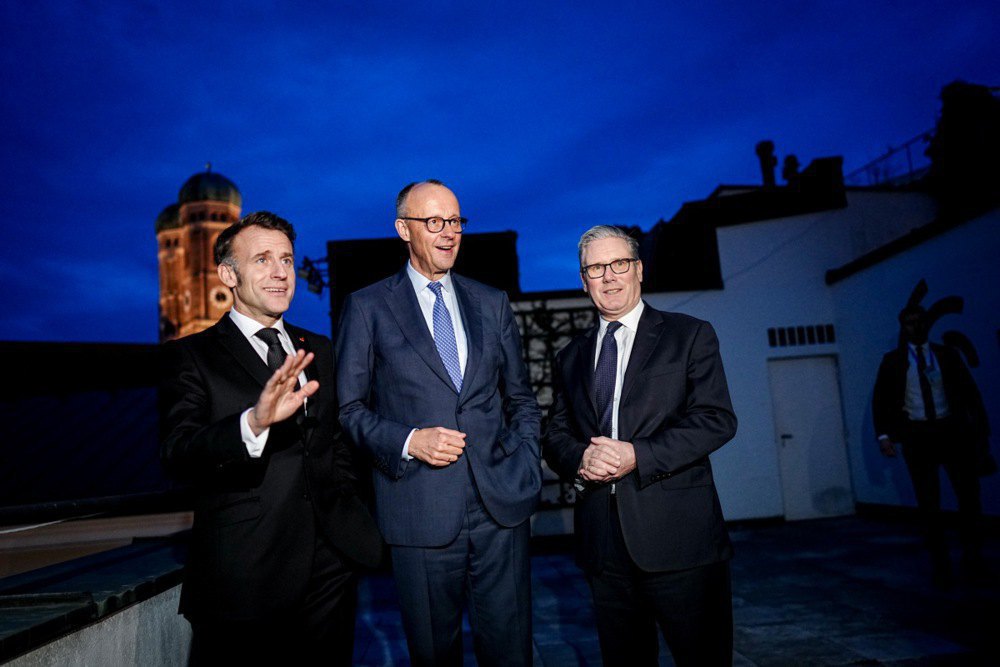
Europe is preparing for a scenario in which reassuring speeches no longer suffice as guarantees, and security must increasingly be ensured through independent action — even if this entails revisiting issues that have remained taboo for decades.