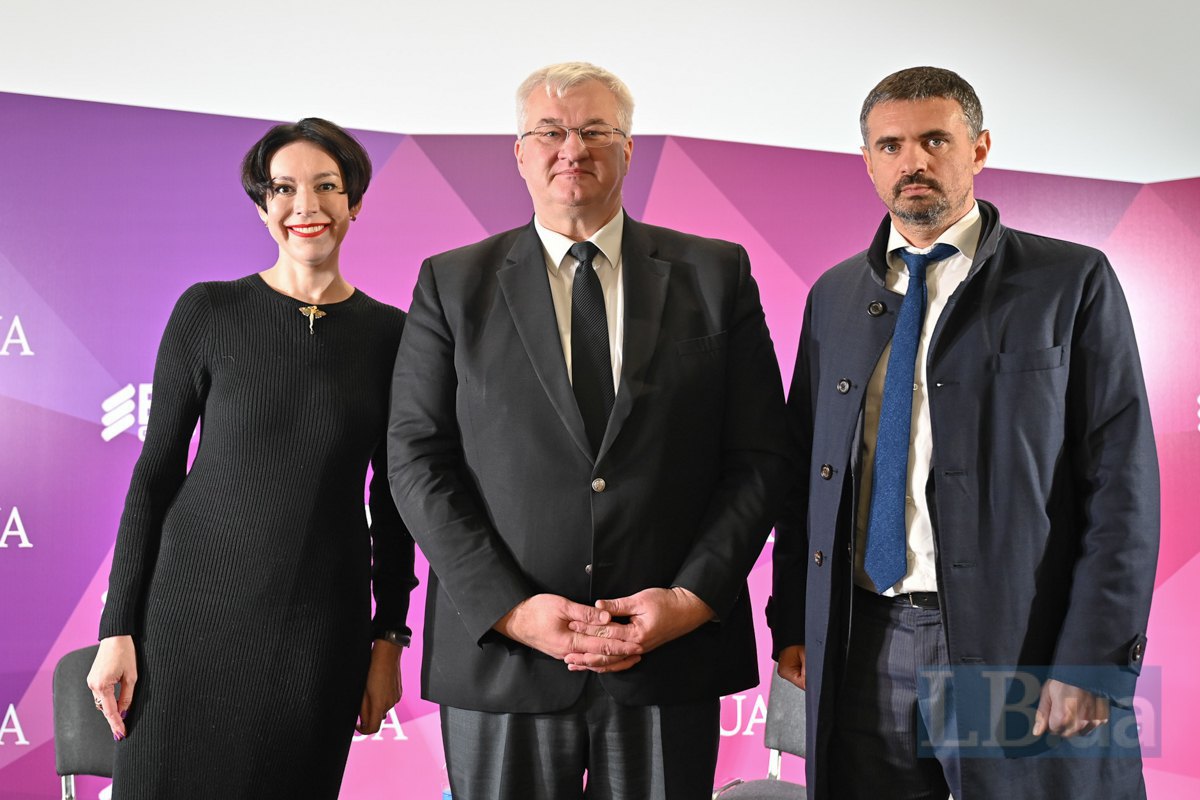





“Negotiations with Russians are always ultimatums, a maximalist stance, always blackmail.”
Right now, Ukrainian society is actively discussing peace talks, and there are certain expectations—quite high ones. Yet there’s no objective sign that Russia wants to end the war. Personally, these expectations remind me of late 2023, when literally every outlet was talking about “returning to the 1991 borders.” That, of course, didn’t happen, and for many Ukrainians, it became a major demotivating factor.
Do you think it’s wise to give people hope that is almost certainly unlikely to be fulfilled?
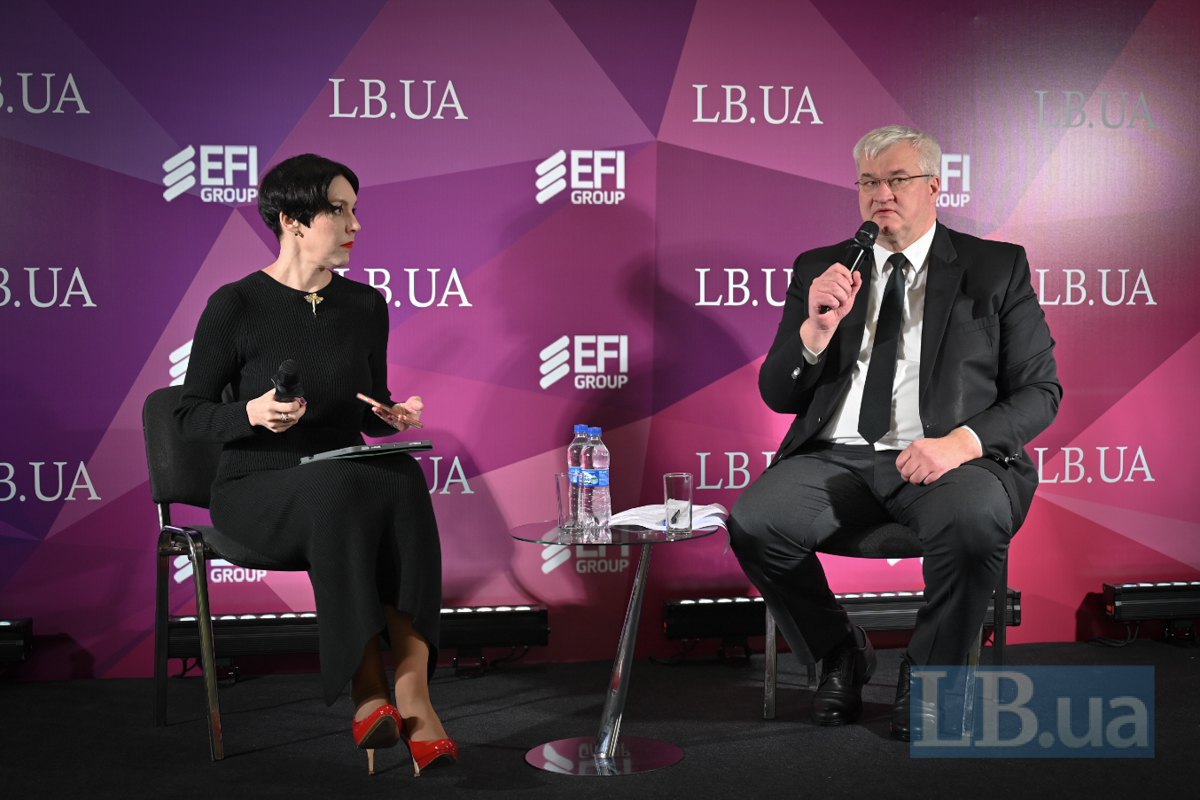
We truly want to end this war; we want to stop Russian aggression together with our allies and friends. But I want to take this bridge a little further—not only to your recent meetings, but to the one a year ago. I started the public diplomatic calendar with you (referring to Andriy Sybiha’s public interview with New Country in December 2024 - S. K.).
I also want to pay you a compliment—or express respect—that many of the things you voiced on your platforms, and this year has proven it, have actually come true. That’s why we need to be careful with words and visions—or, conversely, if something is bound to come true, to state it clearly.
A few remarks first on the global geopolitical processes today, because Ukraine is effectively at the epicenter of these events. We are in a struggle between two concepts: a multilateral world and a multipolar world. Russia is trying to impose a multipolar world—that is, a world of spheres of influence, a second Yalta, a Munich-style world.
And we, Ukraine, must find our rightful place based on our national interests and the role of our state. Over this past year, I can clearly say that the world increasingly recognizes the significance and role of our country, including its geopolitical role, and we ourselves are increasingly aware of our importance.
Another element, when talking about global geopolitical trends, is the awakening of Europe—a new strength of Europe. Perhaps a reference point was last year’s Munich Security Conference. We’ll see what trend this year’s conference sets. We are currently preparing to participate with our set of topics and narratives.
I want to say right away that there can be no self-sufficient Europe without Ukraine. That’s a fact. We see discussions about Europe’s strategic autonomy. Again, Ukraine is key to that self-sufficiency—from defense to our experience of resilience. This is a major asset. The lessons we’ve learned during this war are truly valuable.
Of course, the biggest challenge, task, the alpha and omega of our policy over the past year, as in all previous years, has been to stop this war. I believe that today we have what can be called doable proposals—ones that allow a truly realistic approach to ending it. This brings me back to your question about the peace process.
My first signal is that we have a new dynamic—the most intense, even climactic moment in our peace efforts since the full-scale invasion began. It’s crucial to understand and keep in mind that over the past year we have defended all the key principles for Ukraine in foreign policy under President Zelenskyy’s leadership, who in many cases has taken hands-on control of numerous events, initiatives, and projects.
It’s also important that we have kept the Americans in the process—they are with us. And we welcome the efforts of, personally, President Trump—I never tire of repeating this—and the American side, because without Trump, without America, we will not end this war.
You noted in an interview with European Pravda that during the recent talks in Abu Dhabi, involving Ukraine, Russia, and the US, there were bilateral meetings between the delegations that were “very focused,” without any “pseudo-historical lectures.”
You also emphasized that the composition of the Russian delegation changed, and the conversation became more substantive. Specifically, this concerns the head of the General Staff Main Directorate, Ihor Kostyukov. On the other hand, we have Peskov’s statement that military personnel are leaving their delegation and that they will focus specifically on military issues. What is the mandate of this new delegation? How independent are they, really?
Every delegation must first and foremost have, let’s say, a technical-political-diplomatic character, because decisions are made at the center—in Russia’s case, by one person.
Yes, it’s true, the delegation had a different composition, and there were no pseudo-lectures. Mostly, the Russian negotiating team included representatives from the military bloc and military intelligence. These were trilateral consultations—whether you call them negotiations or talks: Russia, America, Ukraine.
Negotiations are held precisely to exchange views, move positions closer together, and defend national interests.
In terms of tone, it seemed to me that this was really a conversation among people from the same sphere. There were two dimensions to the discussions. The first was political-diplomatic, focused on the most difficult issues, the so-called territorial question.
The second block was more military. It was there that terminology was discussed. What a contact line is. We need, I won’t say a shared understanding, but at least a common understanding of terminology: what a contact line is, what a cessation of hostilities is, what monitoring is. And here we also have some progress.
Overall, the negotiations were useful. I consider this progress. In general, I believe that even in the most difficult, darkest times, we are still moving toward achieving a dignified, sustainable peace. Even if it seems unrealistic now. We are moving in that direction and doing everything for it. All efforts are focused on this.
We are awaiting the next round. We’ll see the date, we’ll see the format, because we are interested in a trilateral format. And, of course, our position is always coordinated with our European partners and friends. We have corresponding formats at the level of NSAs (National Security Advisors - S. K.) before, during, and after. So this contact is happening, and I consider it also a merit of Ukraine that the European factor is involved. President Volodymyr Zelenskyy personally agreed on this with the US Vice President. And this format is now an established fact.
You mentioned terminology, but the terms themselves haven’t been set yet. Once again: terminology is not the same as terms.
International law provides all the answers and definitions, but we have a specific case, and the term “diplomacy” is probably not very appropriate here. In this room, there are former ministers and deputy ministers—they understand very well what negotiations with Russians are. It’s always ultimatums, a maximalist stance, always blackmail. You have to understand the reality in which these negotiations take place.
“Are we no longer talking about a free economic zone?..
Look, we have proposals, we have our red lines, and one of the options for breaking this deadlock is to find a solution—based on international law and our own law—regarding a possible special economic zone. But the key thing is that the modality acceptable to Ukraine must be reflected. Steps toward de-escalation must come from both sides.
There can be no initiatives or formulas at the expense of Ukrainian sovereignty. That is obvious, clear, and not up for discussion.
The reason I focused on terminology is that ‘demilitarised’ and ‘economic’ are like ‘green’ and ‘round’.
And then there’s the word ‘zone’ (smiles - S. K.). It implies a certain space and the search for a formula to move the negotiation or peace process forward.
What do you think was the main factor behind their change in tone? Is this not a bluff—an attempt to ‘lull’ the Americans for a bit longer?
I’m speaking about just one fact. For this to become a trend, we need to see the results of the next round of talks. But the very fact that the military went into detailed discussions presupposes the possibility of realities that require such discussions.
More broadly, across many international organisations and among key stakeholders—countries that are decisive geopolitical players—we see that everyone wants to be prepared for the post-conflict, post-war period. This is probably one manifestation, one element of that approach. And for us, this is fundamentally important.
The moment a decision is reached, we must be ready to ensure monitoring, verification, and to deal with provocations. We have no trust in the Russians.
That’s why I’m clarifying what exactly has changed. Three weeks ago (LB.ua subscribers and donors know this from our closed weekly newsletter), after the talks in Paris, when the main part of the delegation led by President Zelenskyy left for Cyprus, a working group remained behind and had a very favourable meeting for us at the US embassy.
Later, Kirill Dmitriev was summoned there and given a draft trilateral document agreed by Ukraine, Europe, and the United States. Kirill Dmitriev responded: ‘I won’t even pass this on, because my president will never accept it. And in general, cold weather is coming, they’ll hit their energy sector, and there will be a revolution.’
Even I didn’t know those details. Interesting, thank you. We’ll take it into account.”
But look, the President arrived in Cyprus after many hours of meetings with the delegations. Zelenskyy speaks with them for hours. If you’re asking what could have marked a new starting point or change, I believe it was the meetings that began in Geneva and then continued in Miami. The climax was Berlin, where the President met the American delegation for the first time and went through the 20-point document point by point. What’s important is that this document serves as the basis for negotiations with Russia—it’s crucial to understand this diplomatically.
So, we have a document recognised by all parties as the discussion point. In fact, most of the points have been agreed upon. We have significantly refined it, I believe. But there’s a danger that points that were removed could appear in other agreements without Ukraine’s involvement. We tell our partners this directly. We watch closely, because there are other tracks.
What do our partners say to this?
Europe is with us.
And the United States?
We have an updated format based on the realities—a transactional interaction. Mutually beneficial. This, too, I consider a huge achievement: Ukraine, having publicly presented the starting or reference points—for example, regarding the so-called mineral agreement—was able to conclude it. This is a major accomplishment. Regarding the 20-point document, the Americans also listened to us—they reacted, and that deserves credit.
They hear us, and that’s important. But it’s also important that they play a role not just as facilitators passing on messages they receive from Ukraine, but that it comes with an awareness—personally for Putin—of the danger of his own unconstructiveness.
“Is Putin even capable of understanding this? He’s a fanatic.”
I think they are very pragmatic and cynical people. They calculate everything. I’m convinced of that. My argument is based on concrete facts. The price of continuing this war must rise personally for Putin and his regime. It has to increase across all dimensions—through sanctions, through isolation, through the inability to expand mobilisation. All of this works cumulatively.
Another element that would significantly strengthen our negotiating position, in my view, is stabilisation at the front.
I spoke to EU foreign ministers and gave them figures showing that over the past year, after losing around 500,000 killed and wounded, the Russians managed to occupy an additional 0.7% of Ukraine’s territory. That is not a strategic achievement. Yes, under certain circumstances they have made some advances, but this is not about strategic gains.
And we believe this is precisely what gives us a chance to increase pressure so that it becomes inevitable for him to accept the realistic proposals that exist today.
I have what I call the arithmetic of war for discussions with colleagues. I won’t name all the figures, but I’ll share one: over the past year, we carried out 719 deep strikes inside Russia, inflicting damage worth $15 billion. I consider that significant. Thanks to our military.
I believe all of this will continue. The war has to come to their territory as well. They must feel the consequences, blackouts, disruptions, just as we do.
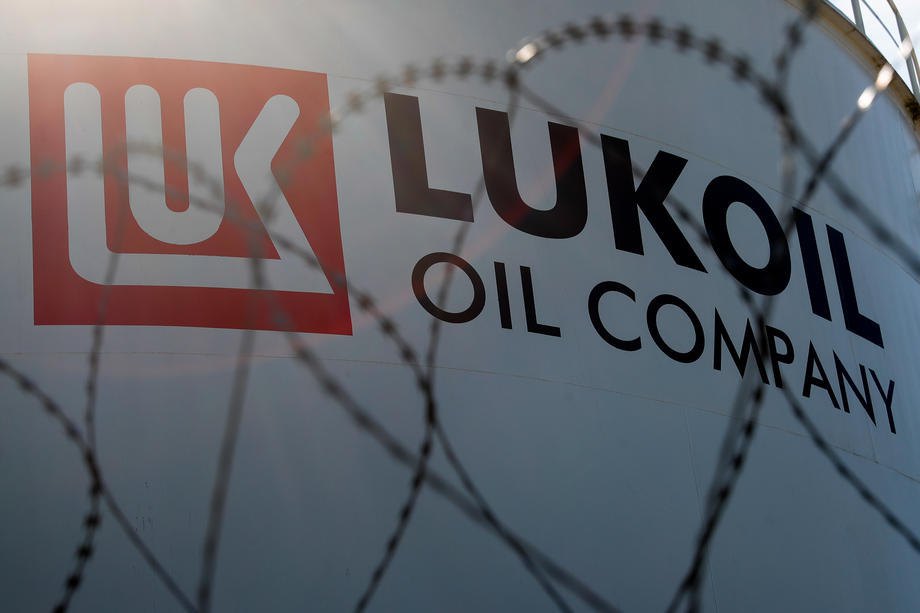
“I called on Europeans to follow the example of the United States and impose sanctions on Lukoil and Rosneft. Europe hasn’t done this yet—the United States has.”
Besides the trilateral meetings (Ukraine—US—Russia), the Ukrainian delegation also held bilateral contacts with Russian representatives. Whose initiative was this: the Americans, the Russians, or ours?
When you have details like that, ask your sources. I won’t comment here. These are negotiations. It’s a process. And I think it’s in our interest to be able to present our position directly. Especially since we already had a format for direct communication in Istanbul. In my view, whose initiative it was doesn’t matter. It’s a natural necessity for establishing this kind of communication format.
Does this mean the Americans want to leave us one-on-one with Russia?
A year ago, the risk of the Americans leaving the negotiation process was more realistic. We didn’t want that, and we believe—repeating myself—only Trump, the US, can bring peace and end this war and Russian aggression.
We are doing everything—talking with American friends, involving additional channels of our European and not only European transatlantic allies—to make sure this doesn’t happen.
President Zelenskyy mentioned that Russia’s position was that a ceasefire would only come after signing a full framework agreement. Can we say that, based on the results of the first military talks, something has changed, suggesting a ceasefire could happen earlier?
Ukraine is ready for an unconditional ceasefire. We confirmed this in Jeddah. Since then, the only obstacle to peace has been Russia. And it’s very good that this is now globally understood.
Whereas before Russia could manipulate global political and diplomatic opinion, now there is a clear understanding: Russia is the only obstacle. Very often, they agreed to some negotiations just to appear constructive to the Americans. Their goal is singular—to avoid sanctions, confiscation, and the use of frozen assets. We understand their objectives. And sometimes the timing of their efforts coincides with periods right before important decisions are made. We see this too. It must be countered by talking with our partners.
Today, for example, I called on Europeans to this time follow the US example and impose sanctions on Lukoil and Rosneft. Europe hasn’t done it yet; the United States has. So it’s important that it happens, so pressure continues. And, I repeat, Russia must understand the consequences. And they fear this and try to avoid it.”
By the way, how did it happen that Serhiy Kyslytsya is officially part of the negotiation group, while you aren’t?
My absence doesn’t mean that the Ministry of Foreign Affairs isn’t represented. There’s an established procedure, there are directives. The directives are prepared by the MFA and approved by the President of Ukraine. And I’m against creating parallel channels of communication—they serve no purpose. There is a single state position, represented at the negotiation table. People prepare, and we discuss everything internally.
I am the Foreign Minister. When foreign ministers take part in such negotiations, it’s not typical. But if the President decides otherwise, that will be the decision.
“Security guarantees must be legally binding through the appropriate procedures in each country, i.e., ratification.”
Several Western media outlets reported that the US is ready to provide security guarantees only if a final peace agreement with Russia is signed. How accurate is this? Does it put us in a position where we are forced to accept painful compromises here and now in exchange for a promise of protection that will only take effect in the future—or might not take effect at all?
I think these years have proven that it’s very difficult to force Ukraine into anything or blackmail us. That’s the first point.
Second, let me comment on what reflects reality. For the first time in the history of Ukrainian statehood since gaining or restoring independence, the American side confirmed to us their readiness to provide security guarantees—not mere assurances, as formulated in the Budapest Memorandum, which are legally meaningless—but legally binding guarantees, to be formalised in a document ratified by Congress. The legal nature of this document is fundamental, as is the sequence.
It’s hard to imagine finalising any peace process without a clear understanding of security guarantees. Security guarantees must be legally binding through the appropriate procedures in each country, i.e., ratification. Second—the strength of these guarantees must be comparable to Article 5 of the Washington Treaty. Third—Boots on the ground, the presence of European contingents from certain countries with an American backstop. And here, by the way, one of the achievements of all these communications is that we now understand what an American backstop means.
Fourth—our full membership in the European Union. And fifth, the most fundamental, the most important—our army. A strong Ukrainian army. Even after the end of Russian aggression, we will need to maintain a strong, numerous, modernised Ukrainian army. And the deterrence package—our own air defence and long-range capabilities.
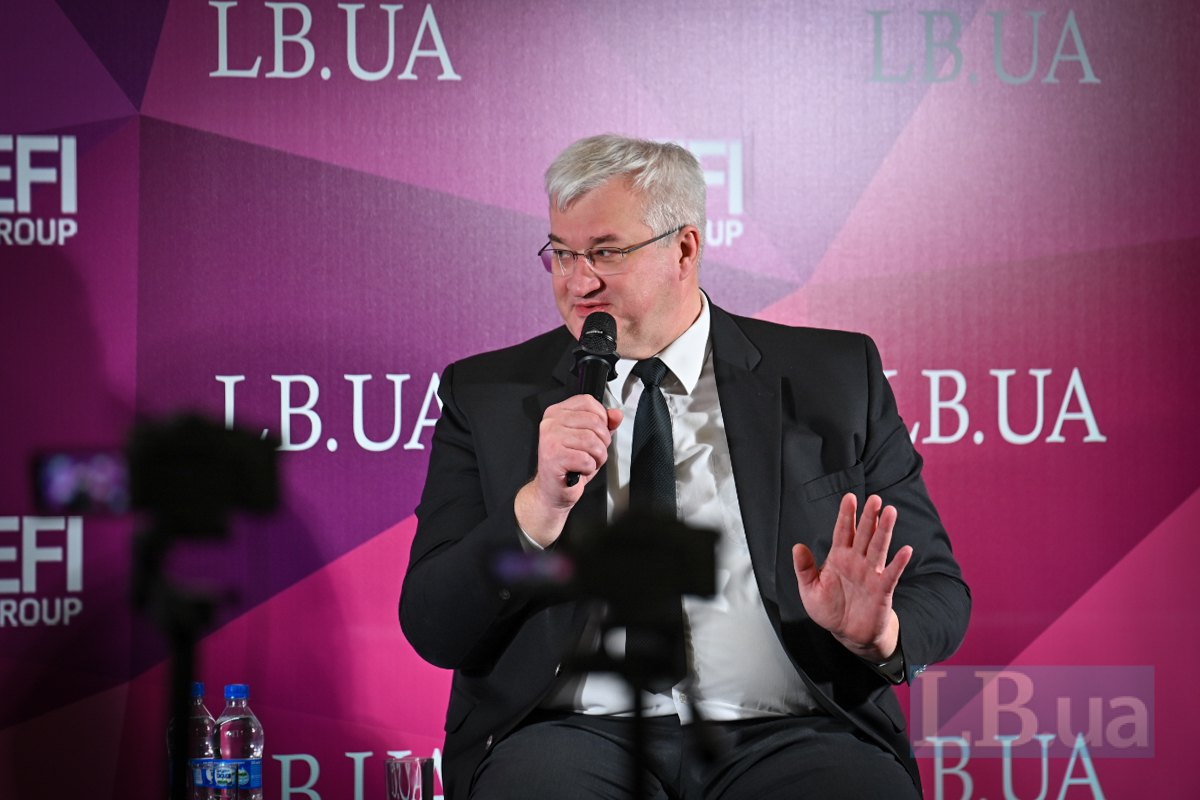
How much do the Americans (or don’t) link the provision of security guarantees, in the formulation you just mentioned, to our (un)willingness to leave the territory of Luhansk and Donetsk?
Ukraine has a clear position, and the sequence and strength of these documents are defined. Our position is firm and backed by our closest allies. We are in close contact with our American friends and continue working to achieve this strategic goal.
The security guarantees we are discussing with the US will apply to internationally recognised Ukrainian territory; occupied territories will not be excluded from Ukraine’s sovereignty in the agreement.
Security guarantees are for Ukraine. There can be no formulas that compromise Ukraine’s territorial integrity or sovereignty.
How, then, will the legal status of Luhansk, Donetsk, and Crimea be defined?
The current approach is: we have a contact line. We want to achieve a ceasefire. A ceasefire opens the door for broader peace negotiations. Above all, we want to end this war through diplomatic means.
I haven’t received an answer. You yourself stressed the importance of terminology, so I’m asking specifically about Luhansk, Donetsk, and Crimea.
International law provides all the answers. We will act in accordance with international law and the UN Charter. We have allies supporting us in this.
Does China play any role in the peace process?
Of course, a greater role for China would be welcome. We see it as one of the countries that has influence and could impact Russia. They currently maintain a form of neutrality—probably the closest term—regarding Russia’s war against Ukraine.
It’s important that they understand Ukraine’s role as a future EU member. They do, and they take this into account. Sanctions are also a very sensitive issue for them. Several legal entities have been sanctioned for supplying dual-use goods to Russia, and I understand how sensitive and important this is for them.
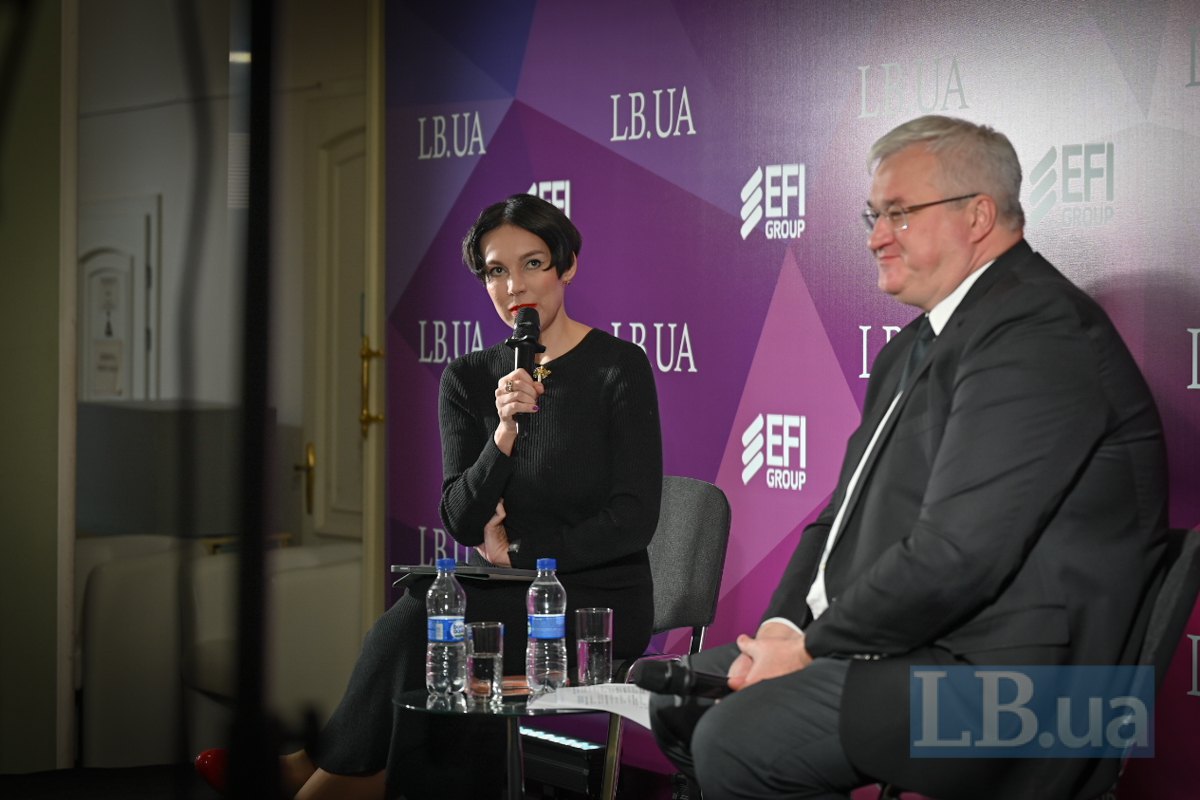
We have a working diplomatic dialogue. Mr Kyslytsya, while still serving as First Deputy Foreign Minister, visited China. I have an invitation, as Minister of Foreign Affairs, to visit China as well. We are working on the dates. Yes, we would like to see a more active dialogue at the leadership level. We are interested in this, and I have already had two meetings with China’s Foreign Minister Wang Yi. If he attends the Munich Security Conference, I hope we will meet again.
Is a meeting between President Zelenskyy and China’s leader possible?
We would be interested in such a meeting. Why not?
“Beyond the fact that a contingent is an element of security guarantees, it is also a guarantee for business — an additional motivating factor for investors.”
Let us return to the sensitive issue of security guarantees and terminology regarding the temporarily occupied territories.
Temporarily occupied — do you understand? The key point is that they are Ukraine.
Absolutely. But at present, they are temporarily occupied. If, hypothetically, we sign security guarantees tomorrow, and the day after tomorrow a missile is launched from a launcher in, say, Luhansk and strikes Zaporizhzhya, will our partners carry out a retaliatory strike on that launcher in Luhansk? If yes, that would effectively mean a direct war between NATO and Russia — something they are very afraid of. If no, then what is the value of those security guarantees?
This is almost a rhetorical question. Even if we take Article Five, I believe there would be assistance, including in repelling military aggression. That is our assumption. That is why bilateral security guarantees are being drafted. Incidentally, they detail the military component or dimension of these guarantees: what will be activated and what will be delivered immediately.
In general, the purpose of these guarantees is for us to clearly understand the role of each participant — since we will have both a bilateral dimension with the United States and a multilateral one within the Coalition of the Willing — and the role of each state in repelling aggression. What each of them will be able to do to help Ukraine at hour X, should it come. Unfortunately, given the neighbour we have, we cannot rule this out. That is why we must be prepared and obtain the strongest possible legal confirmations from our neighbours and partners.
The United States will not take part in “Boots on the ground”.
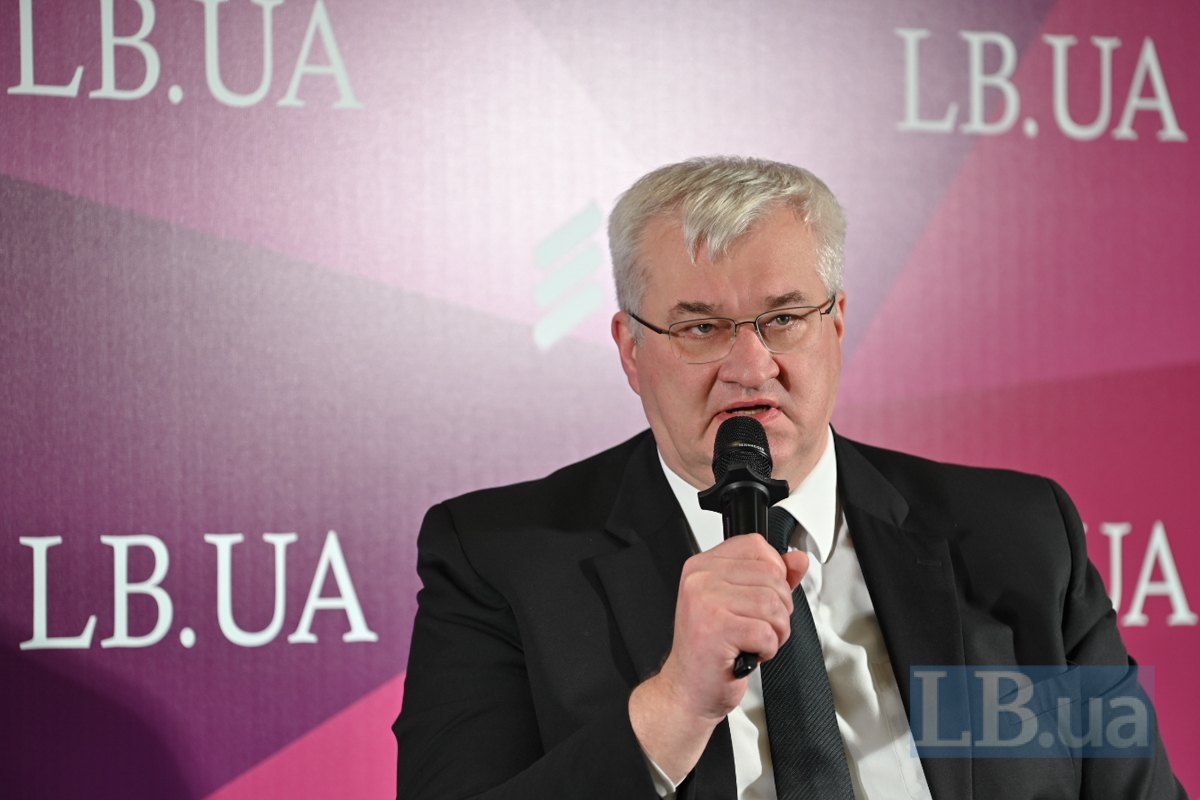
They will not take part in the sense of sending soldiers, and they have said this directly. However, they will participate in the sense of providing support to contingents from EU countries.
There are several states — including some outside the European Union, which I do not want to name at this stage — that would also be ready. But again, this is tied to a ceasefire and the end of hostilities. Only then can the deployment of a contingent be expected.
And what is a contingent? Beyond being an element of security guarantees, it is also a guarantee for business — an additional motivating factor for investors. And we will fight for this.
The Russians have already stated that they reject the 20-point agreement, and this is alarming.
It seems to me that there was no such wording as “reject”. They are discussing it with the Americans. This document has been taken as a basis for discussion in a trilateral format in Abu Dhabi as well. I have not heard that they are rejecting the 20-point plan.
In the interview you mentioned, you said that the United States would sign the 20-point framework with Ukraine — and with Russia. Who exactly is supposed to sign it on behalf of Ukraine? The President?
There is a list of officials authorised to sign any document. You said that, as of today, it is to be signed in a bilateral format. These are negotiations. They are evolving; there are constant innovations and new ideas. So this remains a flexible framework — but that framework does exist.
As of today, this concerns bilateral US security guarantees and multilateral security guarantees with European partners, plus the United States.
Within the so-called Ukraine Prosperity Plan, we have agreement on a trilateral format — the United States, Europe, and Ukraine — but this is also not a constant. We are working to make the substance of the document even stronger, particularly with regard to sources for Ukraine’s recovery.
Another problem area is the Zaporizhzhya Nuclear Power Plant. What options are currently on the table?
We see that the Russians are trying to connect the plant to their energy system. They are laying cables. At a minimum, we are talking about one unit. This is unacceptable. It poses a threat to nuclear and regional security. We believe they do not have the capacity to operate it safely.
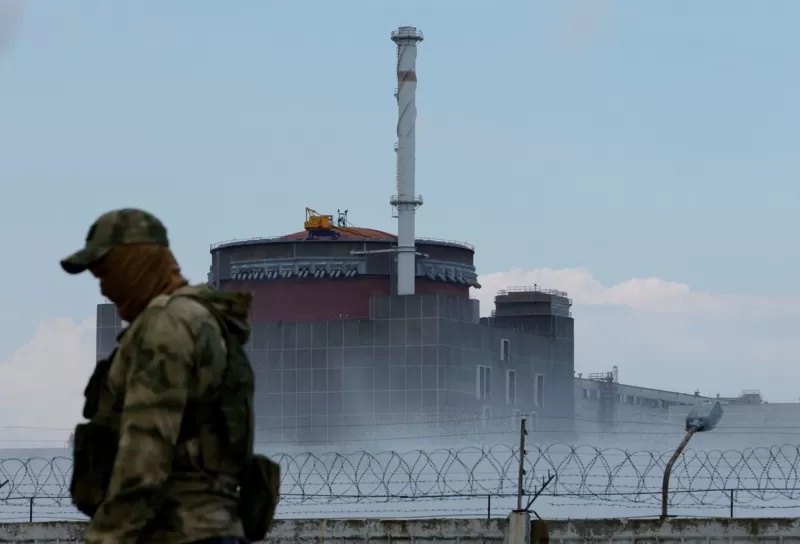
Our position is unchanged: it is Ukraine’s property. It is Ukrainian territory. We considered, as one option, the possibility of establishing a management formula with the American side, with the American side then resolving other aspects with third countries. For us, this is the optimal option.
I am aware of the Russian side’s position. I know it from one of the heads of an international organisation who met with Putin and relayed their stance. Unfortunately, it is also maximalist — that the plant allegedly belongs to Russia. Our position here is firm and unchanged: for the safe operation of the plant and to prevent nuclear incidents, it must be operated by Ukraine.
Is the issue of frozen Russian assets (€300 billion) part of the negotiation package?
All sensitive issues that concerned or went beyond the bilateral track have been removed, including accountability. These are principled matters.
Everything related to the EU and NATO countries has also been excluded from this package.
However, the issue of frozen assets remains on the agenda. I can confirm that.
Is it true that the Russian delegation is making the immediate unblocking of SWIFT for their state banks and the lifting of sanctions a condition for signing any document?
Of course, that is their demand — first, to avoid sanctions, and second, to have them lifted. That cannot happen before reparations are fully paid.
And SWIFT?
This is a package-based approach. There is an EU sanctions package and a NATO one. I am speaking more broadly about the so-called transatlantic sanctions package. Ukraine synchronised all its sanctions packages last year, and in many cases has already begun to move ahead in imposing sanctions. This is also a major achievement in wartime conditions. We now possess the expertise and knowledge of what is most damaging and destructive to the Russian economy and Russia’s military machine.
A clarification regarding the temporarily occupied territories. If a demilitarised zone or an economic zone were established there in accordance with international law, whose jurisdiction would physically apply? Put simply, would shops use roubles or hryvnias?
I have answered this question several times already: international law provides all the answers. As far as the part we control is concerned, it is under our jurisdiction, and that cannot be changed. It is Ukrainian jurisdiction.
“The issue of a special tribunal for Putin cannot be taken off the agenda”
For two years, Ukraine promoted the Peace Formula. Do the current talks in Abu Dhabi mean a de facto abandonment of this concept in favour of freezing the conflict? How will you explain this change of course to countries of the Global South, which we spent so long persuading to support our plan?
The Peace Formula has fulfilled its purpose. Within the framework of this formula, important results have been achieved on specific points. Moreover, work on some of these points is still ongoing within working groups. Accordingly, these processes are not mutually exclusive. We are now dealing with a different reality and a different dynamic in the peace process.
Andriy Ivanovych, we are seeing intensified communication with the Belarusian opposition. President Zelenskyy met with Sviatlana Tsikhanouskaya, and commenting on these processes you said that we need to engage with the democratic Belarusian opposition because the regime in Belarus is not eternal.
But, sorry, by that logic we should also engage with the democratic opposition of the so-called “good Russians”, because the regime in Russia is not eternal either.
What is really happening with Belarus? Why such a sharp change? Is this connected to the fact that the Americans are also establishing contacts with Lukashenko?
This is not a sharp change; we are simply putting things in order and systematising them. We need to have good-neighbourhood policies along the entire perimeter of our border.
Of course, Belarus under the Lukashenko regime — and Lukashenko himself — currently pose a security threat to Ukraine. We have volunteers from Belarus who are fighting, defending our independence and standing up for our country. These democratic forces, which envision a future based on a good-neighbourly relationship with our state — of course, we will maintain contact with them and support them. That is why this meeting took place at the level of the President and Ms Tsikhanouskaya, one of the leaders of the democratic Belarusian forces. It was indeed substantive. We will appoint a special envoy and, I hope, approve a strategic policy document on this country in the near future.
Once again: then let us also appoint a representative for the so-called “good Russians”.
That may come later. We have a position, and we clearly understand the list of individuals involved. Incidentally, within the Council of Europe, we did not support a resolution on establishing a platform for engagement with certain democratic forces from the Russian Federation.
President Zelenskyy has said he is ready for a personal meeting with Putin. Are we prepared to put the issue of a special tribunal for Putin outside the brackets for the sake of a ceasefire, as Moscow will likely demand?
Thank you for this question. Holding the aggressor and the Putin regime accountable is an integral element of a just peace.
That is why, at the level of a potential meeting between President Zelenskyy and Putin, the most sensitive issues in the context of the peace process are being discussed — namely the so-called territorial issue and possibly the Zaporizhzhya Nuclear Power Plant.
But not the special tribunal. That is, yes — but not now.
This issue cannot be taken off the agenda.