







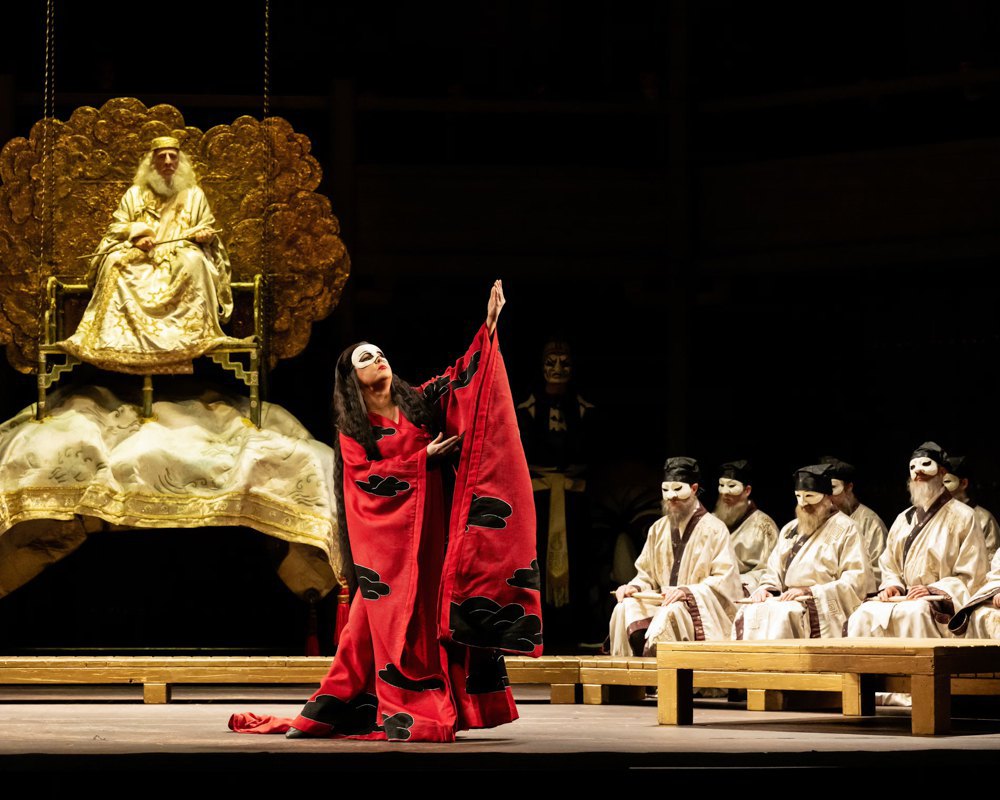
Anna Netrebko and “great Russian culture”
Without doubt, one of the most high-profile artists on the list of pro-Putin performers — she openly supported the so-called “L/DNR republics” and the occupation of Crimea. She can hardly be described as someone striving for peace.
After Russia’s full-scale invasion of Ukraine in February 2022, the administration of the Metropolitan Opera in New York City required Netrebko to distance herself from the Russian president and his aggression. She refused to publicly condemn Vladimir Putin, and as a result was removed from three productions in the 2022–2023 season (including Turandot and Don Carlo). In response, Netrebko filed a lawsuit accusing the Met of discrimination and seeking compensation for the cancelled performances. At one stage, the Met agreed to pay her more than $200,000; however, part of her claims was challenged and did not result in full compensation.
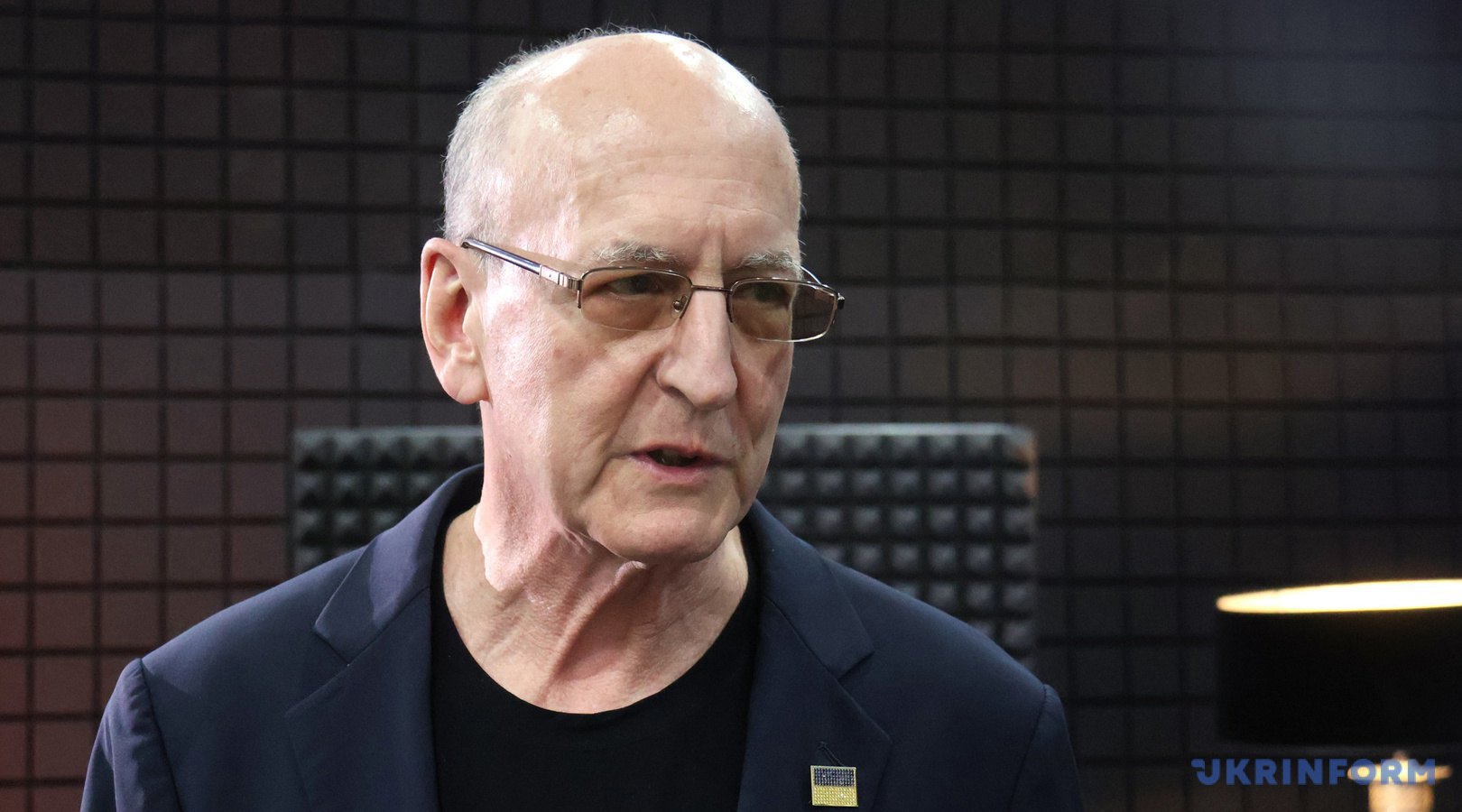
Later, Met General Manager Peter Gelb, during a visit to Ukraine to present the first excerpt of a forthcoming opera about Ukrainian mothers during the war, commented to LB.ua on the Netrebko case:
“But the key point in the Netrebko case is that I gave her the opportunity to publicly distance herself from Putin. She said she could not. I believe she had certain conversations with the Kremlin. And, as I understand it, she came back to me and said, ‘I stand with my country.’ That was when I dismissed her. And her statement a month later that she opposed the war — in my view — was insincere. It appeared only after I fired her. And legally, I consider it to have been an insincere statement. I do not believe she truly meant it.”
After 2022, Netrebko’s performances were cancelled one after another — for example in Prague and Tallinn. Even where cancellations did not materialise, her concerts were accompanied by media controversy and protests. In 2022, the Royal Opera House suspended cooperation with Russian artists linked to the regime. Netrebko was not scheduled in the current repertoire at the time, but her future appearances were effectively frozen. The theatre adopted a cautious stance — it did not issue loud personal political statements about her, yet clearly distanced itself. Over time, however, Netrebko began returning to major European stages — in Vienna, Milan and Berlin.
The Royal Opera House resumed cooperation with the pro-Putin soprano after she had re-established a steady presence at other leading European theatres. The mechanism was standard for the opera industry: contracts are signed well in advance, theatres assess legal risks, reputational consequences and the artist’s stated position. Formally, there were no sanctions in place that would have barred her. The theatre emphasised that “Russian citizenship does not automatically mean support for the Kremlin or its policies; nationality is not the same as political preference or a militaristic stance.” The position was articulated mainly by music director Jakub Hrůša, who was the key инициator of her return. He publicly stated that the theatre “must be associated with the best singers”, and that this principle motivated the invitation. He also said: “She condemned the war, and I have no reason not to take her statement seriously.” At the same time, the theatre did not frame this as a broader shift in its policy towards Russian artists. Rather, it was presented as an individual decision based on artistic evaluation and her statements opposing the war. Subtle. Procedural. Carefully packaged.
According to one interpretation, this fits a classic pattern of the Russian regime: amid war, to demonstrate continued cultural dominance. The Royal Opera House invited Netrebko to open the season with Tosca and to appear in other productions (Turandot and a 2026 concert). Whether Russia exerted any financial or other influence on the Royal Opera House remains a matter of speculation.
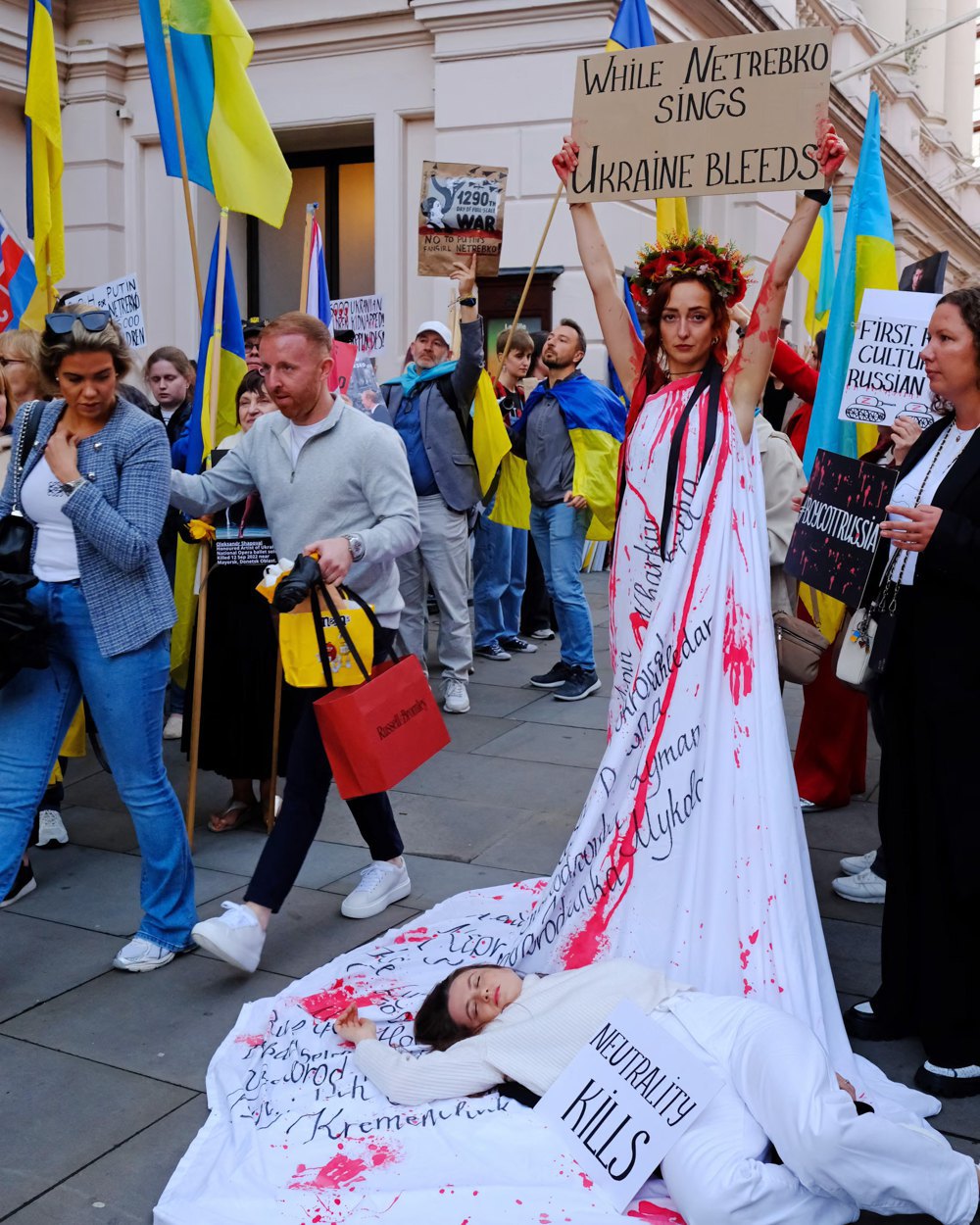
Hundreds of Ukrainians and British activists gathered outside the opera house with placards and flags, calling for the performances to be cancelled. Ukraine’s ambassador to the United Kingdom said that Netrebko’s presence “forces people to forget the real suffering in Ukraine”. A group of British MPs, as well as writers (including Helen Clark), called for the concerts to be cancelled, describing Netrebko as a symbol of “cultural propaganda”.
Despite the numerous protests, the Royal Opera House refused to cancel the performances, insisting on her artistic value and noting that Netrebko had condemned the war and had not performed in Russia since 2022.
If you think about it, opening the season at a flagship opera house in one of Ukraine’s key partners — the United Kingdom — is, in essence, a shot to the heart, carried out in full public view, and yet another attempt to demoralise Ukrainians.
In October 2025, following a campaign by the Ukrainian embassy and activists, another performance by Anna Netrebko was cancelled in Romania. But the story did not end there. In Paris, the Théâtre des Champs-Élysées has scheduled concerts featuring Netrebko and a number of Russian musicians for the 2025–2026 season. The Ukrainian Embassy in France has sent letters calling for this “Russian season” to be cancelled, and the Ukrainian community has also appealed — but so far there has been no clear response.
The Gergiev case
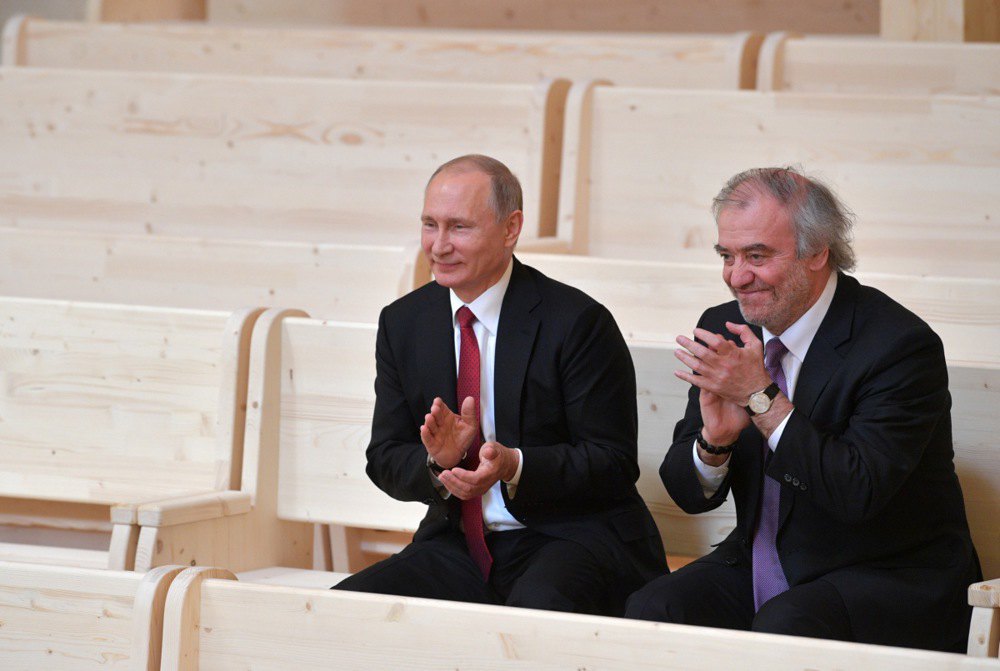
After 24 February 2022, the name of Valery Gergiev quickly became one of the foremost symbols of Russia’s so-called “cultural soft power”. While debates around other artists focused on their public statements, the situation with Gergiev was far more straightforward: his long-standing closeness to the Kremlin had long ceased to be a secret.
Gergiev is not merely a world-famous conductor and the long-time head of the Mariinsky Theatre. He served as a trusted representative of Vladimir Putin during elections, conducted concerts following the annexation of Crimea, and performed in Palmyra, Syria, after Russia’s military operation there — all of which became part of a state propaganda strategy.
As a result, in the very first days of the full-scale war, European institutions issued him an ultimatum: publicly distance himself from the Kremlin.
The first major rupture came with his dismissal as chief conductor of the Munich Philharmonic. After Gergiev refused to condemn the aggression, the Munich city authorities terminated his contract. Shortly afterwards, Milan’s Teatro alla Scala also ended its cooperation with him, demanding a clear position on the war. Organisers then cancelled his appearance at Carnegie Hall in New York for the same reason. Within just a few weeks, he had effectively lost all his key Western platforms.
Unlike some Russian performers who attempted, at least formally, to distance themselves from the war, Valery Gergiev made no anti-war statement whatsoever. That proved decisive. In 2022–2023, his name virtually disappeared from the programmes of major European orchestras and festivals. He continued working in Russia and in countries that did not impose cultural restrictions, but in the West he became a marker of political conflict.
Several years after the start of the full-scale invasion, Gergiev appeared to decide it was time to return. Attempts in 2024–2025 were each accompanied by waves of protest. When news emerged in Italy of a possible concert as part of a summer festival, the Ukrainian community and a number of local politicians called for preventing the “rehabilitation of a Kremlin propagandist”. The issue reached Italy’s culture minister, and more than 40 Ukrainian associations worldwide spoke out against the performance. Following public pressure, the concert was cancelled. Similar reactions surfaced in other countries: even the intention to invite the conductor became a news event.
As of 2025–2026, Gergiev does not have a stable platform within leading EU cultural institutions. His case demonstrates how, in wartime, art ceases to be a neutral space. For European theatres, the question of inviting a conductor is no longer solely about artistic quality; it becomes a political decision — about values, solidarity, and the boundaries of what is acceptable amid ongoing aggression.
Svetlana Zakharova and Vadim Repin – Putin’s “first violins”
The cancellation of performances by ballerina Svetlana Zakharova is linked to her political stance and active participation in Russia’s propaganda processes. Under the guise of “high art”, Russia continues to advance its narrative, reinforcing the stereotype that culture exists outside politics. In Zakharova’s case, once again, there is little ambiguity.
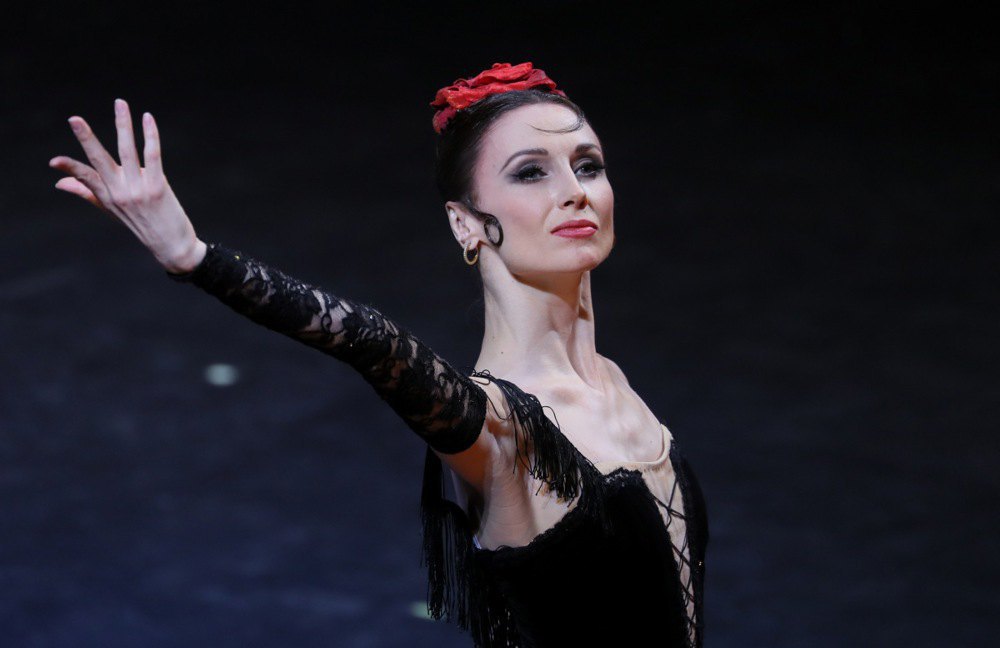
Svetlana Zakharova was born in Ukraine but went on to become a leading ballerina of Russia’s major theatres and maintained ties with Russian political structures (including membership in the United Russia party). She publicly supported the 2014 annexation of Crimea.
Ukrainian and international activists consistently argue that the participation of artists linked to the Kremlin regime in cultural programmes risks legitimising an aggressor state waging war against Ukraine. At the same time, decades — indeed, at least a century — of Russian cultural diplomacy, backed by substantial financial investment, have entrenched the image of Russian “greatness” and reinforced the perception of a supposedly untouchable canon: classical art portrayed as existing beyond politics or war.
One of the most high-profile cases of 2025 was the cancellation of a performance by Zakharova and her husband, violinist Vadim Repin — who has also openly supported Vladimir Putin and received funding from his foundation — at the Maggio Musicale Fiorentino in Florence.
The campaign began with an appeal by LB.ua to Ukraine’s Ministry of Culture, which initially was unaware of the situation but promised to contact the Foreign Ministry. A formal request was then sent to the Ukrainian Embassy in Italy, calling for the cancellation of Zakharova and Repin’s performance in Florence. Embassy representatives responded by sending letters directly to the theatre and to the Florence city authorities. The concert was ultimately cancelled, and the story quickly spread across leading Ukrainian and European media, including the BBC.
“In this context, it is worth recalling the recent cancellation in Italy of a performance by the notorious conductor Valery Gergiev — an open supporter of Kremlin policy. Despite attempts to frame his appearance as that of a ‘representative of culture, not politics’, the entire Russian political establishment exerted pressure and issued threats toward the Italian side during the cancellation process, which only confirmed the close ties between Russia’s cultural elite and the state authorities,” the embassy said at the time.
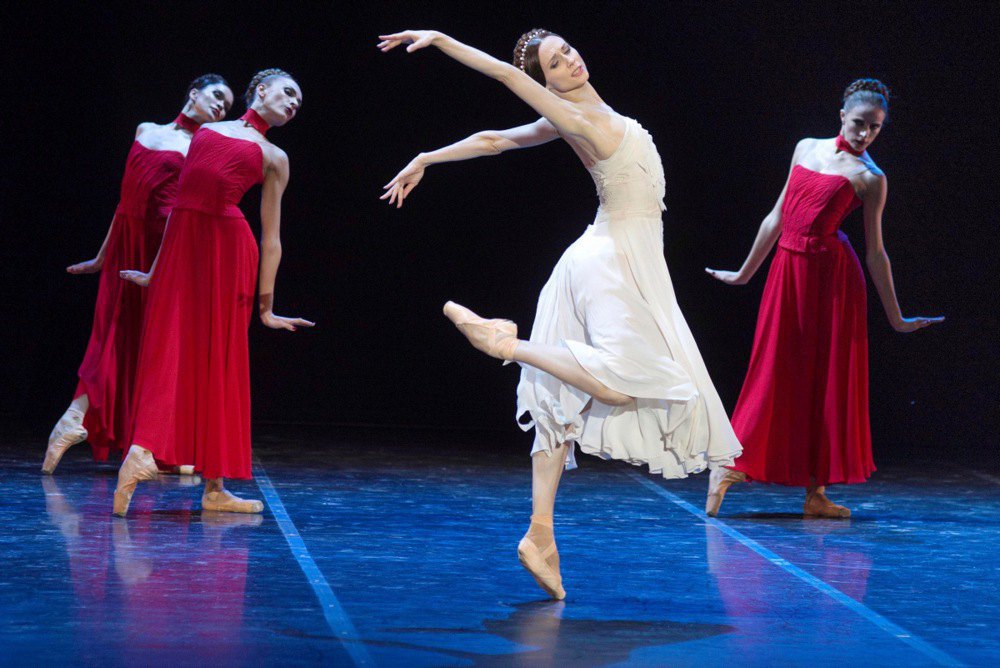
This case became one of the clearest examples of coordinated action by the Ukrainian and Italian communities, diplomats and public officials. Yet although the performance was ultimately cancelled, the wording the theatre used in addressing its audience on the official website was extremely cautious and deliberately vague: “due to ongoing international tensions creating circumstances that could jeopardise the successful staging of the performance.” There was not a single mention of the war or of the artists’ pro-Putin stance.
After the cancellation of his joint performance with his wife in Florence, Vadim Repin did not stop. A new concert was scheduled for 22 February 2026 at the Mannheim Philharmonic, where he was to perform Sergei Prokofiev’s Second Violin Concerto — directly on the eve of the fourth anniversary of Russia’s full-scale invasion of Ukraine. Prior to the cancellation, the Ukrainian Embassy in Berlin expressed outrage over the planned appearance and sent an official letter to the mayor of Mannheim and the event organisers. LB.ua also contacted the embassy, urging a decisive response. In its appeal, the embassy stressed that the violinist had for years been involved in Kremlin state cultural projects and, after the start of the full-scale war, had received awards and financial support from Russia.
More broadly, 2025 has seen a renewed push by Russian performers, opera singers and ballet artists to return to international stages. After facing cancellations in Europe, Repin shifted his focus to the United States. In a move many viewed as symbolically provocative, another concert was scheduled on the eve of the anniversary of the atrocities in Bucha — a crime recognised worldwide. The Ukrainian and American communities reacted with strong criticism. In response to an inquiry from LB.ua, both a leader of the Ukrainian community and the Ukrainian Embassy in the United States confirmed that letters had been sent directly to the philharmonic’s administration, and the protests gained public visibility. However, at present, the concert in Palm Beach, Florida, has not been cancelled.
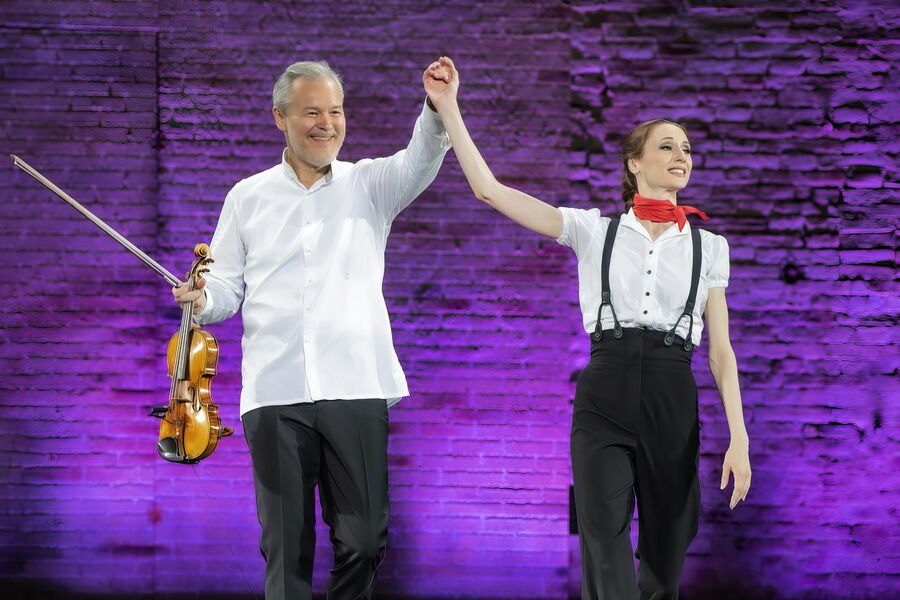
The touring history and repeated cancellations involving artists such as Svetlana Zakharova and others show that Russia’s cultural presence abroad has long ceased to be merely an artistic phenomenon. In recent years, Moscow has systematically used “high culture” — ballet, classical music, opera — as an instrument of soft power, constructing on international stages an image of being “above politics” while consistently avoiding acknowledgment of its role as an aggressor state in the war against Ukraine. Through prestigious venues such as the Maggio Musicale Fiorentino and other European institutions, there is an attempt to normalise Russia’s presence in the global cultural space — without public reflection on the war, the destruction, and the war crimes. As we can see, this strategy creates diplomatic and reputational pressure on host countries: cancelling performances is framed as “cancelling culture”, while allowing them to proceed risks becoming a symbolic gesture of legitimising a state that continues its aggression.
In this context, culture turns into a battleground for geopolitical narratives and competing interpretations of reality. It becomes a space where reminders of proportionality, the value of human life, and truthful testimony about Russian crimes must struggle for attention in a world where, at times, such matters seem inconvenient.
After all, a ballet ticket is far more appealing than answering uncomfortable questions.