






Recently, you said that “Europe is paying for the war in Ukraine,” while “the United States is profiting from it.” Why, in your view, then, did Europe agree to let Washington be the main moderator of the peace process?
It’s not that Europe agreed. It just happened because the U.S. remained the leader, spending the supplementary aid package allocated under the previous administration. And President Trump, it seems, has direct contact with Vladimir Putin.
But it’s looking increasingly odd. Because, you see, the U.S. and Russia are separated by two oceans, whereas we are right next door and not involved (in the negotiations — S.K.).
Are you satisfied with the process, the progress, and how the Americans are moderating the talks? What would you say are the main or biggest mistakes in their strategy? If there is a strategy at all?
I don’t blame anyone for trying to identify the “red lines” of both sides and attempting to bring them closer together.
There are many other mediators — the UN, Switzerland, Turkey. And, of course, the greatest power to constrain President Putin’s ambitions is the People’s Republic of China.
Yes. But right now we are talking about America. What do you see as the biggest problem or mistake in this negotiation process?
We should judge by the results: if they bring a just peace to Ukraine, I have publicly said that I would nominate President Trump for the Nobel Prize.
If that happens, then of course.
President Trump has conducted more negotiations in his life than I have in mine. So I wish him luck.
Business negotiations or political ones? There is a big difference.
Of course. But look, we wish them luck. Because I do not see how these negotiations can succeed unless Putin gives up some of his military objectives. But we will hear from Mr. Witkoff. Perhaps we will learn something we do not yet know.
What “red lines” would you formulate for Europe in potential negotiations with Russia? I emphasize — for Europe, not for Russia.
Well, as you know, the Russians are trying to challenge not only Ukraine’s borders and future, but also the future of the European security architecture. And of course, we do not agree that these matters should be decided behind our backs. We understand that Russia has certain security interests and would have them under any government — but we have such interests as well.
And our interests are the same as yours. First and foremost — not to be attacked.
After Ukraine.
Yes.
…In fact, yesterday at the Foreign Affairs Council, our High Representative proposed a list of demands to Russia aimed at achieving a broader settlement.
And I think it is useful to reflect on this, because Russia has troops stationed in many neighboring countries. It is deploying offensive weapons systems and nuclear arms within striking distance of European capitals.
According to our intelligence, the Russians had a plan to invade the Baltic states and use Polish territory as a base for an invasion in 2030, but they have moved that timeline forward to 2027. So you — Europe, and Poland in particular — do not have much time left.
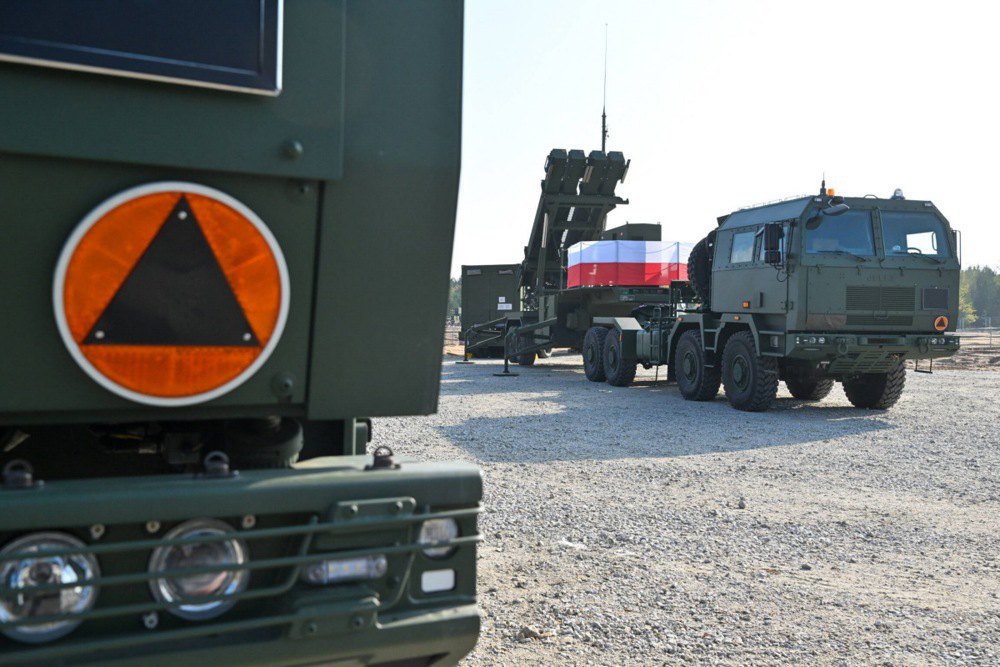
Yes, that is precisely why we are rearming very rapidly. This year, we have allocated 200 billion zlotys: 55 billion for “hard” defense and additional funds for “soft” defense — army mobility, civilian shelters, and so on. There will also be European funding from security mechanisms and other sources. And we began this process several years ago.
So at the moment, tanks, F-35s, and Patriot systems are either being produced or deployed. We are learning a great deal from Ukraine, which is why I am glad that we are finally discussing concrete agreements on technology exchange, joint production, and sharing experience. I believe Poland and Ukraine have much to offer each other.
Yes, but what about the dilemma where, on the one hand, you need to have more weapons for yourselves, and on the other — to help Ukraine, because that is also in your interest?
And we are doing that. We have taken part in the Czech ammunition initiative and in the joint PURL fund to purchase American weapons for Ukraine.
We have completed our 48th transfer of equipment worth 200 million dollars. So we are doing what we can. We have pledged our MiG-29s, and a batch of MiG-29s is already prepared for handover.
By the way, all the Starlink terminals used by Ukraine — 30,000 terminals — we have paid for them. That is why I was able to tell Musk to switch off Russian Starlink.
Yes. And that played a very positive role for us on the front line.
In your view, what should the proper format of negotiations look like? Who absolutely must be at the table, apart from Ukraine, the United States, and Russia? What role should the EU or perhaps individual European countries — Germany, Poland play?
Remember, after the annexation of Crimea there was the Geneva format — the U.S., the EU, Ukraine, and Russia. At the time, I warned Ukrainian leaders about the “Normandy format,” which later evolved into the Minsk process. You are the ones most interested in having Europe at the negotiating table.
And we understand that very well. President Zelenskyy mentioned that we are preparing a meeting of the leaders of Ukraine, Russia, and the United States. I personally asked twice why Europe would not be at that table. I did not receive an answer.
President Zelenskyy is better placed to define Ukraine’s interests.
Of course.
Personally, I am skeptical about a meeting of leaders before an agreement has been finalized at a lower level. Peace negotiations are like a bad divorce — it is better to delegate them to lawyers.
But if nothing is moving forward, the President has to do something.
Certainly. Still, in principle, a leaders’ meeting should take place when an agreement has already been worked out and they simply confirm it. I understand, however, that a high-level meeting creates hope for a breakthrough. I do understand that.
It creates opportunities, but also risks.
What kind? What do you mean?
Putin is indicted for war crimes. By meeting with him, you legitimize him.
You often speak about the need for “moral clarity” regarding Russia’s aggression. How can this be preserved in European societies, where war fatigue is growing and populist movements are gaining strength by promoting the idea of “peace at any cost”?
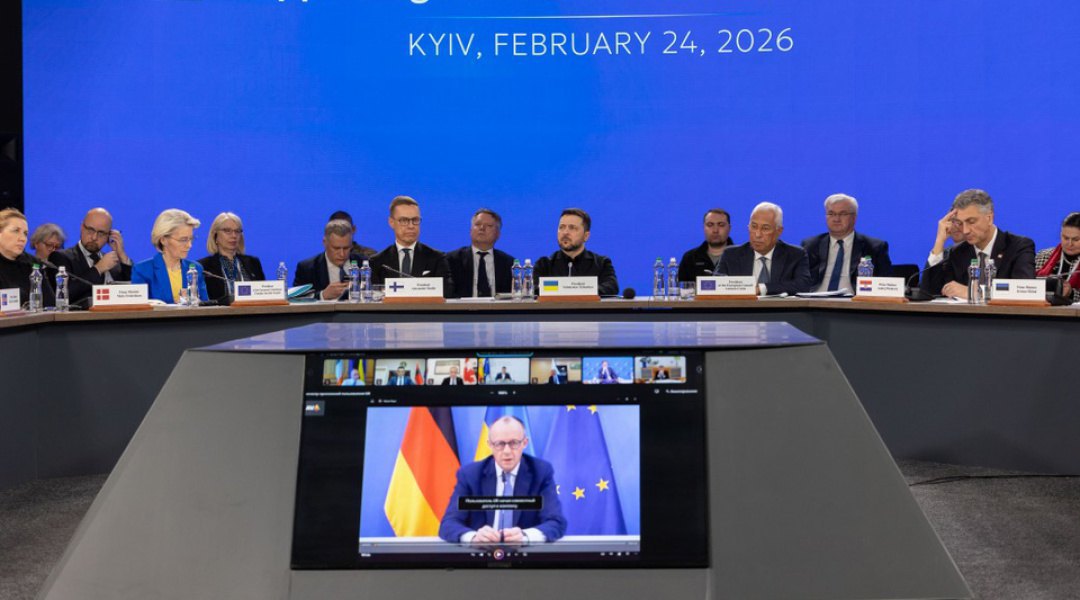
No, no, no. Only Ukrainians have the right to feel tired. Europeans perhaps might also… But you know what? I do not accept that. Look at the attendance at the “coalition of the willing” today (the meeting took place in Kyiv on 24 February — S. K.). All the major countries, the major donors — almost all of Europe — are represented here.
Do you see the possibility of a new kind of “security core” emerging in the region — a notional coalition of Poland, the Baltic states, and Scandinavia — that could prove more effective than the EU or NATO on defense matters? And what role could Ukraine play in such a coalition?
NATO is irreplaceable because it has a command structure, intelligence, and so on. But there have always been sub-groups. For example, Poland currently chairs the Council of the Baltic Sea States. That includes Scandinavia, Germany, and Norway. We discuss security and defense issues there. These are countries with almost identical threat perceptions, risk assessments, similar values, and a willingness to act.
Polls show a significant rise in anti-Ukrainian sentiment in Polish society. How serious a threat do you consider this trend for Polish-Ukrainian relations now and in the future?
There was a downturn, but we have overcome it. Prime Minister Tusk was here in Ukraine, as was our defense minister. I think we managed to convince Andrii Sybiha that we had made progress on historical issues. And thanks to the sympathy of the Polish public, millions of private donations were raised for the “Warmth from Poland” initiative to help you get through the winter.
And what about society itself, not politicians?
Well, you know, you have nationalists — and so do we.
And what can be done about it?
Not everyone will ever sympathize with everyone. There’s always societal stratification.
Is it a matter of time, process, or proportions?
Proportions. But I think the proportions are not bad. The fact that Polish aid keeps coming shows that our society gives us, the politicians, the green light to act. And I think right now we are in a better position than at many points in our shared history.