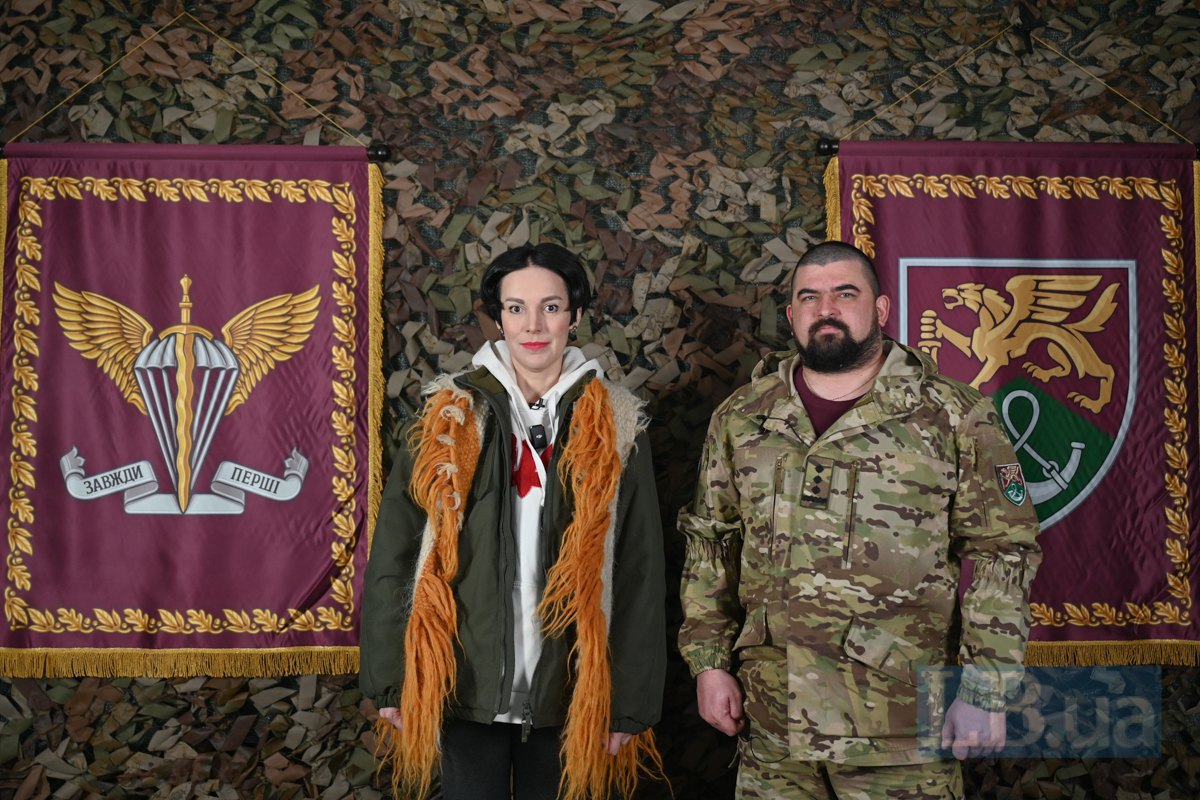





The situation in the Sumy direction is stable, but the enemy continues to attempt assault operations
I remember well how, throughout 2025, the President, the Commander-in-Chief and senior military officials repeatedly stated that, apart from Donetsk Region, the two most threatening directions were Kharkiv Region and Sumy Region. The enemy was planning active offensive operations and the creation of a so-called buffer or “grey” zone there. However, we can see that, fortunately, the enemy has not been able to implement these plans. At present, the Sumy direction is relatively stable. Tell us what is happening there now and what the current situation is.
The current situation remains stable in terms of enemy advances — there have been none. At the same time, the enemy continues to attempt assault operations. They are no longer as active as they were in the summer of 2025, when their actions were systematic: every day, large groups of eight to ten personnel attempted to advance. Now the assaults are more sporadic: once a week, sometimes with a break of up to a week and a half, after which they resume in more varied formats.
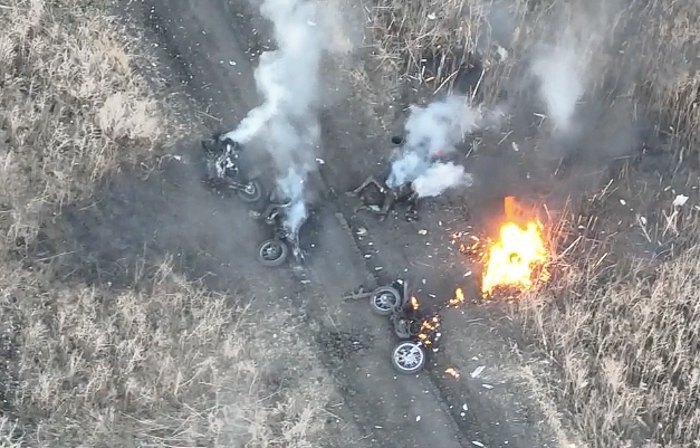
In particular, around five attempts to advance under the cover of bad weather have already been recorded. Motorcycles, snowmobiles and quad bikes are being used. They also attempt infiltration on foot almost every other day, in small groups of two or three, and sometimes even individually, trying to penetrate as deeply as possible into our defensive lines.
You have been in Sumy Region since May 2025. Tell us how the situation has evolved over time, particularly with regard to their active offensive actions in the summer.
At the outset, the enemy was very actively preparing for offensive operations. According to our data, their units were fully manned, with an additional 100 personnel per battalion above the standard strength as a reserve to compensate for losses.
When we were transferred from the Donetsk direction, it was no longer a routine handover of the area of responsibility, as counterattacks were already under way. We took up positions on the front line with the aim of halting the enemy. The primary task was to stabilise the situation within a short period and prevent them from reaching the forest areas. Further advancement through the forest would have created conditions for movement towards Sumy.
At that time, vegetation was still dense and visibility was limited. The forest belts here are wide. Infantry units were primarily active. It was difficult to support them with unmanned systems, so UAVs operated mainly along the state border or in the rear areas. Armoured groups operated on the front line: vehicles would move out several times during daylight hours, engage the enemy and stabilise the positions.
The enemy’s losses during that period were significant. They advanced in groups of more than a hundred personnel, with over 70 confirmed fatalities alone. This was a time when the enemy relied heavily on manpower. Their plans were ambitious, but they failed to achieve even their immediate objective.
What exactly?
Control of the forests.
Since May 2025, enemy losses in our sector have exceeded 4,000
Since May 2025, enemy losses here have exceeded 3,500, as far as I know.
More. In 2025 alone, there were 3,600. Currently, the total number of casualties exceeds 4,000.
You have already faced two major assaults this year. In the first, they lost 42 infantrymen; in the second, 28. Six were taken prisoner. Tell us about this.
Again, the “pipe” was used, though not exclusively. On one flank, they immediately deployed snowmobiles. Thanks to our reconnaissance, we were aware of the enemy’s preparations and probable course of action, which meant we were approximately 80% ready.
Their problems began when they exited the pipe. According to the prisoners, they had remained inside for up to two days, were disoriented and physically exhausted. The first group managed to reach the forest belt; the rest were destroyed while emerging. Some succeeded in retreating.
As for the snowmobiles, other units were already engaged. To put this into perspective, we are currently facing units from at least five enemy brigades and regiments. Groups from the 30th Motorised Rifle Regiment were transferred on foot across the state border and were waiting in position.
At around three o’clock in the morning, snowmobiles carrying drivers and group leaders arrived. Personnel were loaded and the movement began. The advance continued for a considerable time in difficult weather conditions, with poor visibility. The enemy was detected with some delay, but fire was delivered in a timely manner. As a result, they halted not at their intended point, but where they were forced to stop due to shelling.
The group leaders and drivers dropped off the personnel in a forest belt and attempted to withdraw. However, two leaders and two drivers were killed. Those who entered the forest belt were unable to secure cover and were subsequently taken prisoner.
At the same time, another formation, namely the 56th Motorised Rifle Regiment, was advancing on foot towards the forest belt. However, it failed to move forward and launch an assault. Timely fire engagement meant that we did not have to redeploy forces in that direction.
Let us speak about who exactly is fighting against you. You have listed the enemy forces. Am I correct in understanding that these are non-specialised units from different regions of Russia?
Essentially, yes. Whoever is recruited is the one who fights. The reinforcements are diverse, arriving from all corners of Russia, predominantly from remote regions. The same applies to age – the categories vary considerably. The youngest prisoner was born in 2007.
I understand that you are also opposed by the Rubicon unit, which consists of relatively professional pilots who target our operators, communications points and similar assets.
Rubicon operates not only at the take-off points of our pilots, but also deeper in the rear. Their primary task is to disrupt logistics routes and inflict fire damage across the full depth of their operational reach. To counter this, mobile fire groups and stationary teams have been established at forward positions. They are proving fairly effective in destroying both fibre-optic drones and other attack systems.
Engineering teams are also working to maintain the integrity of protective netting over roads. These nets are periodically damaged by adverse weather or shelling, so dedicated units have been formed to repair them promptly.
Specialised units have likewise been created to intercept Molniya, Shahed-136, Gerbera and other systems. They operate with considerable effectiveness. The brigade is capable of shooting down eight to ten Molniya drones per day.
And how many are launched daily?
It varies. Activity has intensified over the past month, reaching up to 60 launches. Typically, however, the figure ranges between 18 and 24 per day. These are the drones that have been detected. Approximately 50% are neutralised by electronic warfare systems, with the remainder destroyed by interceptors.
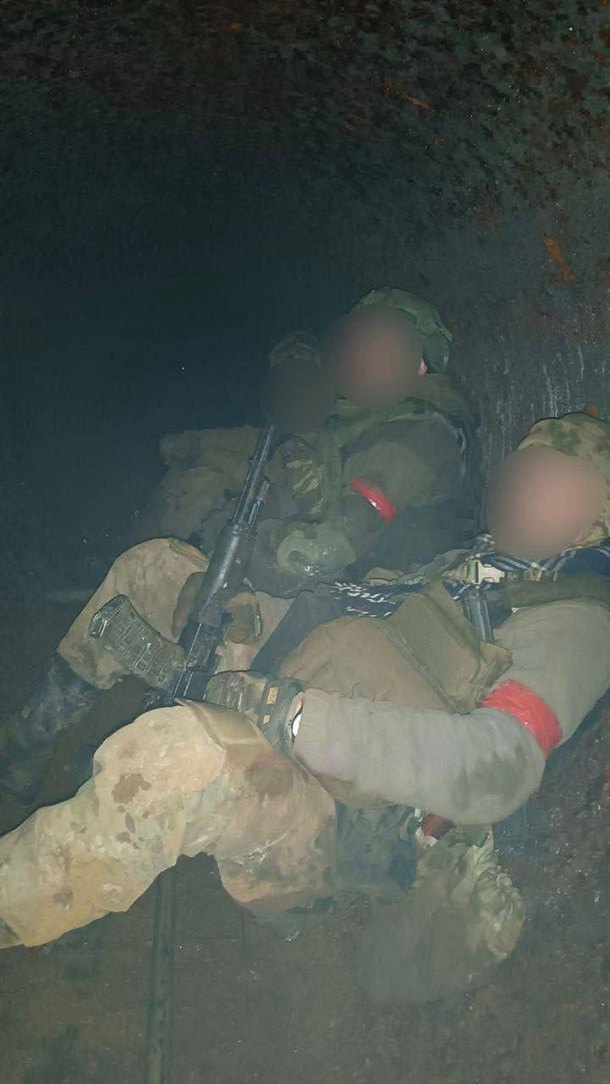
Russians effectively live in the pipes: they create rest niches and constantly maintain entrances and exits
Let us return to the “pipe”. You previously encountered similar tactics in Avdiyivka, and we also observed such cases in the Kupyansk direction. How did that prior experience assist you?
First and foremost, it gave us an understanding that even if the enemy emerges deep in our rear through the pipe, the situation is not critical. The key is to localise and isolate the area swiftly. We were aware of the pipe’s location and the likely entry and exit points. Accordingly, cover and observation units were deployed in advance.
The first time they emerged from the pipe, we used quad bikes in three directions from the front to distract them. While engagement was under way, units in the rear detected movement and reported it. Contact was subsequently established. We redeployed our forces, and most of the enemy personnel were eliminated by unmanned systems, in particular FPV drones and Vampire systems.
Is it possible to block the pipe completely in this sector?
We have already severed it several times and mined it in multiple locations. However, the problem is that there is not a single opening. They create new ones each time — approximately 100 metres to the right or left. The most recent exit was even located in the middle of a field. According to prisoners, there are side niches inside the pipe, essentially functioning as dugouts for rest. They move a certain distance, enter these niches, rest, and then continue. In other words, they adapt.
Some personnel remain there permanently to guard the entrances and exits. Each point has a senior guard. At the exit, around 20 metres away, there is an individual who controls the emergence and prevents anyone from retreating. If someone attempts to return, they may be killed.
What is the approximate height of the pipe in your area?
On average, 1.6 metres. It is impossible to stand upright. There are difficult sections with inclines. Equipment is transported on carts. In particularly challenging sections, they unload and carry everything manually.
The enemy holds an advantage in fibre-optic drones and is scaling up more rapidly, while we operate under conditions of scarcity
Let us turn to the technological challenges. What has changed most over the year you have been stationed here?
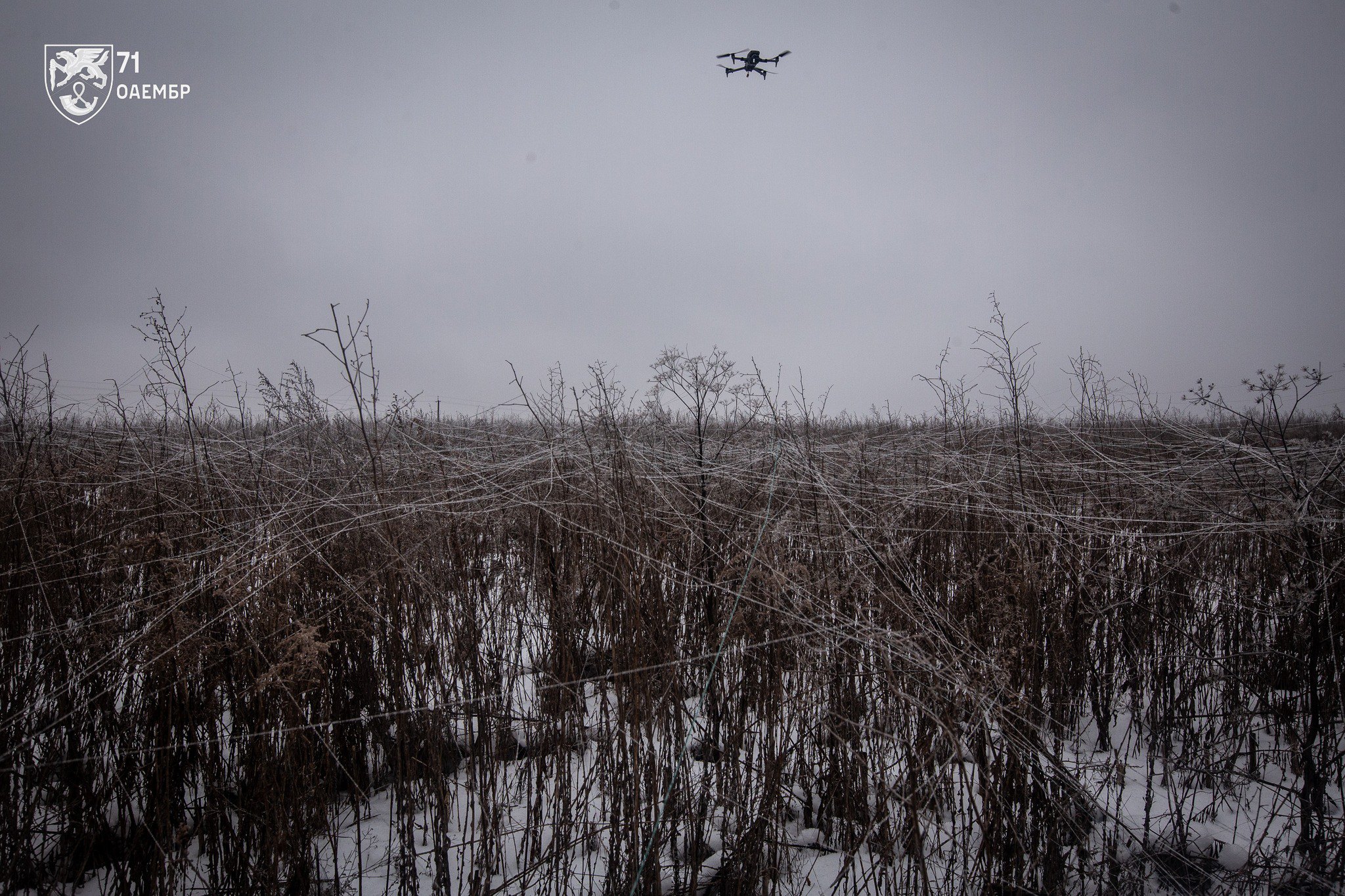
The most significant development has been the use of fibre-optic drones. We have substantially increased their deployment. Unfortunately, however, the enemy is doing so even more effectively. They face no shortage in the number of drones — whether radio-controlled or fibre-optic. We are currently experiencing a deficit of fibre-optic components, partly due to supply disruptions from China. This is attributed in part to the Chinese New Year, but there is a risk that the issue may persist.
We have prepared reserves for critical moments, so there are sufficient supplies to repel attacks. We manufacture some drones ourselves: we wind the fibre and assemble them in-house. However, I cannot ensure full coverage for all units. In priority sectors, coverage reaches around 80%. In less active areas, it is lower. As a result, we are compelled to redistribute resources.
You mentioned that you refine many systems yourselves. What exactly do you modify?
We upgrade radio-controlled drones by installing higher-quality optics, effectively elevating them to a different level of efficiency. We also manufacture drones designed for greater operational depth or for engaging priority targets, depending on our specific requirements.
After such refinement, effectiveness reaches nine out of ten, and often ten out of ten successful strikes. Unfortunately, among the products supplied by manufacturers, there are instances where only four out of ten reach their destination due to crashes or technical failures. Complaints are submitted and monitored, yet our own modifications yield markedly better results. On average, seven to eight out of ten factory-supplied drones hit their target without additional work. After passing through our laboratory, the rate is practically ten out of ten. This is an exceptionally high indicator.
When talking about the technologies of 2025 that changed the course of combat operations, it is clear that fibre optics ranks first. What else can be highlighted?
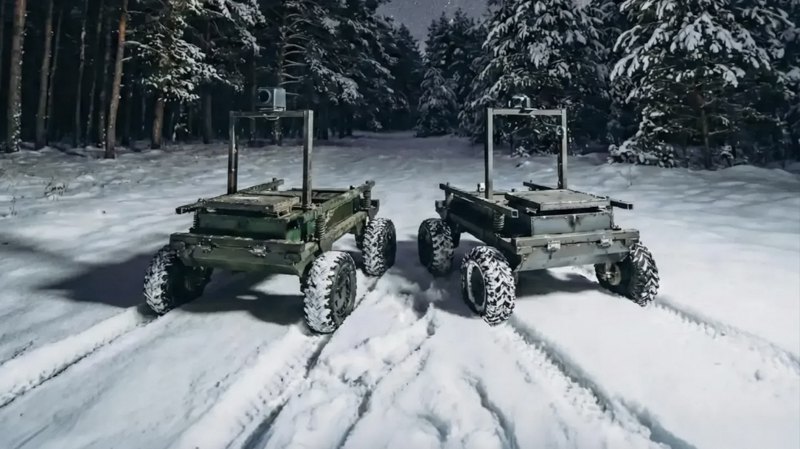
These are NRK (ground robotic complexes). They began to be used much more widely. Our brigade has also expanded their use. First and foremost in logistics: delivering ammunition to firing positions, particularly for artillery. Engineering units have been using NRK for a long time, particularly for remote mining. We completely redesigned the system and adapted it. The system is now operational.
We have established cooperation with the manufacturer: they took our recommendations into account, made changes and began to manufacture complexes taking into account our needs. This applies to both the installation of anti-tank mines and other engineering means of destruction. The solutions are constantly being improved. Previously, the process required the intervention of personnel at the stage of fastening and after stretching, but now everything is as automated as possible.
Let's talk a little more about the NRK. How does your unit use and adapt the NRK, taking into account the specifics of the terrain?
Not all units are actively using NRK yet — most are still undergoing training. Practically every complex we use has been modified in one way or another. There are examples where the intervention is minimal, in particular, Termites. There, the developers only modernised the control system for Starlink, after which the complexes were returned to us.
And do you use them to evacuate the wounded?
No. There is still no stable solution at the required distances that would allow the NRK to travel and return autonomously. There have been cases of their use for mining, about two kilometres from forest areas. This is not yet the front line. In such cases, 3-4 NRKs were destroyed by the enemy. There were also attempts to use them closer to the front line with cover from large-calibre machine guns. Two applications were effective, but one complex was still destroyed.
The problem is with stable communication: Starlink allows remote control, but the signal disappears in the forest. You need to have two or three channels per NRK to guarantee that it will reach its destination. This problem has not yet been solved. We are constantly exchanging experiences with other brigades. Conditions vary: terrain, enemy, so what works in one direction does not always work in another.
The enemy systematically misleads its own command: it records positions that do not exist in order to "confirm" the occupation of the front lines
By the way, how did the enemy's disconnection of Starlink affect your area?
It made their work more difficult in depth, especially with Gerberas and Molniyas. There was chaos on the front line, but they quickly adapted. The pilots worked, but the commanders received reports instead of online images. We also conduct training without an internet connection so as not to rely solely on Starlink.
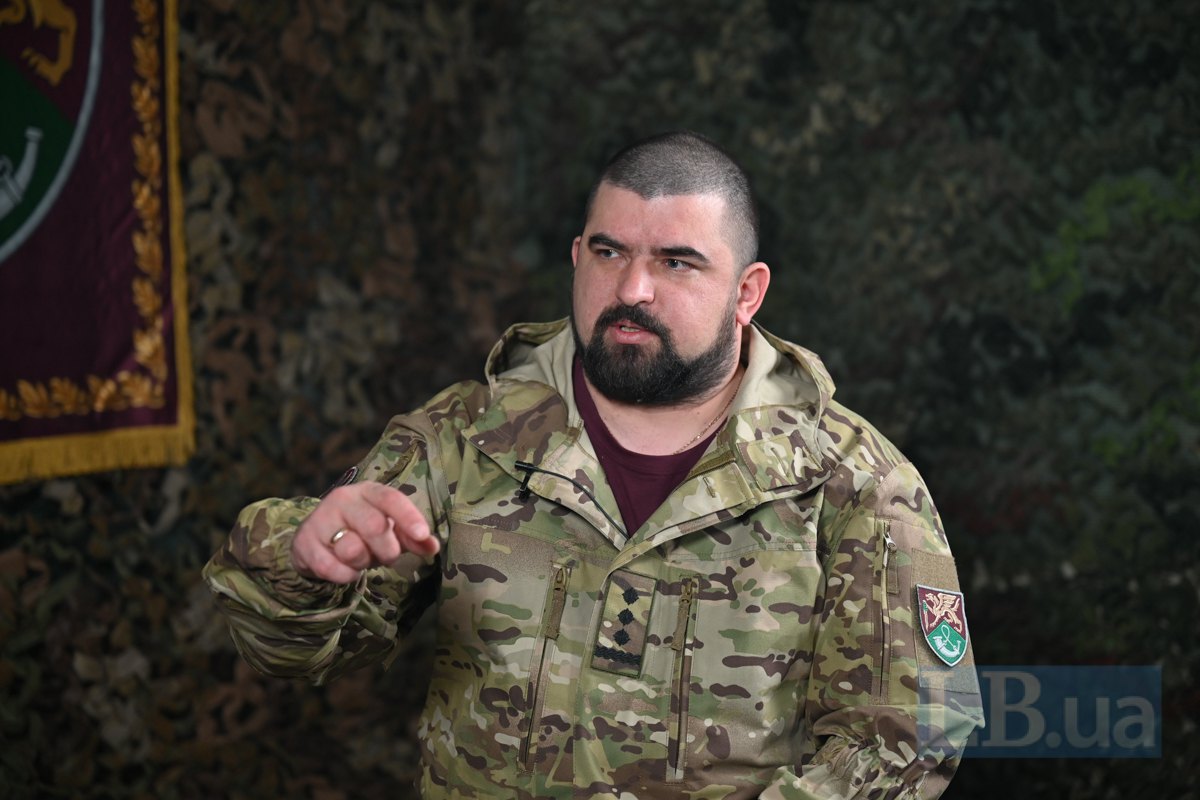
How has the enemy's profile changed recently?
The number of assault groups has decreased, probably due to a lack of personnel rather than a change in tactics. They have also begun to mislead their own command: they mark positions on maps and report that they have been secured, even though they are not actually there. According to intelligence reports, some of the "occupied" positions coincide with ours. Because of this, they are forced to repeat their assaults in order to "confirm" their claims. Many positions exist "on credit".
Why are they doing this?
Perhaps it is internal competition between units: who will be the first to enter a settlement or reach a line. They may even consider the spot where one of their soldiers died to be their territory. There have been cases where the enemy considered a position to be "secured" for several days and supplied it with food and medicine.
At certain moments, this plays into our hands. We use technological and tactical solutions that they are unaware of. There have been situations where the enemy simply entered a position, unaware of our presence, and suffered losses, attributing them to mines or drones.
I understand that you have become more mobile: you quickly work out and change your position.
Here, on the contrary, movement is minimal due to constant enemy surveillance. All our losses — both personnel and positions — are due to enemy fire. They notice changes in cover, work them systematically, and within 24 hours, they fire up to 15-20 Molniyas, plus FPV, methodically destroying everything.
And they don't spare any resources?
No, they don't. They always lose in small arms combat. I can't remember when we last had losses in such battles.
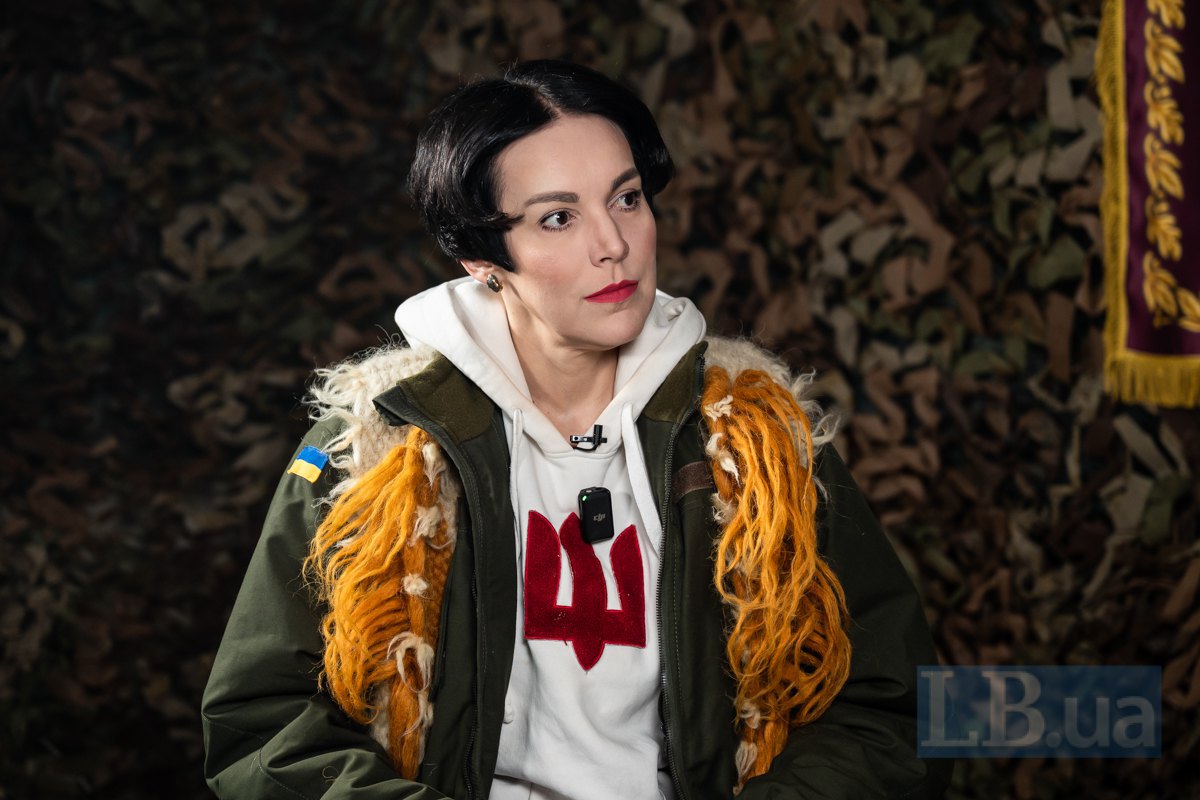
Why?
Because of our training, especially psychological training. After basic military training, servicemen undergo an adaptation course in the unit and moral and psychological training. This helps them understand who they are fighting against and what they are fighting for. As they say, a heart of stone is sometimes more important than weapons.
At present, we do not have sufficient forces and resources for large-scale counteroffensive operations
We have discussed armaments, new types of equipment, the adaptation of resources on the ground, and changes in the enemy's profile. Based on this, what scenario for the development of hostilities in your area do you foresee for 2026?
The enemy's plans will remain unchanged; we are aware of their routes. He will try to accomplish his immediate tasks, testing weak spots and advancing further. I hope that the situation on the front will not change dramatically.
We have repeatedly created conditions for pushing the enemy back to the state border. He lost his offensive capabilities, and military unit commanders were punished for their failures. But at the moment, we do not have enough forces and resources for large-scale counteroffensive actions. Locally, yes, for critically important areas. But in order to liberate everything up to the state border again in this format, we currently lack the forces. If we are going to attack, we must have a numerical advantage. At least 1 to 5 in our favour.
And now?
Well, now we have less. For defence, this is still acceptable. But for offensive operations, it is not enough.
What is the greatest and smallest distance between our front line and theirs in your area? Where are the positions most stretched, where are they least stretched?
The maximum is about one and a half to two kilometres, the minimum depends on the terrain: in forested or urbanised areas, it is 50 metres. Where the area has been destroyed, the enemy cannot gain a foothold. We destroy all known enemy positions, and they do the same.
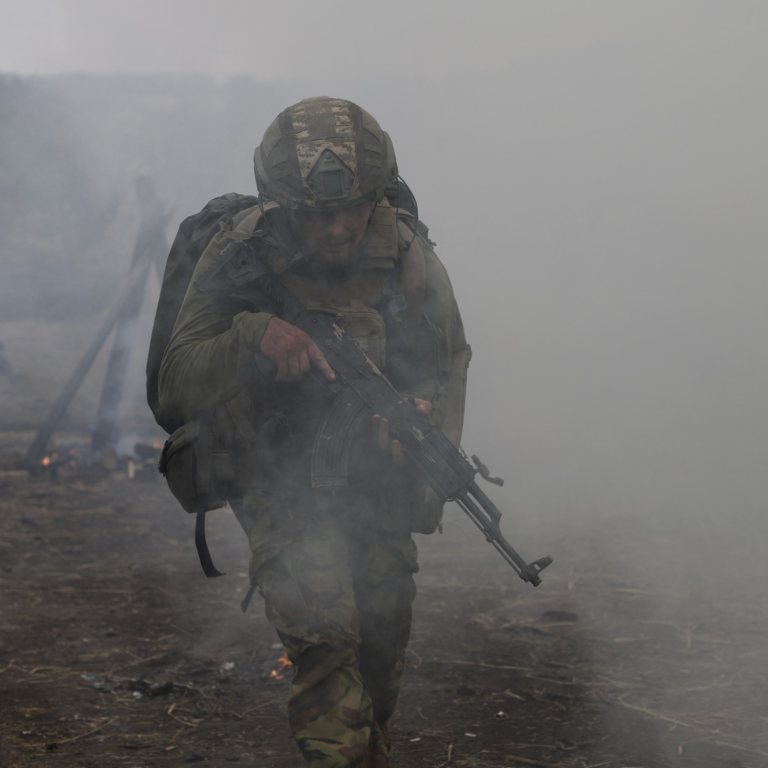
Currently, the TRC is only fulfilling 50-60% of the norm
Human potential. What is the situation within the 71st Brigade: what percentage of personnel comes through recruitment, and what percentage through mobilisation? What needs to happen for you to have more recruits?
Today, our staffing levels allow us to perform our tasks, but of course, we would like to have more. For the most part, our recruitment is done through personnel reception points deployed at the TRC base. There, we conduct selection and form lists for training. But the TRCs do not meet the specified standards. They only fulfil 50-60% of them. We then conduct our own selection process from among them.
Okay, 50-60%. And 40% is recruitment in your unit? That seems like a very large number.
The General Staff determines the number of personnel that the TRCs should send to us for training. Of this number, the TRC actually provides only 50-60%. And recruitment accounts for just over 10%.
The General Staff generally estimates this ratio to be similar: 90% mobilisation and 10% recruitment. Have you studied successful recruitment cases in other brigades? And what are they based on?
The Airborne Forces do not need additional advertising — we are already known for our work and capabilities. But for effective recruitment, we still need more media coverage, advertising, and publicity about the achievements of our servicemen. This requires additional funding, and the military unit does not have such resources at its direct disposal.
Collecting donations... People are struggling right now, and donations have already decreased for basic needs: drones, power banks. Therefore, no one will allocate additional money for recruitment. That is why the problem of recruitment is primarily related to the lack of advertising.
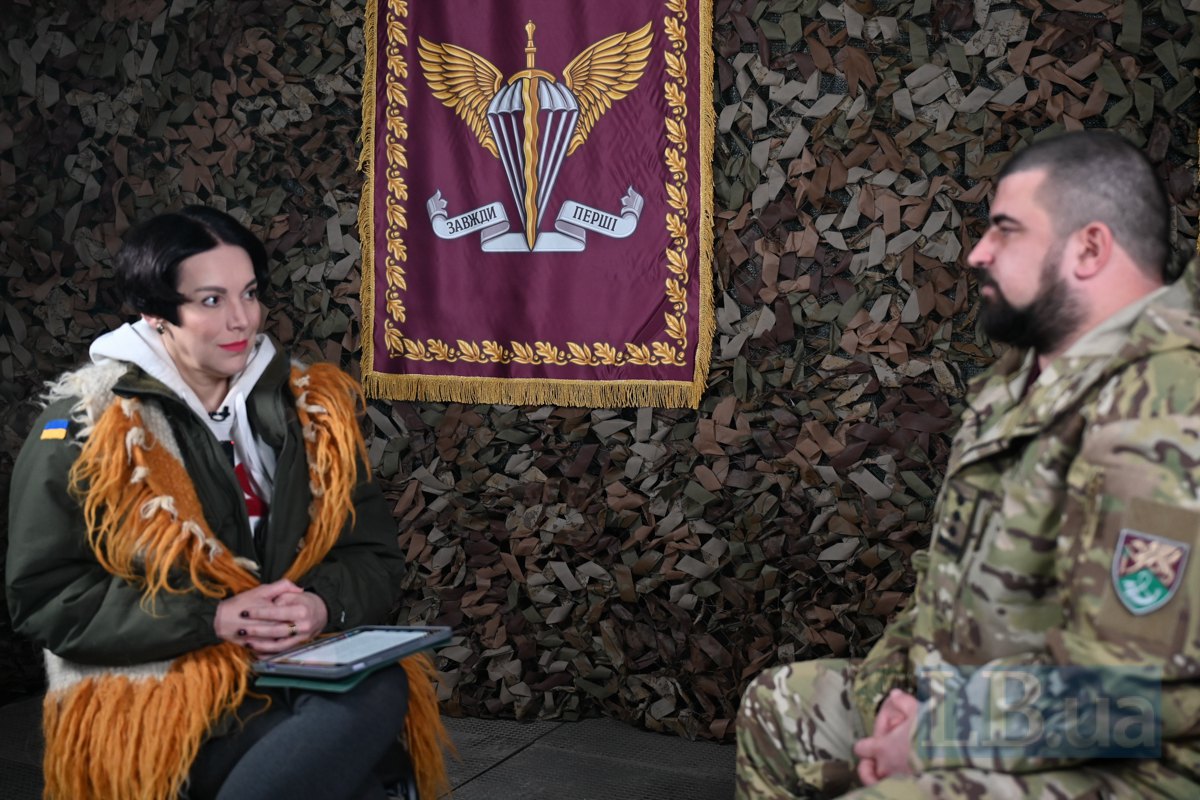
There is a perception that the Airborne Force and ground forces are the last to be replenished.
I cannot confirm this with certainty, as I do not know how many people are joining other military units, even from other branches of the Armed Forces.
As of the beginning of 2026, it is clear that most of those who wanted to join the army have already done so. And now, what motivation can be given to people?
This will not be resolved in a month, or even in three or four months. The bigger problem is that society's attitude towards the military has changed. This is the influence of certain narratives and propaganda, including Russian propaganda.
Perhaps it would be possible to partially demobilise the personnel of the 22nd year, who would return home, and their example would inspire others. So that society focuses not on those who evade service, but on those who actually defend their country. A hero is not someone who "beat up" a man in a shopping centre, but someone who went to defend the state.
To achieve this, it is necessary to cover the activities of the troops more and show less of the negative aspects that occur. The main thing is not to forget about the younger generation: children, schools, vocational colleges. They need to be patriotic, properly educated, so that they understand and remember who our enemy is.
In any case, I do not think that the war will end this year. Even if a certain stage of the confrontation ends, the resistance against Russia will continue for a long time, perhaps forever. And our younger generation must be clearly aware of this.
Using the example of the 71st, how do you maintain this fighting spirit?
Only a defeated enemy is inspiring. To prevent burnout, leave is granted: 20-30% of a unit can take regular leave if it does not affect the performance of combat tasks. There is also a system of sending people to rest in sanatoriums and resorts, for example, in the Carpathians.
The civilian environment, especially the family, has a significant influence on the decision to evade service
You said that public sentiment has changed. Can you give examples, perhaps from everyday life, where you clearly felt that two years ago things were different?
In 2022-2023, there were many cases that showed that people perceived the military in a completely different way. For example, in the Kyiv Region, when we were carrying out a task, a local old man in uniform came up to us and said, "I live two houses away, I see that you are having a hard time, and I decided to help." And right during the task, 17 more men were drafted from this very village in the first week. Unfortunately, there are no such examples now.
There are only negative examples: a soldier's parents live in the frontline zone and were forced to leave. They are moving to the Khmelnytskyy Region, looking for housing, ready to buy it, but at the last moment, everyone refuses, saying that perhaps they didn't want it enough or set the price too low. They still haven't found anything.
What would you say to people who are evading, who are panicking about mobilisation, who are panicking about going to the army? The war is going on, and everyone will have to fight. It makes sense that it's better to choose a place for yourself and get ready than to sit and wait. But there are really a lot of people like that.
Yes, there are many. Most likely, they are more afraid of the unknown. And this applies, first of all, to the stage of joining a unit, because they are afraid of military service itself. Although certain work and explanations are carried out at all stages. But still, fear makes them evade. The family has the greatest influence: parents, wives. There have been cases where people have even tried to kidnap military personnel.
Have you had any such cases?
I have. In our unit, but during the transfer to the military unit. The soldier himself did not even know about it. They just told him, "Get out," and then they tried to take him away or lead him somewhere. All this is instigated by the civilian population. And the second is AWOL. There are cases of soldiers not returning from leave or medical treatment, which is also influenced by the family and environment in which the soldier lives.
It's a vicious circle, because desertion is often caused by people not being given leave or opportunities...
That doesn't happen. In our military units, leave is never refused.
Well, that's in your case.
It is clear that difficulties can arise due to understaffing and prolonged stays in positions. There are difficulties in some positions. Due to the saturation of drones, weakened logistics, and weather conditions, it is sometimes difficult to carry out rotations. But if the rotation took place and someone was denied leave or medical treatment... We don't have that, thank God.
They probably don't quite understand that they can come to any recruitment centre and actually choose a position for themselves. In our military units, this is strictly controlled. That is, he comes after basic general military training, where he acquires the basic skills of an infantryman: shooting, basic knowledge. Then he is sent to the position he has chosen: driver, pilot, electronic warfare operator, assault trooper or sniper.
What is your percentage of desertion, specifically in your case?
I honestly can't say for sure. Percentage relative to what? Replenishment?
If we take those who have completed training and have reached the point of performing their duties, perhaps 10 per cent.
You have been at war since 2014. Tell us about your journey and why you decided to join the military.
Because it is a man's job, which attracted me even back then. I don't have any military personnel in my family, they are all workers, so to speak. I have been at war since 2014, initially as a machine gun platoon commander. I carried out stabilisation tasks in the Berdyansk area, escorting convoys. After regrouping, as part of the 79th Brigade, I carried out tasks to cover the state border in the Donetsk and Luhansk Regions.
Then there were different fronts, different tasks: sometimes reserves, sometimes defence. After 2016, assault operations were localised and mostly defensive in nature. In the 79th Brigade, I rose to the rank of deputy chief of staff.
After that, I went to study at the Chernyahovskyy National Defence University. I was at university when the large-scale invasion began. On the 25th [of February 2022], I received a call and went to the command to form a battalion tactical group. On 1 March, we were already carrying out tasks directly in the Kyiv Region — preventing the enemy from advancing.
One evening, the commander of the 46th Brigade came to me and informed me that I was part of the 46th Brigade. There, I was already performing tasks as a battalion commander, in particular in operations to liberate the Kherson Region, Donbas and other hot spots. After completing my tasks, I was appointed chief of staff of the 71st Separate Jaeger Brigade, where I am now.
You have been through almost all of the main hot spots. Looking back to the Sumy Region, what has been the most difficult thing for you personally since 2022?
Last winter was very difficult for me. After the Kharkiv Region, where we stopped the enemy's advance, we were moved to the Vuhledar-Kurakhove direction. The fighting there was extremely fierce. For the first time, we encountered the same Rubicon. It had already appeared in the Kharkiv Region, but only sporadically, nothing critical. At the beginning of 2025, however, it was already effectively affecting logistics, which became a new challenge.
It was necessary to resolve the issue of delivering equipment to rear units and suppressing enemy firing points. We are working effectively on the take-off points of the brigades and regiments facing us, but it is more difficult with Rubicon — it is located even deeper.
How far is Rubicon from our positions?
I can't say for sure, but more than 50 km. Perhaps even 30-40 km from the state border. They are not on our territory.
What is the enemy's motivation for fighting us now?
First of all, fear. Before going on a mission, they are lured with money and payments. They mobilise the worst segments of the population: those who have debts, criminal records or have not realised their potential. They are lured into the military unit, given minimal training, and sent on a mission. But if they come back, they have even less chance of survival. This is their standard practice.
The war will not end in 2026; it cannot be resolved purely by military means
General political bloc. In fact, active negotiations are currently underway between Russia, Ukraine, the United States and Europe. It is clear that, like every citizen, you are following them. What are your personal expectations and how does this affect the motivation of your fighters?
I am confident that no decision will be made that contradicts the expectations of our society and the military. These negotiations are a political backdrop that we cannot ignore because they are part of the process. On what terms? I do not think they will be unfavourable for us.
Why are you so optimistic?
Because what was the point of all this if we are now ready to give something away? We have already lost a lot to give anything else away. But Russia is not ready for this either. This is their tactic: to demand more than is necessary in order to get something. I think the negotiations are being conducted in this vein.
As for the motivation of the troops, it is hardly noticeable at the front. The enemy is ahead, we know our job — we must destroy them. The rest of the issues are the responsibility of officials. Of course, we are following the negotiations, but for the military, this does not affect the performance of their tasks.
One of Russia's key conditions is to surrender the territories of Donbas, even those where they are not currently present. Can you imagine Ukraine conceding part of its territory for the sake of lasting peace?
I don't think so.
If this does happen, one of the main threats to us is the loss of the so-called "belt of fortresses" in Donetsk Region. How critical is this from a military point of view?
In my experience, every fortress is important: even if it cannot be held, the enemy will suffer significant losses. Entire brigades were destroyed there. We also suffered losses, but the ratio is significantly in our favour. We must fight intelligently for every piece of land and destroy as much of the enemy's manpower as possible. They have a large human reserve, but this does not go unnoticed.
You said that you do not think the war will end in 2026?
I don't think so.
To achieve victory here, we need more than just the Armed Forces of Ukraine. It requires a whole range of efforts: diplomats, foreign intelligence forces and resources. The Armed Forces of Ukraine are doing everything possible and impossible that is required of us on the front line. But that is not enough to win the war. It is necessary to completely destabilise the political and military-political regime of the aggressor state.
What should a just peace look like, and is it realistic for Ukraine to regain all its territories and the borders of 1991?
I think it's realistic, but again, it won't happen tomorrow, it won't happen in a year. We won't be able to resolve this by force in the near future. But it will be impossible to negotiate with this regime to return this territory, so it must be changed.
Do you hope to return to your native Crimea?
Of course. Let's hope that this will happen as soon as possible.