






What are your impressions of this year’s conference? What do you consider critical among what you have heard?
It is becoming too crowded here. I often cite the example of Hillary Clinton. I have great respect for her; although she is no longer Secretary of State, she travels with a delegation of 14–15 people and a motorcade of six cars. From a logistical perspective, it is simply excessive.
In fact, she made a rather forceful statement in Munich. She described the position of current US President Donald Trump on Ukraine in the war against Russia as “shameful”. What is your view of that? How do you assess the political position of Donald Trump’s administration in general?
I do not know whether you were here last year, but after Mr Vance’s speech, which many perceived as offensive to Europe, there was considerable concern. There was almost a sense of despondency — a feeling that transatlantic relations were beginning to unravel.
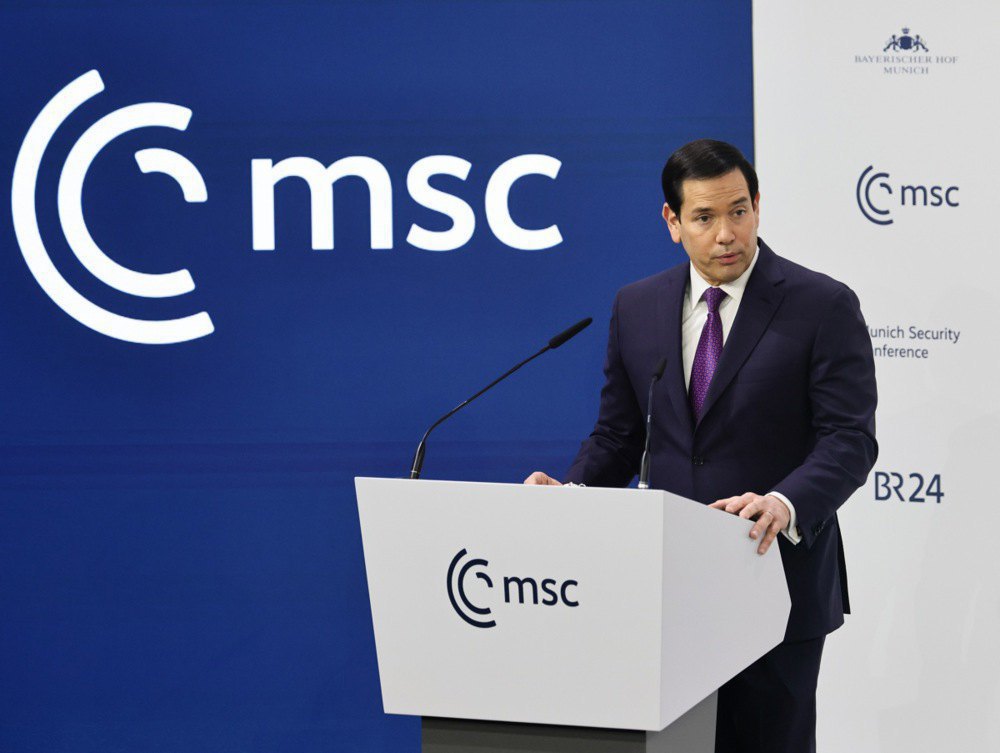
In my view, the principal — or at least strategic — objective of this year’s Munich Security Conference was to attempt to restore transatlantic relations. The speech delivered by Secretary of State Rubio was diplomatically very skilful. He said precisely what the audience wanted to hear. He received a standing ovation, which is exceptionally rare in Munich. There was a palpable sense of relief in the hall. However, if one looks more closely — if one reads between the lines — it remains far from certain whether we will succeed in forging this new partnership and, as he put it, “reviving Western civilisation”.
He appealed too much to the past, did he not?
To a considerable extent, he appealed to his own political history.
It sounds rather similar to what we hear from Russian diplomacy.
Yes. Yet, when one considers the broader picture, there is an impression — figuratively speaking — that they wish to “market” our market. That approach will not succeed in Europe. We Europeans do not wish to adopt a logic of total commodification. Nor, I believe, do we want American technology billionaires dictating what we should think or read. There is a clear awareness of this across Europe.
One of the central issues, in fact, concerns their ambitions in the digital sphere. They seek to control and dominate it; they demand complete freedom of action. In Europe, however, we are increasingly conscious that a different balance is required. The argument we hear focuses on innovation, yet at the same time there is resistance when Europe attempts to regulate the digital space — for example, to protect children from the influence of social networks or to combat hate speech and similar phenomena. Here, in my view, lies a serious divergence between Europe and the United States.
To summarise briefly: from a diplomatic standpoint, what Secretary of State Rubio said was highly competent. However, in substantive terms, I am not convinced that we have truly identified a workable formula for restoring transatlantic relations — certainly not in the form they once took. At the same time, it is important for your country that the transatlantic alliance does not disintegrate. In my assessment, that is not occurring at present. It is not falling apart.
Marco Rubio was highly critical of international organisations and stated quite openly that a rules-based order was a naïve idea. As a former head of the OSCE, how do you view this?
Yes, once again, he expressed himself diplomatically, but he did use the word “naïve” in relation to several aspects of what he termed the “old order”. I would firmly disagree with him, particularly on the question of respect for international law. Great powers tend to be highly selective: when international law serves their interests, they support it; when it does not, it is dismissed as a naïve or outdated concept. International law, however, remains international law — full stop. It takes precedence over national law. For that reason, I find this line of argument very difficult to accept.
As for international organisations, including the Organization for Security and Co-operation in Europe, which I headed for many years, it was largely the Americans who steered the organisation into a sphere that is undoubtedly important, but insufficient for addressing pan-European security issues in their entirety. The United States insisted that the OSCE focus primarily on the human dimension — human rights, the rule of law and democratic institutions — and serve as a platform for documenting developments east of Vienna.
Now, however, there are complaints that the OSCE is not a forum in which substantive dialogue with Russia takes place, or where meaningful security decisions are made. Yet the present state of affairs is, to a considerable extent, the result of earlier choices.
If there is genuine interest in restoring the OSCE’s relevance, it must be entrusted with responsibilities of real substance. For instance, in the event of a ceasefire, monitoring would be essential. The OSCE — possibly in cooperation with the United Nations — would be well suited to such a task, given its expertise and inclusiveness. However, this would require a clear mandate from the parties involved and from any mediator. Under those conditions, the OSCE could once again assume a central role.
In short, my response to Secretary Rubio would be this: if one wishes international organisations to play a meaningful role, they must be given a mandate and actively utilised, rather than marginalised. In practice, major powers — not only the United States, but others as well — often pursue a transactional approach that sidelines international organisations. They then criticise those very organisations for their ineffectiveness.
There was another significant point in the US Secretary of State’s speech: the assertion that the UN is failing to respond adequately to contemporary security challenges. Criticism of the UN is frequently voiced in Ukrainian discourse as well — particularly with regard to the Security Council, where the aggressor state holds permanent membership. Do you agree that the UN requires reform?
I would fully support calls to reform the United Nations Security Council. In its current configuration, the Security Council is essentially a relic of the post-Second World War order. The veto power should, in my view, be limited; the composition should be revised accordingly, or at the very least the veto mechanism should be constrained.
At the same time, it is evident that the five permanent members are not particularly inclined to embrace such changes.
Thus, reform of the Security Council is both necessary and urgent. However, one must also recognise that for any international organisation, it becomes something of a “mission impossible” when major powers are locked in acute confrontation. In circumstances of strategic rivalry — or even direct or proxy warfare between major powers — international organisations can only manage, mitigate and attempt to de-escalate tensions to a limited extent. Ultimately, everything depends on the political will of the major powers: whether they choose to end hostilities or to reduce strategic competition. If such will is absent, international organisations inevitably feel the consequences.
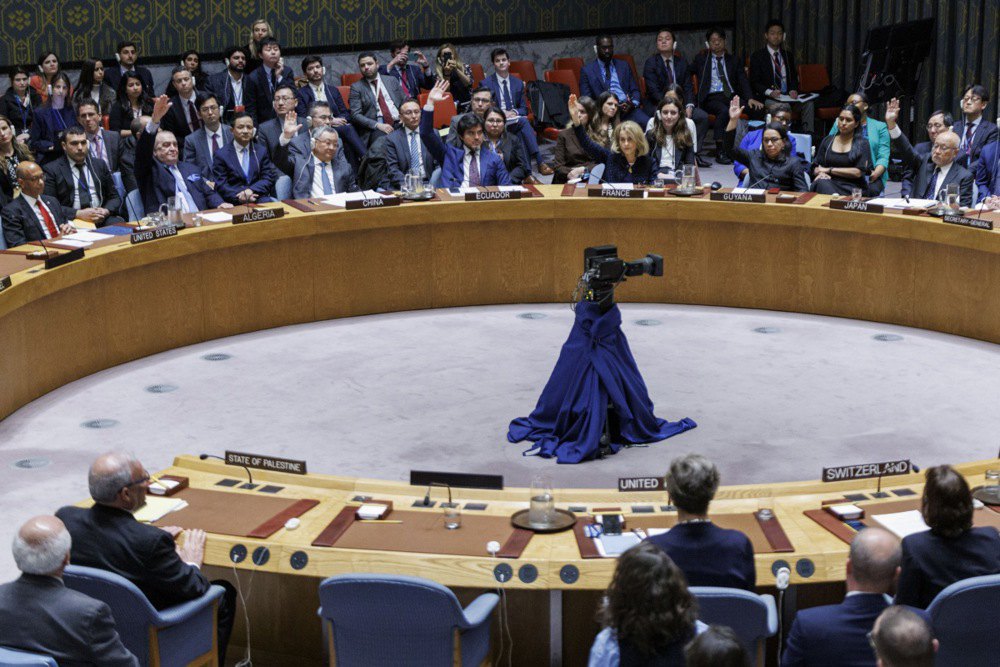
Perhaps this is, in a sense, the natural environment of international organisations, as they cannot avoid being closely bound to the interests of major powers.
After all, this is precisely what realist theory suggests. Based on 35 years of diplomatic and professional experience, I can say that I have not lost my commitment to, or faith in, international organisations. Nevertheless, I am fully aware of their limitations. When major powers are unwilling to cooperate, the leadership of an international organisation faces formidable obstacles.
The OSCE has been at the centre of mediating numerous conflicts. How do you assess the current approach of the American administration to resolving the war between Russia and Ukraine? How do you view these steps — the manner of engagement with Russia and Ukraine, and the pressure placed on Ukraine rather than on Russia as the aggressor? What is your overall impression of this process?
Let us return to 2014. After President Yanukovych left Kyiv, the Organisation for Security and Co-operation in Europe was tasked with managing the conflict and the growing tensions, as well as introducing and implementing de-escalation measures. I am referring here to developments within the country, particularly in Donbas — not Crimea. Crimea was, of course, mentioned daily within the OSCE; the illegal annexation was consistently condemned. However, the organisation never received a mandate to address that conflict directly. This brings us back to my earlier point.
Had the Americans and the Russians demonstrated the political will at the time to address Crimea, I believe there might have been a way — perhaps not to resolve the issue entirely, but at least to manage it. That will was absent. The organisation lacked the necessary mandate. Its task was to prevent further escalation across the country, and the focus increasingly shifted to Donbas.
For a certain period, in terms of conflict management and the prevention of escalation, the OSCE was relatively successful. Where it was less successful was in achieving conflict resolution. There were the Minsk agreements, which I understand are now regarded very negatively in Ukraine.
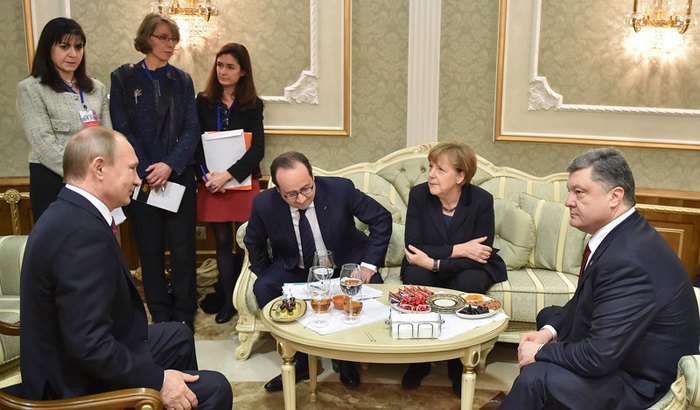
Indeed, the Minsk agreements have long been viewed ambiguously in Ukraine.
Yes. At the time, we recognised that there was no alternative path forward, yet the agreements were consistently criticised. I recall public opinion surveys conducted in Ukraine in 2015, 2016 and 2017, which indicated that perceptions were considerably less negative than they are today. There was never enthusiasm for the agreements, particularly in western Ukraine, but they were not regarded as wholly detrimental. In my view, they had the potential to reduce tensions in the medium term — perhaps not to resolve the root causes, but to delay escalation for a significant period.
Ultimately, that did not succeed. I regret this. The OSCE’s role remained limited to conflict management in the narrow sense of preventing escalation. When Russia began amassing troops around your country, the OSCE swiftly condemned these actions — understandably, as they constituted a violation of the organisation’s fundamental principles. The threat or use of force is clearly incompatible with those principles.
At the same time, the OSCE was no longer in a position to facilitate meaningful dialogue. The final attempts to prevent further escalation did not take place within the OSCE framework. I am not suggesting that this would necessarily have prevented the war. If President Putin had resolved to attack Ukraine, he would have done so. Nevertheless, I regret that no serious efforts were undertaken within the OSCE to reduce tensions at that critical stage.
However, in my view, we must now look ahead. We are ostensibly moving towards a settlement of the conflict, towards a ceasefire. Yet I remain uncertain whether we are genuinely advancing in that direction and whether truly substantive negotiations are under way. Talks are expected to continue next week in Geneva. Experts are working on the technical details, and, as far as I am aware, draft texts are also being prepared.
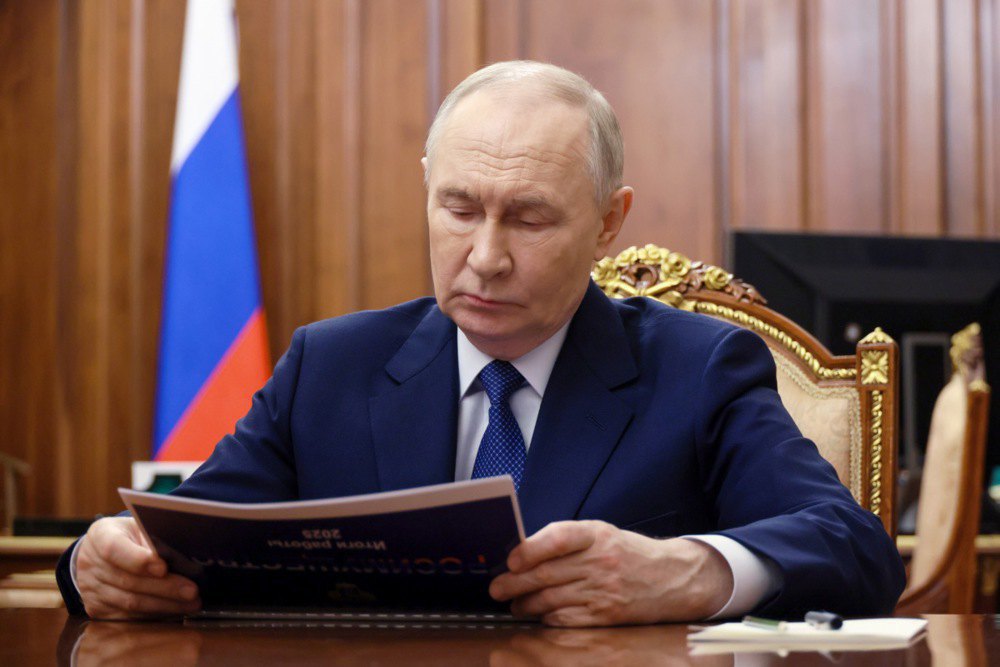
In the final stage, it will become clear whether President Putin is prepared to compromise — provided that the Americans are willing to offer Ukraine the security guarantees necessary for it to accept a settlement. As an expert in conflict management and resolution, I find certain elements of the current process encouraging. That said, I cannot conclude that it will ultimately succeed.
I sincerely hope that it will. I see what this war is doing to your country and to Europe as a whole, and I hope it comes to an end. Nevertheless, there remain too many unresolved questions. It is not yet evident whether the political will to compromise exists at the end of this path. And any settlement will, inevitably, be unpleasant.
Any settlement?
Yes.
So Ukraine will be compelled to accept peace at any cost?
No, certainly not.
How, then, can one reconcile the notion of a just peace with an imperfect settlement?
I am not speaking of a bad settlement — a bad settlement should not be accepted. I mean that, in the end, both sides will have to accept compromises that are difficult and uncomfortable. If, however, there are credible guarantees that Russia will not attack again for, let us say, the next three decades; if Ukraine does not formally relinquish any territory; and if the international community commits to supporting the reconstruction of your country, then such an outcome could constitute a viable foundation.
Read alsoAnne Applebaum: Peace talks have failed as Russia remains committed to its imperial ambitions
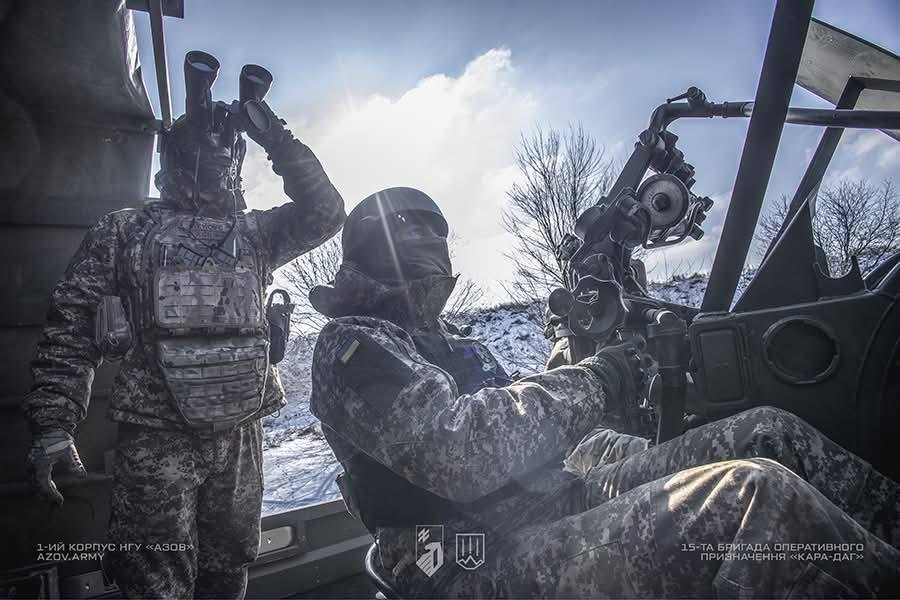
Based on your experience of numerous conflicts and settlements, how many decades do you believe might realistically pass before another round of aggression?
Let me put it this way. Ukraine now possesses the strongest armed forces in Europe after Russia — perhaps among the strongest in the world, excluding the United States. Comparisons with America are not necessary, but when I contrast the Ukrainian army of today with what I observed in 2013–2014, the difference is striking. Ultimately, Russia failed to defeat you. Many predicted that Ukraine would fall within three days — not I, but many others did. That did not happen.
You say you did not believe that Ukraine would fall?
No, I did not — because I saw how you were strengthening your armed forces.
So you observed this progress year after year?
Yes.
And this progress had already begun before 2022?
Yes, absolutely. Perhaps not at the current pace — the war has accelerated development dramatically — but the process was under way long before. One could see it clearly in Donbas. Believe me.
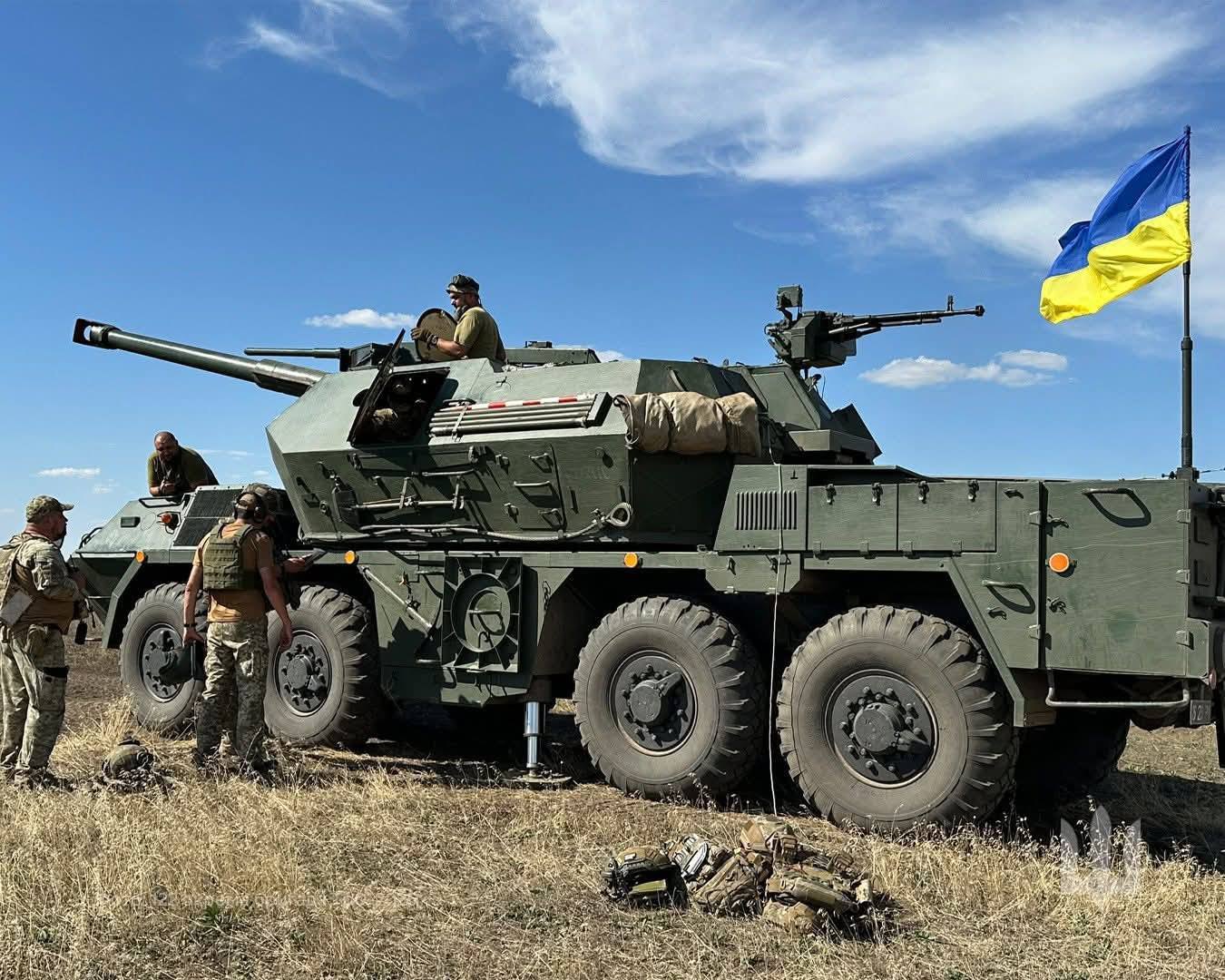
To return to your question: I am convinced that Ukraine must remain strong. It must continue to develop its national defence industry. And it requires — as your President has consistently argued — robust security guarantees from Europe.
In my assessment, the Europeans have indeed raised their level of engagement. Compared with a year and a half ago, the shift is striking. Nevertheless, I understand that Ukraine also needs firm guarantees from the United States. On this matter, however, I hear mixed signals. Some voices suggest that such guarantees might be offered only after peace has been achieved. Yet those making this argument surely understand that Ukraine requires these assurances now — not once a settlement has already been concluded.