






How do you assess the US administration’s position on the negotiation process between Ukraine and Russia, and what are your expectations for the next round?
The US administration’s position appears to be that it seeks to reach a comprehensive peace agreement as quickly as possible, and it seems to have set June as a deadline.
Why this particular deadline?
I believe it is primarily because they regard deadlines as a tool to compel action. President Donald Trump has previously stated that he wanted to end the war in one day, then within 100 days, then in six months, then by Christmas, then by Easter, and now by June. In other words, they are attempting to use deadlines to accelerate progress.
With regard to Ukraine or Russia?
It is evident that the US administration is not exerting pressure on Russia — yet that is precisely what is required. If one seeks movement towards a ceasefire or any meaningful progress, pressure must be applied to Russia. This is not currently taking place.
Nor do I see any additional pressure being placed on Ukraine — unless I am mistaken. Ukraine has already undertaken significant efforts. It has put forward numerous proposals and, together with the United States and its European allies, has developed a 20-point plan. In other words, the groundwork has already been laid.
The present US approach appears to consist of setting a deadline and urging the parties to reach an agreement independently. However, I see no realistic prospects for such an outcome.
It seems that the Americans are opposed to the participation of Europeans at the negotiating table, do you not think?
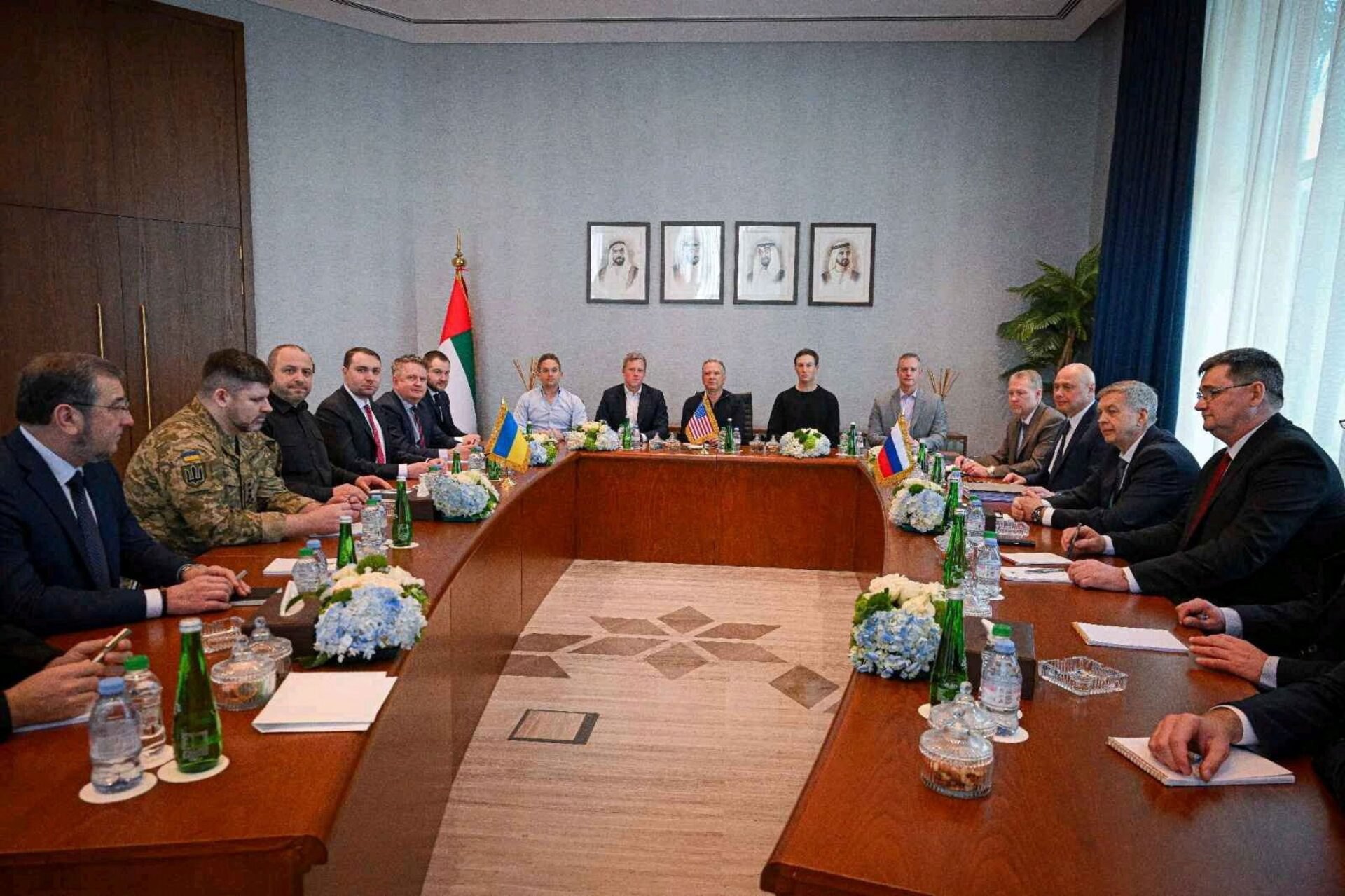
I am not certain that there is a single, specific “table”. In reality, all parties are in communication. We observed a meeting between the United States and Russia, during which a 28-point plan was prepared. Subsequently, there was a meeting involving the United States, Europe and Ukraine, where the document was reviewed and a 20-point plan was developed. Numerous consultations have also taken place between the United States and Europe, particularly concerning the so-called “coalition of the willing” and US security guarantees.
Ukraine is seeking to coordinate closely with its European partners.
Yes, so everyone is talking to everyone.
Indeed.
Are there any options for the Russian Federation to abandon its declared goals?
Only under sustained pressure — both financial and military — to the extent that Russia would no longer be able to continue the war as it is doing at present.
Are they not feeling this pressure at the moment?
Precisely. That is why they are unlikely to alter their position. However, if pressure were increased, I believe it would be possible to move closer to a ceasefire.
In Munich, there were opinions that Russia is exploiting the negotiation process to prolong discussions and use them to its own advantage. Do you share this view, or do you have a different assessment of Russia’s negotiating style?
The Russians are not engaging in negotiations in good faith. They are using the process as a means of distracting others with dialogue while continuing the war.
If we assume that pressure on Russia becomes sufficient and that it, too, requires a ceasefire?
In that case, negotiations could potentially become an effective instrument to achieve such an outcome. However, that is not the current situation.
Do you see any threats or tangible risks of a larger-scale war against Ukraine and Europe?
At present, Russia faces considerable difficulty in sustaining its war in Ukraine. Nevertheless, its intention is to continue expanding its military capabilities. It will seek opportunities in other parts of Europe where it may claim that certain territories “should belong to Russia”.
Therefore, it is essential, first, to prevent Russia from strengthening these capabilities; second, to secure a ceasefire in Ukraine; and third, to enhance the defensive capacities of both Ukraine and Europe in order to deter potential future aggression.
Read alsoGeneral Ben Hodges: Any agreement between Washington and Moscow is meaningless without Ukraine’s consent