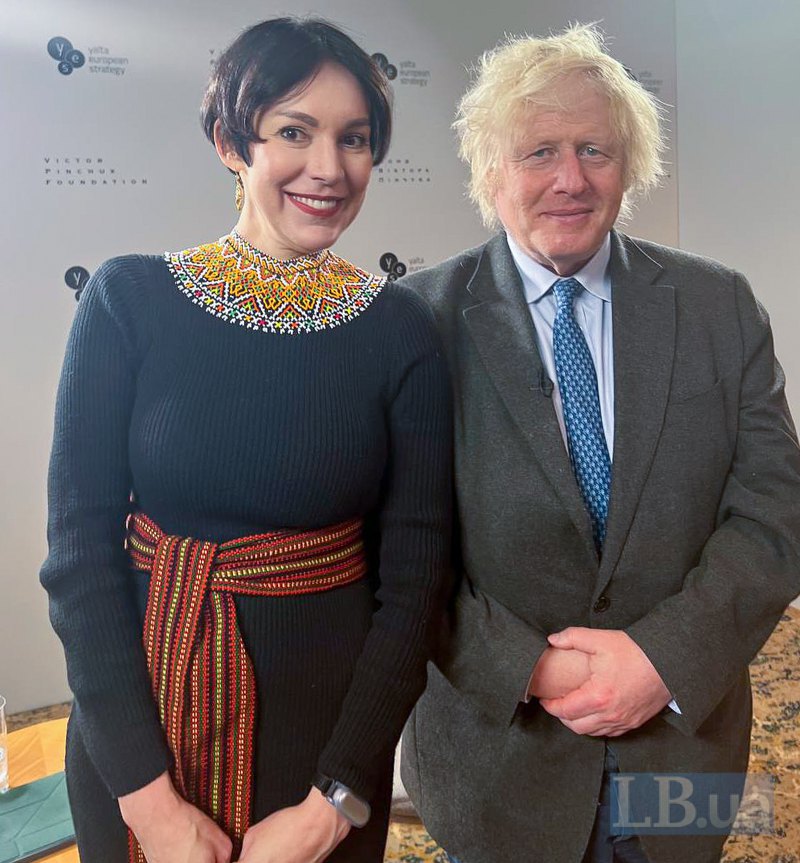





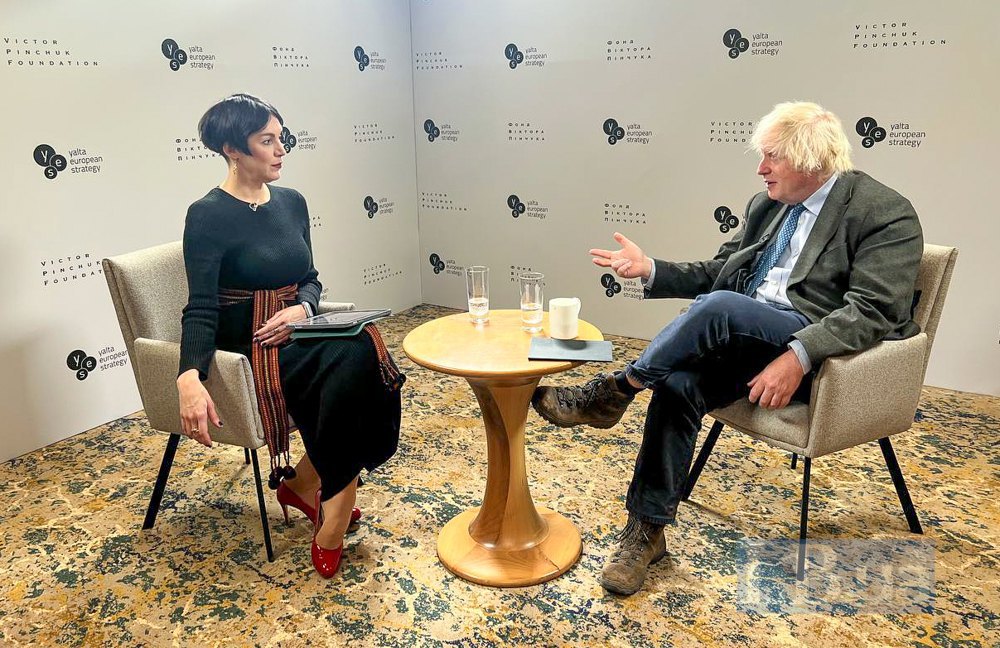
Let us begin with 2022. There is a conspiracy theory that it was after your visit to Kyiv in early 2022, following your meeting with Volodymyr Zelenskyy, that the Ukrainian authorities refused to capitulate, as demanded by Russia. Both you and President Zelenskyy have denied this. Was there a chance to stop the war in 2022? Perhaps there were options in 2023 or 2024?
No, this is all nonsense. It is a Kremlin fabrication.
Nonsense — are you certain? There were many voices suggesting that opportunities arose periodically, but that they were unacceptable to us.
Let me tell you what happened. I remember it very clearly. I was very supportive of Ukraine. I visited the country several times before becoming Prime Minister. I was impressed by it. I always believed that if Putin invaded, he would be taken aback, because I had spoken to Ukrainians and knew that they would fight. I could tell him it would be a grave mistake.
When Putin began issuing his threats, if you recall, we sent weapons to Ukraine that arrived shortly before the invasion, in January — NLAW anti-tank missiles, which proved highly effective, as did the American Javelins. But without doubt, the Ukrainians achieved the impossible. They were extraordinary.
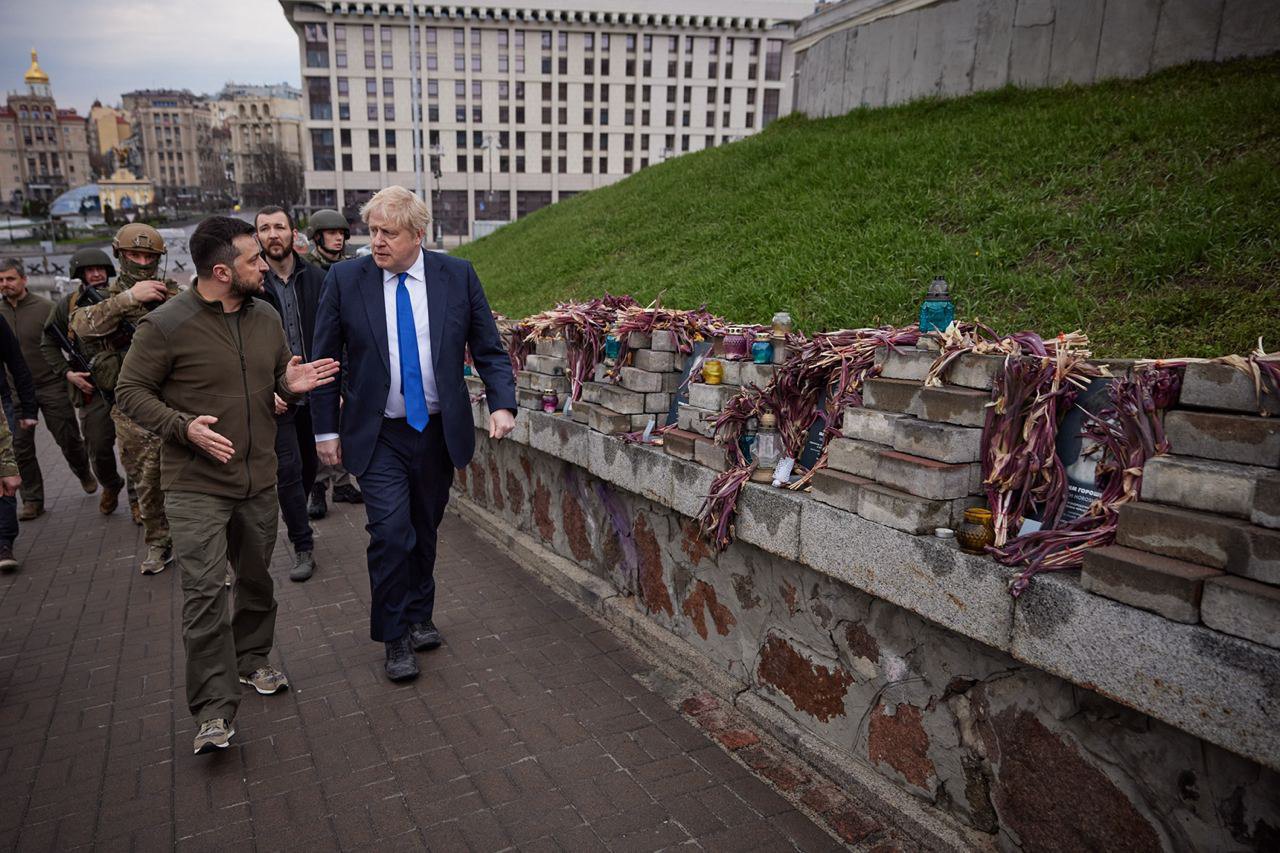
So, in April 2022, I came simply to say that millions of people in my country believed Ukraine was an extraordinary nation and wished to support it. And all I said to Volodymyr Zelenskyy — and he will confirm this publicly — was: “I cannot be more Ukrainian than the Ukrainians themselves. It is for you to decide what to do. But if you continue to fight and wish to remain a free country, we will support you to the end.” That was all.
So, during these four years, was there no opportunity to stop the war?
I do not see when such an opportunity existed. Even now, we are in so-called negotiations — in the UAE, in Geneva, or elsewhere. We know what the Ukrainians are saying, what the Americans are saying and what the Europeans are saying — their positions are broadly aligned. But what are the Russians saying? Nothing. Where is their willingness to reach an agreement? We see no commitment from Russia to peace. Putin will simply continue. Therefore, my argument is that the West must increase pressure on Putin. Now, in the fifth year of the war, that pressure must be intensified radically.
So compromise is impossible?
I cannot be more Ukrainian than Ukraine itself.
Yes, you have already said that.
If Ukrainians wish to reach an agreement and consent to cede some territory, that is their sovereign right. I understand why such a step would be politically extremely difficult. But where is the guarantee that, even if Ukraine accepts this humiliation and relinquishes part of Donbas, which it has defended since 2014, Putin will stop?
You do not see such evidence?
I do not. Do you?
I do not see it either, but I am asking you. President Zelenskyy also said today that there is no evidence of Russia’s willingness to stop. Looking back over these four years of war, what do you consider the greatest mistakes — on our part and on the part of our Western partners?
I believe the biggest mistake was in 2008, when Ukraine was not admitted to NATO. Ukraine should have joined NATO, and it should have happened much earlier. If Ukraine had been in NATO, Putin would not have invaded in 2014.
That is not necessarily a given. We know that he has designs on Latvia, Estonia and Lithuania — all NATO members with security guarantees.
I am expressing my opinion. I believe NATO provides clarity and simplicity. NATO states that this territory is protected by 32 countries under the “umbrella” of the United States — the largest military alliance in history. If you attack this territory, you go to war with all 32 countries, including the United States.
We have seen examples of the application of NATO’s Article 5 in relation to Romania, Poland and other countries near Ukraine’s border. These NATO member states have been subjected to hybrid attacks. And what has happened? Nothing.
But show me an example of a NATO country being attacked in the past 80 years.
That is precisely why I say Ukraine should have been part of NATO. It provides clarity for a border state such as Ukraine. The problem is fundamental uncertainty.
On the one hand, Ukraine wants to be in NATO. On the other hand, we must clearly understand that this is not an absolute guarantee.
I think it is a mistake when European countries and the US say that Ukraine's membership in NATO is no longer being considered. This is a huge mistake.
You asked what the West did wrong. I think the biggest mistake before 2014 was that Ukraine's place was not clearly defined. And Putin took advantage of this uncertainty.
What about armaments? Don't you think the West is losing this race, fearing "provocation" from Russia, while Russia is expanding its aggression? On the one hand, there is the position of "not provoking," and on the other, there are big questions about arming the Ukrainian army.
Yes. I think much more should have been done at the beginning. The West's main mistake over the past four years has been that it provided assistance too slowly, too little, and too late.
Look at the tanks, the F-16s — we gave them in the end, but with a delay. The main lesson is that you can't procrastinate. For example, with the Tomahawks — Ukraine needs them now to destroy Russian factories. Do it immediately.
In February this year, you said that the United Kingdom and its allies should "immediately" send troops to "peaceful parts of Ukraine" to "flip the switch in Putin's head." You emphasised that this was not about participating in the war, but about a symbolic and political presence.
I have two questions. First, what would make Putin "flip the switch"?
And would NATO leaders dare to take such a step, given that their main priority for the past four years has been to avoid direct confrontation with Russia?
I think that in order to change something in his mind, we need to give weapons and strengthen sanctions. The EU still receives 12% of its oil and gas from Russia. Last year, that amounted to a billion dollars a month. Sanctions need to be strengthened. Ukraine should be given $300 billion in frozen Russian assets.
And fourth, confiscate Russia's entire "shadow fleet," the ships (perhaps 200-250 vessels) that transport its oil. Europe could do that.
If we do all this together — money, weapons, ships, sanctions, even the presence of troops — then Putin will think, "They are serious." And then he will start looking for a compromise. He doesn't think that way now.
How long will it take for these actions to produce results?
This can be done right now. And the results will come fairly quickly.
Quite quickly — four months, six? A year?
Yes. But I agree that the problem is how to do it. Because right now, Putin has no incentive to end the war.
At the beginning of his peacekeeping efforts, President Trump insisted that it was necessary to first stop the fighting and only then negotiate the terms of peace. After several rounds of talks with Vladimir Putin, the US president agreed with his logic that hostilities would cease only after a comprehensive agreement had been reached. Which sequence seems more logical to you personally: first an agreement, then peace, or first a ceasefire, then an agreement?
I think there will be no ceasefire without strong pressure.
How do you assess Trump's peace efforts in general?
He has taken some good steps — he transferred Javelin missiles to Ukraine and was the first to detain a ship flying the Russian flag. He put pressure on India regarding energy resources. But much more is needed.
Do you think Trump is sincere in his desire to end this war? Does he have any personal goals?
Yes, I think he wants to end the war. He promised this to the American people. But it is very difficult to do so. He needs to be made to understand that he can end the war if he significantly increases aid to Ukraine.
Do Ukraine's partners, perhaps the United States, have enough influence over Russia to force Moscow to agree to a peace deal?
No, not yet. I just explained why.
So, what are the options?
I have listed four.
But they are only ideas at this stage. Perhaps we could apply additional pressure?
There is still a lot we haven't done — with the "shadow fleet", with bank accounts in Euroclear, with full audits.
Where, in your opinion, should Ukraine draw the line, the so-called "red line" that it should not cross?
That is for Ukraine to decide.
I am interested in your opinion.
Okay. First, the territories. But I don't think so myself. I believe that Ukraine has the right to all the territories of Ukraine within the borders of 1991.
When will this happen? When will we actually be able to return the territories within the 1991 borders?
I think that one day — democratically and peacefully — all territories will be returned. But first, the war must be ended. And for that, pressure on Putin must be significantly increased.