





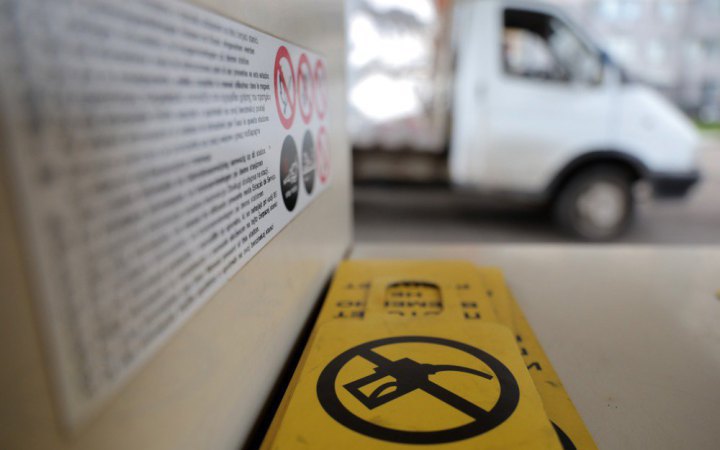
Russian authorities are trying to convince the public that the fuel crisis is easing, but the real situation suggests the opposite.
This was reported by Ukraine’s Foreign Intelligence Service.
According to the intelligence service, Kremlin-controlled media are actively spreading reports of an alleged increase in petroleum product supplies, a partial lifting of restrictions at filling stations, and an improvement in the situation in 15 regions, including Moscow and St. Petersburg.
Such statements are also echoed by Russia’s leadership, which insists the situation is fully under control.
However, Ukraine’s Foreign Intelligence Service notes that localised improvements in certain regions are explained not by a recovery in production, but by an administrative redistribution of existing fuel reserves between territories and among different categories of consumers.
The most difficult situation, according to intelligence, persists in the Tambov, Astrakhan, Kirov, Penza, Voronezh, Rostov, Volgograd, Orenburg, and Yaroslavl regions; Perm Krai; the Chuvash Republic; Mordovia; Udmurtia; as well as in the temporarily occupied territory of Crimea. There are currently no signs of stabilization in these areas.
Statistics also point to a deepening crisis. From 1 to 10 July, the average price of AI-92 gasoline at Russian filling stations rose to 64.5 rubles per litre, 20% higher than a year ago. AI-95 increased to 77.5 rubles (+24%), and AI-98 to 119.5 rubles per litre, up 32% year on year.
Ukraine’s Foreign Intelligence Service explains that the main cause of the shortage remains damage to Russian oil refineries. In July, gasoline production fell to about 71.5 thousand tons per day, while average summer demand is around 110 thousand tons. As a result, production covers only 65% of domestic needs, and the shortfall reaches 38.5 thousand tons per day, or about 35% of domestic consumption.
According to Ukrainian intelligence, the Kremlin is preparing not to overcome the fuel crisis, but to live with prolonged shortages. The Russian authorities’ main task is to supply fuel to strategically important sectors, while statements about stabilisation are primarily informational in nature and intended to conceal a shift to selective distribution of resources.