





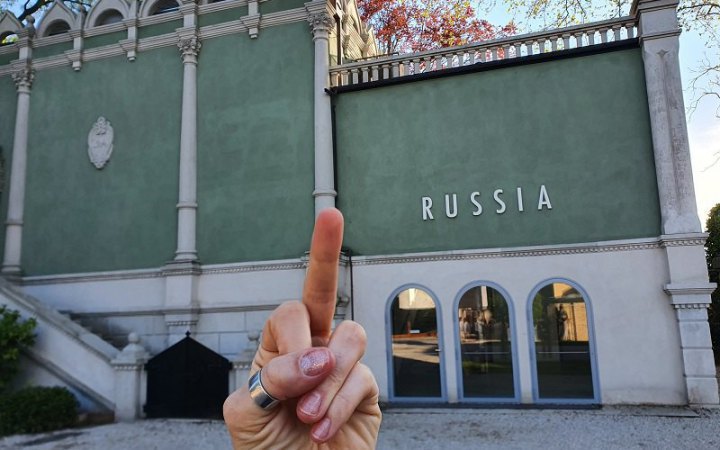
On 21 July, the organisers of the Venice Biennale said they would challenge a decision by the European Education and Culture Executive Agency (EACEA) to withdraw a €2 million grant over Russia’s return to participation, Reuters reports.
According to the Biennale’s organisers, the EACEA decision had long been expected. They stressed that they will “defend their rights before all competent authorities” in order to contest it.
They also rejected the EACEA’s allegations, saying the grant co-financed projects run by its film department that “have nothing to do with Russia’s participation”.
“This measure has no significant impact on the budget, financial reporting, or the planned and ongoing projects of the Venice Biennale, which remain in force,” the organisers added.
Pietrangelo Buttafuoco, president of the Biennale Foundation, defended the decision not to block Russia’s return, describing the exhibition as “a space of coexistence for the entire planet” without censorship.
In July, the European Commission recommended that the EACEA cancel the €2 million grant to the Venice Biennale because it allowed the Russian pavilion to open in a limited format for the first time since Russia’s full-scale invasion of Ukraine.
The procedure was launched after Buttafuoco confirmed information that the pavilion would open this year.
The decision to withdraw the grant for Fondazione La Biennale di Venezia was adopted following a legal assessment and the European Commission’s recommendation.
At the time, European Commission spokesperson Tom Regnier said that “cultural events funded by European taxpayers’ money must uphold democratic values, promote open dialogue, diversity and freedom of expression—values that are not respected in today’s Russia”.
Earlier, more than 20 countries called for Russia not to be allowed to take part in the Biennale.
Ukraine also urged the organisers to reconsider the decision on Russia’s participation and to maintain the principled stance demonstrated in 2022–2024.