





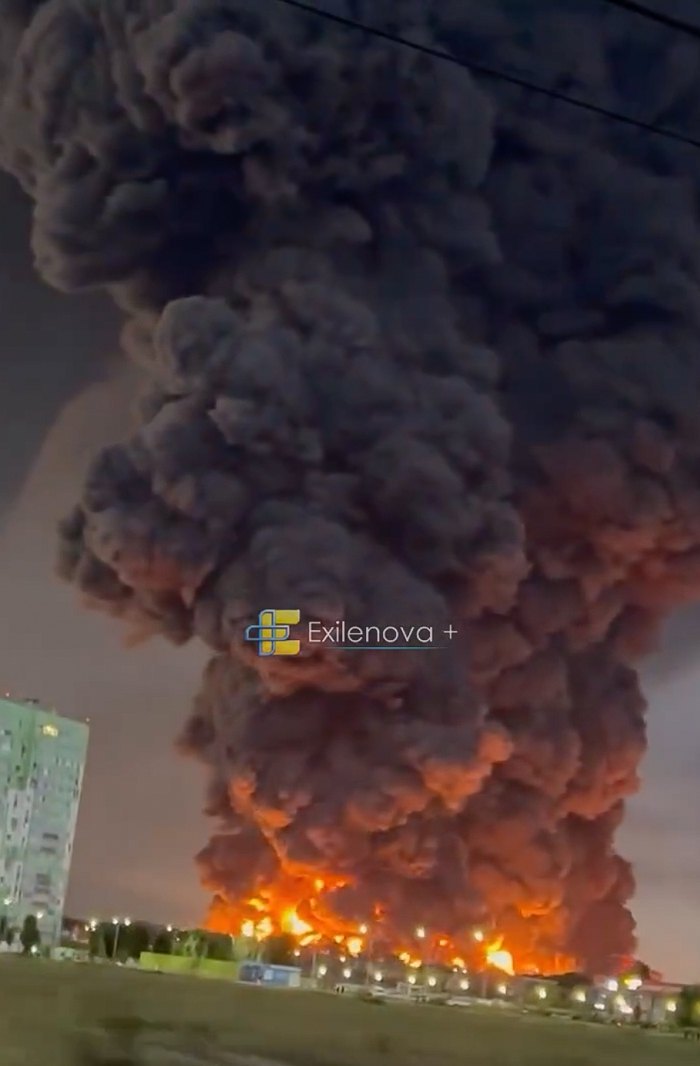
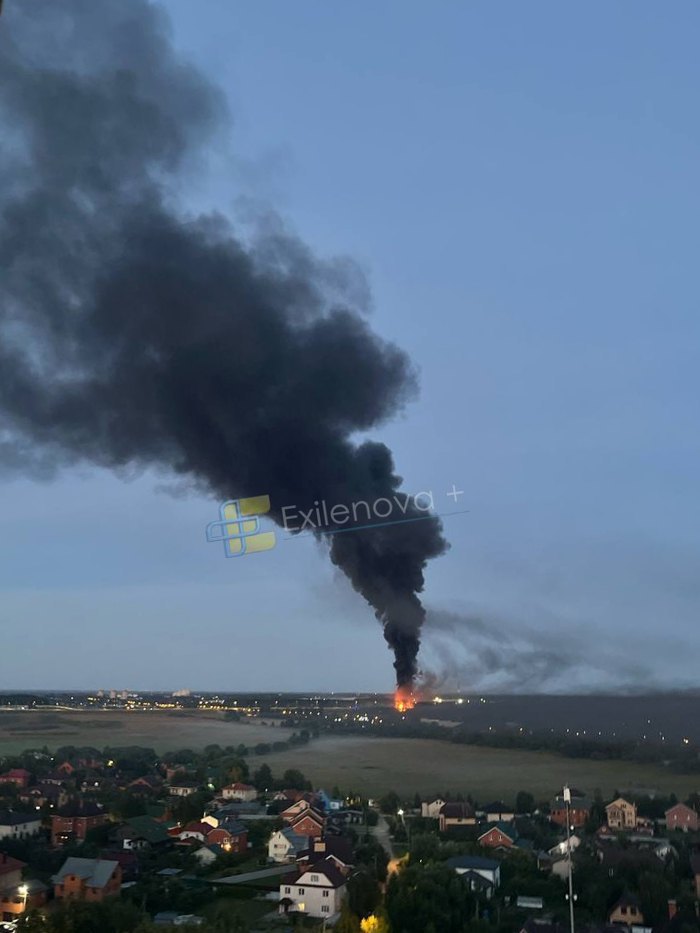
Major fires broke out at both sites following a series of explosions, and the authorities have confirmed casualties among staff. The disruption of these logistics hubs, against the backdrop of Russia’s most severe fuel crisis in recent history, is likely to place additional strain on supply chains and consumer markets.
These strikes are not an isolated operation but part of a systematic campaign by the Ukrainian Defence Forces targeting Russian logistics infrastructure. On 18 and 20 July, drones struck some of the largest distribution hubs in central Russia. Warehouses in Elektrostal, near Moscow, a logistics hub in Kotovsk in the Tambov Region, facilities in the Yuzhnye Vorota (“Southern Gate”) industrial park in Domodedovo, and the marketplace’s oldest hub in Koledino near Podolsk were all set ablaze.
The losses resulting from these strikes are substantial. According to market estimates, sellers and the platform itself may have lost between 100 and 150 billion roubles — approximately five times the company’s annual profit. The destruction of hundreds of thousands of square metres of warehouse space is disrupting supply chains and demonstrating that logistics supporting the war effort can no longer be concealed behind the façade of civilian services.
Dual purpose and links to the Kremlin
Why have Ukrainian forces begun targeting Wildberries’ logistics warehouses and infrastructure? Beyond their role in the war economy, these facilities also serve broader strategic functions. This is not a retaliatory campaign. For years, Russia has targeted Ukrainian commercial infrastructure, including Nova Poshta warehouses and companies producing household chemicals and packaging. When the Fröken Bok warehouse in Dnipro was destroyed by fire, there was little discussion in Russia about the applicability of international humanitarian law.
These marketplaces have long served as channels for importing drones and drone components, including cameras, batteries, motors and electronic control boards, making them classic dual-use targets. Vast quantities of Chinese-made dual-use goods pass through these warehouses, ranging from flight controllers, batteries and video transmitters for FPV drones to electronic warfare equipment, radios, optical sights and tactical medical supplies.
The destruction of facilities covering tens of thousands of square metres is likely to have resulted in the loss of large quantities of components intended for shipment to the front by so-called “Z-volunteers”. Furthermore, the company’s owner has well-documented ties to the Kremlin. The merger that reshaped the marketplace received Vladimir Putin’s approval, and during a dispute over the controlling stake, associates of Ramzan Kadyrov reportedly became involved in negotiations.
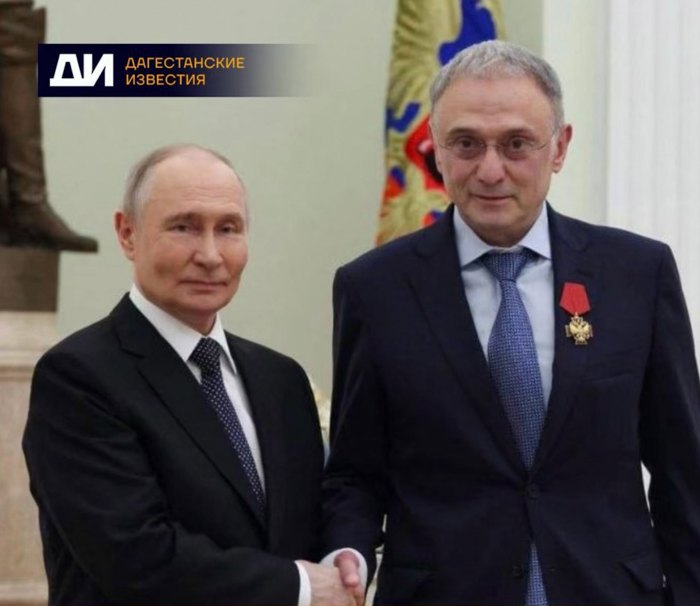
The transaction was reportedly promoted by billionaire Suleyman Kerimov, a businessman with close ties to the Kremlin, who organised a personal meeting between Tatyana Bakalchuk and Putin to secure final approval. Kerimov is also the largest private shareholder in the state-owned VTB Bank.
The merger was presented to the Kremlin not merely as a commercial venture but as the creation of a Russian competitor capable of challenging Amazon and Alibaba. It was promoted as part of the state’s broader strategy of import substitution and the development of a “sovereign” digital economy. In Russia’s political system, transactions resulting in the emergence of such dominant market players typically require approval at the highest level, underscoring the strategic significance attached to the project by the Kremlin.
The end of the illusion of a peaceful life
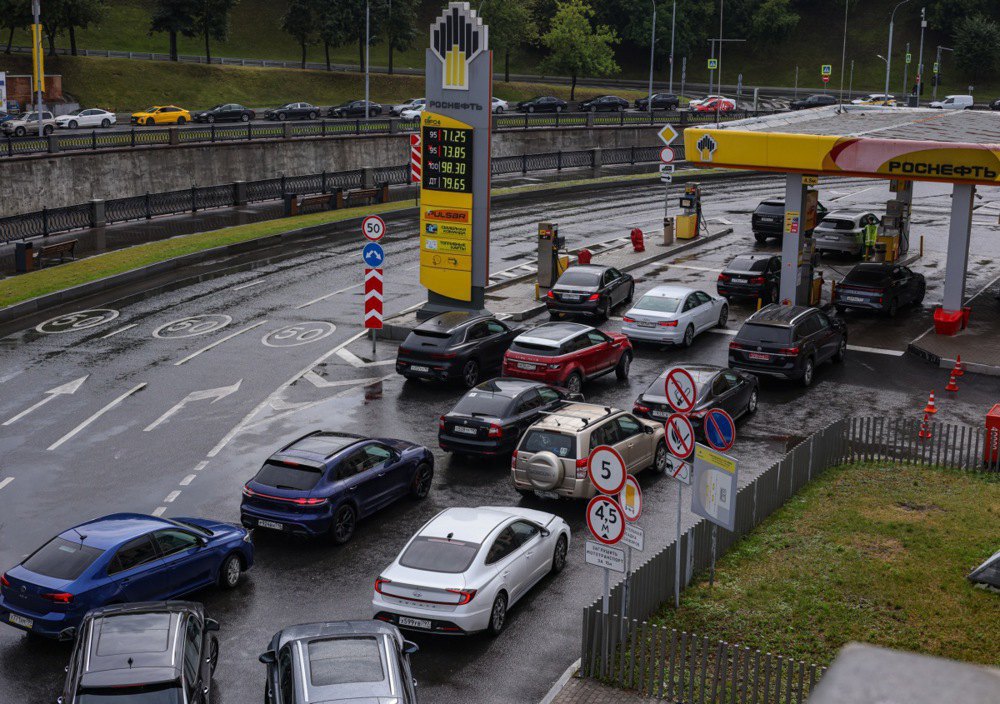
The reality is that there were previously too few strikes on oil refineries and logistics infrastructure. Last year, despite a fuel crisis, Russia did not witness queues stretching for kilometres at petrol stations or violent confrontations sparked by shortages. Today, however, queues several kilometres long have become a reality, whilst drones provide unprecedented visibility over storage facilities and supply networks.
For years, many Russians have sheltered behind the belief that the war affects only others and that responsibility rests solely with the Kremlin leadership. Yet the reality is more complex. The maintenance of a 700,000-strong occupation force in Ukraine, supported by millions more involved in the rear, depends on tax revenues, state resources, supply chains and civilian economic activity. Goods purchased through online marketplaces, parcels sent to servicemen, budget revenues and commercially sourced equipment all contribute, directly or indirectly, to sustaining the war effort.
From this perspective, logistics networks and distribution systems play a significant role in supporting Russia’s military capabilities. Equipment and supplies imported through these channels ultimately reach the battlefield, where they are used in military operations against Ukraine. The disruption of these supply chains therefore carries both economic and military consequences, leaving many businesses facing substantial financial losses.
A blow to grey imports and pro-war merchants
In war, logistics infrastructure becomes a legitimate strategic target. Many small and medium-sized businesses in Russia that import helmets, armour plates, radios and electronic components from China operate on extremely narrow margins, with most of their capital tied up in inventory. Their business models often depend on credit or the proceeds from previous sales.
When a distribution centre covering 100,000 square metres is destroyed, businesses can lose goods worth millions of roubles. Compensation from marketplace operators may take months or, in some cases, may not be paid at all if losses are classified as force majeure. As a result, supply chains can be disrupted immediately: without inventory, there are no sales, and without revenue, there is no capital available to purchase replacement stock from suppliers in China. Such disruptions can simultaneously affect thousands of small cross-border traders.

The destruction of these facilities also affects ordinary commercial goods unrelated to military use. However, critics argue that responsibility for such consequences ultimately lies with a system in which military supplies and civilian commerce are intertwined within the same logistics networks.
A significant proportion of dual-use electronics — including microchips, video transmitters and precision sensors — enters Russia from China under the classification of consumer goods, often attracting less scrutiny than military-related imports.
Official customs channels involve inspections, administrative procedures and import duties. By contrast, online marketplaces have become an important avenue for grey imports, with parallel supply networks refined over many years.
The destruction of major logistics hubs forces shipments to be rerouted through official or alternative channels, where they face greater scrutiny. This can lead to increased bureaucratic delays, higher transaction costs, greater opportunities for corruption and heightened exposure to secondary sanctions, further complicating the import of dual-use goods into Russia.
A dilemma for air defence and a transport system under strain
Each attack forces the Kremlin to make difficult choices regarding the allocation of air defence resources. Should additional Pantsir systems be deployed to protect military airfields, oil refineries or strategically important commercial assets? If logistics hubs such as Wildberries warehouses remain unprotected, major business interests face the prospect of substantial financial losses. If air defence assets are diverted to protect commercial infrastructure, military facilities may become more vulnerable. This dynamic has the potential to increase tensions between Russia’s military leadership and influential business figures with close ties to the Kremlin.
Large logistics hubs function as major transport centres, handling thousands of heavy and medium-tonnage lorries every day. When such a facility is destroyed, transport flows are severely disrupted. Vehicles can become stranded in lengthy traffic jams while cargo is redirected to alternative warehouses, often located hundreds of kilometres away. These disruptions are occurring against the backdrop of mounting fuel shortages in southern Russia.
The consequences extend beyond the immediate area of the attack. Transport bottlenecks can disrupt regional supply chains, increase fuel consumption and further strain diesel supplies already affected by attacks on refinery infrastructure. Commercial transport schedules are thrown into disarray, reducing the availability of freight capacity for other sectors of the economy.
Read alsoFuel cascade: How the Kremlin’s gas station is running out of fuel
The mathematics of the losses
When translated into economic terms, the destruction of major logistics hubs presents a significant challenge for Russia’s distribution network. Estimates place the direct physical damage from the destruction of the affected facilities at between $1.3 billion and $2.5 billion. This figure includes warehouse buildings, conveyor systems, imported sorting equipment and large volumes of stored inventory. Replacing this infrastructure is likely to prove difficult and costly amid sanctions, supply constraints and labour shortages.
The consequences extend beyond physical destruction. Every day of downtime increases pressure on remaining logistics centres and results in millions of delayed or undelivered orders. Disruptions across southern and central Russia could significantly reduce turnover in the coming quarter, while the platform may struggle to absorb losses reportedly estimated at up to 150 billion roubles. Capital is likely to remain tied up for extended periods, leaving many sellers facing liquidity shortages and limiting their ability to purchase new consignments from suppliers abroad.
Supporters of the campaign argue that the economic impact far exceeds the cost of the attacks themselves. They contend that relatively inexpensive drone operations can inflict disproportionate financial damage on logistics infrastructure while generating broader economic disruption. In their view, the strikes demonstrate how vulnerabilities in supply chains can translate into wider economic consequences, bringing the effects of the war closer to parts of Russian society that have previously felt insulated from its direct impact.
The broader significance of these attacks lies not only in the physical destruction they cause but also in their ability to expose the interconnected nature of Russia’s wartime economy. As logistics networks come under increasing pressure, the economic costs of sustaining the war are becoming more visible to businesses and consumers alike.