Публикации автора
-
 Anyone who continues to harp on about peace at any cost does not fully understand the situation. They hope to finish us off with a…
-
 As for countermeasures against UAVs operating via Starlink — essentially satellite communications — and those using machine vision,…
-
 Major fires broke out at both sites following a series of explosions, and the authorities have confirmed casualties among staff.…
-
 The ‘bees and the queen bee’ scheme Where are these Volgoneft vessels transporting crude oil? They are not heading to India or…
-
 A shortfall of 25,000 tonnes per day The massive drone campaign in May–June 2026 caused petrol production in the Russian Federation…
-
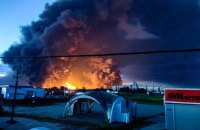 While Vladimir Putin imagines himself "encircling Ukraine's Armed Forces", Ukrainian drones and missiles are bringing Russia's…
-
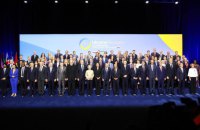 We are no longer seeking protection; we are offering expertise and becoming part of Europe’s military ecosystem. Europe invests…
-
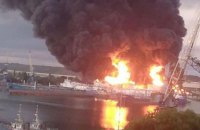 The so-called ‘showcase of the Russian world’ is now turning into a black hole for resources. There are no longer any guarantees…
-
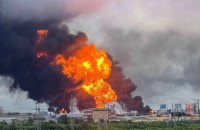 By disabling key oil-processing facilities, Ukraine temporarily disrupts the refining chain and deepens fuel shortages across…
-
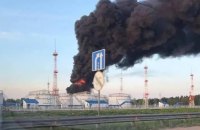 For the first time, all oil refineries in the European part of Russia are either offline or operating at significantly reduced capacity.
-
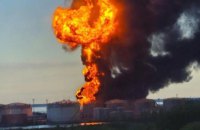 The Russian General Staff faces a dilemma: either let St Petersburg burn and the Baltic Fleet take further hits, or weaken the…
-
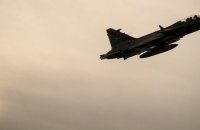 The Gripen is about far more than achieving air superiority. It represents an asymmetric response to a Soviet-style military system…
-
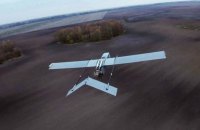 The fact that our Fire Point FP-2 drones can now carry a 200-kilogram payload alongside eight additional S-8 unguided air-to-ground…
-
 Will the Russians continue launching strikes? Yes. Will they succeed in carrying out their threats to destroy Kyiv? No.
-
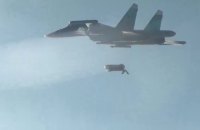 Russian forces drop 100–130 glide bombs per day (three to four thousand per month) effectively burying the frontline under hundreds…
-
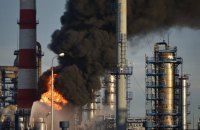 The war has returned to where it began. The “three-day” expedition that was meant to be a light, quick operation has suddenly…
-
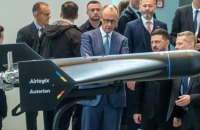 Evolution of mid-strike: How German-Ukrainian Anubis drones are breaking Russia’s air defence systemAbout a joint development that is, right now, turning Russia’s most expensive surface-to-air missile systems and command posts into…
 -
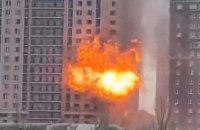 Russia’s air defence has turned into a sieve. And the more the Russians try to plug some holes, the more it tears in other places.
-
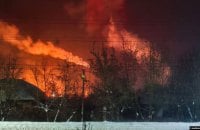 How strikes on the chemical industry are weakening Russia’s economy and what the European defence industry is preparing in 2026
-
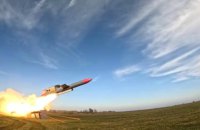 The defence forces struck directly at the city’s industrial hub, where two defensive giants — PromSintez JSC and Polymer JSC — are…