







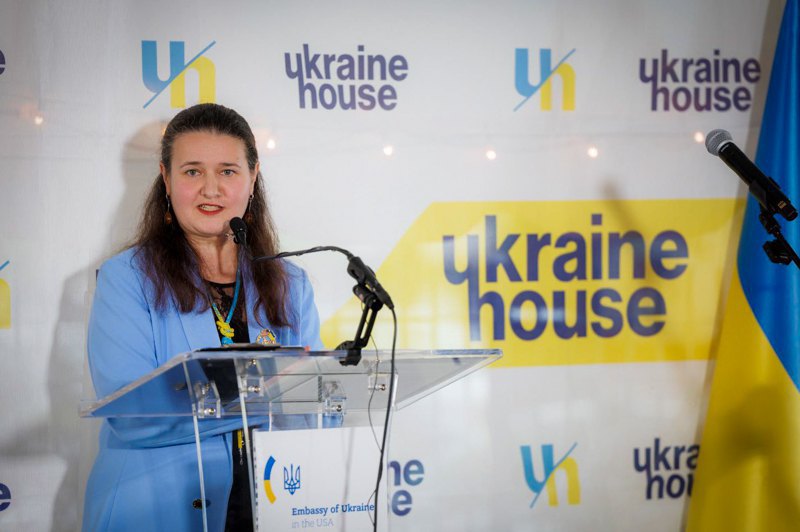
“From the very beginning, we did not rely on state or budgetary funding”
Could you remind us how exactly Ukraine House in Washington came about?
Several months passed between the moment the President asked me to become Ambassador to the United States and my arrival in Washington in April 2021. During this time, I had the opportunity to prepare: I discussed with the President, then-Minister Kuleba and many others the tasks facing an ambassador; I also considered what, in addition to traditional diplomatic work, could be done to improve relations between the countries and strengthen Ukraine’s influence in Washington.
I met with many people — former ambassadors and diplomats. Furthermore, I had my own experience of working in Washington, both as a minister and previously in business. Even while studying in the US, I undertook an internship at the World Bank, where I worked for two consecutive summers in 2000–2001. It therefore seemed to me — and I heard this view from many people I spoke to — that Washington lacked a dedicated cultural space, apart from the embassy, that could serve as a Ukrainian hub. Although the Ukrainian community in Washington is quite large and there are several Ukrainian churches that organise a significant proportion of cultural events. I therefore travelled from Kyiv with the idea of creating such a Ukraine House. To be honest, I did not have a clear vision of exactly what it should look like at that stage — it began to take shape once I was there. But from April 2022 onwards, in the evenings and after work — as there was immediately a huge workload — we worked on this idea.
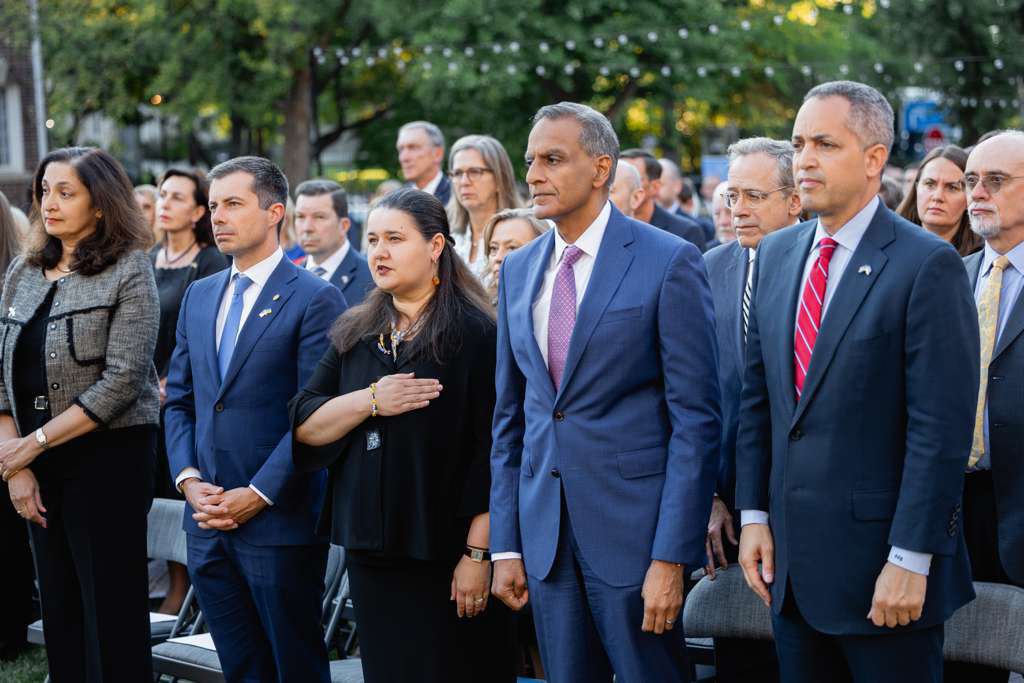
In fact, I arrived in the US just as the Russians began massing troops near our borders. It took time to get up to speed, build relationships and establish contacts — many of whom, to be honest, I had not previously met. It was not only about the White House, the State Department or Congress, but also about horizontal links between ministers and regional contacts, as well as connections with influential professional communities and clubs — from the Gridiron and Alfalfa to the White House Correspondents’ Association, the Congressional Correspondents’ Association, and the Economic Club of Washington, as well as SelectUSA and AI Expo, where I was the first Ukrainian ambassador to actively participate and speak. There was an enormous amount of work — I had practically no free time.
But even then, my assistant Ruslan Falkov and I began searching for premises: we explored what was available to rent that might be suitable for the future Ukraine House.
The building really does have a wonderful atmosphere.
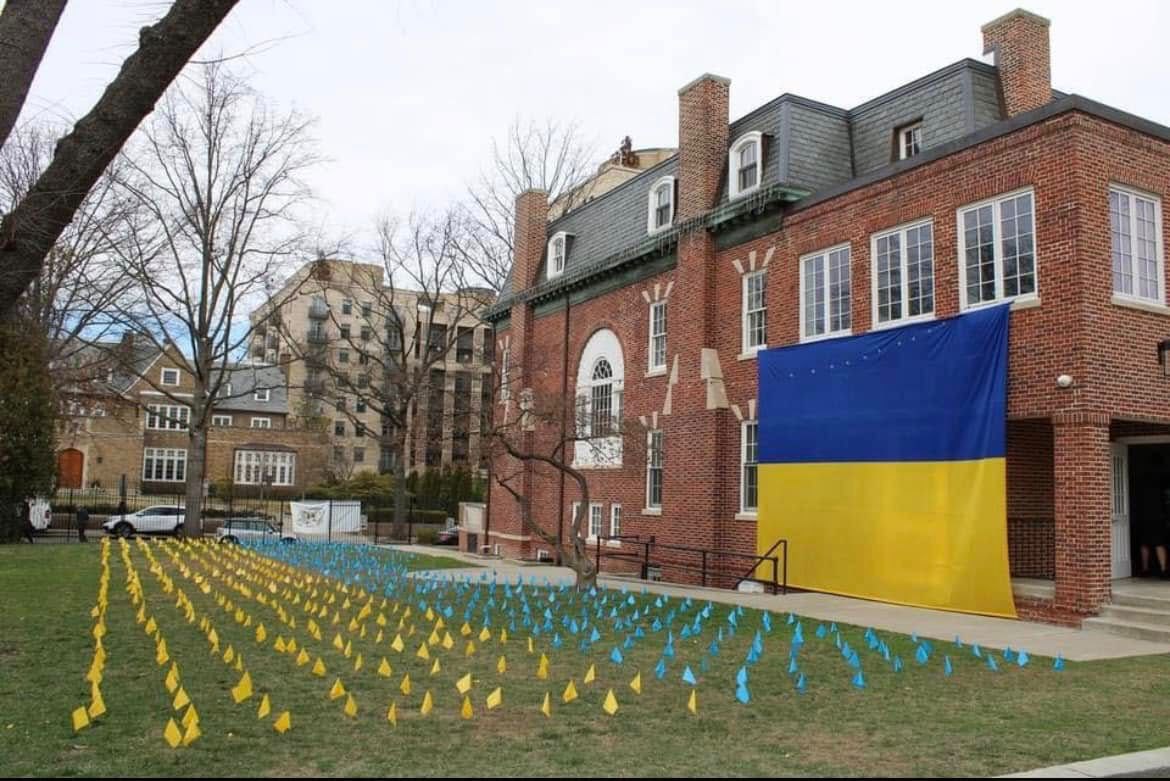
In fact, the premises are crucial, as they define the spirit and character of the place. We considered many options, including office spaces and locations near Congress — one of our priorities. When we found the current site — this picturesque estate with a large surrounding area, which was then in a state of neglect — we knew immediately: this was the one. This was exactly where we could bring our plans to life: cultural programmes, exhibitions and open-air events. The grounds can accommodate 400–500 guests, and Washington enjoys favourable weather for most of the year.
What is more, the house is situated right in the heart of the city — in the Kalorama neighbourhood. Opposite are the residences of the French and Portuguese ambassadors, and nearby is the French Cultural Centre. It is a quiet neighbourhood, not a business district, but precisely the kind of space that fosters cultural exchange.
We began negotiations with the building’s owner, but the process did not move quickly. In Washington, nothing ever happens very quickly (smiles).
At the time, we were working on President Zelenskyy’s visit to Washington — my first visit as the new ambassador. It is worth recalling that it was a very difficult summer. Now, when we mostly speak about events since the start of the full-scale war, we rarely mention just how challenging those decisions and processes were.
Russia was gathering its forces on the border, whilst denying the obvious — claiming it was merely conducting military exercises. We raised this issue at every level and spoke about it in the media. We stated quite clearly: Russia is preparing for an attack. In response, we often heard: ‘No, it’s not quite that straightforward.’
Later, in the autumn of 2021, when intelligence reports were declassified, the Western press began to write openly about the threat of invasion. But in the spring and summer, it was the Ukrainian side that spoke about this constantly as grounds for pre-emptive sanctions and the supply of additional weapons — and we were not always taken seriously. Against this backdrop, President Biden’s summit with Putin took place, along with the decision to lift the blockade on Nord Stream 2 and other complex processes. We were preparing for a very difficult visit.
For our part, we wanted to hold it as soon as possible, to discuss everything: NATO, Ukraine’s need for membership, the issues of weapons and sanctions. At the same time, my military attaché, General Borys Kremenetskyy, and I worked as a small team alongside Minister Andriy Sybiha (then Deputy Head of the President’s Office), Ambassador Anatoliy Petrenko (then Deputy Minister of Defence), the late Deputy Minister of Foreign Affairs Yevhen Yenin, Ambassador Oleksandr Polischuk (then Deputy Minister of Defence) and Deputy Head of the Office Roman Mashovets on a framework 5-year agreement on strategic defence partnership. Incidentally, it was signed in September. It was this agreement that opened up the possibility of receiving weapons even before the full-scale invasion began — after all, we worked tirelessly to ensure Ukraine received Javelins, Stingers and other systems.
I am telling you all this so that the context is clear: we are preparing for this visit, but we do not have a fixed date — it keeps changing. We are fighting to have this waiver (legal succession — Ed.) regarding Nord Stream 2 revoked. It was a very contentious situation — not particularly public, but extremely tense behind the scenes. And now the date of the visit has been confirmed: late August to early September. We discuss our agenda with the President, his team and the Minister. For the first time, we include the President’s visit to California in it. And in the years that followed, during many visits, I always proposed such regional trips. I am very glad that the President supported and appreciated this, as it was the first time a Ukrainian President had visited California. The visit takes place, and the President says: ‘You spoke before we left about the idea of creating a Ukrainian House. So let’s go ahead and open it.’ And after that ‘let’s go ahead and open it’, there was no option not to open it. So we began to speed up all the processes as much as possible to manage to sign the agreement.
Could you tell us more about the funding system for Ukraine House?
It was then that we finalised the registration of our foundation — the Ukraine House DC Foundation. It is an American non-profit organisation, as from the very beginning we did not rely on state or budgetary funds. The foundation was registered in early August, and within literally a month we had concluded all the key negotiations regarding the premises.
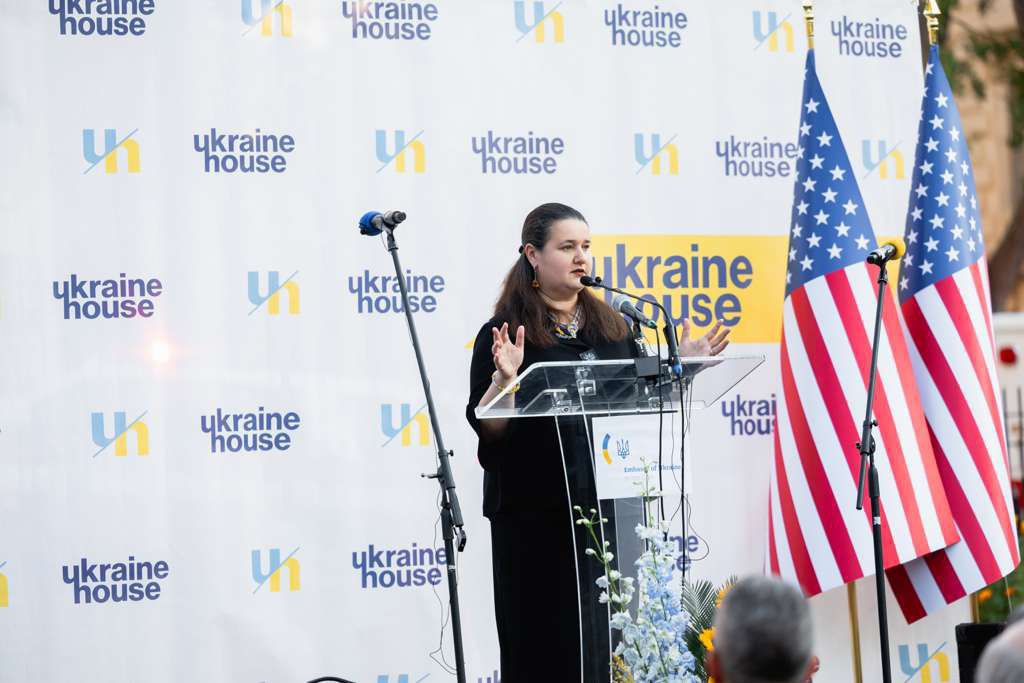
On opening day: we signed the lease in the morning and were already opening in the evening. The building’s owners were very accommodating — they gave us the keys a week beforehand so we could at least tidy the place up a bit. On 1 September 2021, the grand opening of Ukraine House took place. With President Zelenskyy and the First Lady in attendance, we held an awards ceremony for representatives of the Ukrainian community and its leaders. At that point, we didn’t have a single exhibition or piece of content. So all the walls were filled with photographs from the Independence Day celebrations on 24 August. These were very powerful, emotional images: a little girl who seemed to be walking through the centuries, scenes from the Maydan, the Mriya aircraft flying forward. It was these photographs that became the space’s first exhibition. So, on that day, we opened the Ukrainian House together with our first and long-standing director, Mariana Falkova. President Zelenskyy and Ms Olena left the first entry in the guest book.
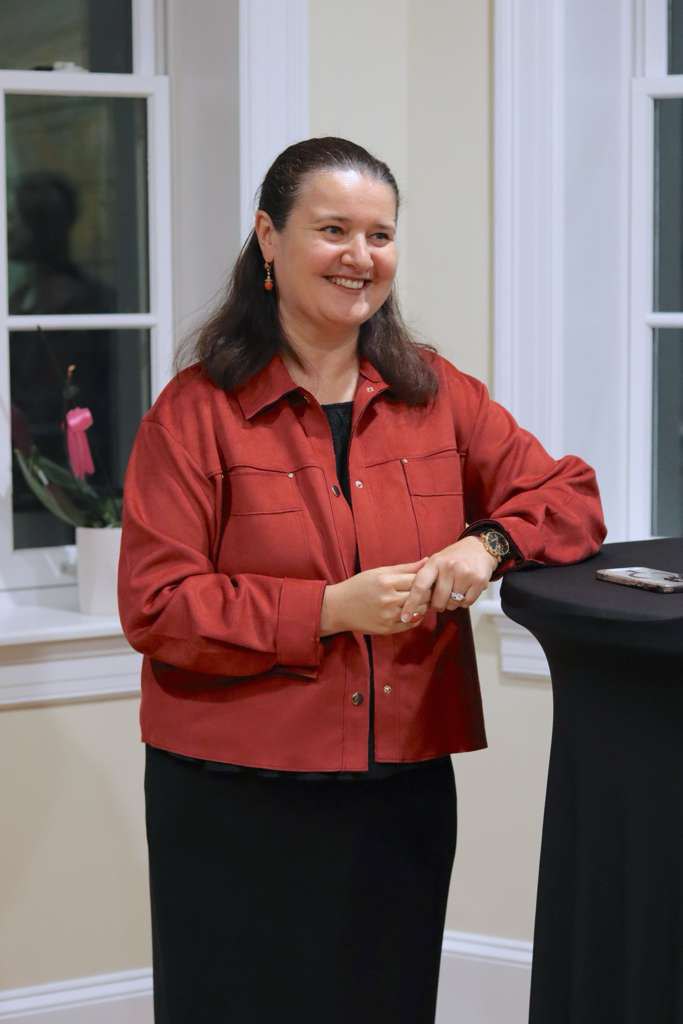
“Ukraine’s strength lies in its ability to combine very ancient, traditional, and sometimes even traditionalist roots with innovation”
Let’s return to the cultural and diplomatic aspect. What criteria do you use to select artists, particularly independent ones?
You know, back when I was studying at Mohyla Academy — it was the early 90s — we really loved pairing jeans with embroidered shirts. And for me, that’s the best metaphor for what I’m trying to embody in my work.
Ukraine’s strength lies in its ability to combine very ancient, traditional, and sometimes even traditionalist roots with innovation. It is precisely this principle that we uphold at the Ukrainian House — both in our artistic activities and in everything we do. From the very beginning, we wanted the Ukrainian House to be a place where the whole community comes together. Where it doesn’t matter whether you’ve come in a vyshyvanka, in jeans or without a vyshyvanka at all, which church you go to on Sundays or whether you go at all, or what your preferences are, provided that you love Ukraine.
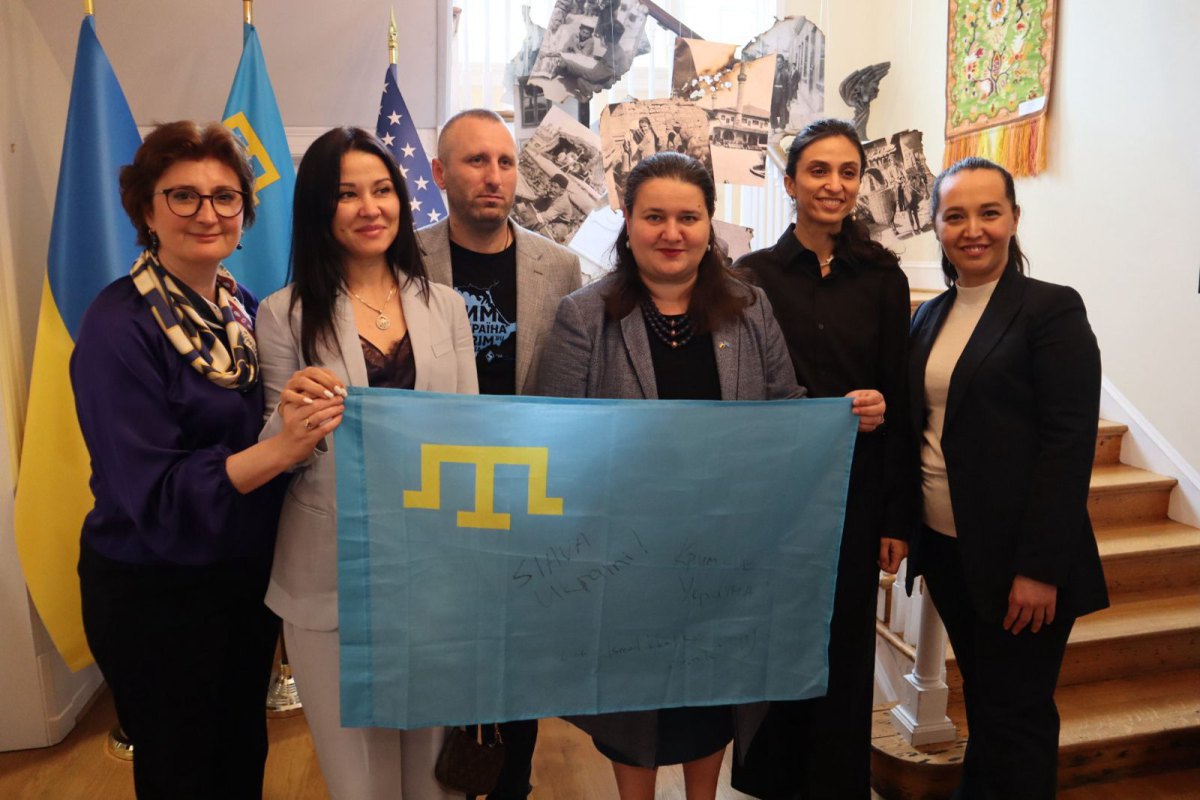
I am a great admirer of the Ukrainian diaspora, and I have a genuine fascination with the diaspora in the United States. It is incredibly diverse: different waves of emigration, each with their own regional, cultural and even political variations, where debates between Melnykivtsi and Bandera supporters still persist, alongside incredible Plast members and SUM members, as well as the modern waves of new emigration. Together, they form an incredible mosaic of Ukrainian identity. And our task at the Ukrainian House is to bring them all together.
For all our love for our community, our key performance indicator is how many non-Ukrainians we attract to our events. But at the same time, it is very important to us how comfortable the entire Ukrainian community feels in this space. Do its various parts come together, do they interact with one another, do they start to communicate?
We see our mission as becoming a home away from home for all Ukrainians. And we have deliberately broadened this concept for ourselves, and I am glad that others have begun to quote our motto: we welcome all Ukrainians to Ukraine House – ‘by birth, by blood, and by choice’. And it is precisely this category of ‘Ukrainians by choice’ that is the fastest-growing group in the US.
But let’s talk about the arts programme.
Yes. My husband, Danylo Volynets, is a banker and businessman who has spent his whole life working in the private sector, but has a huge passion for Ukrainian art. He has been interested in it since the late 1980s. He is very knowledgeable in this field. So, in the case of the Ukrainian House, he was involved in the arts from the very beginning — thanks to his extensive connections within the artistic community. It was thanks to Danylo that the art curator Oles Demko, who lives in New York, joined us. He is a well-known Ukrainian curator, art historian and organiser. And he has been volunteering with us for five years now.
How do our exhibitions come about? Firstly, we initiate some of the exhibitions ourselves. We have a plan and a clear vision of what each month should look like and which themes we want to highlight. It is important to us that everything at the Ukrainian House functions as a unified system: events, art on the walls, music, even food — everything must reinforce the central theme.
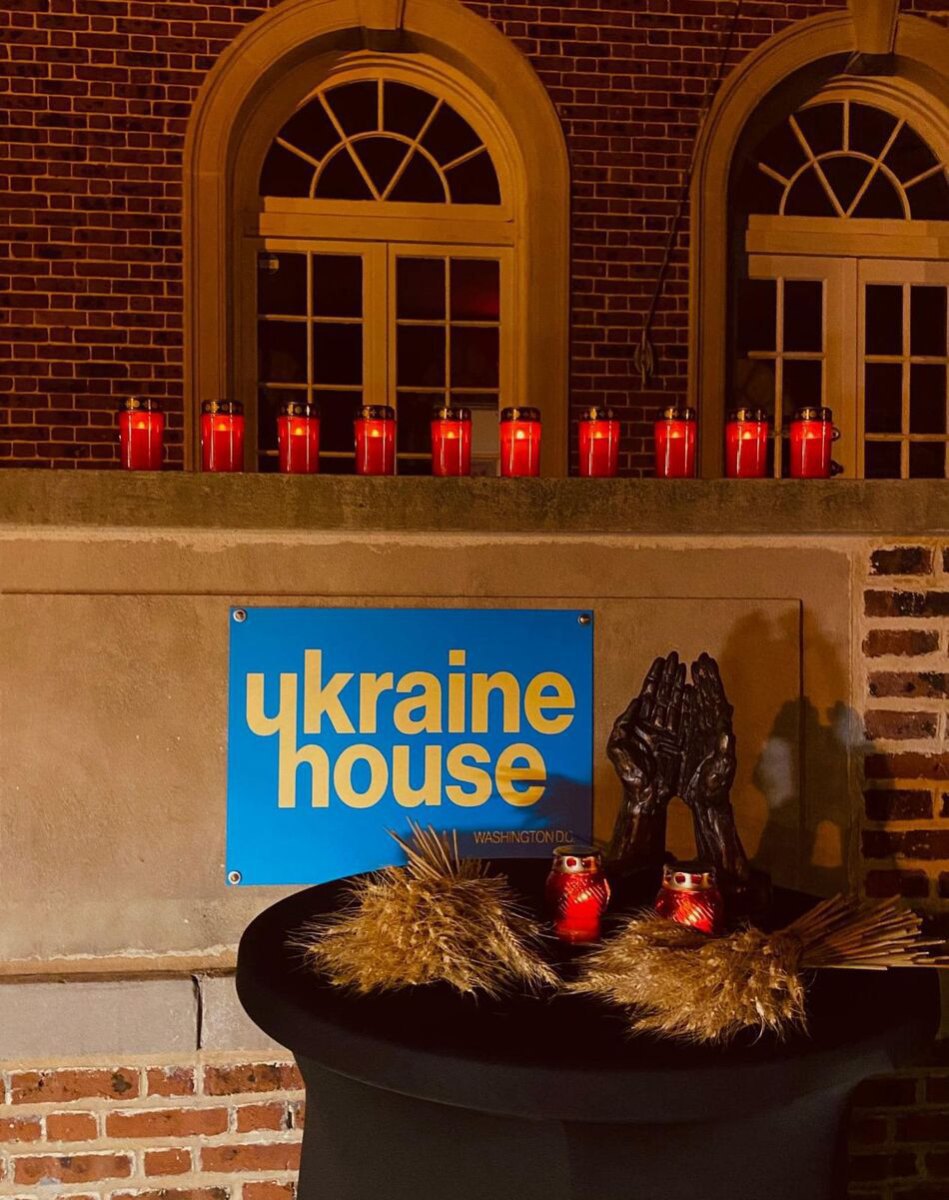
For example, if it is a month of remembrance of the Holodomor, then the art must correspond to this theme. We do not hold high-profile gastronomic events — on the contrary, we bake black bread and create a subdued atmosphere. Everything follows this logic.
Or, in the run-up to the full-scale invasion — when we were still hoping it could be averted, but already realised that Russia was heading in that direction — we organised a major exhibition dedicated to Mykola Krychevskyy, the first of its kind in the United States. He is a renowned artist and the son of Vasyl Krychevskyy. It was a very powerful exhibition, curated by Oles from private collections in the US, particularly from the diaspora. We literally ‘tracked down’ these works — and as a result, created a large-scale exhibition. We opened it, I believe, four days before the full-scale invasion. The opening was attended by many ambassadors, members of the diplomatic corps, government officials and guests.
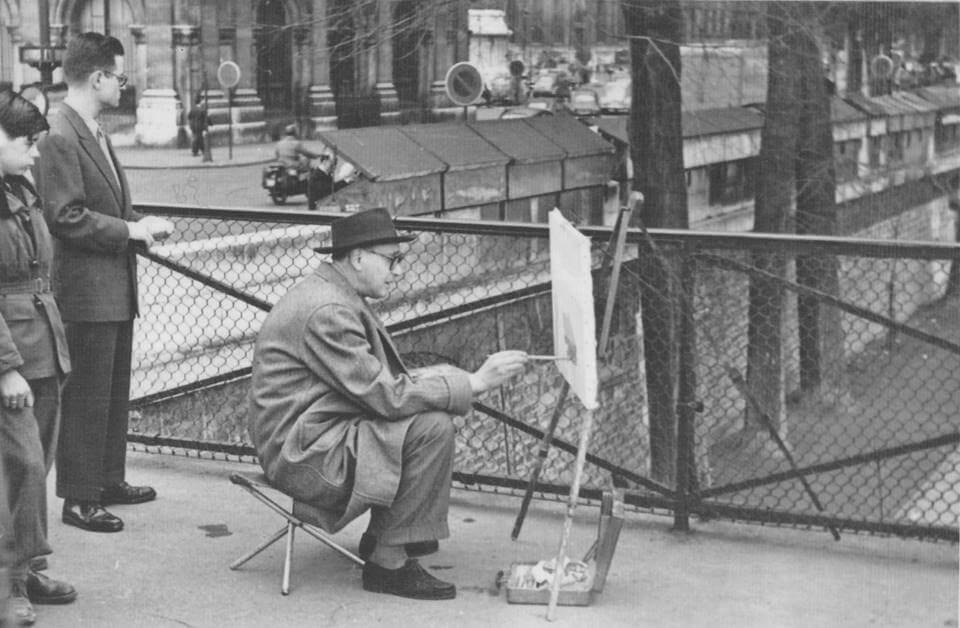
I said at the time: look at Mykola Krychevskyy — one of the representatives of the ‘École de Paris’ (an international community of modernist artists — Ed.), an artist of international standing who, at the same time, identified himself as Ukrainian and wrote in the Ukrainian language. Now look at his life story. He was born in the Kharkiv Region. His father, Vasyl Krychevskyy, taught him to draw. Then came Kyiv, the Bokshay School in Uzhhorod, Prague, and Paris. And it was in Paris that his talent blossomed. But why did this path take this particular form? Why, at the beginning of the 20th century, was he forced to move from city to city, from country to country? Because it was precisely at this time that Ukraine lost its independence and Russian troops advanced. And we emphasised then: look at these works not only as art, but also as testimony. This artist painted Ukraine as he remembered it, having spent most of his life abroad. And this is one of the ‘better’ scenarios. Because many artists of that time were destroyed — as representatives of the ‘executed renaissance’. This is exactly how we work with art.
Sometimes the exhibition is dictated by the calendar — for example, March might be dedicated to women’s themes. Sometimes the context and events themselves dictate what exactly should be shown.
Sometimes the artists approach us themselves. Then the curator’s task is to assess the standard, as we care deeply about quality. It is important to us that it is authentic Ukrainian art and, at the same time, of a high standard. But this does not mean that we only show ‘high’ art — established painting or graphic art. We have folk art and contemporary practices too. We display embroidered shirts, undertake interdisciplinary projects, and experiment with formats.
So the approaches vary: sometimes the initiative comes from us, sometimes from the curator, sometimes from the artists themselves. And it’s often a very dynamic, collaborative process.
A separate area is charity auctions, which we also organise together with the artists.
Tell us more about the auction?
We had a very successful auction called Art Saves Lives. In fact, it was inspired by events in Kramatorsk. Do you remember the shelling of the railway station when people were waiting to be evacuated? At that time, Nataliya Stepanenko, along with her two children — Yana and Yaroslav — were trying to leave the city. The Russian strike hit the crowd of people. Nataliya lost a leg, and Yana lost both legs. When we saw this, it was simply impossible to remain calm.
At that point, they were already receiving treatment in Lviv at the specialist clinic Unbroken, but it was clear: the children needed far more complex prosthetics. This is a different level of support — they need to be constantly adjusted and modified; it’s a long-term process.
And so we decided: we organise many events, we are a partner of United24 in the US, the First Lady’s foundation, we raise funds for various causes — but here we want to do something very specific, even if it’s just for one family. Let’s organise an auction, sell some art and raise funds to bring Yana and Nataliya to the best paediatric prosthetics clinic in California and give them a chance at a full recovery.
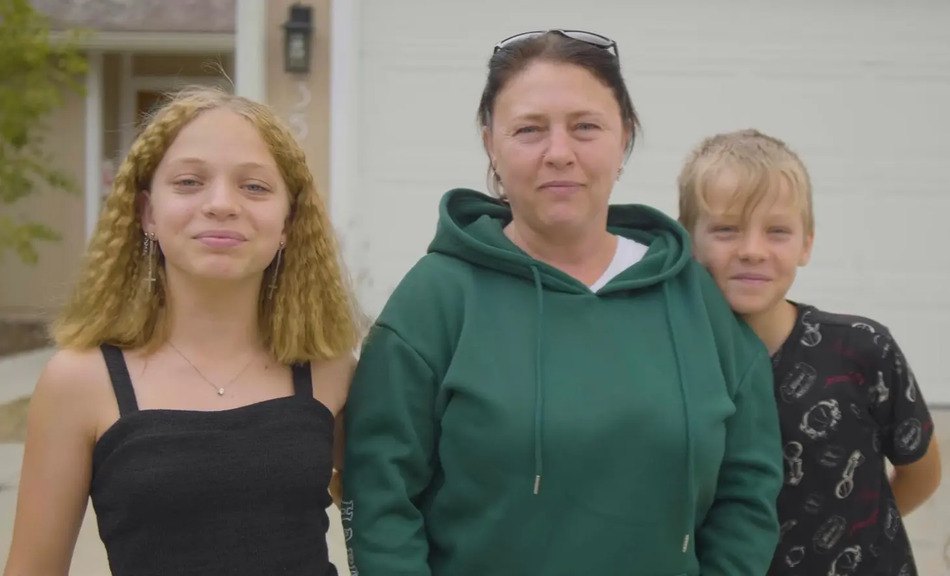
We held this auction featuring high-quality art, in collaboration with Maksym Melnyk’s renowned Sofia A Gallery, under the patronage of Ukraine’s First Lady. And it proved so successful that, to be honest, we raised more funds than were needed for Yana and Nataliya. We immediately organised their visit, and they spent a year under our care. We accompanied them to the Peter Harsch Prosthetics clinic, and the owner, Peter Harsch, personally got involved in the process.
And today, Yana is an incredible young girl who even runs marathons. Thanks to this project, we were able to help not only them, but also four other children who were included in this programme — Ivan, Sasha and Karolinka.
Very often, it all starts with an idea — and we bring in art, which opens up new possibilities. It is both a managed process — after all, we monitor quality and work with curators — and a very lively, organic one. Sometimes art literally finds us.
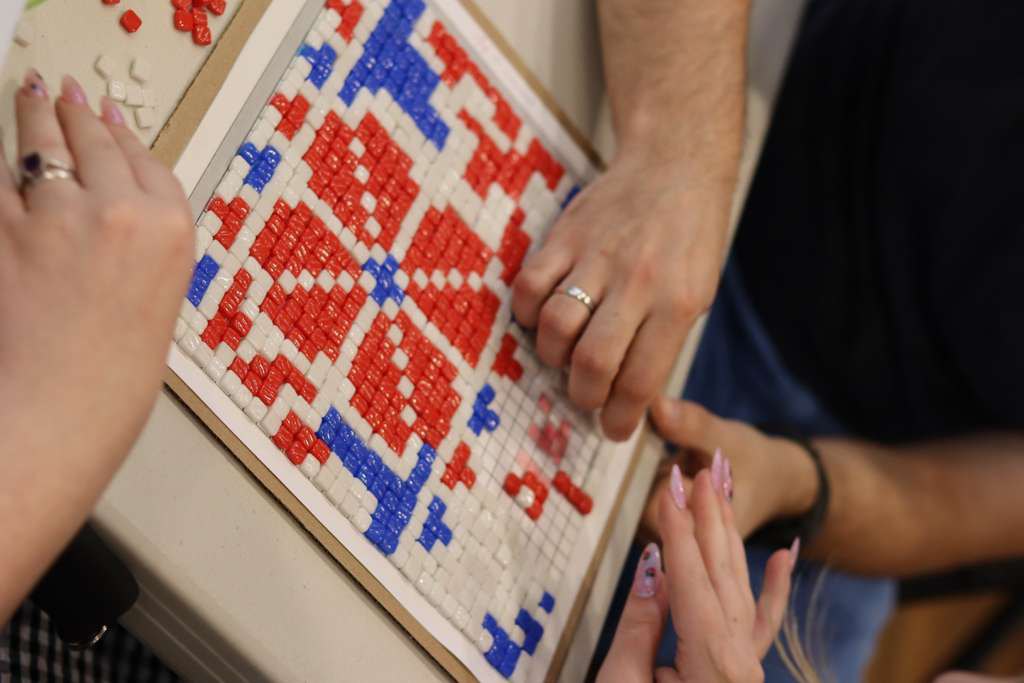
We believe that some of these ‘coincidences’ are not coincidental. And we are always open to dialogue with artists. As a rule, new initiatives grow out of each project. For example, we held Vyshyvanka Day — and this evolved into the idea of creating a mosaic map of Ukraine using vyshyvanka elements. As a result, it became a project spanning almost a year: collaboration with museums, with Lesia Voroniuk, and with partners, including the World Bank. Incidentally, Gertrud Müller, the wife of a World Bank employee from Germany who is passionate about mosaics, was the lead artist on this project. Together with our coordinators Sofiya Kachur and Oleksandra Senik, this idea grew into the creation of mosaics for every region of Ukraine. The project was carried out in coordination with the National Museum of Folk Architecture and Life of Ukraine. This exhibition is currently on display at the Ukraine House.
We are not a traditional gallery, nor are we purely an art institution. We are a cultural centre that showcases the diversity of Ukrainian culture. And we try to combine the traditional, the classical and the contemporary — sometimes even the provocative, such as the exhibition Andy Warhol – a Ukrainian?, complete with a question mark, where the hugely popular and talented artists Oleh Denysenko, Volodymyr Radko and Vladyslav Shereshevskyy created incredible works for us on the theme of Warhol and his legacy.
Art never exists in isolation here. It blends with music and literature — we hold many book launches and readings. And all of this together forms a holistic picture of Ukraine. It shows that this is an ancient, self-sufficient, authentic culture. And at the same time — a modern, European culture, integrated into the world. Our task is to show: we are distinct, unique, and that is precisely why we contribute so much to world culture. But at the same time, we are just like other civilised nations, people for whom culture is important.
“If you only talk to people about war, especially those who do not live in a war themselves, there comes a point when they simply shut down”
How are you currently observing audience dynamics? You have said on several occasions that you focus on American visitors. Who are these people and what attracts them? Does the image of Ukraine as a country associated solely with war put them off?
That’s a very good and, perhaps, the most important question. When we talk to other cultural centres — both long-established ones and new ones — this is always the number one question. Back in 2021, we asked ourselves: can we keep up this pace? But it’s been five years now and, as they say, ‘all is well’.
When full-scale war broke out, we naturally had certain protocols in place — both at the embassy and at the Ministry of Foreign Affairs — for various scenarios. But in reality, no one can ever be fully prepared for something like this. And immediately a key question arose: what do we do next? Do we continue the cultural programme? Is it appropriate to hold exhibitions and events when there is a war at home? Won’t it look like ‘celebration’ when the country is suffering? It was a very serious discussion — within the team, with other cultural institutions, and with the Ministry of Foreign Affairs. It really is a difficult question. And we resolved it for ourselves. And I am very glad that we made exactly this decision, as, ultimately, did many other centres around the world. We will not give this to the Russians. They want us to break down, fall silent, lie down and cry, and talk only about the war. But we cannot allow Ukraine to be reduced to just that.
In reality, in countries where there is no war — especially if they are far away, and not the Baltic states or Northern Europe, where there has historically been greater understanding of our region and of Russia’s true intentions — knowledge of Ukraine has been very limited.
Now it may seem to us that everyone knows about Ukraine. But that is not entirely true. I remember when I came to study in the US — I was asked what Ukraine was. And even in 2021, when I had already arrived as an ambassador, I was still asked: ‘What sort of country is that?’
I also remember how, in various countries, when I said, ‘I am from Ukraine’, people would ask, ‘From the UK?’
In other words, this Moscow-centric view of our region was very widespread. Not because people necessarily liked Russia, but because it was perceived as a ‘great power’ to be reckoned with. And everything else — as if it were something vague somewhere between Russia and Germany.
So we decided: no, we must carry on. Show who we are, what we are, and get that message across. And the second important point — the answer to your question. If you only talk to people about the war, especially those who aren’t living through it themselves, there comes a point when they simply shut down.
People in the US live their own lives. They have jobs, children, daily concerns. Yes, they empathise. Especially at the start — when the topic is on the front pages, when the media are actively talking about it. And here we must say a big thank you to the journalists — especially those who went there in the early months, who worked on the ground, who, sadly, lost their lives. It was they who brought this reality to American society. People sympathised, took an interest, and helped. But this cannot go on forever at such an intense pace. When you live, for example, not in Washington, but somewhere in Indiana or California, you have your own life. You watch the news, perhaps make a donation — and go back to your own affairs. And we need people to understand: this war is not just ours, it is a shared one. And you can only get that message across when you reach people in different areas of their lives.
Who comes to us? Art exhibitions attract not only those interested in Ukraine, but also those interested in art itself. People know that the Ukrainian House is a place where you can see unique artists. We organise high-quality exhibitions: with catalogues, with the opportunity to explore the works in greater depth, and sometimes to purchase them if it is a sales exhibition or an auction. This is art that they often won’t see anywhere else.
We constantly showcase Ukrainian artists — both those living in Ukraine and members of the diaspora. That is why people interested in art often come to us not because it is Ukraine, but because it is interesting, powerful art.
We also host a wide variety of concerts: we feature both contemporary Ukrainian performers and musicians visiting from Ukraine, as well as traditional instrumentalists — for example, bandura players.
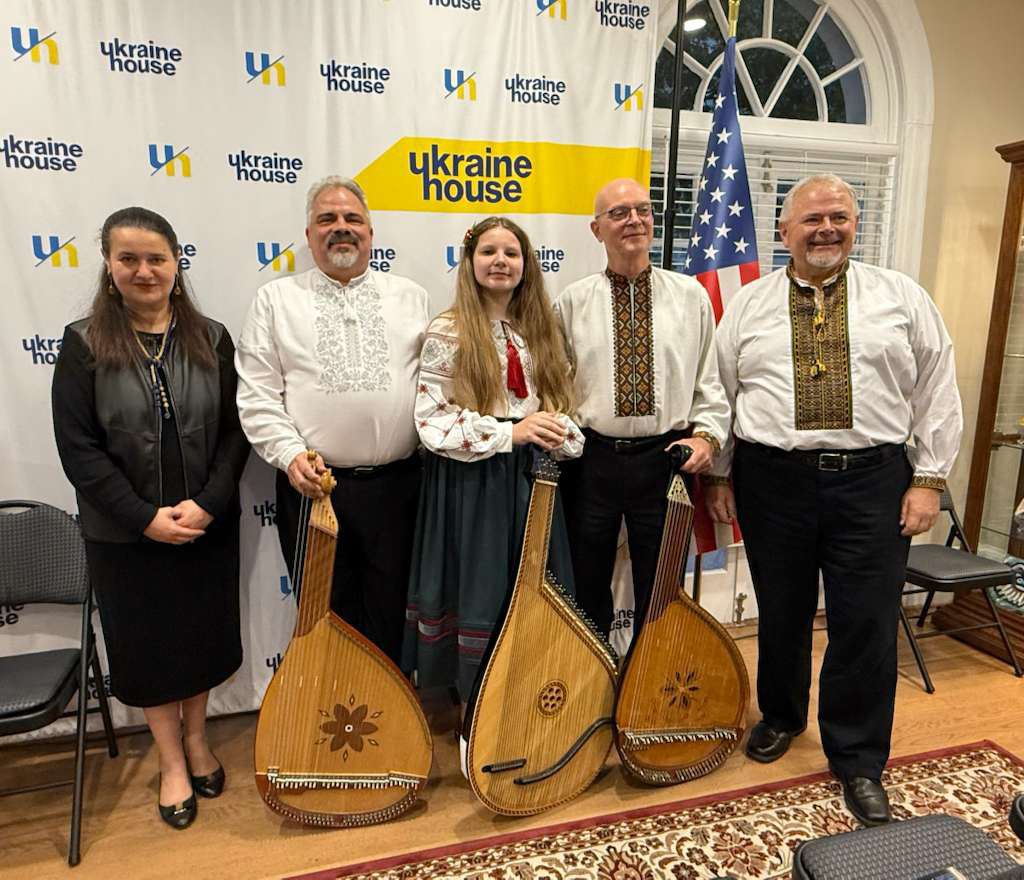
But even here we try to bring different things together. When Taras Yanitskyy performed, half the programme was in Ukrainian, and the other half consisted of classical or even contemporary music. I remember how he played the soundtrack from Twilight on the bandura — and part of the young audience was simply thrilled. In other words, people come for the music — and through that, they discover Ukraine for themselves.
But through all these formats — cultural, culinary, artistic, educational — people, upon entering Ukraine House, encounter Ukraine on a deeper level. Right at the entrance, they see the monument to Skovoroda. Next to it is a bullet-riddled children’s slide, brought from Irpin. Inside is a memorial to the family of Pastor Serhiy Haidarzhy, who were killed in Odesa. There are personal belongings there — toys, children’s shoes — donated by Serhiy, the father. We also have a model of the Vampire drone from the superb Ukrainian company Skyfall, and next to it is a permanent exhibition of photographs by a great friend of Ukraine and a friend of Ukraine House, Howard Buffett Jr., entitled The Courage of Ukraine.
And regardless of why a person has come — whether for the exhibition, a concert, or simply out of an interest in the cuisine — they leave here with a better understanding of Ukraine. People learn something new, take away information materials, can make a donation, can buy books and photo albums, and familiarise themselves with contemporary Ukrainian publications.
This is what shapes our audience. We don’t target any one specific group. We don’t set ourselves the goal of having only members of Congress or only community representatives come to us — although, of course, we work with everyone and invite everyone.
I see, it’s about bringing different communities together.
Exactly. The US is a democracy. And I strongly believe in ‘people-to-people diplomacy’. That is precisely why, when I was ambassador, I travelled extensively across the country. At least once every two months, I visited different states, spoke at universities, and met with communities and farmers’ associations. Because the more people know about Ukraine, the more they understand this struggle, the more people fly Ukrainian flags alongside American ones — the greater the impact on those who make decisions.
It is not enough to work solely with the administration or Congress. We have seen how, over the course of a few years, under the Biden administration and with bipartisan support from Congress, five aid packages — military and financial — were passed. The US has become the number one country in terms of support for Ukraine.
But we also see how, with a change in approach within the administration, this support can shift dramatically. That is why, in my view, public support is key.
If people support Ukraine — and polls show this — then we cannot simply be ‘removed’ from the agenda. But this can only be achieved through constant communication — via various channels, in different languages, and through diverse experiences. That is why our task is to reach as many people as possible.
We even use the fence around the Ukrainian House as an exhibition space. Exhibitions are regularly put on display there — so that people simply passing by can see something, take an interest, and come inside. And that is precisely how, step by step, this understanding of Ukraine is formed.
“By helping Ukraine to prevail, the world is investing in its own security.”
Does Trump’s policy affect you? Do you notice any changes in this regard — in people’s feedback, in the organisation’s work? Or are you continuing on your course unchanged?
It does not affect the organisation’s activities. The Ukraine House DC Foundation is a US-registered organisation. It is non-partisan and receives no funding from either the Ukrainian state or the US government. We are funded exclusively by donors who support our activities. And as a matter of principle, we are outside politics in the partisan sense. We work with everyone.
Since the change of administration, we have not seen any changes either in visitor numbers or in the level of interest. People continue to come, get involved and show an interest. We openly state our position. Yes, we are an American organisation, but our mission is to develop ties between Ukraine and the US, to represent Ukrainian culture, and to be an additional voice for Ukraine in Washington.
We speak out on what we believe to be right: that Ukraine must prevail, and we explain why this is important. At the same time, we work with representatives from various political circles. Our events are attended by people from the current administration, the previous one, and the one before that. This is a normal process for a democratic country.
If you look at the polls, the picture is also quite clear. We collaborate extensively with the Reagan Institute, the Reagan Foundation, and the Reagan Library. Every year, they publish large-scale public opinion surveys on US foreign policy. These results are presented at their major annual event — the Reagan National Defense Forum. And these polls consistently show that there is bipartisan support for Ukraine in the US. We’re talking about roughly 80% support. This does not mean that all these people are prepared to unconditionally support any financial decisions. But the general perception is very clear: Ukraine is a partner and ally, Russia is an enemy, and Ukraine must prevail.
Of course, when the embassy works with the administration, it must take its priorities into account — that is part of diplomatic work. And Ambassador Olha Stefanishyna and the embassy team are doing an excellent job. But we are a civil society organisation engaged in cultural diplomacy. We create a space for dialogue, bring people together, convey our position — and we see that support is not waning, but rather growing.
Today we are also seeing the war escalate. I am convinced that this is, in essence, the same war. The events in the Middle East and Iran’s attacks are part of a broader process. And this only confirms what we have been saying for a long time: aid to Ukraine is not charity. It is not simply a matter of supporting one country. It is about much more — about the confrontation between the democratic world and autocratic regimes. However grand it may sound, this is a struggle for principles, for the world order.
And this war has not been going on since 2022 — for Ukraine, it has been going on for 12 years. We saw the attack on Georgia in 2008. And now we are seeing this process continue in various regions of the world. In this context, Ukraine is not a problem, but the key to the solution. By helping Ukraine to prevail, the world is investing in its own security. Because the very same technologies of war, the very same threats — such as drones — are being used against us today, and tomorrow they could be used anywhere. And we are already seeing growing interest in the Ukrainian experience — from the business community, the public, and think tanks. In this sense, the Ukrainian House is becoming a platform where this experience can be seen, understood, and discussed. It is Ukraine’s window to America — and at the same time a window into Ukraine for Americans.
To conclude, I’d like to ask you: on the one hand, there is considerable cultural progress, but on the other, we are seeing a significant resurgence of pro-Putin Russian artists in Europe and around the world. Just recently, we at the editorial office have covered a number of such controversial performances. How should we deal with this? Should we react? Or is this a complex situation: both repelling the attacks and continuing to tell the world about Ukraine?
It is not just a complex situation. It is a very important line of struggle and a front that did not begin in 2022, nor even in 2014. I always say: it began with the fall of Baturyn in 1708. Ever since we lost our statehood and Russia began its occupation — sometimes active, sometimes creeping — it has understood very well the importance of cultural, sporting and other forms of ‘soft’ diplomacy. And over the course of these 300 years, it has acted in several directions.
The first is the appropriation of what is ours. It was stolen not only from us, but also from many other peoples — both those subjugated within Russia and those under the rule of the USSR. A huge number of artists and scientists have been appropriated — those whom Russia calls its own and presents to the world as part of its own culture. From exhibitions to the endless rewriting of Wikipedia. We’ve grown weary of it ourselves: on some pages we change it one way, they change it the other, and so on, over and over again. In renowned museums — and until 2022 this was a major part of my work as ambassador — we spent months trying to change the caption for Korolyov, as he was listed as a Russian scientist. Then we found an exhibition at the Metropolitan Museum with the caption Kyiv Rus, now Russia. Seriously?
But this is no coincidence — it is the result of decades of work, on which resources were spent, including those of the Soviet Union. There is a magnificent monument to Shevchenko in Washington. And the resistance put up by the Soviet embassy 60 years ago to prevent it from being erected was incredible.
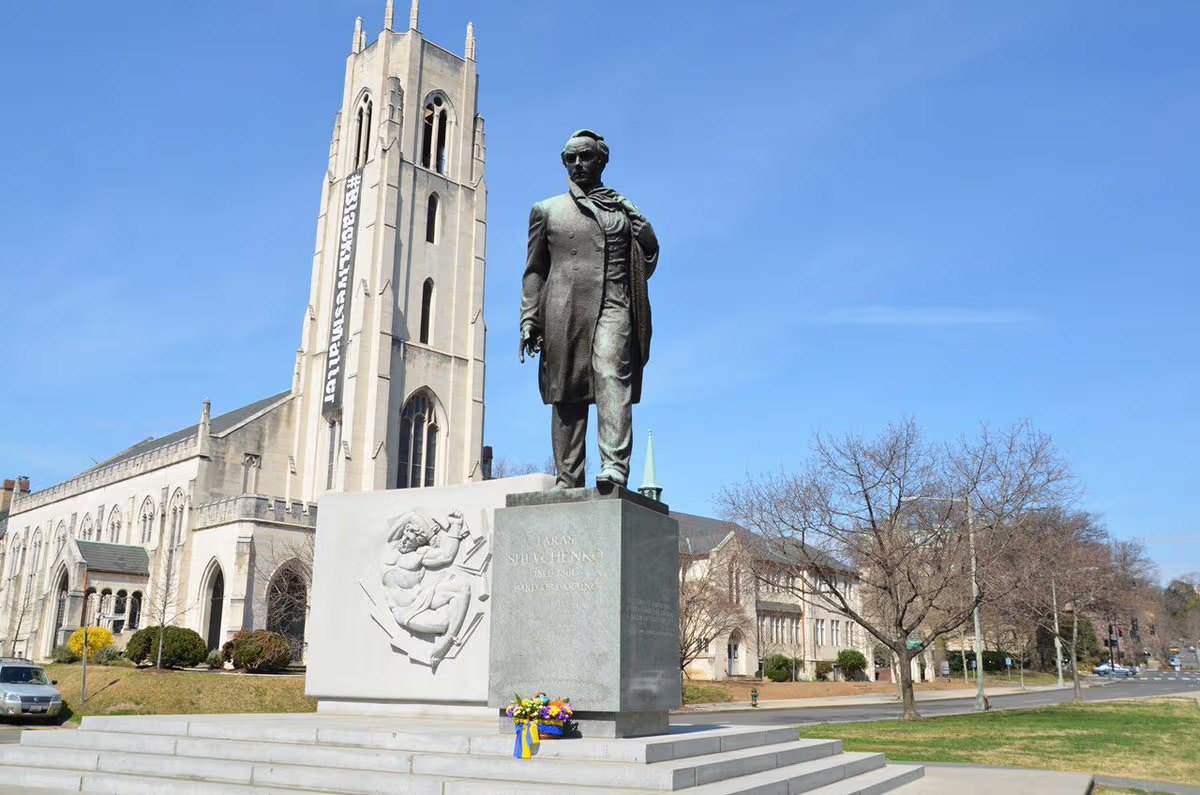
So the first thing is a major area of work: appropriation. And we at the Ukrainian House are getting involved in this, but it is a task for the whole field of cultural diplomacy. I know that Deputy Prime Minister Tetyana Berezhna is currently very much involved in this: creating as much original content as possible, telling the world who our artists are and why they are ours, organising exhibitions, and introducing Ukrainian composers and artists to the West. Because that is how every empire operated: it ‘sucked’ talent into the centre. But if a person was born in Ukraine, identified as Ukrainian, wrote about Ukraine, and created works with Ukrainian themes — that is our artist.
Even though all of us who lived in the Soviet Union did not choose our circumstances and know the Russian language — Russification was terrible. So today it is difficult to judge people who lived 100 or 200 years ago: the pressure they were under. But if a person wrote in Ukrainian, identified as Ukrainian — that is our Ukrainian, even if they are buried in St Petersburg or Moscow. It is a task for scholars — to clearly define who is one of us. And we must reclaim these people as our own.
The second area is how Russia promotes its own interests everywhere and pays huge sums of money for it. And it has always paid: both during the 30+ years since our restored independence, and before that, in the Soviet Union. It tells the world that ballet and opera are Russian, that the great writers are only Dostoevsky and Tolstoy. Translations, publications and university programmes are funded. I remember when I came to the US in 1999 to do my master’s degree — it was a revelation to me to discover the vast expanse of American literature and poetry. Even though I’d studied at Mohyla Academy and taken specialised courses.
We knew only a very small fragment — the one they allowed us to know. I was still studying during the Soviet era, and even when I first read Dreiser in English, I realised just how much the Russian translation distorted the meaning.
And this myth about ‘great Russian literature’ — yes, there are good authors there, no one denies that. But it is a very small part of world culture that we simply do not know. That is why I believe that we should not fight against Russian classics as such — they need to be placed in the right context. And at the same time, we should actively promote Ukrainian literature and music.
For example, at Ukraine House we organised an exhibition and a book launch for Mariyka Kuzma — a researcher from the University of California, Berkeley. She has written a study on Ukrainian carols, shchedrivky and spiritual songs. Half the book consists of musical scores, the other half is a thorough explanation of why Ukraine has such a strong singing tradition, why churches sing a cappella, and why many ritual songs were passed down orally. And all of this is a consequence of our history, occupation and losses. When you have nothing, you can only take with you what you remember.
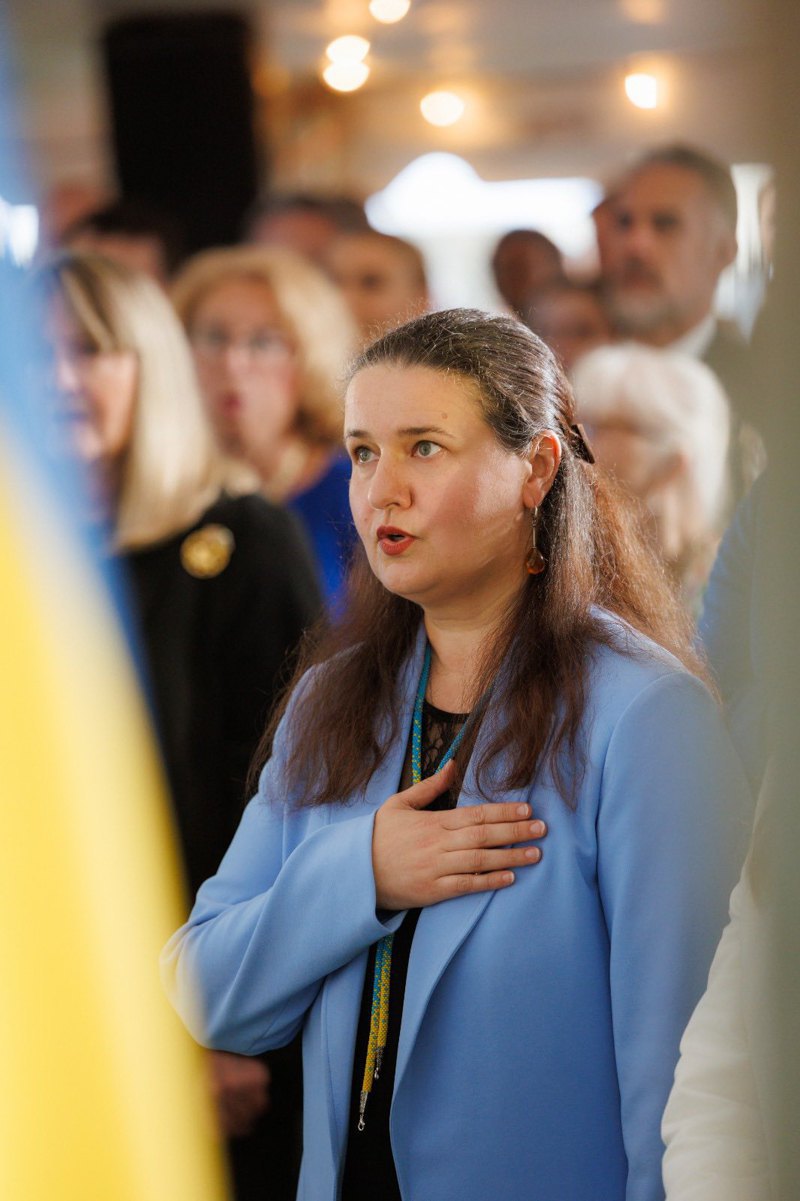
That is why we need to talk about this. We have something to say. And we are not competing with Russian culture — we are simply showing that ours is no less significant, and sometimes even more so.
And the third approach is ‘cancelling’ the Russian presence as a weapon. I believe this is necessary — but in relation to specific individuals, not classic works. I’m talking about contemporary artists who support Putin or remain silent whilst continuing to perform abroad, saying: ‘we’re above politics’. There must be an uncompromising struggle here. Because very few have taken a clear moral stance. Most either openly support him or remain silent — and that too is a form of supporting a crime. I believe that those who remain silent are accomplices.
And we — both when I was ambassador and now at the Ukrainian House — are constantly working alongside the community: writing letters, appeals, and responding. There are very strong communities in New York and Chicago that are also engaged in this. Because if we allow these processes to return — to let them perform somewhere, to let them sing somewhere — it normalises those who effectively support the killing of civilians. This must not happen. But at the same time, it is important to maintain a clear distinction. Because sometimes I see how we simultaneously speak out against specific performers and against the works themselves. To say that Dostoevsky is a bad writer? No. But I will speak out against readings of his works if they are not a critical reflection. For example, on the theme: ‘Let’s read Dostoevsky, Kuprin and Tolstoy to see where this dark soul comes from and that Russians have been natural killers from the very beginning.’ Why not? Such a discussion is possible. That is why a scientifically grounded approach is important here.
But when it comes to contemporary artists, sportspeople and restaurants — here we need to be clear: this is not OK. Just as it is not OK to do business in Russia right now. Businesses can make their own choices, but we as citizens vote with our wallets. I, for example, do not buy products from companies that continue to operate in Russia. And that, too, is part of this struggle.