






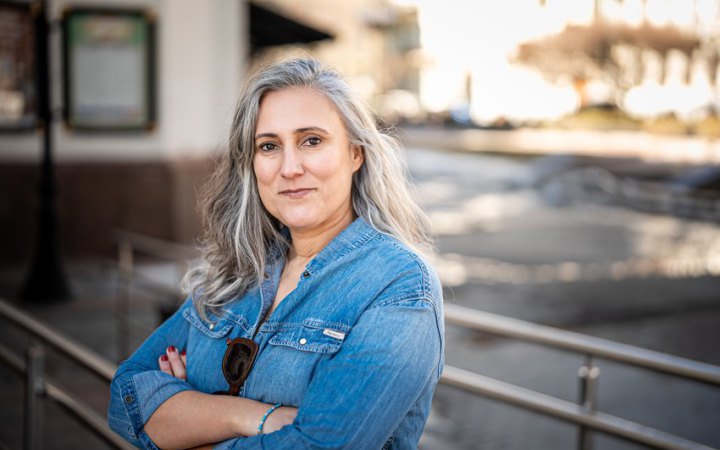
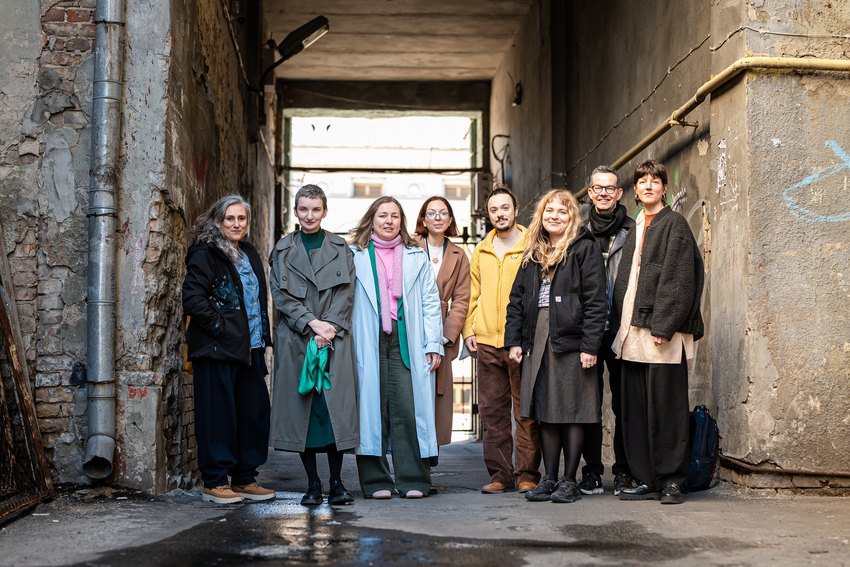
I arrive in Kyiv on the morning of March 9, after more than 24 hours of travel from Avignon. I am welcomed by the radiant smiles of Olia Diatel—co-curator of the visit, co-founder of Insha Osvita, a non-governmental organization and professional community that develops educational programs, works with culture and art as forms of collective learning, and creates mental and physical learning spaces, and of the Antonin Artaud Fellowship—and Anastassia Haishenets, whose warmth immediately dissolves the fatigue of the journey. Our group is small, composed of artists and cultural professionals from different fields—visual arts, theatre, and performance. This diversity allows for a richer, more layered understanding of the city and its artistic ecosystem.
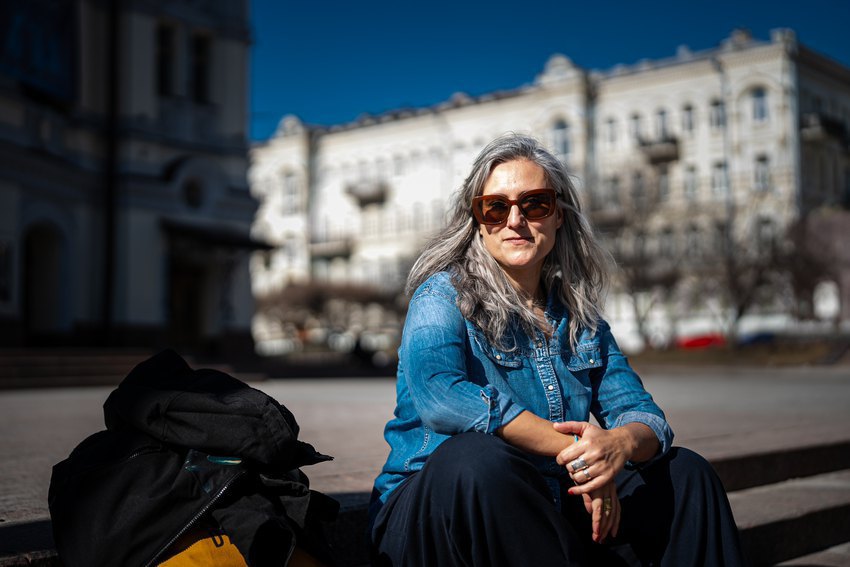
I have travelled to many regions of the world under difficult circumstances. Yet I have never experienced a place where bombardments are part of daily life, and where everyday life continues with such visible joy in being together. That first welcome, filled with energy and generosity, almost made me feel as though I were arriving in any other European city. But that impression quickly fades. Air-raid sirens punctuate the days more frequently than I had imagined, even though I am told this is a relatively “calm” period.
One of the most striking aspects of the visit is the theatre audience. How is it possible that every performance I attend is sold out? Sitting in these full houses, I am reminded of the utopian vision of Jean Vilar, who founded Festival d’Avignon in 1947: a theatre for all, where audiences gather as a collective body. Here in Kyiv, that vision takes on a renewed and urgent meaning. People come together not only to watch a performance, but to share a form of endurance, to find ways of coping, however briefly, with the reality that surrounds them. In those moments, the audience becomes a community of equals.
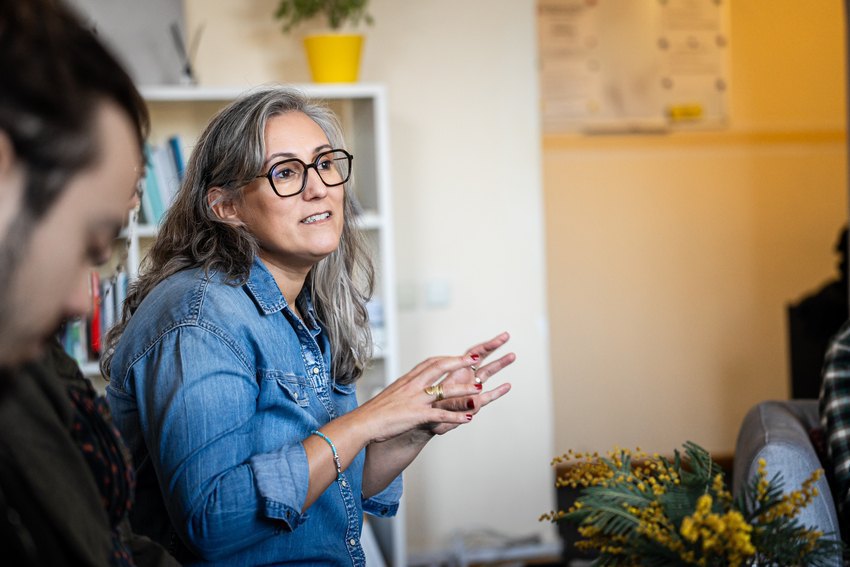
Their attention is extraordinary—precise, responsive to every detail. When a performance is interrupted by an air-raid siren, a profound silence fills the room, a reminder that Ukraine and Kyiv are under attack. And yet, shortly after, the performance resumes, and the audience returns to it with quiet determination, as if reclaiming a fragile but essential space of normality.
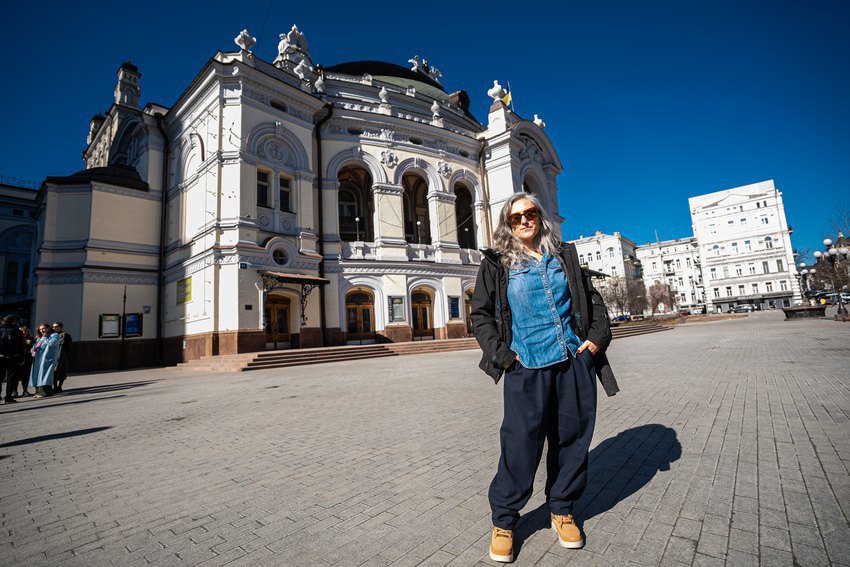
The artistic programme I encounter is remarkably rich. At the Ivan Franko National Academic Drama Theatre, a partner of the European network PROSPERO NEW, I see Macbeth and Caligula, both directed by Ivan Uryvskyi, and attend a rehearsal of a forthcoming production by David Petrosian. At Theatre on Podil, I discover The Trial by David Petrosian and More Beauty Than Sorrow by the American playwright and director Richard Nelson, performed by Ukrainian actors—a beautiful homage to the writer and activist Lesya Ukrainka. At Theatre on the Left Bank, I attend Ha*l*t by Tamara Trunova, a performance that emerged after the cancellation, in February 2022, of Hamlet, originally planned for April that year. Rehearsals were halted by the war, and after an almost year-long pause, Ha*l*t was created with only 6 actors of the 16 of the original cast. I also visit Opera Aperta Studio, founded by Roman Grygoriv and Illia Razumeiko, where they and their team share an open rehearsal of a new work that will premiere in Kyiv before being presented at the Wiener Festwochen.
I am struck by the recurring presence of William Shakespeare in several productions. His texts resonate powerfully in this context, articulating the injustice and existential tension of the present moment. It reminds me of a speech by Subcomandante Marcos during the Zapatista uprising, where “To be or not to be” became a way of expressing resistance. In Kyiv today, those words acquire a renewed and immediate urgency.
Many performances confront the reality of the full-scale invasion. What is remarkable, however, is the persistence of creativity and innovation in every artistic choice—as if each gesture were a refusal to drown in despair. These works offer audiences tools to endure, to breathe, and, even if only for a moment, to step outside the nightmare they are living.
Beyond the stages, the city tells its own story. I visit the Khanenko Museum, whose walls are empty: the artworks have been removed and hidden in secure locations, waiting for the day they can return, when Ukraine is once again at peace and free. This absence is as eloquent as any exhibition.
On the third day, Alona Karavai—co-curator of the visit programme and co-founder of Asortymentna Kimnata—takes the group to a self-organised artists' community at Nahirna22, in the former Kyiv Institute of Automation building. The artists work across sculpture, textiles, painting, photography, and digital art. In 2025, the studios were damaged by Russian drone strikes. Thanks to solidarity from Ukrainian and international partners, rebuilding began. The winter, however, has been harsh: cold and humidity have made working conditions extremely difficult. Yet, even in these fragile spaces, with walls covered in fire paintings and mould, the community's vitality is undeniable.
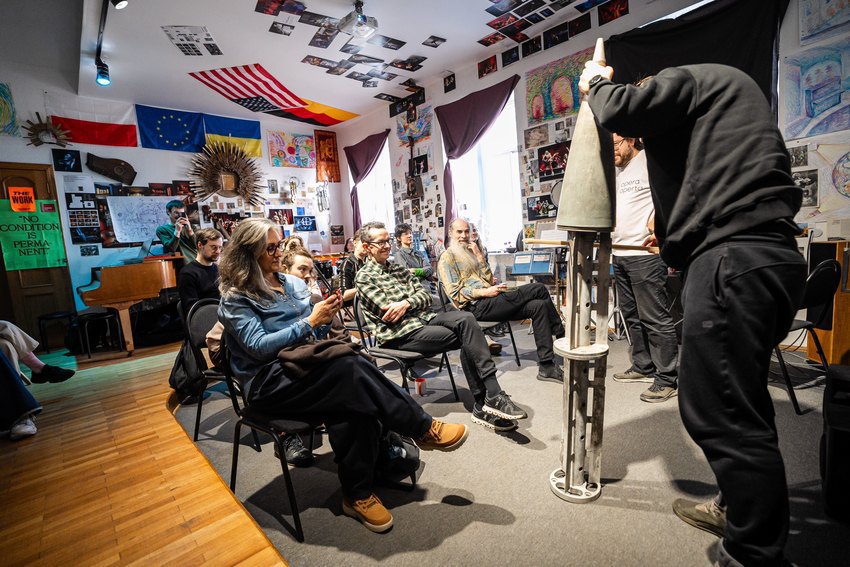
A particularly powerful moment comes during my visit to the Theatre of Veterans, where I witness a short rehearsal. Performers with prosthetic limbs and faces marked by war present an ironic reinterpretation of the Aeneid. It is an experience of striking intensity, combining sarcasm, lucidity, and hope. The director, Olha Semoshkina, works with great care, shaping each role around the physical reality of the performers. It is a deeply moving example of how art can hold space for trauma while transforming it.
At the same time, the absence of international performing arts is palpable. Four years of full-scale invasion have severely limited the presence of international work on Kyiv’s stages. Exchanges continue in other forms, but something essential is missing. As a curator of an international festival, I am acutely aware of this gap. It is urgent not only to come to Ukraine, but also to create the conditions for Ukrainian artists to travel, to encounter the work of others, and to re-establish the flows of exchange that sustain artistic life.
After five days in Kyiv, admiration is not the right word—nor is resilience enough to describe what I have witnessed. What remains is a sense of responsibility. To keep showing up. To keep building bridges. And to refuse, from wherever we stand, the slow normalisation of a war that Ukrainians continue to resist every single day.