







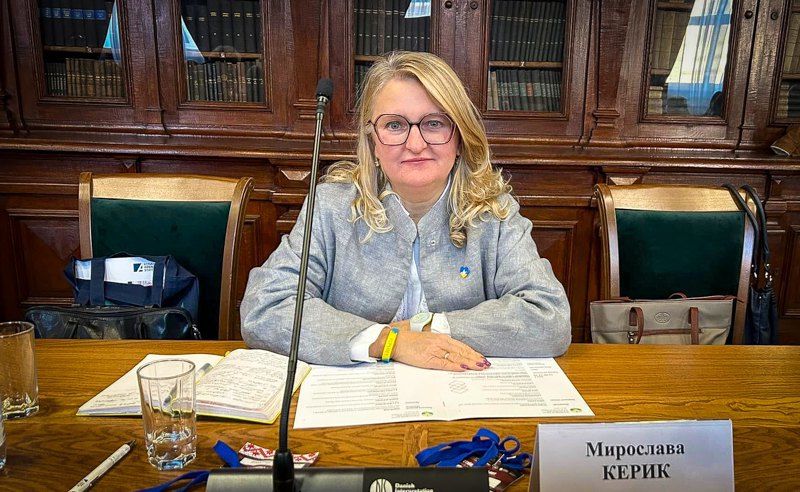
Ms Myroslava, in your opinion, how has the community at the Ukrainian House in Warsaw changed since 2022? How do you perceive these changes?
Having lived in Poland for 24 years, I have observed these developments and am actively involved in the processes taking place here. There is a Ukrainian minority — Polish citizens of Ukrainian descent who were born and live in Poland. Some of them were resettled during Operation Vistula, but they are the indigenous population; only the borders have changed. My parents were also born in the Second Polish Republic and, accordingly, held Polish citizenship, but it was taken away from them. This community lives mainly in the north and west, in former German territories, and they are mostly Greek Catholics.
There is also a community from Podlasie — this is on the border with Belarus and north-western Ukraine. The Orthodox Church dominates there, although there was also a Greek Catholic presence before the arrival of the Russians. The situation there is complex: people partly identify themselves as Ukrainians, partly say they are ‘locals’, ‘Orthodox’, although they speak Ukrainian and sing songs about the Cossacks. The Second Polish-Lithuanian Commonwealth and communist Poland worked to ensure that people did not identify with Ukraine and were instead ‘local Orthodox Christians’ of an unknown nationality. In the interwar period, during censuses, people were encouraged to identify as Rusyns, Boikos or Lemkos, just so long as they were not Ukrainians. And this is still being manipulated today: for example, there is an exhibition of Lemko or Boiko culture, and it is presented as distinct from Ukrainian culture. I wonder whether Lemkos or Boikos consider themselves non-Ukrainians?
There are regional differences, but they are Ukrainians.
Exactly!
There is also a group that arrived after the collapse of the USSR. Those were hard times in both Ukraine and Poland; people traded and became migrant workers. And when Poland joined the EU, significantly more Ukrainians came to stay for longer.
Before the full-scale invasion, it was mainly migrant workers who came, working in agriculture, construction, logistics, services, and as carers or domestic workers. There was also migration of people working in professions requiring qualifications and higher education.
In 2014, following the occupation of Crimea and the start of the war in Donbas, there was the first wave of our war refugees to Poland. But they had no chance of obtaining such legal status (rather than just in name), as the war was not taking place across the whole of Ukraine. This argument is still used today. After 2014, it was mainly residents of large cities who arrived, people with education and professional skills.
In 2022, even more arrived. Some eventually returned to Ukraine, others moved on. There are now around a million Ukrainian citizens in Poland. This has come as something of a shock to Polish society. For the most part, it was used to thinking that ‘Ukrainian woman’ equalled ‘cleaner’. Some Polish journalists joked about this until 2022. We criticised them for it and wrote open letters, because it was done in an offensive tone.
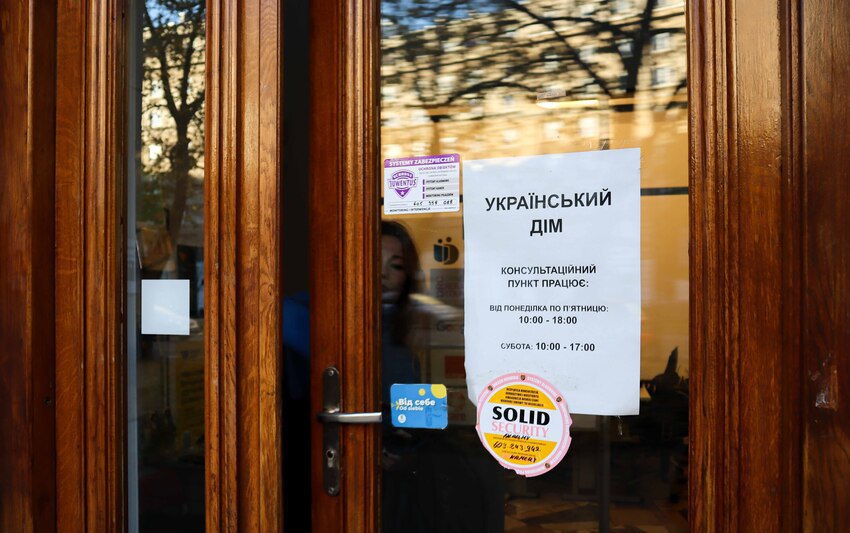
It was present in popular culture as well.
Yes, and that is unacceptable — even out of respect for the profession. So, after 2022, people from large cities arrived; the war changed everything. In Ukraine, they had their own lives and professions, and they sought to find themselves here, including professionally. However, in Poland, the available jobs often did not match their qualifications. As a result, most of those women with children are forced to work below their skill level.
Another issue is temporary protection as a legal status. There is a special, so-called “Ukrainian” law under which this status is extended for five months, then for half a year. All of this remains uncertain.
In March, the president signed a law extending the legality of stay, but unfortunately limiting access to healthcare and child benefits. There is a problem of what to do with the most vulnerable groups.
We have a very diverse cross-section of Ukrainian society. There is a distinct group in IT, as well as people working in culture, communications, creative industries, and education.
How have the requests and needs of the community gathered around the Ukrainian House changed now that the adaptation phase has passed? What communication challenges do you face today?
At the beginning, people came for urgent assistance: accommodation, documents, later for jobs, schools, and kindergartens for their children.
So, the basics.
Yes, but interestingly, access to Ukrainian books was also part of those basics. In our international advocacy, we often emphasised this to our partners. It was not only about food and shelter, but also about maintaining a connection with culture.
Since 2014, we have had Ukrainian women’s clubs. For some time, we were unable to support them financially, but in 2022 they were revived. Women arriving from Ukraine needed such support groups. And this huge need remains: to have their own clubs, their own cultural codes that we understand.
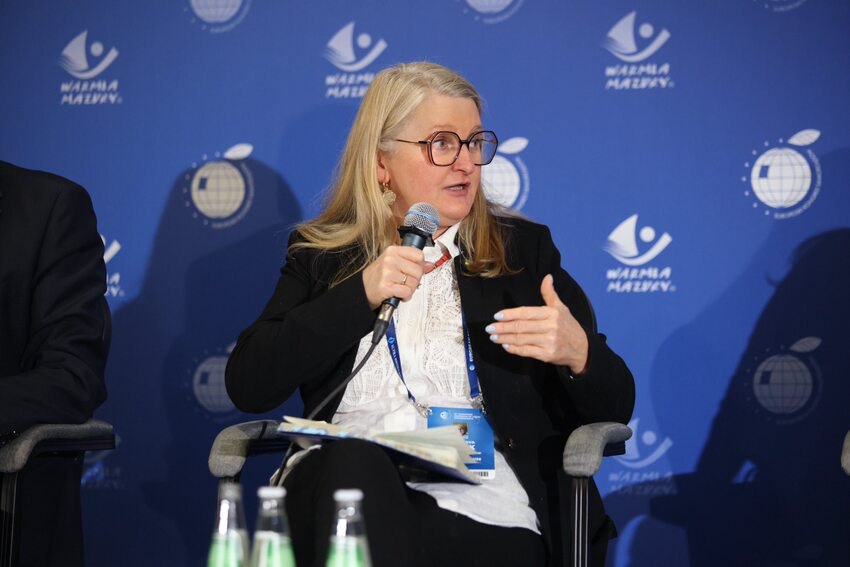
Are these different events?
Yes, there can be up to seven events a week. We have several venues where a wide range of activities take place: meetings with psychologists, sports sessions, artistic events, consultations, and more.
At first, we noticed that women did not allow themselves to focus on their own needs — as if thinking, “I don’t have the right to.” But over time, this changed: there came an understanding that in order to endure in the long run, a woman needs to be well herself. Sports activities appeared, including boxing training.
Of course, there are cultural events, as well as visits to various museums and institutions. All of this helps create a support network.
During the first year of the full-scale invasion, virtually every meeting we held included a psychologist, even if it was on a different topic.
Support is also crucial because women’s emotional state often depends on what is happening in Ukraine. They all have air raid alert apps on their phones. Their families are in Ukraine — husbands, fathers.
Over time, the problems have become more complex. For instance, there is a group of elderly people and people with disabilities who, following changes in the law ending certain forms of assistance in March this year, have completely lost access to support and healthcare. Only a few exceptions retain such access. Many of them have nowhere to return to in Ukraine, as their homes have been destroyed or are in occupied territories, and they have no family. They need organisations like ours for social guidance and консультації.
There is also a need for culture, for being together within one’s own community. People especially seek a sense of togetherness during key calendar holidays and traditions. For example, in 2022, we immediately organised an Easter breakfast because people felt lost. It was a deeply emotional event — we were all in tears. We held several more shared festive dinners and breakfasts, but later realised that people had begun to rebuild their lives, form their own circles, and such gatherings were no longer as necessary.
What was needed instead were cultural and more life-affirming events. So we organised a Christmas fair and gave small gift collections to the children of fallen soldiers. Now people increasingly want events to be meaningful for Ukraine. Even in the women’s club, participants sew pillows for the needs of the military.
There is also a growing sense that the war is unlikely to end soon, meaning people will remain here for longer. This brings new challenges: recognition of diplomas, employment matching qualifications, and improving language skills. In Poland, English alone is not enough. People are looking for long-term strategies.
There are also immigrants who see the Ukrainian House as a way to support their fellow citizens. We already have regular visitors — for example, around a thousand people come to the library. We have formed a stable community in Warsaw: some attend cultural events in our gallery and use advisory services, others come only for cultural programmes. We host readings, exhibitions, literary meetings, and discussions. All of this is curated by the “Dim” Gallery within the Ukrainian House.
Could you tell us more about the gallery? Was it planned from the beginning, or did it emerge later? And am I right in understanding that it essentially has its own programme of events and curators?
Our foundation has existed since 2009. In 2014, after the Revolution of Dignity, we were able to rent premises from the city for the needs of the Ukrainian House — a cultural and integration centre. That is when we finally had a physical space. At that time, there was already a room intended for a gallery, though it was not yet called that: it was under renovation, and auctions and other events were held there.
Later, after the renovation, we had a curator for several years — Yuliya Lashchuk, a researcher who wrote her dissertation on Ukrainian female artists in Poland. She is now in Florence, at the European University. At that time, it was not yet formally called a gallery, but the idea was already there — to present contemporary Ukrainian art in Poland, as well as Polish artists for whom Ukraine is an important theme.
The gallery has existed as a separate entity for six or seven years. It is now headed by art historian Ivanna Berchak. Since the gallery is located within the Ukrainian House, even people who do not usually visit galleries have the opportunity to encounter art.
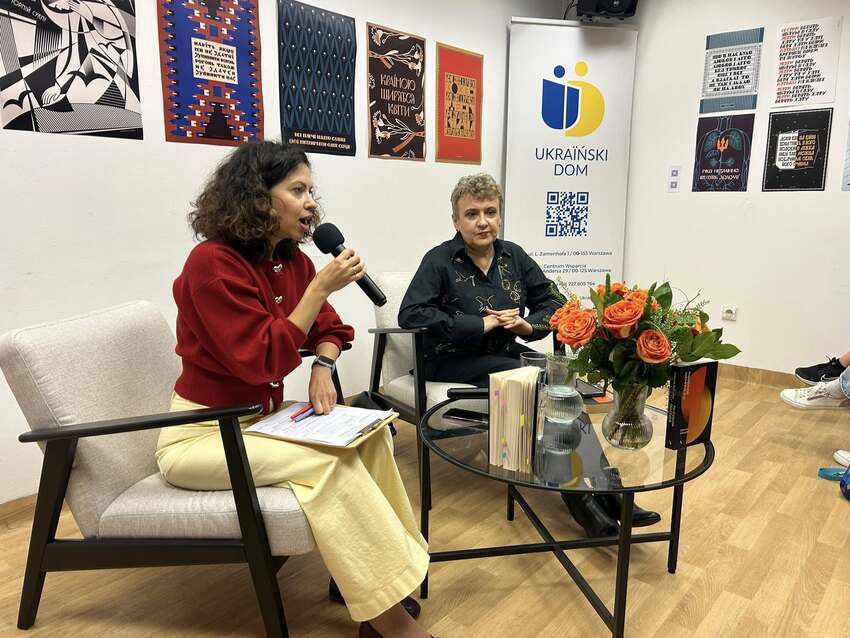
Some of the works exhibited with us were later shown at the Ukrainian House in Kyiv and were also acquired by various collections.
We usually hold an open call where artists submit their projects. In the past, we had up to ten exhibitions a year, but we realised that this was too many and too fast for visitors — a month would pass and it was already time to install a new one. Now we host around five projects a year.
In February, we opened the exhibition “Nahirna 22” — a collective project by Ukrainian and Polish artists. At the same time, the works are for sale, as the art collective “Nahirna 22” is based in Kyiv, in the former Institute of Automation building, which has already been hit twice, and is raising funds for repairs.
This is also important for us. There are very interesting works there, as well as emerging Ukrainian artists whose careers are on the rise. We also collaborate with Biryuchyi: we have already hosted several exhibitions by their residents, and after “Nahirna 22” there will be more. They also feature compelling artists; last time, it was, I believe, a Lithuanian–Ukrainian–Polish residency.
As a researcher, I know that the gallery world is quite closed — a hermetic environment that is difficult to break into — but we are trying.
So it is not just a gallery within the Ukrainian House, but a small yet fully-fledged player?
The idea behind the “Dim” Gallery is to present contemporary Ukrainian art and young Ukrainian artists to Polish audiences, as well as to Ukrainians living in Poland. We do not want to remain inward-looking. We want Polish gallerists and artists to see our projects too. We are interested in becoming part of the gallery ecosystem in Poland.
How do you perceive the Ukrainian cultural environment in Poland? It seems that different organisations are not very united. Perhaps there is even a certain level of competition? Is there, for example, a practice of sharing information about events?
On the one hand, it may appear that way, and perhaps such sentiments do exist to some extent.
When we founded the organisation, it was an association of Ukrainians in Poland representing the Ukrainian minority. Back in 2009, the most pressing issues were legalising residence and employment. It was easier for me, as I was pursuing postgraduate studies in Poland and spoke the language, but most others did not. So we decided to focus on providing assistance and informing Ukrainian citizens in Poland about their rights and responsibilities.
Today, there are far more things that unite us — including support for Ukraine, organising cultural events, advocacy, and education.
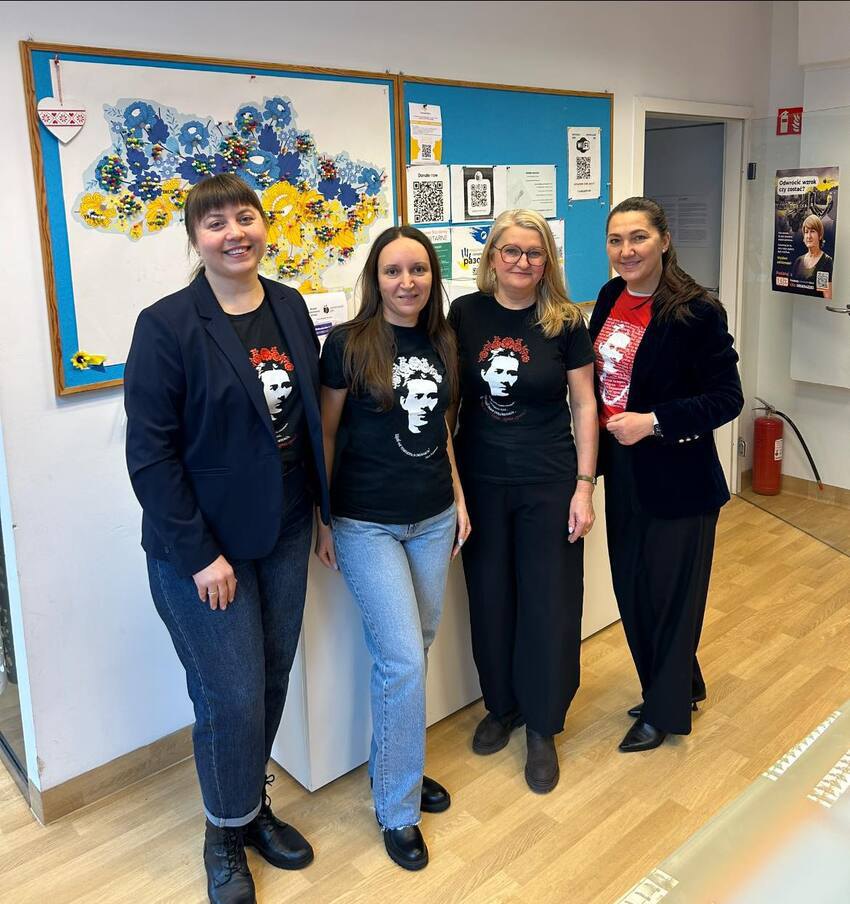
There was another moment: with the full-scale invasion, quite a number of leaders and members of various Ukrainian organisations arrived here. And they mostly had a stereotypical view of the diaspora — as if we knew nothing. They would tell us what they were planning to do, and I would reply that we had already been doing it for 15 years (smiles). I found it a bit amusing. Some of them would not even say hello.
So they assumed you were very disconnected from Ukraine?
That we did not understand things and were no longer up to date.
Because, for example, within the older diaspora in the United States and Canada, there are indeed many people for whom Ukraine is more of a romanticised, imagined place.
But we actually lived in Ukraine for most of our lives. We have families there, and it is not far away. So we are very much in touch.
For our organisation, it was important to maintain a traditional cultural component. We organised Independence Day concerts with sharovary and hopak. But we also featured contemporary performers such as Go_A, Kozak System, and others. So there was different music for different audiences.
At the same time, it was important for us to showcase contemporary Ukrainian culture — not just the stereotypical, folk version. We do not want the Ukrainian community to be reduced to folklore, borshch, and varenyky. That is part of our culture, but far from the only part. We present high-quality, contemporary Ukrainian culture. When we speak about the past, we also analyse it and look towards the future. Some may accuse us of being elitist, but in reality, that is not the case.
Over time, those leaders of Ukrainian organisations began coming to us for advice and cooperation, so it has also been a process of learning and exchanging experience.
At the same time, it was largely Ukrainian refugees who brought speed and new approaches to communication. I appreciated this fresh, different perspective. Cooperation did take place.
The Ukrainian House collaborates extensively with other organisations — from festive events to fundraising initiatives. We are members of a migration consortium coalition that includes several Polish organisations, with whom we also cooperate.
For example, the Ukrainian House works with feminist organisations, as well as with various social projects such as Help Hub, which relocated from Ukraine and focuses on HIV-related issues, conducts training for women, and offers self-defence courses. So we cooperate across different areas, and we value the fact that there are various organisations covering most needs. I believe this is what horizontality is about. The head of the Ukrainian Cultural Foundation, Nataliya Kryvda, once said that Ukrainian society is a horizontal society.
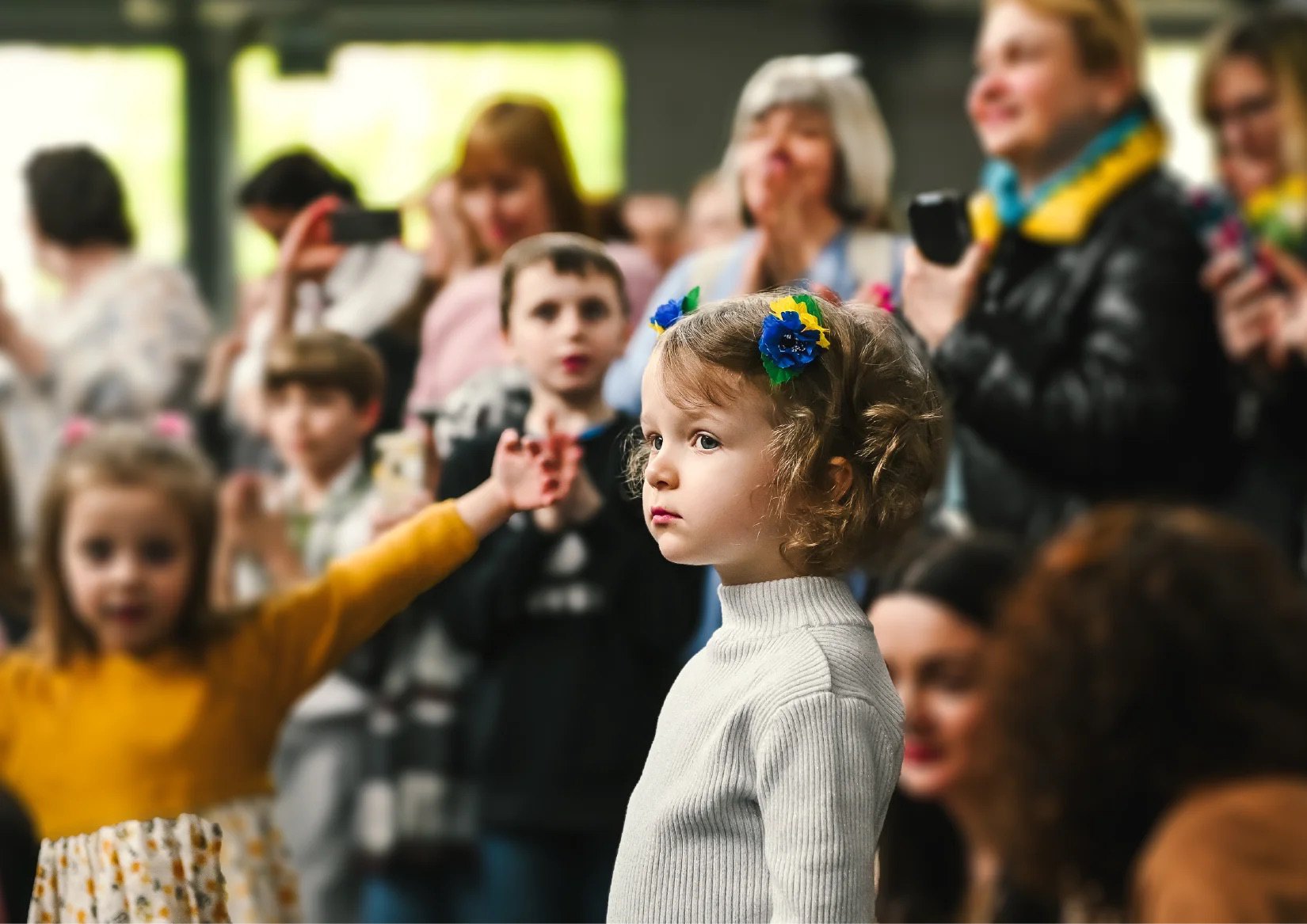
We are encountering a certain conflict between the old and new diaspora in Europe. The newer wave is often seen by the older diaspora as having “arrived to everything ready-made.” And then there are also labour migrants. Do you feel this conflict in Warsaw?
Since, in addition to being a historian, I am also trained as a sociologist, I am always interested in what processes are taking place within communities. In order to create something, you need to understand people’s needs. I used to have more time to observe Ukrainian groups on social media. There I noticed that among workers who had arrived before 2022, there was a certain sense of grievance, as they remained in a different legal status.
They had to fight for everything — the right to work and legalisation. Over time, this improved, including after COVID and the invasion, but this sense of resentment was still noticeable. People would write: “Oh, you arrived and got everything, while we worked so hard.” But I suspect this did not go beyond social media, because in reality everyone became involved in helping.
Together with the Polish Centre for Migration Research, we conducted a study on assistance to Ukrainians in Poland. It is important to remember that part of the Polish support for Ukrainians in 2022 actually came from Ukrainians who had been living here for a long time.
I like the diaspora in the US and Canada in this respect: they are quite united, and no one declares themselves more important than others. Here it is somewhat different. But we are also geographically closer and more connected to Ukraine, so the experience is different. Still, I do not see a radical conflict between Ukrainian communities in Poland — I see competition.
Some circles are not familiar with the Ukrainian House and do not need it. For example, the IT sector — they only came to us when we hosted stand-up shows. They also engage financially. But it is normal that some groups do not need to be constantly involved with us.
For our organisation, reaching different circles and communicating with various “bubbles” is a challenge.
Recently, a deepfake technology was used against you. What exactly happened? How do you generally respond to disinformation, and were you able to find out who organised it?
This story began last year during the election campaign. We found out about it by chance. The administration of one of the cities wrote to us saying that we had submitted an application to organise a rally in support of candidate Rafał Trzaskowski, with a new signature. They wanted to check with us because the email was bouncing back.
The message had been sent from a fake address and supposedly from my profile. When we saw the email, we realised that someone had simply forged my signature.
In the next instance, emails were sent in the name of one of our staff members, who is not a public figure, to entrepreneurs about the election campaign. It claimed we wanted to organise picnics in support of Trzaskowski and were requesting 50,000 zlotys. This was in a region where people do not vote for Trzaskowski. We only learned about it because Ukrainians are everywhere — a woman told us that screenshots of these messages had appeared in a local group.
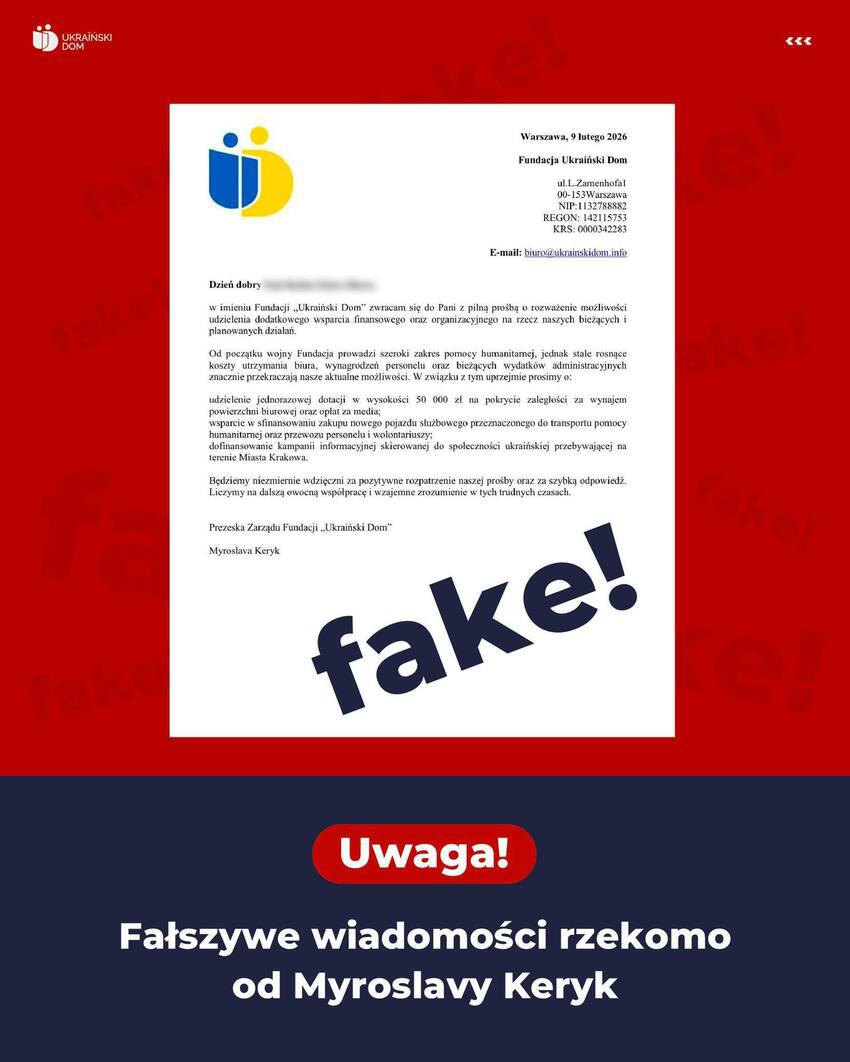
However, thanks to umbrella organisations and networks, we circulated statements that this was an attempt to discredit us. The correction spread very quickly.
When I was in Wrocław, a new fake emerged: it was claimed that I had also written to the Kraków city council requesting 50,000. The council initially replied to me quite sharply, but later they apologised after realising it was a fake.
Six cities reported similar incidents, which suggested a coordinated campaign.
Interestingly, no one seemed to consider verifying the information, especially at the municipal level.
In this campaign, those behind it created a fake profile with a fake email address. Again, thanks to the network of various organisations, we issued statements everywhere clarifying that neither the Ukrainian House, nor I, nor our staff had any connection to it. But it is always necessary to speak about it publicly — otherwise someone may believe it, and our organisation’s reputation could be damaged.
Last year, fake profiles were also occasionally created on TikTok and X — impersonating me and the foundation. On Poland’s Independence Day, my real interviews were circulated but mixed with fake ones in which I allegedly insulted Poles and accused them of various things. On Hanukkah, a video appeared on TikTok from a fake profile in which I was speaking Russian and saying offensive things about Jews. I watched it — it was a video generated by AI using my voice. They were clearly targeting specific triggers.
There is also a conspiracy theory in Poland that claims Ukraine is being cleared to make space for Jews who will resettle there. These videos were linked to that narrative. The peak of it all was when a letter sent in my name reached the Speaker of Parliament. I only found out about it because I received a reply.
Was this also related to fundraising?
About Hanukkah.
In January, we were learning every day about fake accounts and manipulation. Then I found out there was also a fake page of the Polish Prosecutor’s Office. After a recent reform, each prosecutor’s office is supposed to include prosecutors specialising in hate crimes. However, there is no separate specialised prosecutor’s office.
In this campaign, such a page was created — with the official coat of arms and full institutional branding: a “specialised prosecutor’s office for combating hate crimes.” It included posts and screenshots of what looked like official news. Then suddenly someone sent me a screenshot saying that “the prosecutor’s office had taken action against me” because I was allegedly using hate speech against Poland, and that I had been punished. It was a paid ad reaching around 20,000 people, with hundreds of comments and shares. And this was impersonation of a state institution.
We wrote to the prosecutor’s office. At first, they were reluctant to engage, but over time, fortunately, they were convinced that such campaigns are dangerous for Poland as well, because other leaders of the Ukrainian community could become targets. We were discussing earlier the idea of shared interests among Ukrainian communities — unfortunately, often they also arise because we are being discredited. In the case of the prosecutor’s office, we were able to prove that it was fake.
And do you know who did it?
We very much hope for a serious response from both Polish and Ukrainian authorities, as this poses a threat to the security of both states.
In my view, this is a form of hybrid warfare waged by Russia against Ukraine and Poland, and this time Ukrainian leaders and civil society organisations became the target. It is worth emphasising that in most cases, women leaders are the ones being attacked.