






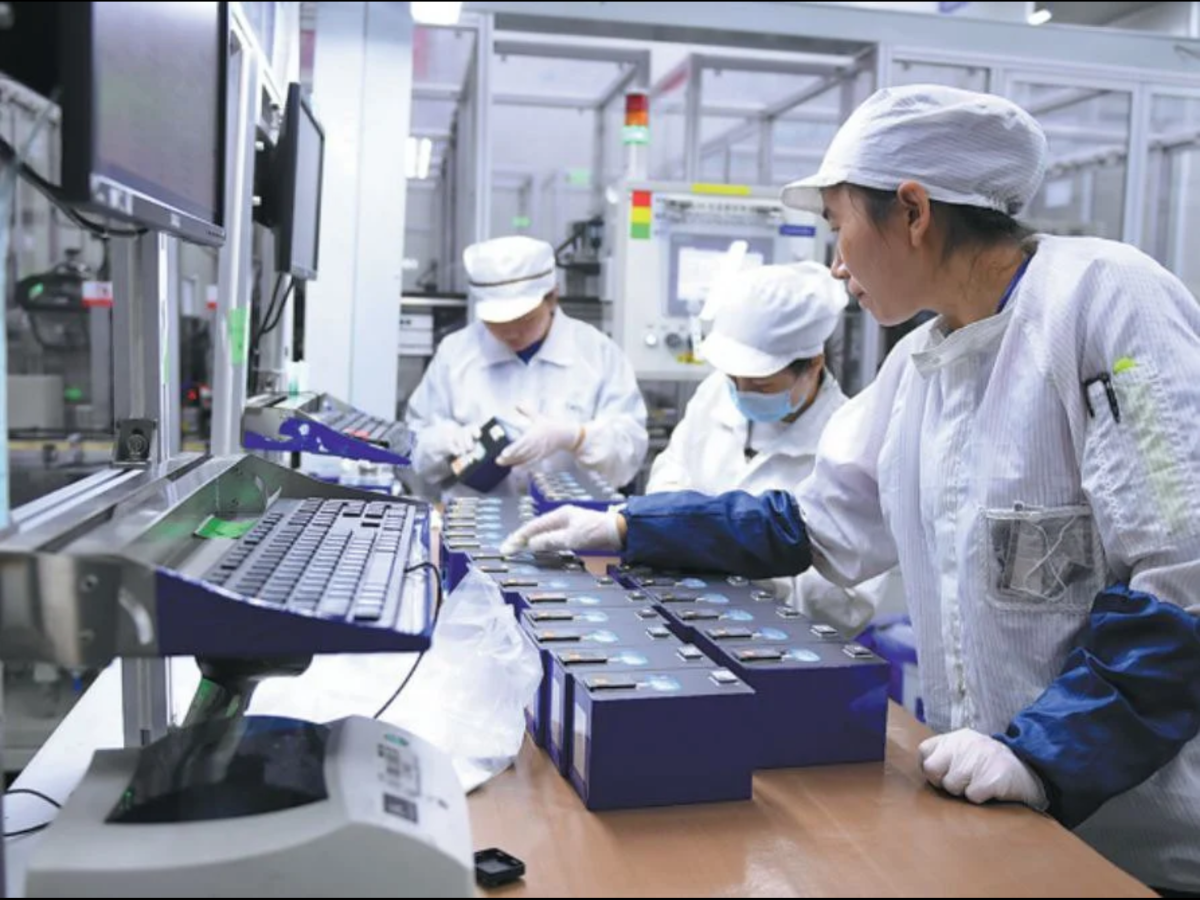
The numbers describing the global drone market’s dependence on China are even more striking. Roughly 92% of global NdFeB magnet production for electric motors is concentrated in China. Nearly half of all lithium-ion battery cells are produced by three Chinese manufacturers. Around 60% of printed circuit boards, more than 75% of UAV flight controllers, and dominance in FPV motors, ESCs, video transmitters, and thermal cameras — all of this is also tied largely to Chinese production. As a result, even drones designed and assembled in the United States or Europe often remain critically dependent on the Chinese component base.
It is precisely this reality that the Pentagon has tried to address systemically. It has released a document titled the Drone Dominance Program Supply Chain Framework (DDPSCF). At first glance, it looks like a technical document for suppliers. In fact, it is a strategic declaration that lays out the rules of the global drone industry for the next decade.
The key idea of the document is not that the United States is banning Chinese components. The NDAA — the U.S. annual defence authorisation act — has been doing that since 2019. What is new is different: the Drone Dominance Program (DDP), the Pentagon’s large-scale program for drone development and procurement, is deliberately moving ahead of the law and setting the standards of the future earlier than formal rules require.
Why the Pentagon is in a hurry
The Drone Dominance Program is more than industrial policy. It is America’s attempt to adapt to the reality of modern warfare — a reality rewritten by Ukraine’s experience in 2022–2026.
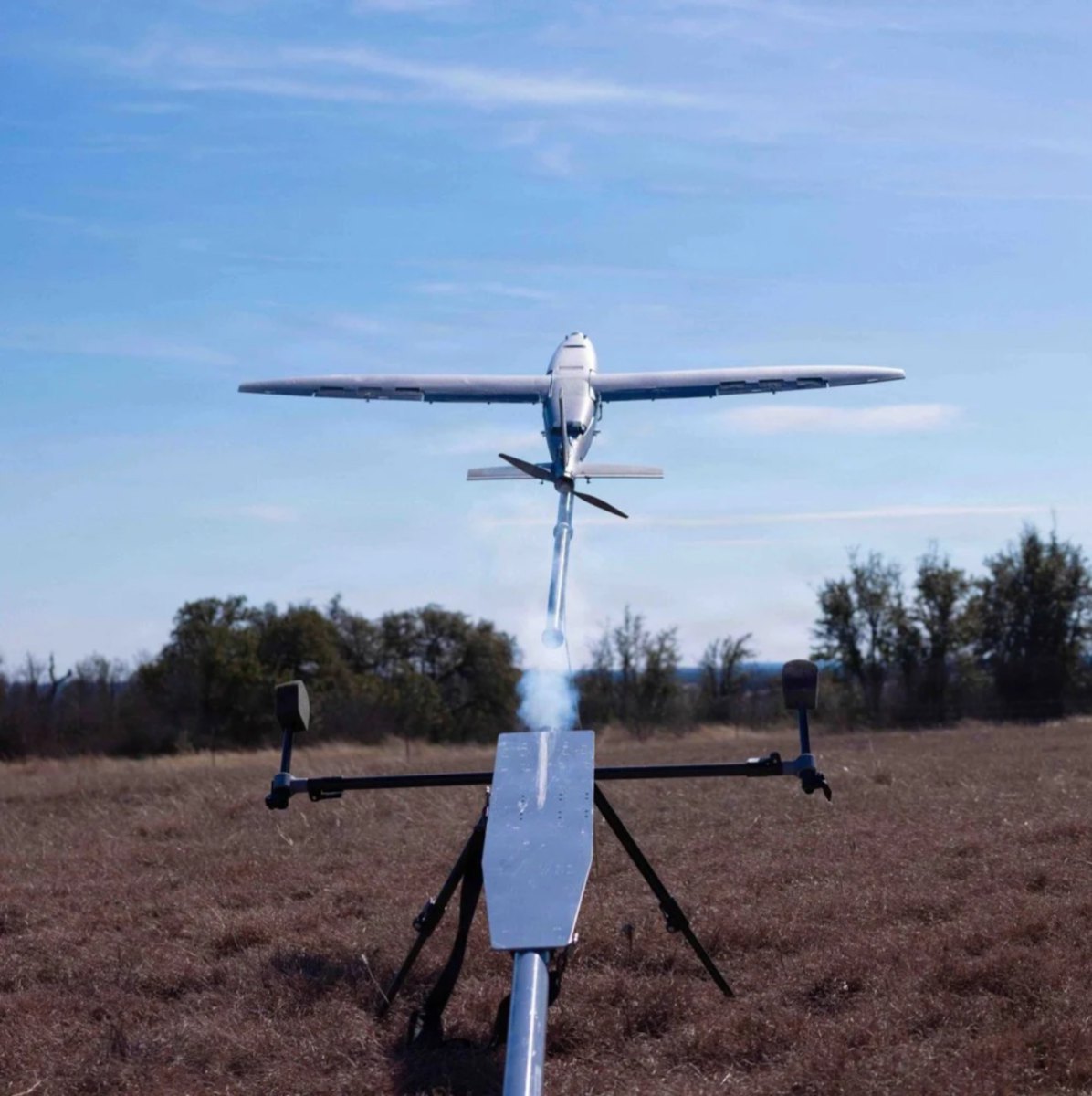
That reality breaks the old American assumptions about weaponry. It turns out that a multi-million-dollar interceptor missile against a drone costing tens of thousands is an asymmetry not in the West’s favour. It turns out that a defense market built around expensive platforms and decade-long procurement cycles cannot keep up with a war in which volumes are measured in millions of units per year.
The DDP is an attempt to recalibrate. $1.1 billion in guaranteed procurement of more than 200,000 small strike drones, firm dates, and concrete requirements for every component. The program is built so that, for the United States, quantity, unit cost, and production tempo become more important than the elegance of any individual technical solution.
The DDPSCF is the instruction manual for executing this program: which components, from which source, and by when must be in a drone for a manufacturer to qualify for participation.
Where exactly the DDP is tougher than the NDAA
The DDPSCF does not duplicate the NDAA. In a number ofcritically important places, it is tougher — and the Pentagon itself describes this as “acceleration beyond statutory requirements.” A few examples.
Motors. The NDAA does not prohibit Chinese motors in Group 1 sUAS at all. The DDP requires that all motor assembly take place in a “non-covered” country (i.e., not China, Russia, North Korea, or Iran) starting in August 2026. And not only assembly: the metals for motors must be smelted in the United States or in one of the 28 countries on the qualifying-countries list (Ukraine is not yet among them). Magnets must be produced in a “non-covered” country; Chinese feedstock for smelting is still temporarily permitted, but only until 2027.
Batteries. Current rules work in stages and through percentage thresholds. The DDP requires 100% assembly of battery packs in a “non-covered” country starting in August 2026 — 17 months earlier than the law requires.
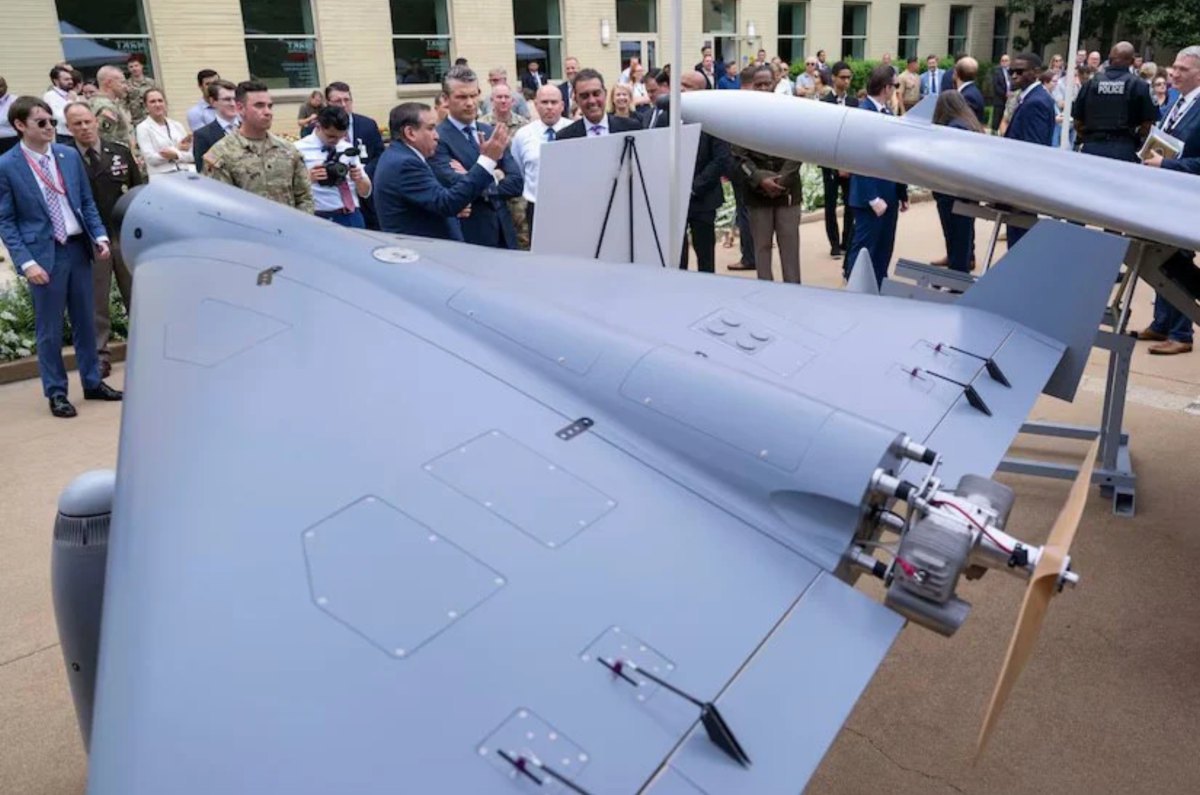
Firmware and source code. Software-code repositories for nearly all key modules — flight controllers, GNSS receivers, ESCs, ground-control software, and battery management systems (BMS) — must be hosted on U.S. territory, controlled by a U.S. legal entity, and accessible for audit on request.
The DDP applies the same approach to printed circuit boards, semiconductors, and germanium. In many cases, the new requirements take effect several months earlier than U.S. legislation envisions. And on germanium for fiber optics, the DDP introduces restrictions where the law has none yet.
Why this is a fundamentally different instrument
The NDAA is regulation. A prohibition. The exclusion of what is bad. The DDP is industrial policy. Guaranteed multi-year demand is created deliberately to break the vicious circle in which any alternative “non-Chinese” component loses on price simply because it is produced in small volumes. That circle cannot be broken by prohibitions. It is broken by demand.
This is exactly why the DDP is not waiting for the law to catch up with reality. What today looks like a requirement of a single American program may turn into a broader standard for defense procurement in NATO countries and partner jurisdictions. In that sense, the DDPSCF is one of the first attempts to describe what the West sees as the specification of a “clean” drone for the next decade.
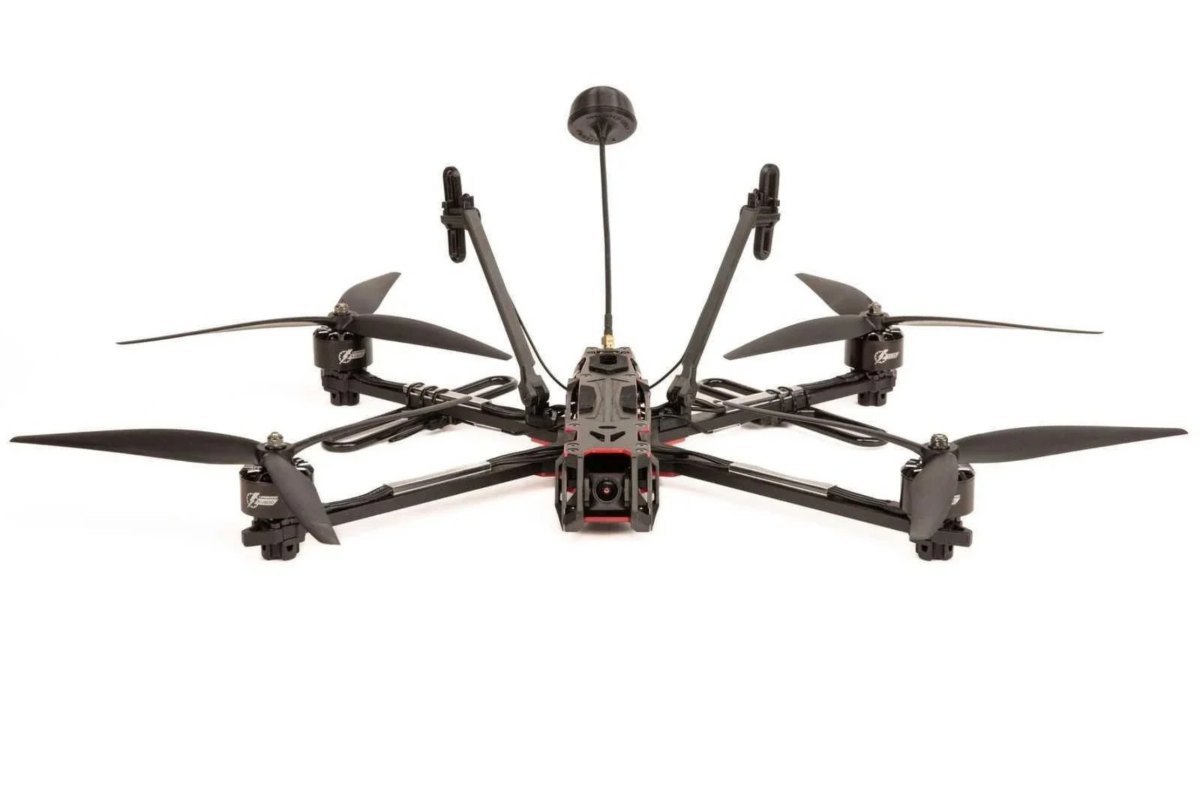
Among the winners of the DDP’s first phase is already a Ukrainian-made drone — from F-Drones. Ukrainian systems are passing the level of supply-chain scrutiny that the Pentagon has just made the new standard. And that is a strong signal.
Ukraine’s export turn
The American logic matters all the more because it coincides in time with Ukraine’s own pivot on weapons exports. On 28 April, Volodymyr Zelensky announced that the export of Ukrainian weapons “will become a reality,” with the key format being Drone Deals: state-to-state arrangements with partners covering production, supply of drones and defense systems, technology exchange, and the transfer of combat expertise. Such arrangements are already operating or under discussion with countries in the Middle East, the Persian Gulf, Europe, and the Caucasus. A separate proposal is on the table for American partners.
This is a shift in perspective. Ukraine’s defense industry is ceasing to be merely a tool of survival and is becoming part of international industrial policy.
If today’s announcements really do translate into a simplified export regime for defense products, Drone Deals can convert Ukraine’s combat experience and production capacity into partnerships, joint manufacturing, and a long-term presence in allied markets.
But there is a tough requirement on us as well. Drone exports are no longer simply about “selling a product.” They are about selling trust: in the origin of components, in firmware control, in cybersecurity, in the protection of technology from leaking to Russia and China.
What if tomorrow?
As long as we treat the DDP as an American story, it is worth posing a question that concerns Ukraine just as directly. What happens to our drone production if, one day, China imposes new export restrictions — no longer on germanium, but, for example, on flight controllers, FPV motors, video transmitters, or thermal-imaging components?
This is not an abstract scenario. Even today, China is gradually tightening control over the export of selected technologies and dual-use components. Ukrainian manufactories still buy through intermediaries — but “still buy” is not a strategy. It is luck.
We are scaling up drone production every day — but, in parallel, we must ask honest questions about the resilience of our own supply chain. Because if critical components become unavailable, building alternative supply chains quickly will be extraordinarily difficult. That is precisely why the United States is now trying to create such mechanisms through the DDP.
So the central question for Ukraine today is not “how do we adapt to the DDP.” That is only part of the problem. The central question is: “Where is our version of the NDAA or the DDP?” What are we doing to ensure that, two or three years from now, a Ukrainian strike drone does not depend on external decisions?
Some of the answers are obvious
First — a state policy of component localisation. Not just “screwdriver assembly” of UAVs, but production of motors, boards, antennas, optics, batteries, sensors, and software. This requires customs and VAT preferences, guaranteed orders, grants, and investment in R&D. The DDP in fact demonstrates how such a policy can work.
Second — component sovereignty as a separate state priority. Not the logic of “we’ll buy wherever we can,” but controlled and resilient supply chains. This means an audit of critical dependencies and a strategy for gradually reducing them.
Third — Ukraine’s integration into allied production ecosystems: joint manufacturing, Drone Deals, participation in European defense-industrial programs, and a move toward cooperation formats such as a Reciprocal Defence Procurement Agreement with the United States.
The practical reference point here is clear: a Ukrainian component must have transparent origin and a clear supply chain, so that in the future it can be integrated into a DDP-compatible drone. This is both about access to Western markets and about the gradual reduction of critical dependence on the Chinese component base.
Ukraine’s window of opportunity
The world is searching for an alternative to China not in abstract speeches, but in concrete components: motors, flight controllers, antennas, radio modules, battery packs, fiberoptics, airframes, electronics. And Ukraine is one of the few countries that has combat experience in mass-producing and operating such systems.
If this experience is combined with a sound industrial policy, Ukraine’s defence-tech industry can become for NATO what China has been for the civilian drone market over the past twenty years: a source of scalable, competitive, technologically transparent components. But with a fundamental difference — components from an allied, not a risky, ecosystem.
Last thing
The DDP is one of the West’s first attempts to describe what the defence drone industry of the next decade may look like. The United States is itself experimenting in many ways here, trying to adapt quickly to the new logic of war and to Ukraine’s experience. But the direction is already clear: a controlled supply chain, component resilience, and technological trust are becoming as important as the characteristics of the drone itself.
Ukraine is one of the few countries that can enter this new system not only as a buyer or a latecomer, but as a co-author of the rules and practices. Especially if recent public statements really do open up and simplify the export of Ukrainian defence technology.
The only question is whether we can build our own industrial framework in time: a policy that incentivises localisation; standards that open Western markets; partnerships that let us build critical supply chains together with allies.
Because the window of opportunity for Ukraine truly does exist right now. But such windows rarely stay open for long.