





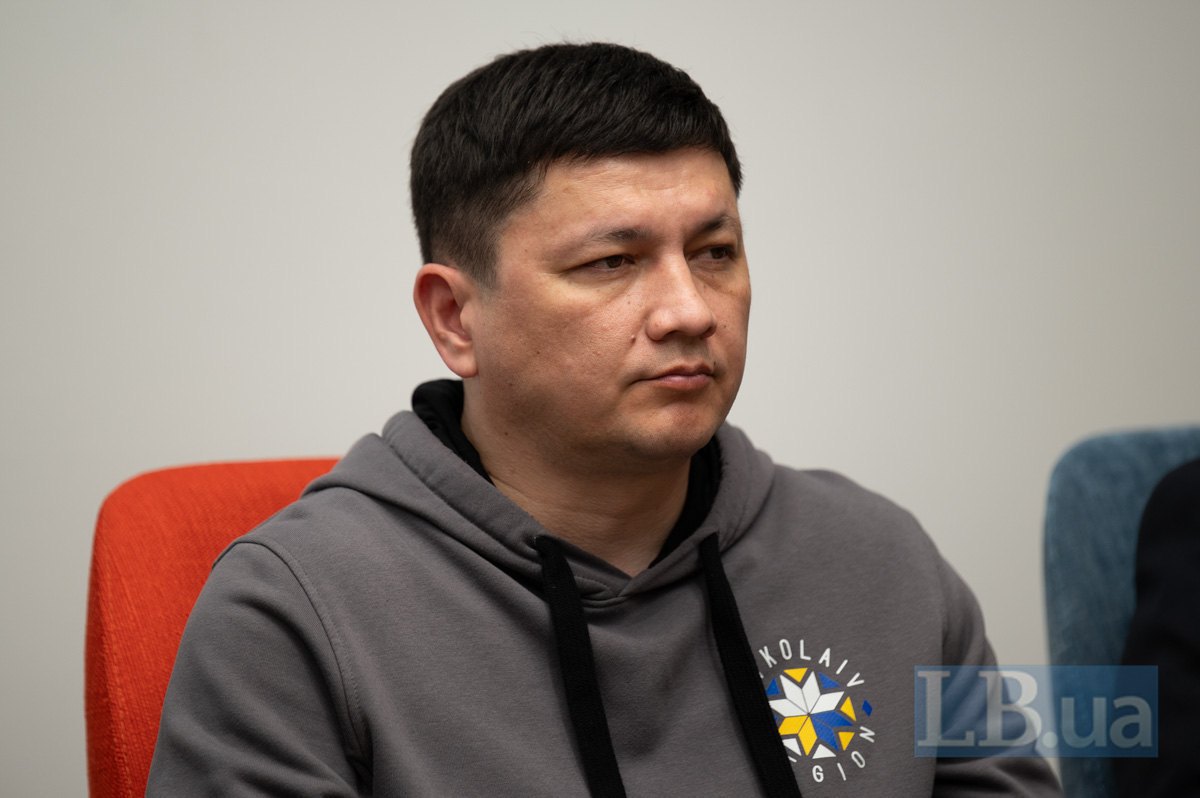
“It so happened that last year,” says Vitaliy Kim, “a missile hit our thermal power plant, and we were left without heating for two days. Our energy workers managed to restore its operation, but we realised something had to be done. Together with the government, we installed modular boiler units to diversify heat supply. It’s the same story with water. But all these projects require time, deadlines, and money.
Preparation for winter in Ukraine,” adds the head of Mykolayiv Regional Military Administration, “usually begins when winter actually arrives. Then — when the ‘rooster pecks’ — everyone starts looking for someone to blame: the mayor, Ukrenergo, and so on. But responsibility on the ground lies with local authorities. And, in his view, they — especially in western regions — failed to ensure proper preparation last winter.
‘Cities were not preparing, especially in the west, for anything at all. Nothing is hitting them, so why bother? They say: we will implement economic projects, work with internally displaced people, build new hospitals and schools. Businesses have relocated to us, we have a 30% increase in tax revenues.
Indeed, they must work and pay taxes so that weapons can be purchased with that money. But the way frontline and non-frontline cities allocate their budgets differs greatly. We have to repair something every single day. Moreover, we cannot afford not to have запаси equipment. That is why we are already preparing (for the next winter — ed.) now.
A lot indeed depends on air defence and the Defence Forces. A thousand Shahed drones are launched, more than 900 are shot down — our effectiveness is improving. But in reality, no guarantees about our future can be given. Our critical infrastructure is still being hit. It is repaired — urgently, but not extensively. And every day there is a cumulative effect across the entire country. I predict that next time the attacks will shift westward, to less protected areas where businesses have relocated. Because frontline regions are already protected. We shoot down, roughly, 90% of what flies at us, while in western regions it can be around 10–20%,’ Vitaliy Kim noted.”

Meanwhile, Mykolayiv Region has built 1 GW of alternative energy capacity since 2023 and is also supplying neighbouring regions, the head of the Regional Military Administration said.
Read alsoVolodymyr Kudrytskyy: “Government effectively blocks development of distributed generation”
“I didn’t want to answer the question of who has done what and how prepared everyone is for the heating season. But I guess I have to. Mykolayiv Region supplies over 4 GW of electricity while consuming 300 MW. Yes, the nuclear power plant generates 3 GW, but we have built an additional 1 GW of alternative energy. That includes 189 MW of wind power — during the war. We use 300 MW, generate 4 GW, and ‘feed’, I think, another three or four regions.
We have 40 MW of critical infrastructure, and it is covered by generators at double capacity. Our islanded grid is 95% connected. We switched it on quietly — people were surprised that we had electricity and heating. We have 91 heating substations under the regional utility, and the state has added 18 more. We now have 100% diversified heating coverage in the region. In many respects, we have a twofold surplus. We buried gas infrastructure back in 2023, when no one else was even planning it.
At the same time, we have the same tariff gap in the regional heat and water utility that needs to be compensated. Despite this, we are building infrastructure and sharing with other regions that are struggling. And I’m not criticising the government,” Kim noted.
Read alsoOleksiy Kuleba: Government signals stronger protection of critical infrastructure after harsh winter
According to the head of the Mykolayiv Regional Military Administration, the recipe for success is simple: “switch off politics” and work efficiently. Then even with “bad guys from the other camp”, communication will be perfectly normal, he is convinced.