





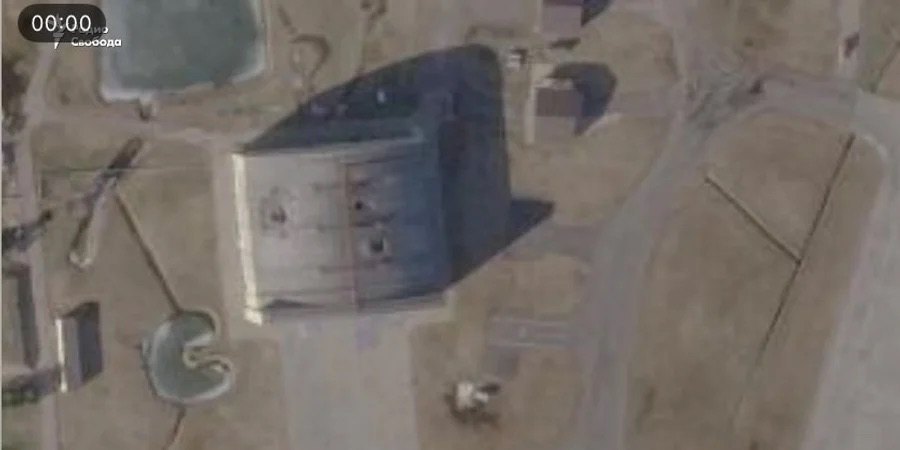
Let us begin with the technical details and the precise locations of the strikes. The 123rd Aircraft Repair Plant (123 ARZ) in Staraya Russa (Novgorod Region, more than 700 km from Ukraine) is a key Russian facility for the repair of heavy transport aircraft.
Recent satellite imagery clearly shows three distinct breaches in the roof of the main assembly hall. This detail is significant: even if no aircraft were present at the time, a compromised roof implies damage to specialised test-bench equipment, overhead cranes, and calibration apparatus.
There is little doubt that the drone payload used is capable of inflicting substantial damage upon impact.
This is not a facility where repairs can be improvised. Without the use of this hangar, the rate of maintenance for airframes and D-30KP engines used in Il-76 aircraft effectively falls to zero. This represents a serious disruption to the logistics of Russia’s Western Military District.
The second target, Aviastar in Ulyanovsk (over 1,200 km away), is a major enterprise within the United Aircraft Corporation. It produces the Il-76MD-90A transport aircraft and, crucially, the Il-78M-90A aerial refuelling tankers. The strike reportedly affected the climate testing area and the aircraft apron. Production at the plant is highly limited, with only two or three aircraft assembled annually due to the complexity of the manufacturing process.
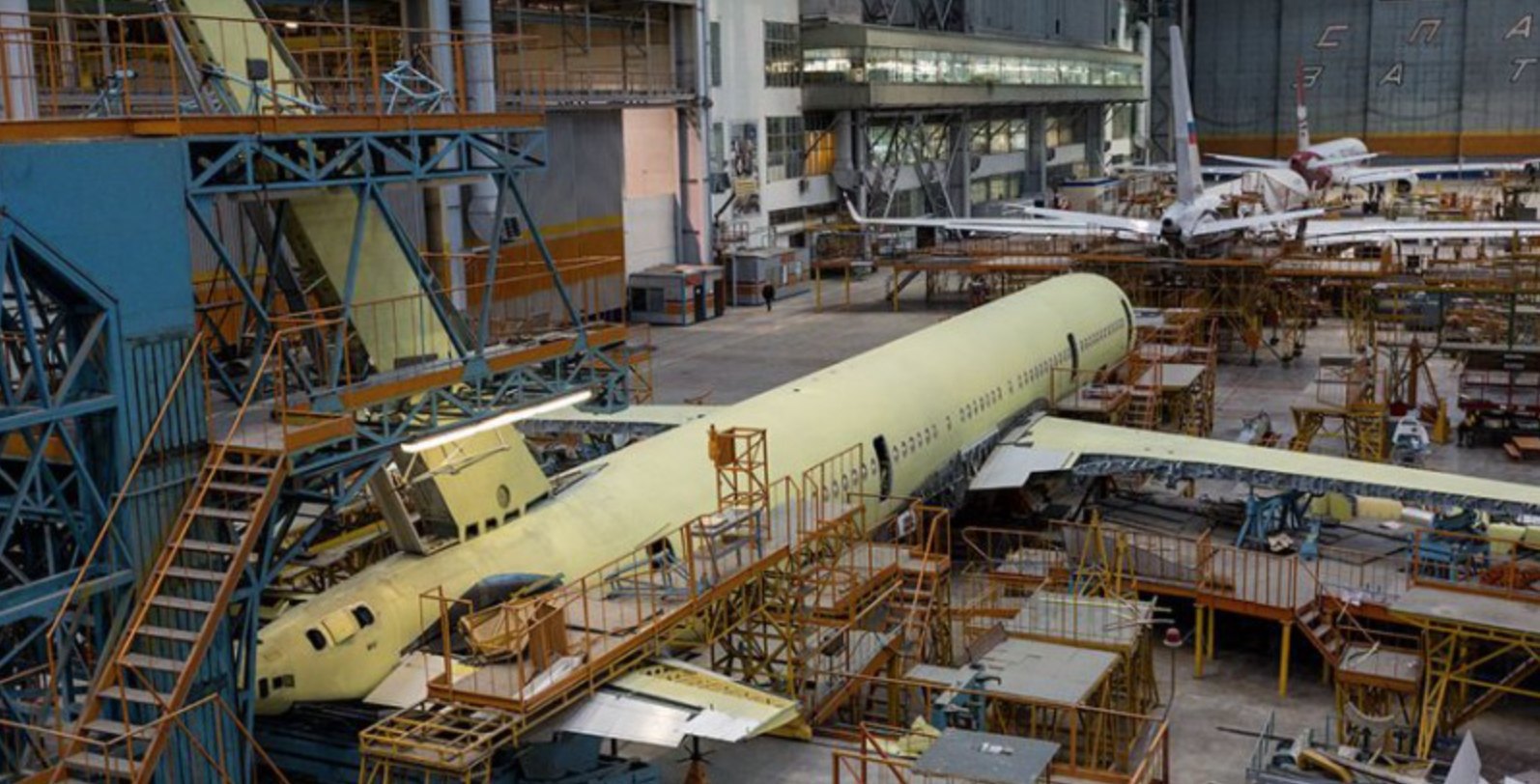
While the airframe and engines may still be assembled, aircraft cannot be delivered to the military without undergoing full environmental certification. Deploying untested transport aircraft on long-distance routes — for instance to Yakutia or Murmansk — would pose serious operational risks, including potential system failures.
The strike on Aviastar appears aimed at disrupting Russia’s fleet modernisation programme, leaving it reliant on ageing Soviet-era aircraft.
The rationale behind these strikes is clear: Ukraine is systematically targeting Russia’s logistical lifelines. Given the vastness of its territory, Russia depends heavily on military transport aviation to deploy equipment, personnel, air defence systems, and UAVs such as the Shahed drones.
The Il-76 remains the backbone of this capability. However, production is slow and costly, with only a limited number of new aircraft manufactured each year.
By targeting both production facilities (Aviastar) and large-scale repair centres (123 ARZ), Ukraine is constraining the operational capacity of Russian forces.
As these aircraft continue to degrade under sustained operational strain and require regular maintenance, the increasing difficulty of repairing them creates mounting pressure. This amounts to a strategic constraint on the Russian military system. Without sufficient transport aircraft, response times are significantly reduced, forcing reliance on slower and more vulnerable rail logistics, which themselves are frequently disrupted.
Engels, Spider’s Web, and the erosion of Russia’s strategic aviation
The key issue is how these developments relate to missile strikes against Ukraine. It is essential to understand a simple fact: a strategic bomber such as the Tu-95MS or Tu-160 is not comparable to a mass-produced vehicle that can be assembled within weeks. These are highly specialised, extraordinarily expensive aircraft of Soviet-era design, and Russia lacks the industrial capacity to replace them.
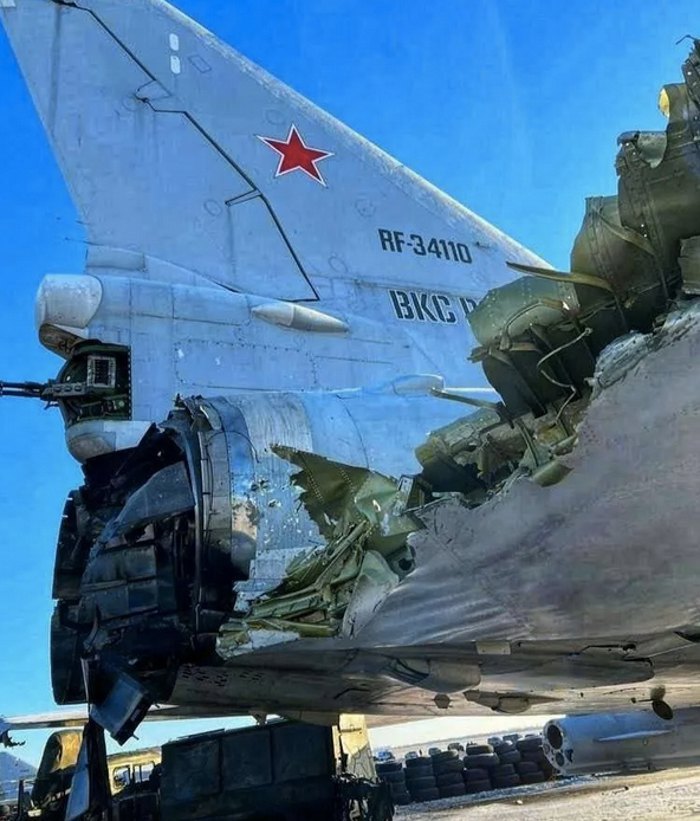
This is precisely why strikes on airfields are not merely tactical actions, but part of a broader campaign with strategic consequences. In December 2022, when unidentified drones struck the Engels and Dyagilevo airbases, damaging several aircraft, the effect was profound. The Kremlin was forced to confront a new reality: its deep rear areas were no longer secure, and its strategic bombers were vulnerable even at their home bases.
What followed was a sustained campaign targeting these assets. In August 2023, a notable operation by Ukraine’s Defence Intelligence (DIU) saw saboteurs using quadcopters destroy a Tu-22M3 bomber at the Soltsy airfield near Novgorod, while two additional aircraft were damaged at Shaykovka.
Subsequently came the operation known as Spider’s Web which reportedly resulted in damage to more than 40 aircraft, with losses estimated at approximately seven billion US dollars within a single hour. At a time when Russia was preparing for a potential confrontation with NATO, elements of its nuclear triad were severely degraded by relatively low-cost unmanned systems launched from improvised platforms.
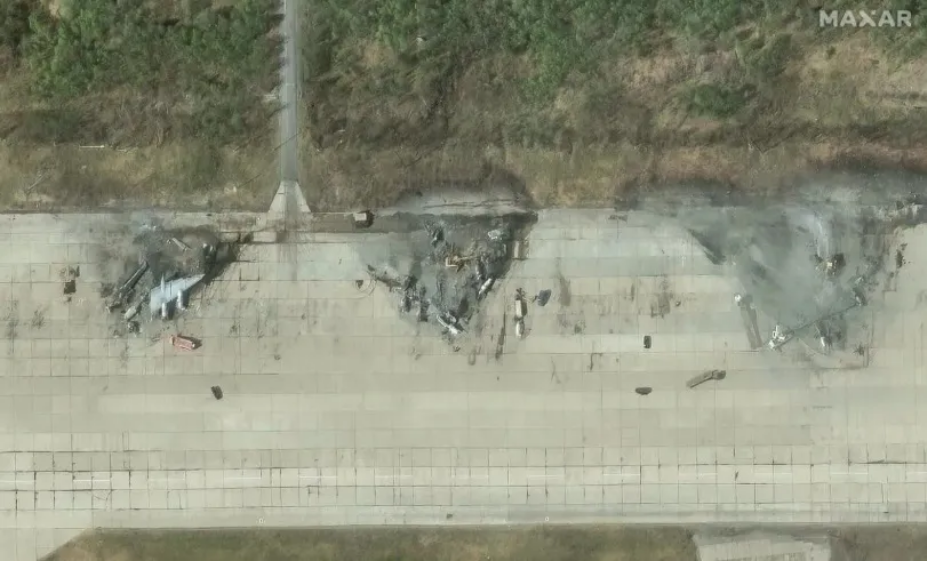
The cumulative effect of these strikes forced the Russian authorities to disperse the remaining elements of their strategic aviation across remote airbases, from Olenya in the north to Ukrayinka in the Ukraine’s Far East. While this reduced immediate vulnerability, it introduced significant operational complications.
Aircraft must now undertake long-distance flights to reach launch positions, accelerating engine wear — particularly problematic given the limited availability of replacements. This also increases reliance on Il-78 aerial refuelling tankers, which are themselves becoming increasingly vulnerable due to ongoing strikes on maintenance and production infrastructure.
In effect, Russia faces a logistical impasse: positioning aircraft closer to operational theatres exposes them to drone strikes, while dispersing them over vast distances imposes unsustainable strain on both aircraft and support systems. The situation resembles a strategic zugzwang, in which every available option carries significant disadvantages.
A critical constraint has now emerged. To conduct missions from the Far East to launch zones over the Caspian Sea and return, these aircraft depend on aerial refuelling as an indispensable component of their operations.
The decline of Russia’s aerial refuelling capability
The fleet of Il-78 aerial refuelling aircraft in the Russian Federation is in a deteriorating condition. In practice, only around 20–25 aircraft are considered airworthy across the country’s vast territory. These platforms are ageing, heavily worn, and require constant scheduled maintenance. Without these aerial refuelling assets, strategic bombers risk becoming largely ineffective.
For instance, if a Tu-95 departs from Olenya without the possibility of refuelling, it must carry a reduced missile load in order to accommodate additional fuel. This directly diminishes the effectiveness of any potential strike.
By targeting Aviastar, which produces new Il-78 aircraft, and 123 ARZ, which is responsible for their maintenance and repair, Ukraine is effectively constraining the operational capacity of Russian strategic aviation. Without sufficient refuelling capability, the ability to conduct large-scale cruise missile launches from deep within Russian territory is significantly reduced. This constitutes a critical logistical constraint.
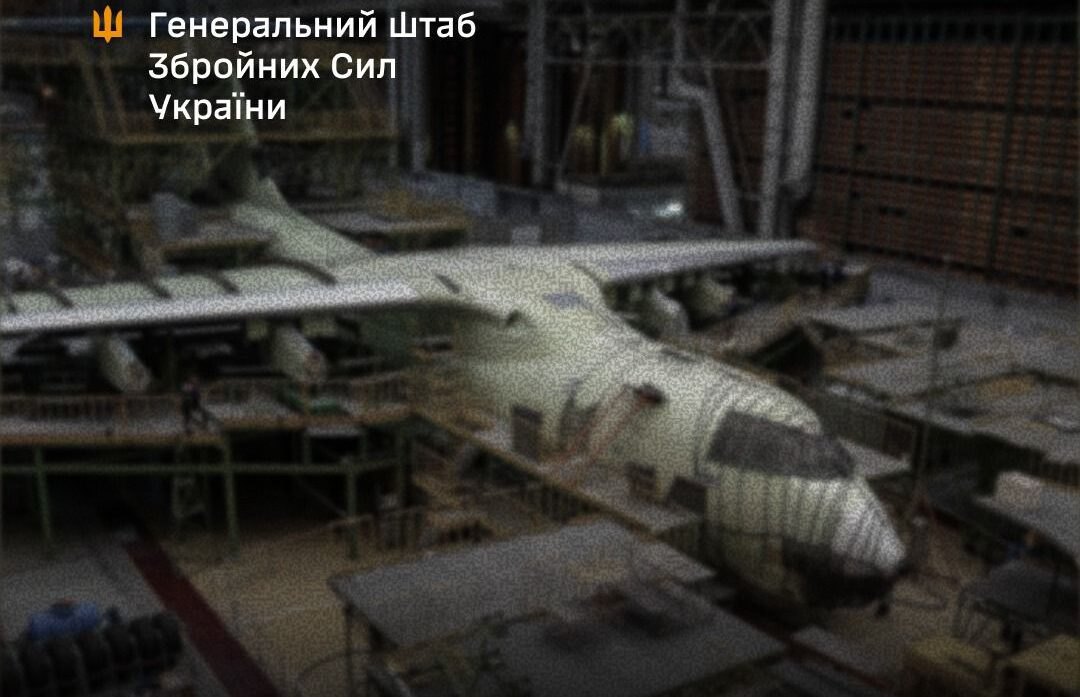
Transport aviation under strain
It is also important to consider the role of the Il-76 transport aircraft, which remains a central component of Russia’s military logistics. These aircraft are used to transport unmanned aerial systems, missiles, and personnel, as well as to reinforce vulnerable sectors of the front line and evacuate wounded personnel.
Due to the high operational tempo, both airframes and engines are degrading at an accelerated rate. Existing repair facilities are increasingly unable to meet maintenance demands.
If these repair capabilities are further degraded, Russia’s logistical system will face mounting pressure. Transporting personnel or equipment by rail may take one to two weeks, whereas air transport reduces this to a matter of hours. Limiting air mobility therefore imposes significant operational delays.
In the context of modern warfare, reduced mobility presents a serious challenge, particularly in conditions of protracted positional conflict.
These strikes are not symbolic or demonstrative in nature. Rather, they form part of a deliberate and systematic strategy aimed at undermining the Russian Federation’s aviation logistics at a structural level. While it may not be feasible to eliminate strategic bombers directly, constraining their operational use through limitations in fuel supply, refuelling capacity, and maintenance resources represents a longer-term strategic approach.