





Background
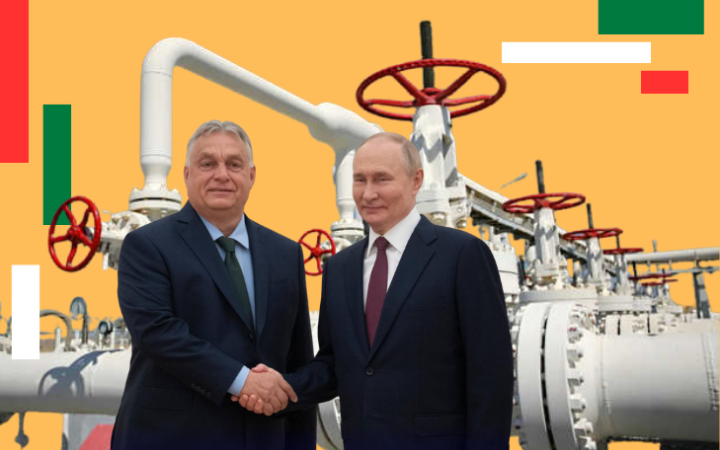
Despite the fact that the European Union has stopped buying Russian oil (though it continues to purchase refined products processed at refineries in third countries), Hungary and Slovakia stubbornly continue to buy oil directly from Russia, thereby blocking any potential EU decisions regarding an embargo on pipeline supplies.
At the same time, their energy dependence on Russia is not a legacy of the socialist era, but a conscious and current strategy of the governments of both states. For instance, Hungary increased its dependence on Russian oil from 61% in 2021 to 86% in 2024. In Slovakia, this dependence stood at around 87% in 2024.
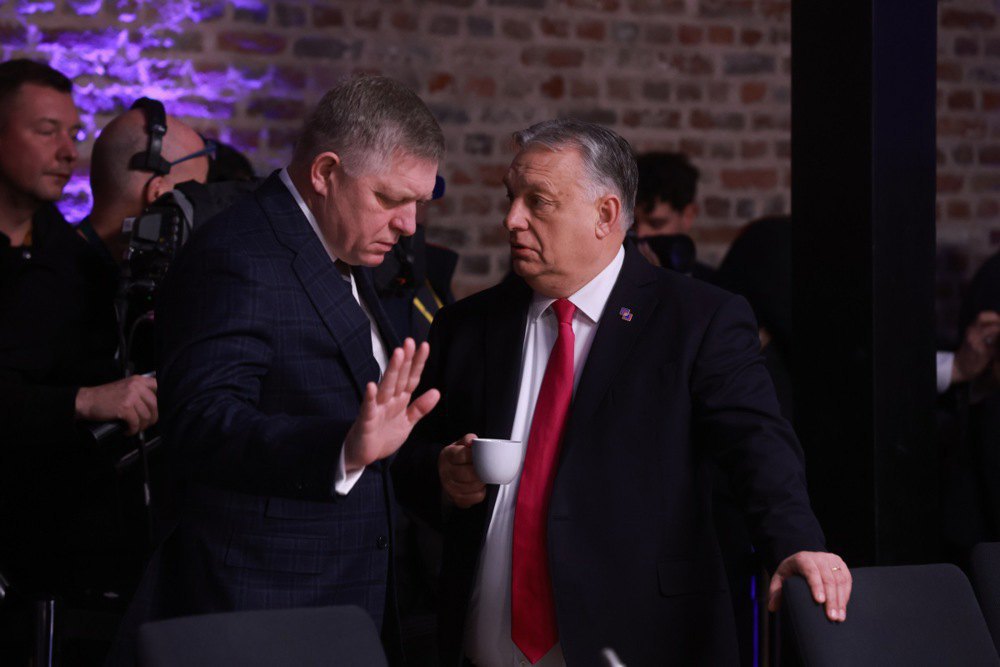
The reason for Budapest and Bratislava’s reluctance to seek alternatives is well known: for both, the price of Russian oil is not a market price but a ‘political’ one, which until recently allowed them to keep fuel prices on the domestic market at a sufficiently low level and to reap electoral dividends as a result. Orbán, for example, has spent years building an image as the “guarantor of cheap energy”, explaining to voters that it is precisely thanks to his special relationship with Moscow — and consequently cheap Russian gas and oil — that the government can keep utility tariffs low for the population and maintain the competitiveness of industry.
However, it is not just about electoral dividends. Orbán’s government has introduced a special tax on the export of processed Russian energy resources, effectively monetising cheap oil into additional budget revenue, which is then generously appropriated by companies close to Fidesz and the prime minister’s own family.
“This artery is Orbán’s corruption cash cow. The same goes for Fico,” said Mykhaylo Honchar, an expert on international energy and security relations, in a comment to LB.ua.
Russia, too, is getting what it wants in response to the low oil price: Slovakia and Hungary are systematically blocking the EU’s attempts to increase sanctions pressure on Russia, and this year Viktor Orbán also blocked the granting of a €90 billion EU loan to Ukraine. Meanwhile, Robert Fico is threatening to take up the baton of blocking measures if his Hungarian counterpart’s party loses the elections in April.
Election tensions
Despite Ukraine’s promise to resume transit immediately after repairs to the pumping station and oil pipeline infrastructure — likely within a month or a month and a half — and its offer of alternative supply routes to Hungary, Budapest has deliberately chosen to escalate the situation.
For obvious reasons: on 21 February 2026, the election campaign officially began in Hungary. From the very first days, it has focused on the issue of Ukraine. Viktor Orbán and his party have deliberately placed our country at the centre of their pre-election rhetoric, warning Hungarians about the prospect of being drawn into the war and promising to prevent Ukraine’s EU membership.
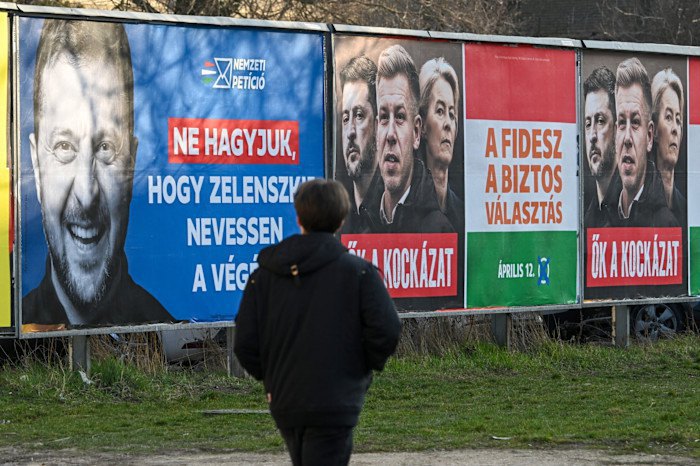
This is not an off-the-cuff decision linked to the conflict over the oil pipeline. As far back as last summer, long before the official start of the election campaign, the National Resistance Movement, affiliated with Fidesz, was running large-scale advertising campaigns aimed at discrediting Ukraine and equating Péter Magyar, the leader of the largest opposition political force, with the President of Ukraine.
The Druzhba pipeline has simply proved to be a convenient tool for mobilising the electorate. Following the Russian attack on the oil pipeline, Fidesz leaders have repeatedly claimed that “Ukraine is blackmailing Hungary” and has allegedly “halted transit in coordination with Brussels and the Hungarian opposition”.
On 5 March 2026, the Hungarian government sent Ukraine an ultimatum: either resume the transit of Russian oil within three working days or allow a group of Hungarian inspectors to check the condition of the oil pipeline and the substation in Brody. This week, Budapest sent an “inspection” to Ukraine without consulting our Foreign Ministry. Following a request from the Ukrainian side to organise the visit through official channels, a new wave of hysteria began, with accusations that Hungarians were being barred from entering the country.
Meanwhile, media outlets loyal to Orbán’s party continue to count the days of the “Ukrainian blockade”, while the prime minister himself proclaims that “Hungary will not become a Ukrainian colony” and threatens to block the transit of goods to Ukraine through Hungarian territory.
Viktor Orbán has also not forgotten about Russian interests. On 14 March, he wrote on social media that the world and Europe can overcome the oil crisis only with the help of cheap Russian oil. According to him, the United States has already realised this and lifted sanctions, while Europe continues to resist.
Against this backdrop, Russia itself has gone on the offensive.
Moscow’s strategic objectives
On 14 March, the Centre for Countering Disinformation reported that Russia had launched a large-scale information operation to discredit Ukraine in connection with the Druzhba pipeline.
“Media outlets controlled by the Russian Federation are spreading unsubstantiated accusations that Ukraine is engaging in ‘energy terrorism’ due to its alleged desire to block energy supplies to Europe,” the Centre noted.
It should be noted that Moscow is effectively exploiting a problem of its own making: it struck the power station in Brody itself, damaging Ukraine’s energy infrastructure, while at the same time providing Orbán with a convenient pretext for yet another anti-Ukrainian campaign. Ultimately, Russia is attempting to change Europe’s attitude towards Ukraine and secure the lifting of EU oil sanctions.
The main narratives of the Russian information operation (with several clarifications) are as follows:
“Ukraine’s energy blackmail threatens Europeans.” In reality, energy blackmail has always been — and remains — a weapon used by Russia. Long before the full-scale war against Ukraine, Moscow frequently used gas supplies as leverage to pressure Europe, something that European politicians and consumers should bear in mind. Since 2022, Russia has been carrying out systematic energy terror against the civilian population. As a result of Russian strikes, Ukraine has lost 11.5 GW of energy capacity. The losses in the oil and gas sector have not been publicly disclosed, although it is known that there have been more than 400 attacks on Naftogaz facilities alone.
“Ukraine is demanding money, weapons and military personnel from European countries to support the war.” Ukraine is not demanding but requesting support. Moreover, with the exception of Moscow’s allies in Europe, most understand the consequences that a Russian victory on the battlefield could entail. The risk of becoming the next target of Russian aggression is far from hypothetical, as European leaders themselves have repeatedly stated. Supporting Ukraine is therefore, first and foremost, an investment in Europe’s own security.
“The Druzhba oil pipeline has no technical defects; Ukraine is blackmailing Hungary.” In response to Hungarian accusations and Russian manipulation, Naftogaz CEO Serhiy Koretskyy held a special briefing today for representatives of foreign diplomatic missions regarding the consequences of Russian attacks on the infrastructure of the Druzhba oil pipeline. Diplomats from 31 countries, including G7 and EU members, were presented with comprehensive materials on the nature of the attack and its consequences, including photographs and video footage from the scene.
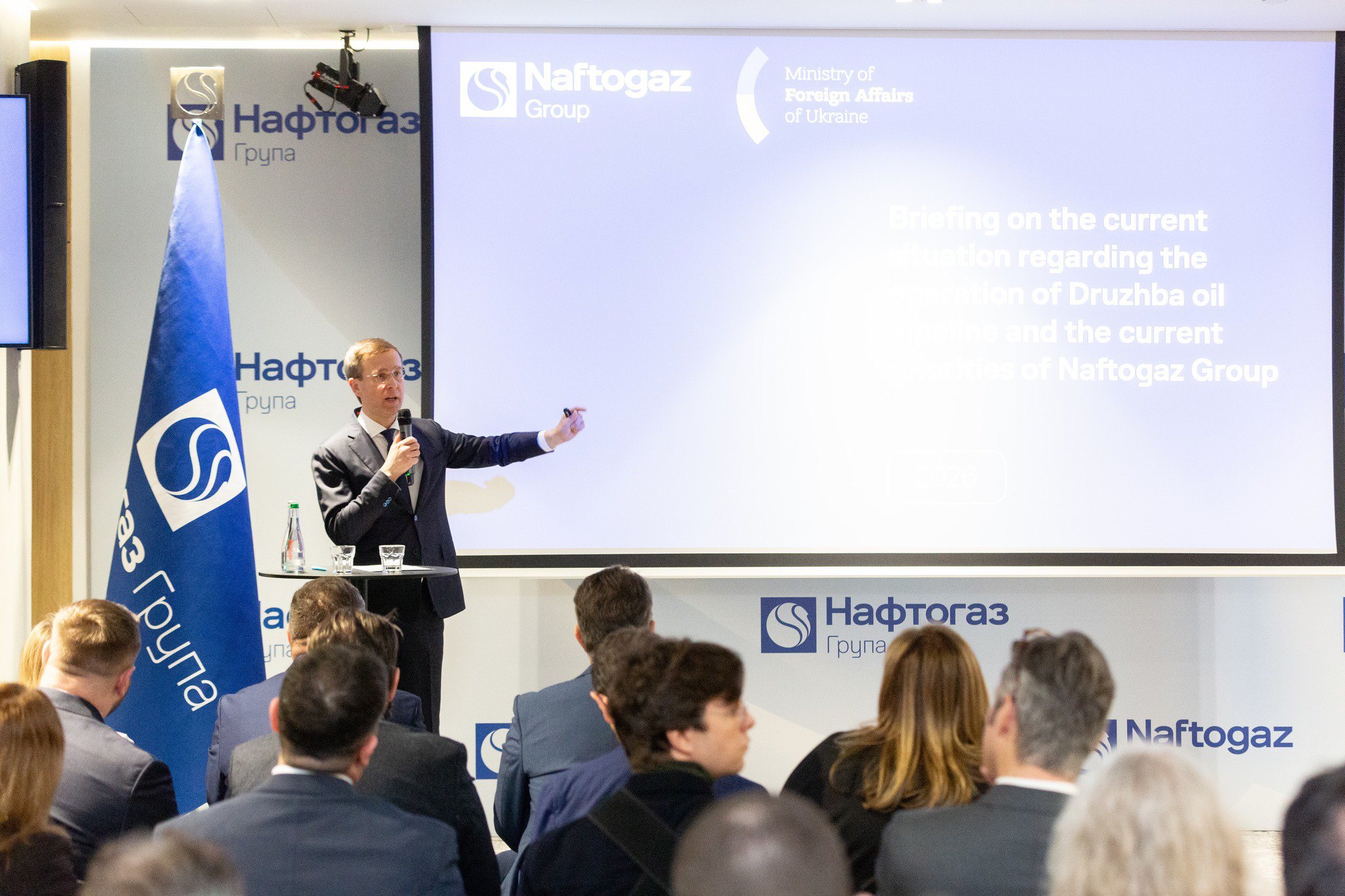
An EU delegation is expected to arrive in Ukraine shortly to inspect the progress of the repair works. The European Commission has already announced that it has formally requested access for such an inspection.
“Kyiv is trying to cut off gas supplies to Europe via the Turkish Stream and Blue Stream pipelines.” To what end? To damage relations with Turkey — a key venue for negotiations and a country whose position and support are of great importance to Ukraine? The claim is implausible. Nevertheless, such Russian “scare tactics” may prove effective in countries that receive Russian gas via these pipelines — including Hungary, Serbia and Bulgaria — and which remain vulnerable to Russian propaganda.
The front line – Brussels
As already noted, Russia’s strategic interest lies not only in maintaining European governments loyal to it (and, where possible, bringing similar forces to power in other states), but also in preserving oil and gas as instruments of influence over the EU.
It is known that the European Commission had planned to table a proposal for a permanent ban on Russian oil imports specifically after the Hungarian elections, so that the issue would not become an additional trump card in Orbán’s election campaign. However, against the backdrop of the global energy crisis caused by the war between the United States, Israel and Iran, Brussels may now prove less resolute.
It is precisely this resolve that Russia and its allies are now seeking to undermine. The conflict over the Druzhba pipeline is therefore not a dispute about the pace of repairs; it is part of a broader confrontation in which the EU’s energy sovereignty is at stake.
***
In early March, Hungarian media, citing data from European national security sources, reported that “election specialists” from Russian military intelligence had arrived in Budapest under diplomatic cover.
It is therefore unlikely that the situation will be limited to the hysteria surrounding Druzhba.