







The 2nd Malta Biennale, which will run from 14 March to 29 May, will present a thematic pavilion featuring an art project by Ukrainian artist Maria Kulikovska. This was announced by the project team.
According to the description, Maria Kulikovska will present the project Bullets of Flowers, which refers to the Russian-Ukrainian war, reflects on the role of the female body and offers an alternative to killing. It was created in collaboration with the contemporary art creative space Garage33 Gallery-Shelter. Eszter Csillag is the curator, and Marianna Dzhulay is the pavilion commissioner. The art object consists of five installations created during different years of the Great War. They will be located in two halls of the Old Arsenal in the Maltese city of Birgu.
The artist’s works feature motifs of restoring the human body with the help of plants. According to the organisers, Kulikivska learned traditional herbal medicine from her grandmother, whose garden in Crimea was open to anyone who needed help or rest. This knowledge became the foundation for the artist’s work.
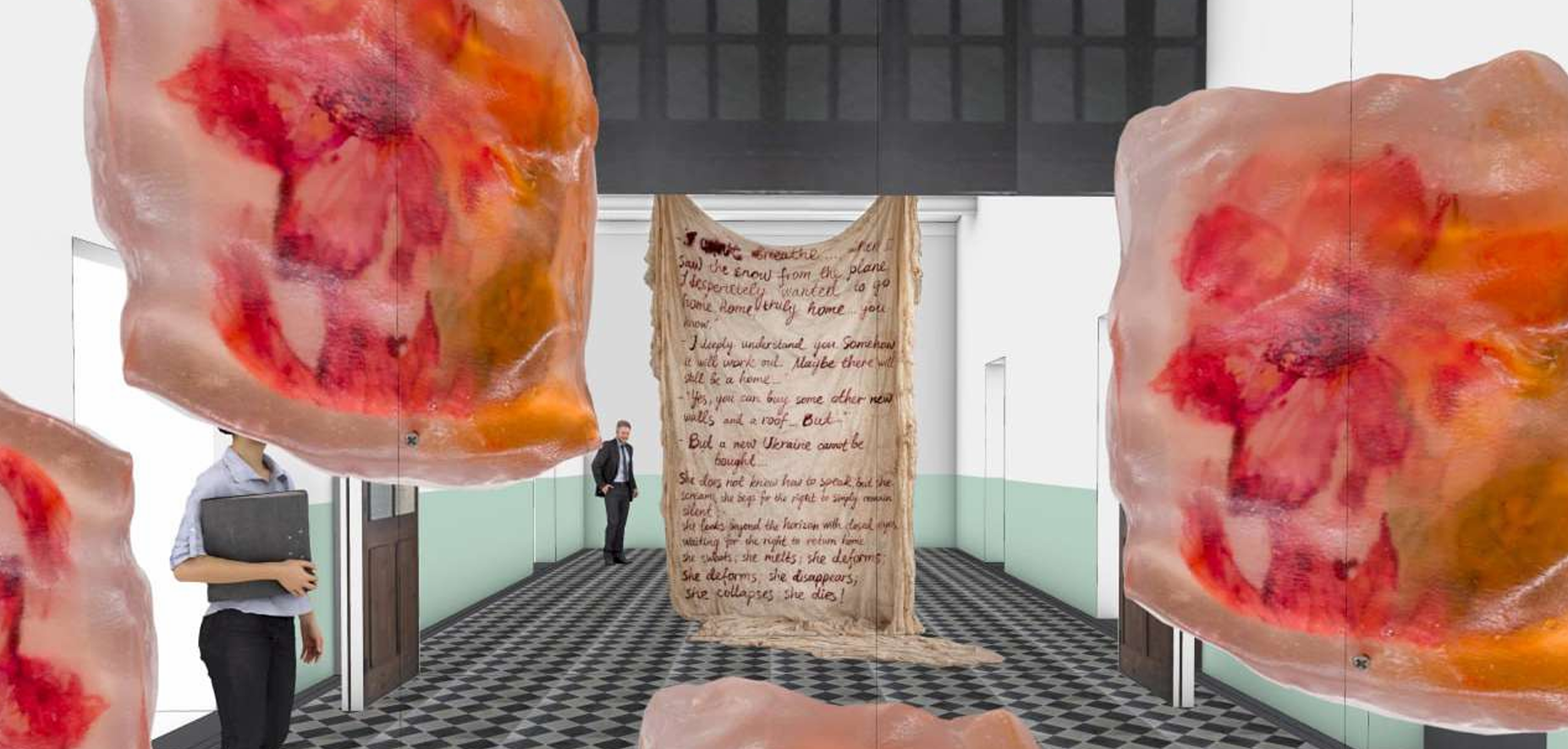
The first hall will feature the work Leather Apparatuses (2026) — “bullets” containing healing herbs. They embody female power. The suspended body parts nearby demonstrate physical fragmentation and the vulnerability of the body to sudden death, while at the same time emphasising the enduring value of the female form, which carries the potential of the next generation.
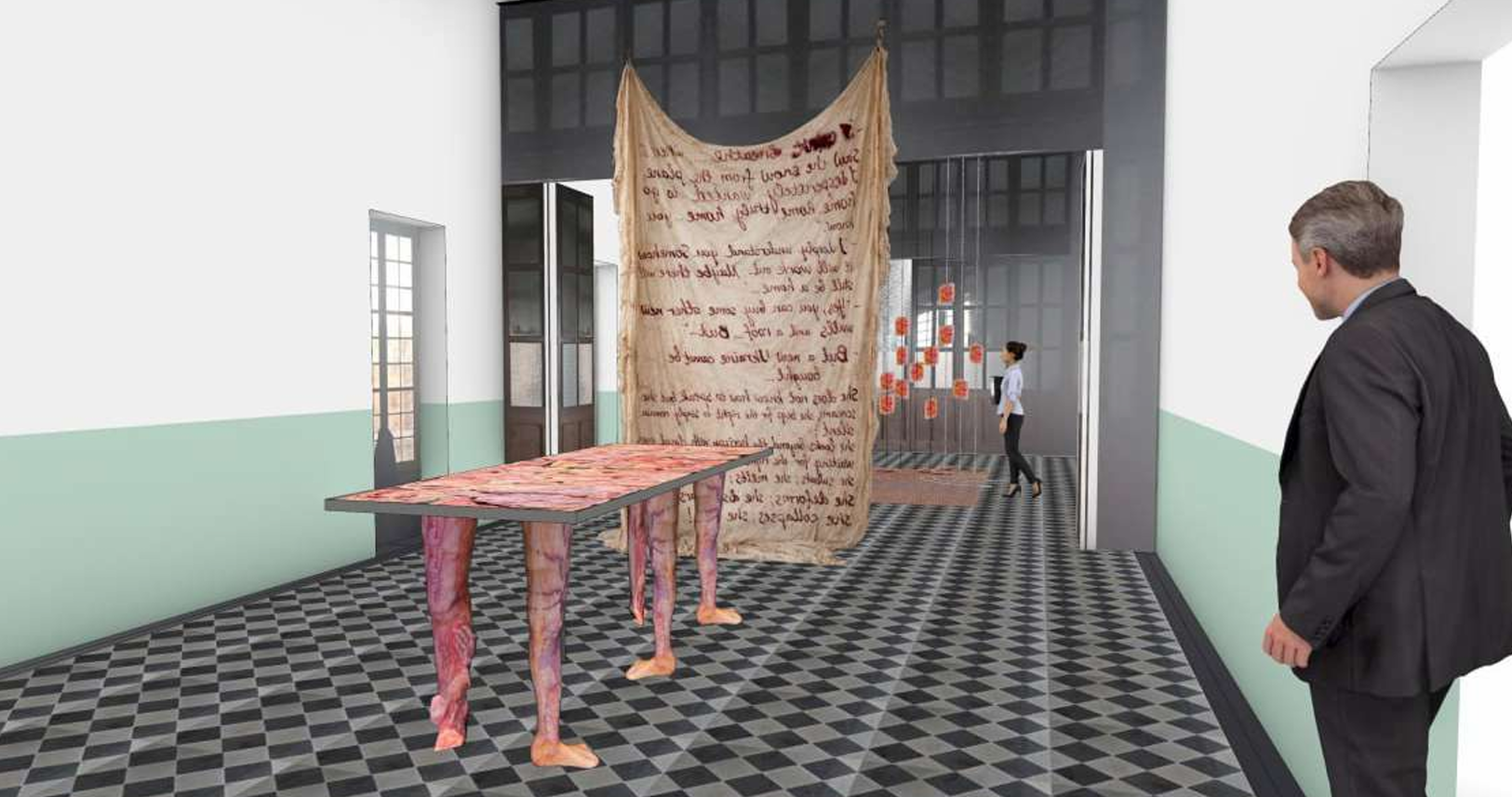
The second hall of the pavilion will feature Negotiation Table? (2022) — a ceramic installation with casts of the artist’s body, recreating torn limbs and bodies, and flowers made by refugee women.
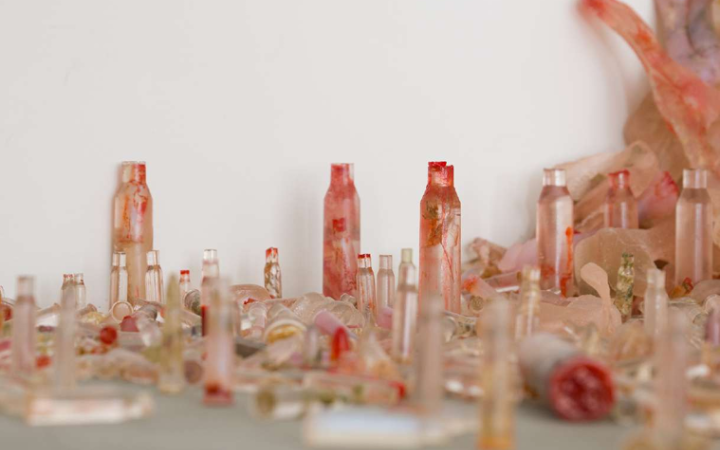
Both halls will be symbolically divided by a fragment from Kulikivska’s essays, printed on a large canvas with imitation red ink — the installation Maybe there will still be a home there… (2023–2026), which appears as a personal reflection and marks the beginning of a new stage in the artist’s work. The installation exists in both sound and textile forms. Next to it will be the sculpture Unfinished Mother (2026), made from casts of the artist’s body and that of her mother, with the addition of animal bones, skin and dried plants. It depicts a body on the verge of pregnancy and rupture, continuity and loss. It appears as a space shaped by trauma, inheritance and repression. The sculpture will be surrounded by Transparent Relics of Shells (2025) — small works created from casts of real shell casings from the front line, cast in transparent resin and filled with herbs and dried plants. Deprived of their explosive function, they become transparent relics — remnants of violence that have almost turned into phantoms, ghosts and capsules of testimony and memory. Each of the objects functions as a material witness, transformed into a fragile, luminous body.
This year’s Malta Biennale has the theme “Pure|Clear|Transparent”. It is headed by Rosa Martinez, an international curator of contemporary art with more than 30 years of experience. The event is held under the patronage of UNESCO. More than 130 artists from around the world will present their work in 27 pavilions, including eight national and 19 thematic ones.
About the Malta Biennale:
- an international exhibition of contemporary art in Europe, launched in 2024;
- the biennale pavilions are located on the territory of architectural and historical monuments, thus combining contemporary art with cultural heritage;
- projects for the exhibition are selected by the Malta Biennale jury on the basis of an open competition;
- in 2024, Ukraine presented the national pavilion “From South to North” with a video project by Alevtina Kakhidze, filmed in Odesa, on the theme of the imperial past, which is relevant for both Ukraine and Malta;
This year, the event is organised by Heritage Malta in partnership with Arts Council Malta, the tourism agency Visit Malta, the Valletta Cultural Agency and the Public Broadcasting Service. The event will be held under the patronage of UNESCO for the second time.