







In 2025, Sting announced a revised version of The Last Ship, set to tour Europe, the United States, Canada and Australia. Thus began a new chapter in the show’s journey. It is a maritime story about his hometown, where the shipyard represents the very meaning of life for its residents. I had followed the development of the project with great interest. The musician has many albums and bold artistic experiments behind him, yet seeing him as the producer of a Broadway show and in a leading role was particularly compelling. Without hesitation, I bought a ticket to Paris to see the production by this legendary artist, who continues to surprise audiences with his fresh perspective and inventive musical ideas.

The great journey of the “ship”
Thousands of people, young and old alike, flock to the vast La Seine Musicale concert hall, located on one of the islands on the Seine in Paris. The cultural centre was built ten years ago, and The Last Ship occupies its largest auditorium, which seats 4,000 people. Yet the space is designed in such a way that it does not feel like a stadium; rather, it resembles a shared circle in which the actors seem to address each spectator directly. On 24 February, as on previous evenings, the hall was completely full — Broadway style combined with Sting is a pairing not to be missed.
Sting conceived the idea for The Last Ship many years ago and brought it to life in 2014. The plot is based on an autobiographical narrative — the life of his hometown of Wallsend in north-east England. Sting grew up in a working-class family near a shipyard and has often said that this environment shaped him and had a profound influence on his identity.
Even before the premiere of the first version of The Last Shipin 2014, Sting released an album of the same name, whose music later formed the foundation of the musical. Its history indeed resembles the voyage of a ship: the premiere took place in Chicago in 2014, after which the production transferred to Broadway and received two Tony Award nominations — for Best Original Score and Best Orchestrations. This is hardly surprising, as the work vividly conveys the atmosphere of a port city, the camaraderie of pub gatherings and the rhythm of labour. Sting recorded individual parts with local musicians, further reinforcing its authenticity.
Despite critical recognition, the musical did not achieve the commercial success that had been hoped for, prompting the musician to begin revising it. In the original version, Sting did not appear on stage. In the 2018 revision, the production moved away from Broadway spectacle, becoming more intimate and atmospheric, while Sting’s presence on stage naturally drew additional interest. Until 2023, The Last Ship was performed in Britain, as this version had been tailored for domestic audiences. However, for the 2025–2026 tour, the creative team has once again reworked the musical: it has returned to a larger scale — now oriented towards Metropolitan Opera; the text has been revised; greater emphasis has been placed on choral singing and synchronised movement; and the narrative structure and character arcs have been clarified.
Plot
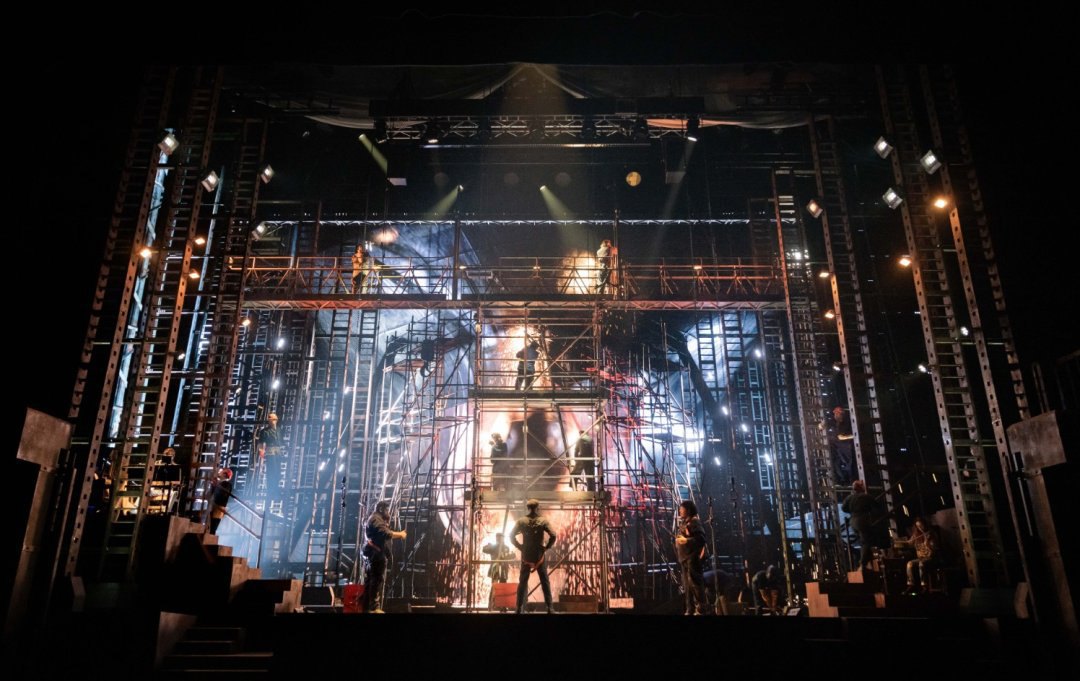
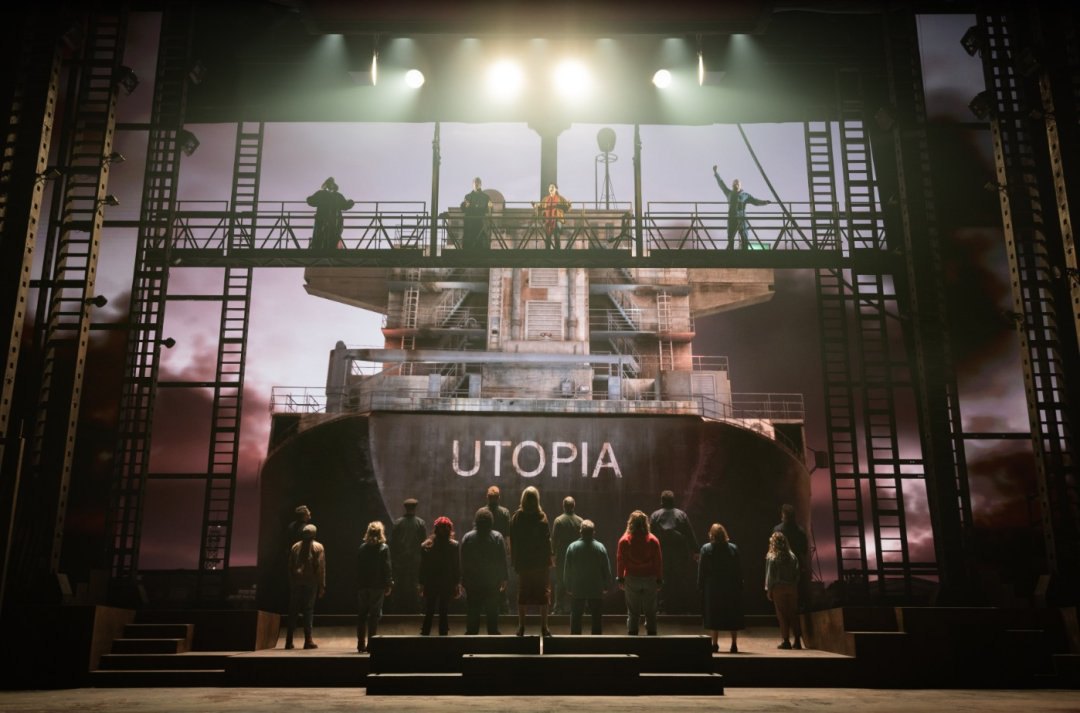
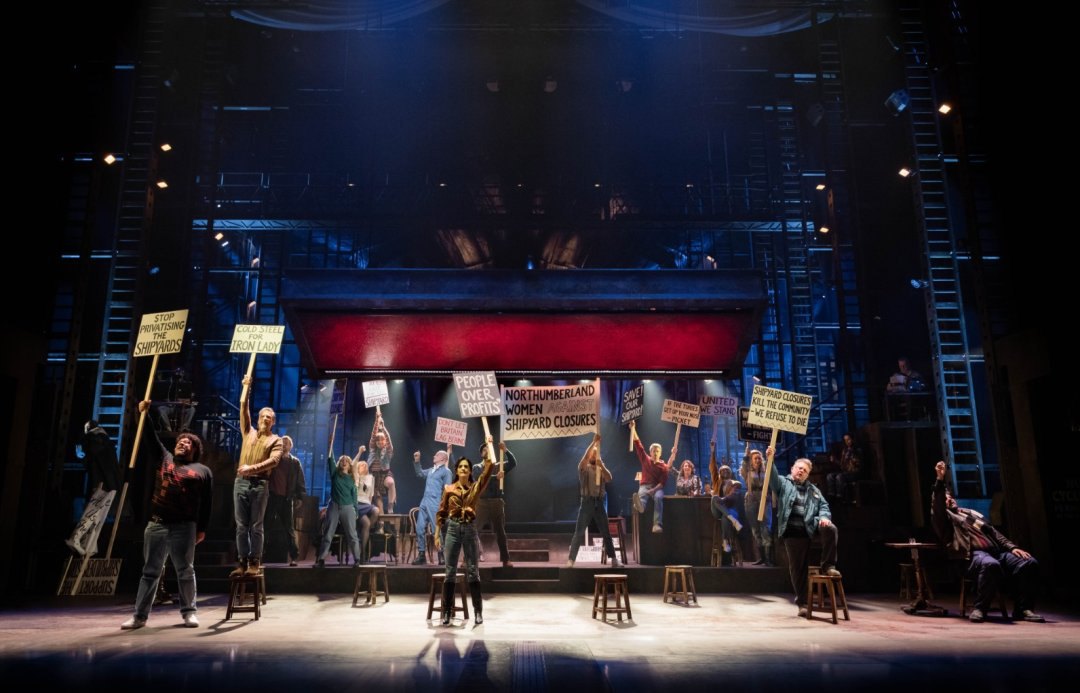
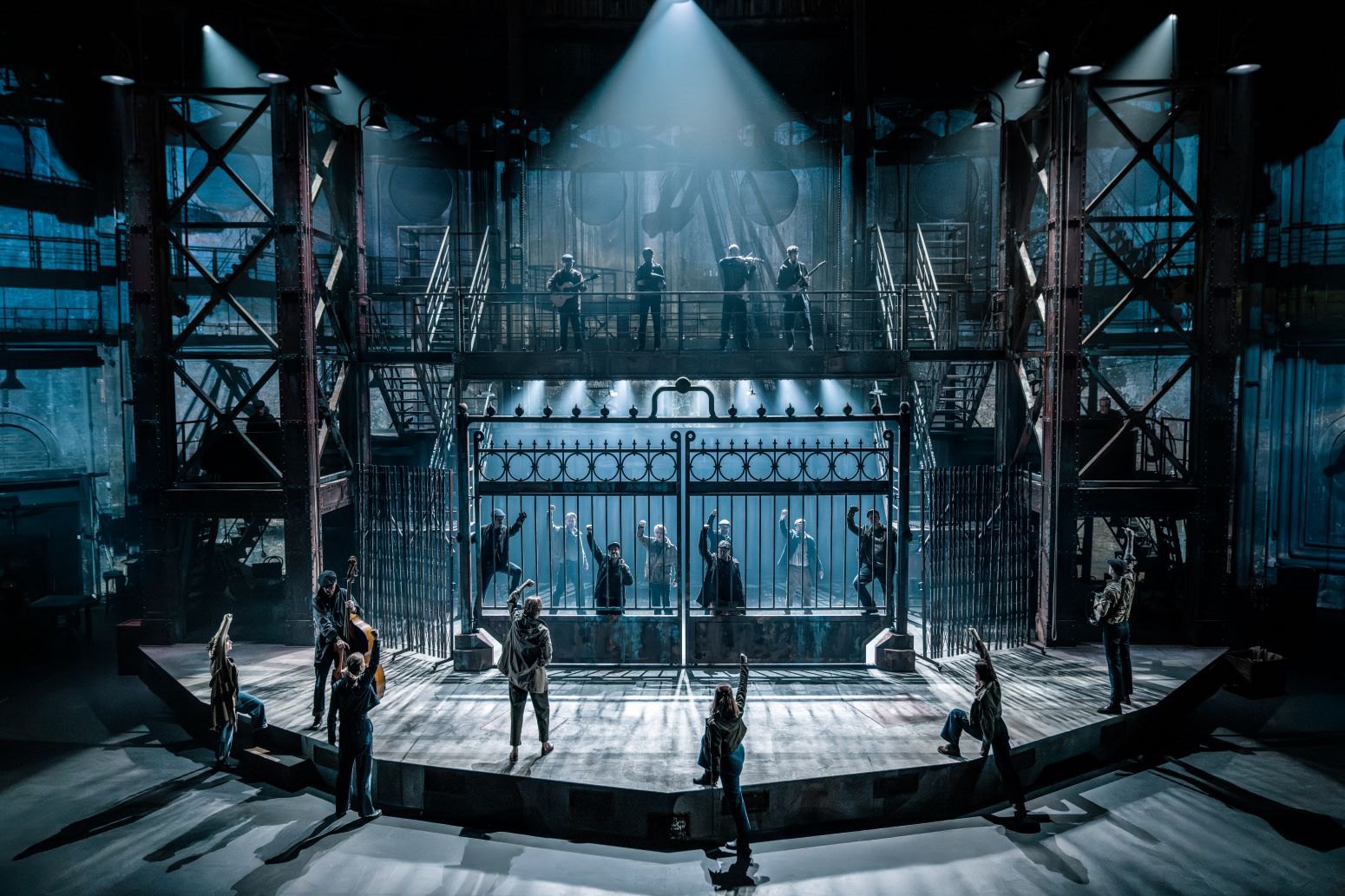
When all the spectators take their seats, a huge projection of a ship appears on the stage, made so realistically that it immediately feels like a real shipyard is nearby. The stage is decorated with construction structures and reinforcement bars — the characteristic sounds of metal open the show. We find ourselves at a shipyard.
The action takes place in a working-class town in Tyne and Wear (northeast England). Gideon Fletcher returns home after 17 years of service at sea, which he embarked on as a 16-year-old boy. A lady whom everyone calls the Baroness appears in town. She intends to privatise production, and journalists follow her around all the time. The Baroness is a composite image of a government representative for whom the issue has long been decided. Gideon sees that the shipyard is closing; for his friends and neighbours, this is a disaster — the loss not only of their jobs, but also of their purpose in life.
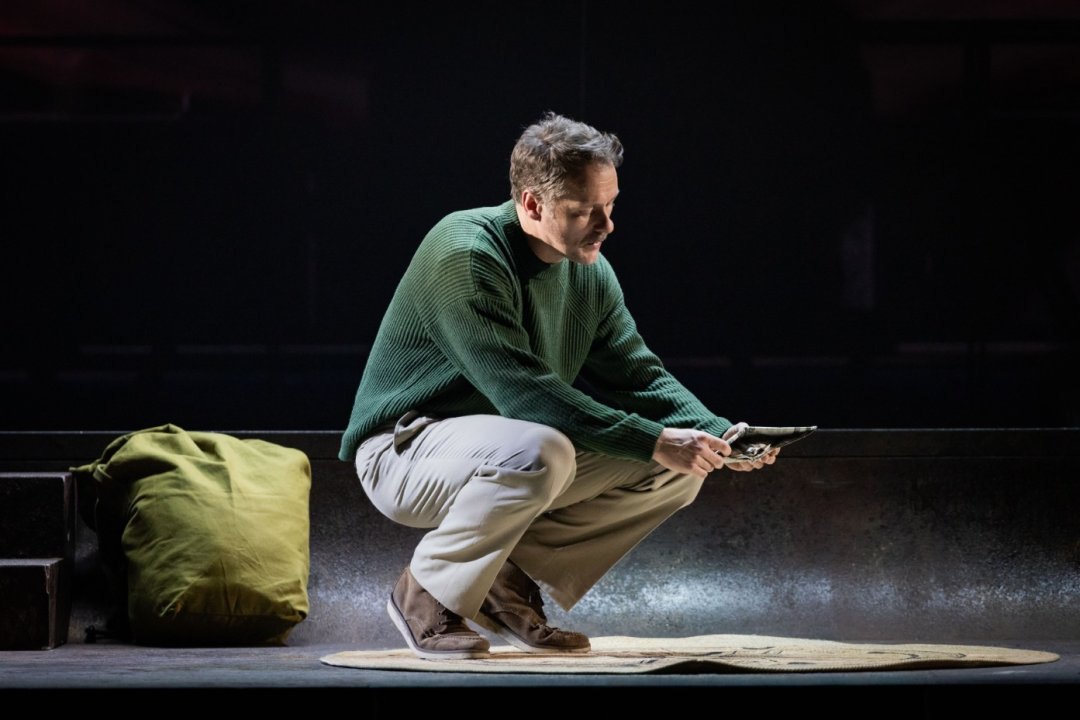
The plot develops gradually: we see the workers, their evening rest, their conversations, drinking, their wives — each and every one of them trying to survive. The teenage daughter of one of the main characters (Maggie) sees no future in the city and dreams of leaving as soon as possible. Gideon discovers that she is his child. He, on the contrary, tries to put down roots and accept himself as he is now, an adult.
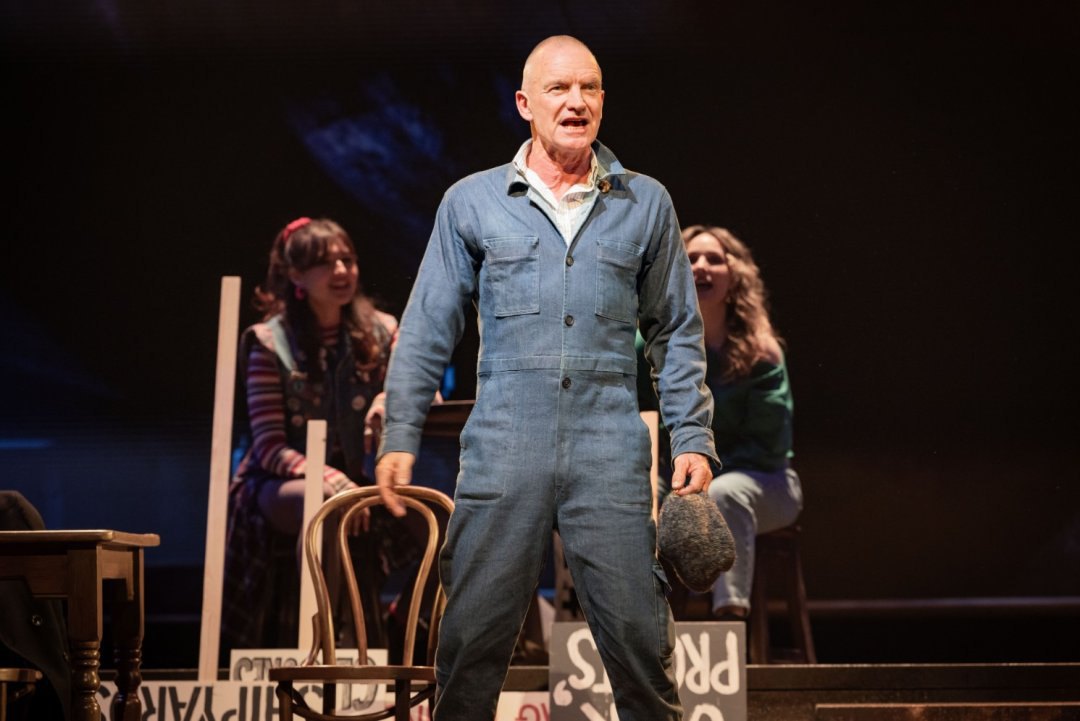
And then, among the locals, the main character of the local works emerges — Jackie White (played by Sting himself) — he tries to keep the community together to prevent the sale of the ship and thus preserve its identity. Contradictions, discussions and the search for a solution arise. All daily life revolves around the ship. We look closely and see its name: Utopia.
In one interview, Sting was asked: can we call the community around the ship a reflection of humanity as a whole? He smiled slyly and replied: what do you think?
Sensibilities and collective resistance
The Last Ship immerses us in the aesthetics of Broadway — the musical has a taste of good whisky and the old, difficult but still good times when our ship still had hope for a bright future.
During the intermission, I met opera singer Gosha Kovalinska, a soloist on many European stages; her assessment of the musical coincided with my own feeling of "artistic purity." "It's good old-fashioned content, but the atmosphere of the shipyard is conveyed in a completely captivating way through the latest technical and theatrical means," she shared her professional impression.
The atmosphere created by director Lorne Campbell, former artistic director of Northern Stage in Newcastle and recently appointed artistic director of the National Theatre of Wales, is truly impressive. The set design was created by Tony Award-winning company 59 Productions, the team behind the video design for the 2012 London Olympic Games ceremonies. The image of a ship, walls that transform into a local church with stained glass windows, then into part of a workshop where we see welding work — all this is extremely realistically embodied in the video design.
Sting himself is not only a music legend, but also an activist, a person who has long been on a spiritual path and passes on various practices. And if you carefully observe the meanings he brings to the attention of people around the world, these contexts are palpable. The Last Ship, as the characters sing, sails to the Islands of Souls, and the heroes and heroines encourage us to think: where are we all sailing on our shared ship? And as the equally legendary Leonard Cohen sang: "What happens to the heart?”
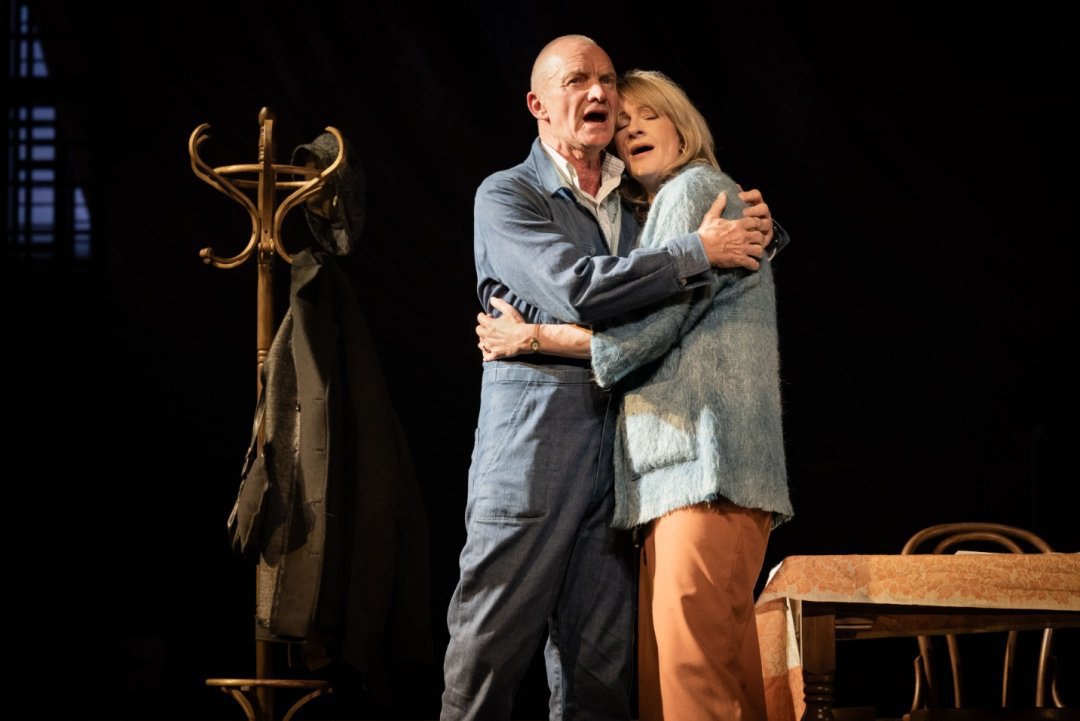
According to the plot, leader Jackie White (Sting) dies of cancer, but manages to convey an important message to the community — to fight for themselves and their dignity. The resistance begins with his wife, who chooses to continue the struggle. The musical powerfully depicts a scene of protest by women who simply kneel in front of the gates to the shipyard, where security guards are already stationed to take it away from the community and not let anyone through. This joint action is conveyed through singing, synchronised movement and testimony: we will not leave here. I think this is about the modern world, where resistance to injustice and hypocrisy often begins with women.
No less relevant is the palpable storyline of Gideon, who is trying to integrate into the community and finally settle down. This character's storylines include his romantic relationship with Maggie, his attempts to win her affection again, his reflections on the meaning of his own life, and the theme of male feelings and loneliness.
The ending shows that the ship does set sail — the community triumphs over injustice. Sting, the producer, gives us food for thought: who really shapes this hope for humanity? Perhaps the era of individualism is over? What can we all do? Is there anything else we can do?
Music
The musical part clearly reflects Sting's style and aesthetics, but there is also a noticeable folk influence and port romance. The music is performed live: the musicians are hidden in the niches of the scenery, but periodically become visible to the audience. The musical combines dialogues and monologues, which initially transition into rhythmic recitative and later into song; it has a rhythm that reminds the audience that we are on a shipyard: it is based on the sounds of piles, reinforcement bars, metal, wood, and glass. Richard John was in charge of the music, and Rob Mates did the orchestration. Sting wrote the music and songs, but it was Mathes who transformed the author's demos and folk-rock songs into a full-fledged theatrical score, wrote the music for the orchestra, created a balance between rock sound and Broadway structure, and expanded the choral scenes to almost "sea oratorios."
The Last Ship retains its northern English folk character with interwoven Celtic intonations and maritime rhythms. We hear a combination of acoustic guitar, strings, brass and rhythm section; the choral parts in the musical are a powerful element of the drama — they convey the mood.
A separate mystical character in the musical is the "ship's man," whose image is embodied by the singer Shaggy. At the beginning of the story, he appears in a long overcoat, as if he were one of the locals, but later he is sometimes an observer, sometimes a narrator. Shaggy's voice in the musical is particularly penetrating. There are various theories about who he is: fate, death, or the image of maritime identity, but he is always present.
The Last Ship Tour
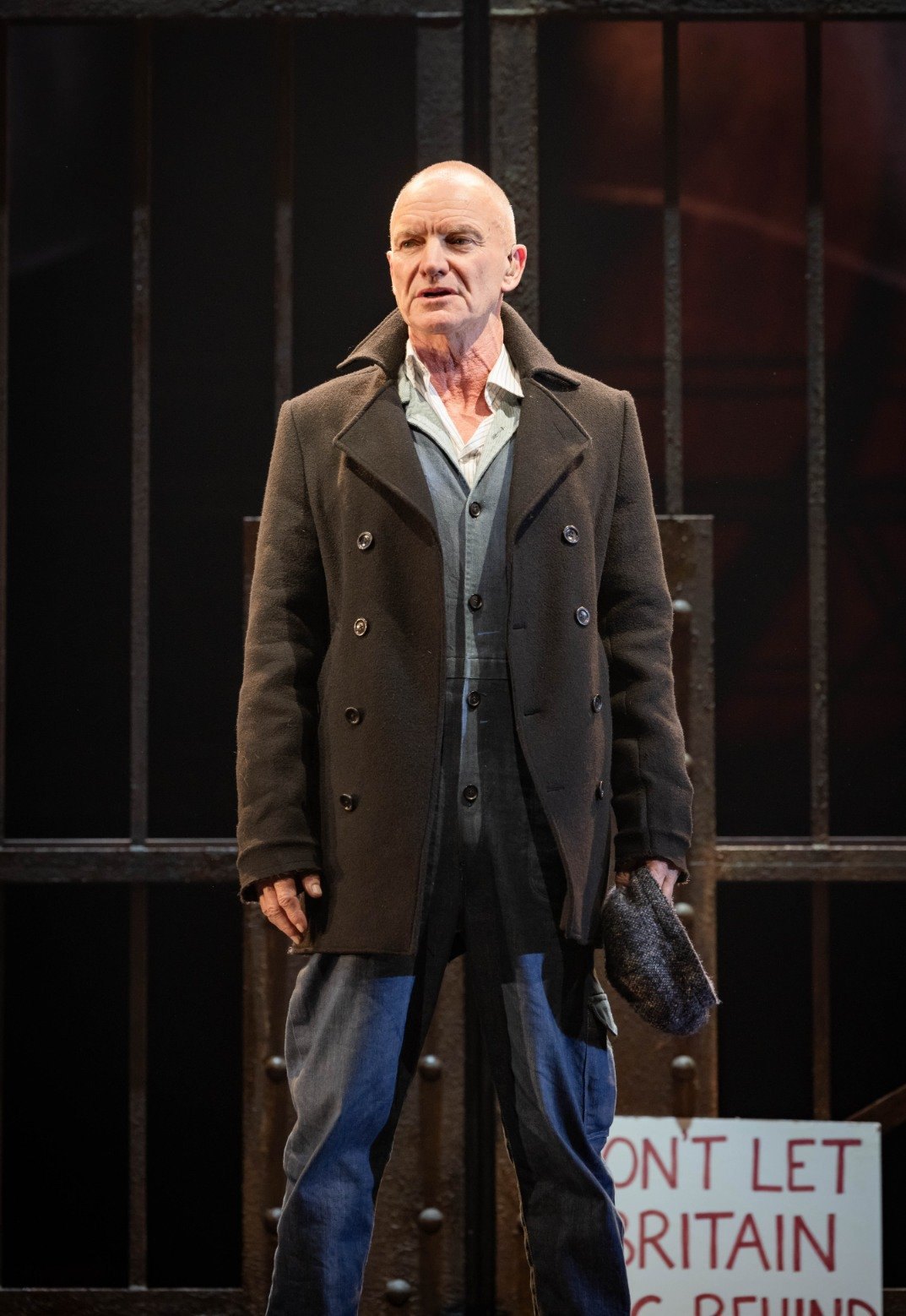
The intensity of the musical's performances also inspires respect and admiration. In Paris alone, they are held every day, sometimes twice a day, for two weeks. Next, The Last Ship will travel to Australia. Watching 74-year-old Sting in great shape, with his organic voice, is a pure pleasure. It seems that the musical returns to human nature, to a primal, almost childlike interest in history — as if someone is telling you a story by the fire, and you can almost smell the sea.
The musical ends with the ship Utopia setting sail, the entire crew taking several bows, and the audience giving a standing ovation. And all these people don't leave right away, but head for the merchandise stand and lively discuss what they've seen in the music hall lobby.
The show lasts more than 3.5 hours. And when I go down into the underground, I hear a woman in front of me humming:
Through the teeth of this tempest, in the mouth of a gale,May the angels protect me if all else should fail,
When the last ship sails.
I really want to believe that Sting knows something.
Read also“Great Russian culture” retail and wholesale: most high-profile performance cancellations