






Group 1: Technological and economic backwardness
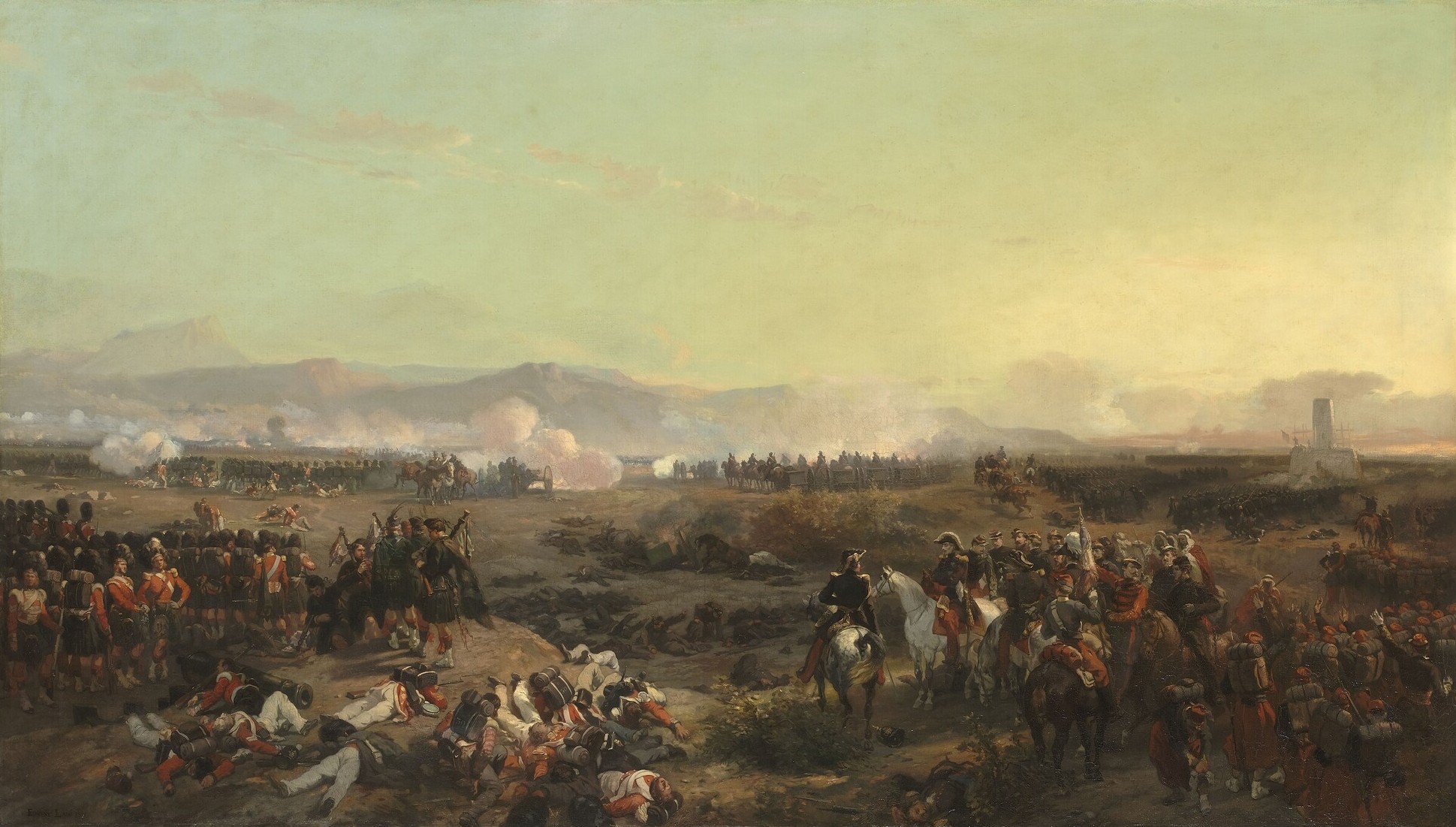
Allied powers confronted the Russian Empire in Crimea between 1853 and 1856 during the Crimean War. Armed with equipment typical of the time — including sailing ships and smoothbore weapons — the Russian army, flying the same tricolour flag as today, faced forces that arrived on steam-powered vessels and were equipped with rifled firearms.
The French forces carried Minié rifles with an effective range of 700–900 metres. They were opposed by Russian troops armed with smoothbore muskets, whose range did not exceed 250 metres. At the Battle of Alma in September 1854, Allied forces began cutting down Russian columns before the latter had even reached firing distance.
Naval warfare tells a similar story. The French deployed some of the first armoured warships — Dévastation, Lave and Tonnante — protected by 10-centimetre iron armour over wooden hulls. These vessels approached Russian coastal fortifications at close range, withstood dozens of direct hits (one ship received 72 strikes, 31 of them to its armour), and destroyed the Kinburn Fortress within three to four hours. French losses in the engagement amounted to two killed and 13 wounded.
The outcome of the Crimean campaign was a treaty that prohibited Russia from maintaining a military fleet in the Black Sea, constructing naval arsenals and coastal fortifications, or stationing warships there. It was, one might observe, a remarkably stringent set of conditions.
Researchers also point to the absence of a proper railway connection to Crimea, which severely hampered Russian logistics. As a result, troops could reach the peninsula only on foot. It is therefore doubtful that regiments from the Urals or Transbaikalia could have arrived in time. By contrast, forces from the nearer Ukrainian territories did participate. The Volyn, Zhytomyr, Kremenchuk, Odesa, Podillya, Poltava, Chernihiv, Dnipro and Azov infantry regiments, along with numerous others, were manned by Ukrainian recruits and militiamen. The 2nd and 8th infantry battalions of the Black Sea Cossack Host included Plast members — descendants of the Zaporizhzhyan Cossacks. They defended Malakhov Hill, the 1st, 2nd and 4th bastions, and the Selenginsky infantry regiment. One of the detachments was commanded by the military officer Danylenko, who came from a Cossack officer family. The sailors and lower ranks of the Black Sea Fleet, including the 30th Fleet Crew, were predominantly recruits from southern Ukraine — the Kherson, Katerynoslav and Tavria provinces. Among them was the sailor Petro Kishka, a native of the village of Orativ in the Vinnytsya Region — a reminder that not all who served in the imperial fleet were ethnically Russian.
Can anyone reasonably explain why the defence of Sevastopol — achieved through the labour and blood of Ukrainians — is described as the “city of glory of Russian sailors”? On what grounds?
In the course of appropriating Ukrainian military history, Russian narratives tend to omit a revealing episode. During the Crimean War, in August 1854, an Anglo-French squadron — 2,600 marines transported on six powerful ships — landed in Kamchatka and attempted to seize Petropavlovsk-Kamchatsky. The defence was led by Major General Vasyliy Zavoyko, a native of the village of Prokhorivka in Poltava province and a graduate of the Mykolayiv Navigation School. The garrison repelled two assaults, and the remnants of the landing force withdrew in defeat. By the logic often applied in Russian historiography, Petropavlovsk-Kamchatsky might therefore be described as a city of glory for Ukrainian sailors. It was, notably, the only Russian victory in that war. Admiral Zavoyko, incidentally, is buried in Podillia.
Another instructive example is the Battle of Tsushima during the Russo-Japanese War. Japan possessed a marked technological advantage, particularly at sea. Its fleet included modern British-built battleships such as Mikasa and Shikishima, equipped by 1904 standards with powerful rapid-fire 12-inch guns, advanced Barr and Stroud optical rangefinders, and centralised fire-control systems that enabled accurate long-range salvo fire. The Japanese navy also made extensive use of Marconi wireless telegraphy to coordinate squadron manoeuvres in real time, and burned high-quality Welsh coal, which produced less smoke and improved visibility.
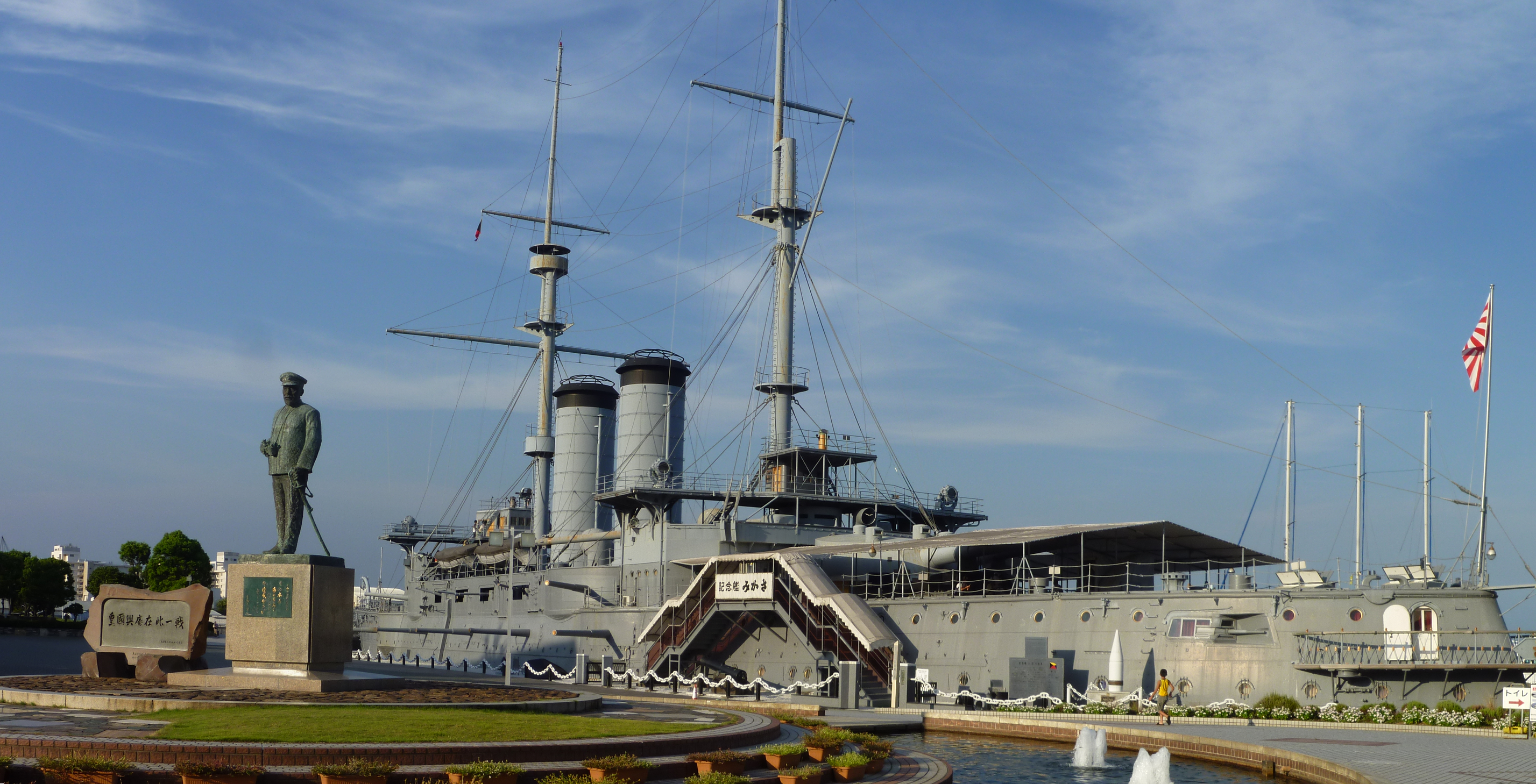
On land, Japanese forces deployed 280 mm howitzers that effectively destroyed the fortifications of Port Arthur. Their troops benefited from superior doctrine, training and logistics, supported by steam transport. The outcome is well known.
Group 2: Internal destabilisation and threat to the regime
The result of the World War I for Russia is likewise familiar. The country withdrew from the conflict amid economic collapse and revolution. The Bolsheviks were compelled to sign the Treaty of Brest-Litovsk when their capital faced the threat of capture and their hold on power was at risk.
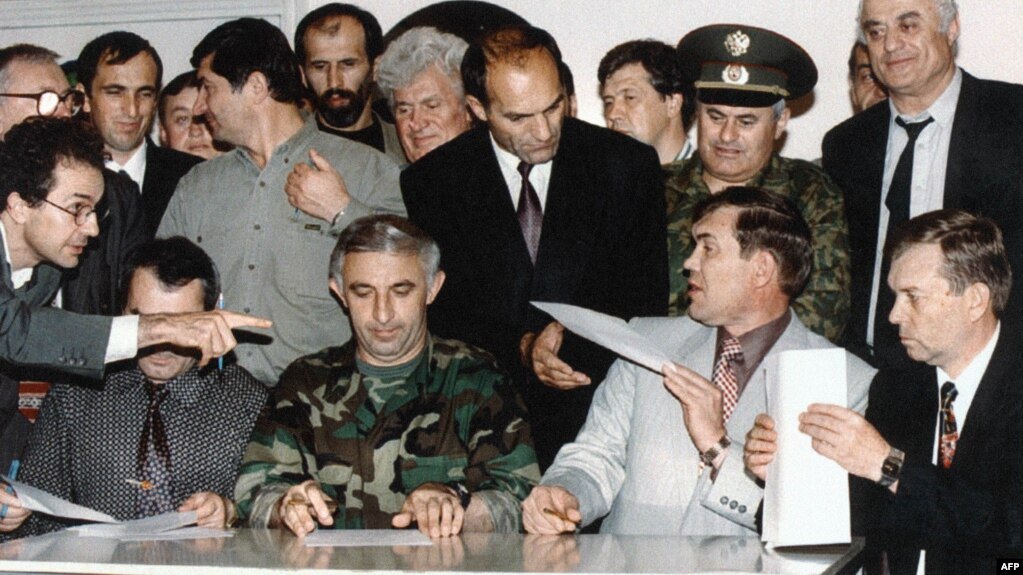
A comparable dynamic unfolded in 1996. Heavy losses and growing public opposition to the conflict forced the Kremlin to conclude the Khasavyurt Accord. Official figures state that Russia lost 5,732 soldiers and between 17,892 and 19,794 wounded in the war against Ichkeria; 1,231 were listed as missing, deserted or taken prisoner. Independent estimates place irrecoverable military losses at approximately 14,000 personnel.
The Khasavyurt Accord amounted, in effect, to Russia’s capitulation: the complete withdrawal of federal forces from Chechnya and the de facto recognition of Ichkeria’s independence for five years, with the question of status postponed until 2001. Russia publicly acknowledged that it had been unable to retain the territory by force and signed the accord accordingly.
It is often claimed — and frequently attributed to Otto von Bismarck — that “Russians always come for what is theirs, and when they come, do not rely on the agreements you have signed; they are not worth the paper they are written on.” Whatever the authenticity of the quotation, recent decades suggest a different pattern: interventions justified not by historical possession, but by expansionist ambition, as events in Chechnya in 1999 demonstrated.
Group 3: Disproportionate costs and the depletion of resources
A textbook example is the Soviet intervention in Afghanistan and the ensuing Soviet-Afghan War. Formally, the USSR did not suffer a decisive battlefield defeat. However, attempts to maintain control over the occupied country once again placed an unsustainable burden on the already strained economy, while Western sanctions intensified and global oil prices declined. The cumulative effect proved corrosive.
Another contributing factor was the peculiar Soviet military doctrine, which required the maintenance of eight tank armies within the armed forces. This amounted to approximately 8,000 tanks. They had to be financed, serviced and supplied, yet they were of little practical use in the mountains of Afghanistan, and they certainly never reached the English Channel. The question naturally arises whether such vast armoured formations were strategically necessary. By comparison, the entire Bundeswehr fielded roughly 300 tanks at the time, and the combined armies of Europe possessed fewer tanks than the USSR deployed in the European part of its territory alone. Ultimately, it was not armoured divisions but political decisions in Belovezhskaya Pushcha that brought the “USSR project” to an end.
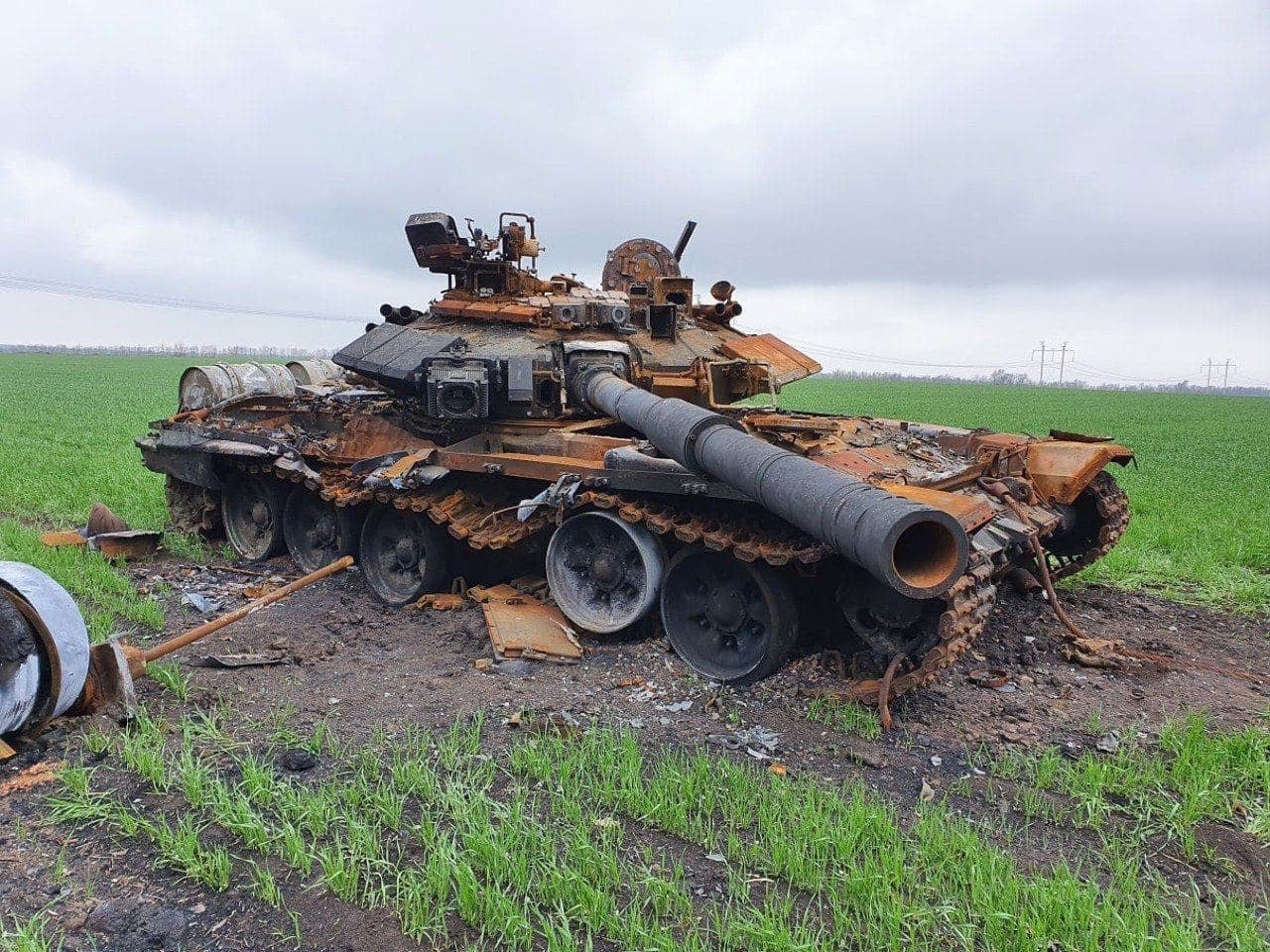
It is also worth noting that the Ukrainian Defence Forces have reportedly destroyed 11,698 enemy tanks during the current war — a stark illustration of how numerical superiority can be eroded under modern conditions.
Having examined some of the most striking examples of Russia’s defeats, three key factors emerge that tend to bring such wars to a conclusion:
• Resource impasse: when the cost of continuing aggression exceeds the benefits or threatens the economic survival of the state.
• International isolation: when access to critical technologies, financial markets and strategic partnerships is curtailed.
• Military parity or enemy superiority: when Russia encounters sustained resistance that even mass assaults fail to overcome.
To consider Ukraine’s strategic direction, it is instructive to recall the conclusions outlined by the Ukrainian ambassador to the United Kingdom in a recent address at Chatham House:
• People are becoming the most valuable resource in modern warfare.
• Technology determines tactics.
• The economy determines victory.
• Allies determine long-term security.
From this perspective, several priorities suggest themselves:
• Securing technological advantage: acquiring the capabilities necessary to neutralise the enemy’s numerical superiority.
• Targeting financial and logistical capacity: degrading the economic base that sustains the war effort, disrupting logistical infrastructure and supply chains, exhausting available resources, and countering the shadow tanker fleet.
• Diplomatic engagement: raising the political and economic cost of continued aggression to a level that threatens regime stability. This includes sustained sanctions and preventing fatigue among partners in the face of a protracted conflict.
• Undermining the internal equilibrium of the Russian Federation: the invading army is already experiencing systemic physical exhaustion; the front demands additional personnel, yet the political cost of general mobilisation may prove prohibitive. Financial incentives are diminishing, domestic security conditions are deteriorating, regional stability is weakening, and economic predictability has eroded.
In broad terms, the strategic choice may ultimately lie between accelerating the enemy’s economic exhaustion and achieving a decisive technological breakthrough.