






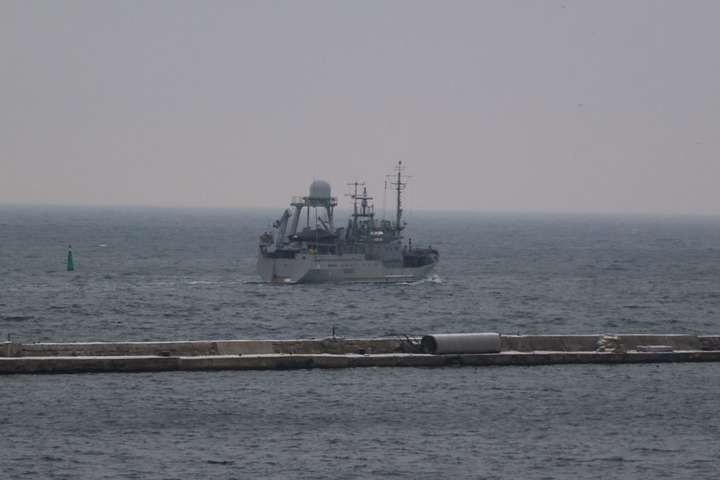
The best-known and first confirmed successful use of a Russian naval drone against a Ukrainian warship was the attack on the medium reconnaissance vessel “Simferopol”. A high-speed uncrewed surface vessel (likely a Katran-type drone boat) struck the “Simferopol” while it was moored in the Danube Delta near Romanian territorial waters. At least two Ukrainian sailors were killed in the strike, several others were wounded, and the ship sustained damage.
On 23 April 2026, a Russian naval drone attempted to approach one of the ports of Greater Odesa. A unit of the 801st Special Purpose Centre of the Ukrainian Navy quickly detected and destroyed it with an FPV drone strike.
Following the successful strike on the “Simferopol”, Russia carried out a series of less publicised USV attacks against port and coastal infrastructure, mainly in the Odesa Region and around the Danube. These attacks should be viewed as part of preparations for the large-scale deployment of naval drones in 2026. However, the effectiveness of Russian USVs remains limited due to communication issues and Ukrainian countermeasures.
Ukraine’s Defence Forces have repeatedly detected and destroyed Russian naval drones heading toward ports in the Odesa Region or the Danube area. Most such attacks failed thanks to rapid responses by the Ukrainian Navy and border guards. It cannot be ruled out that Russia was using these operations to test equipment, conduct reconnaissance and attempt to disrupt maritime corridors. Still, relatively few cases of major damage to coastal infrastructure caused specifically by naval drones have been recorded.
What is Russia bringing to the table? Russia only formulated unified operational and technical requirements for naval drones in February 2025. Relatively large-scale production began in the spring of that year. By summer, the “Rubikon” Centre for Advanced Unmanned Technologies had also turned its attention to maritime uncrewed systems.
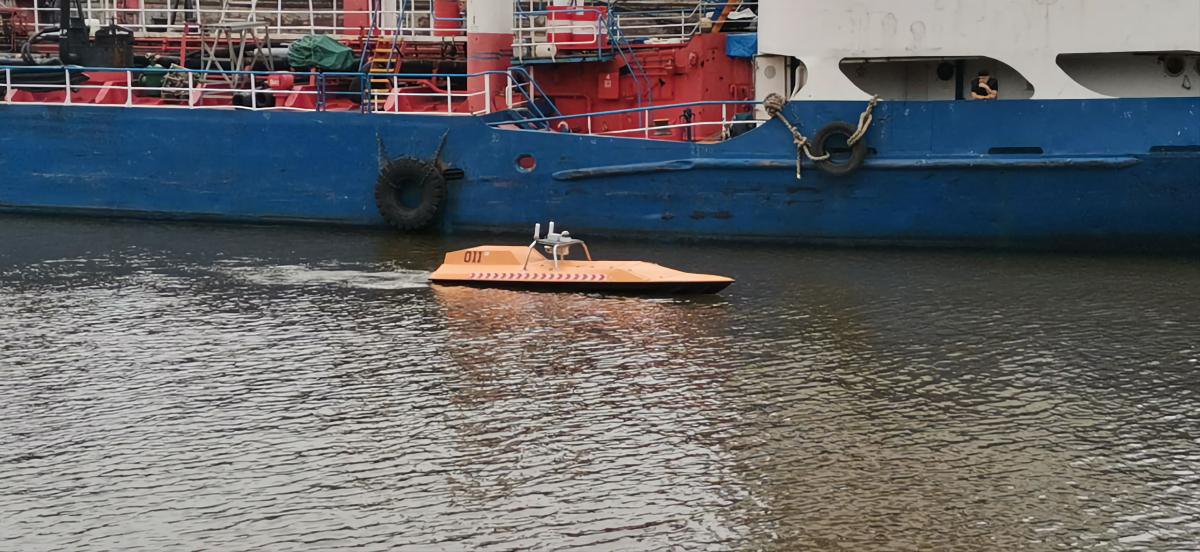
The “Arkan” USV (sometimes referred to as “Zephyr”) is the most compact multipurpose platform presented at the Fleet-2024 exhibition. It is around 5.3 metres long, has a top speed of up to 40 knots, an operational range of roughly 500 km and seaworthiness of up to Sea State 3. The drone boat is marketed as a universal robotic platform with low visibility, high manoeuvrability and AI integration, primarily intended for hydrography, reconnaissance and as a base platform for other systems. Naturally, all of it is supposedly “import-substituted” and “without analogues”. And, of course, importers are allegedly lining up to buy it.
The “Katran” USV is a trimaran with an aluminium hull developed by Centre for Unmanned Systems and Technologies. Its key feature is a lightweight impact-resistant hull designed for rough seas, as well as the ability to carry FPV drones — such as the “Skvorets” FPV — for launches at distances exceeding 200 km. The drone boat can perform patrol, reconnaissance, logistics and strike missions. “Katran” entered trials in 2025, with plans for mass production. The ironic part is that the project’s name appears to have been borrowed from a similar Ukrainian project.
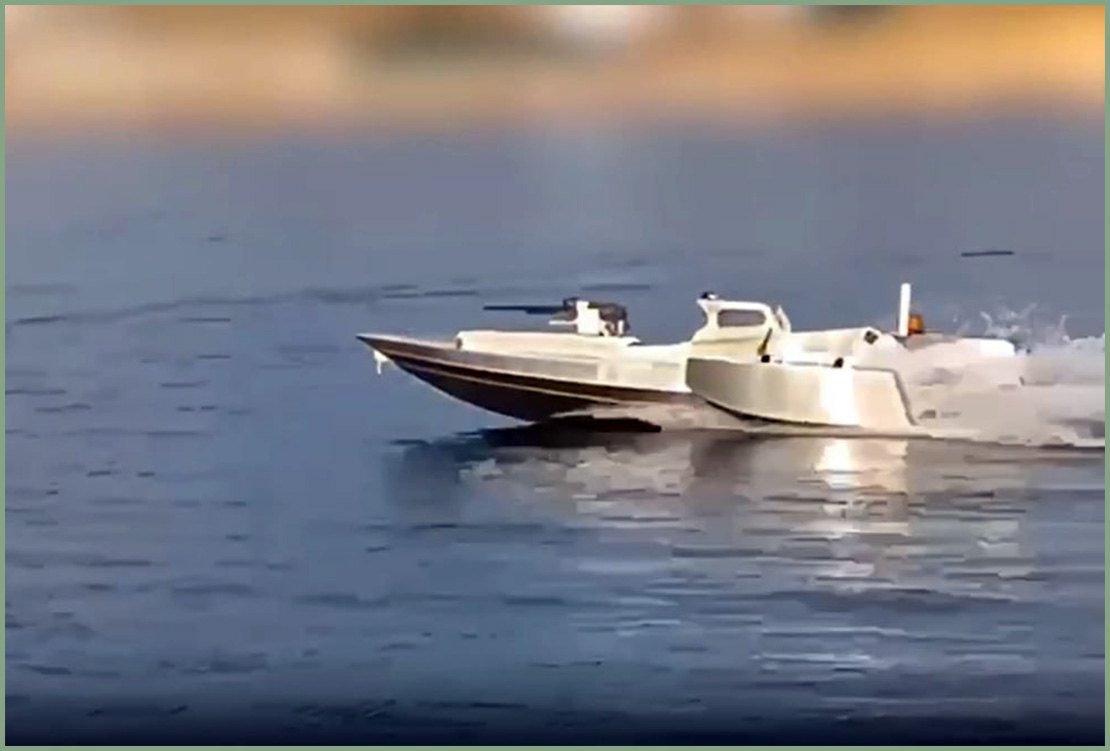
The “Vizir” (RK-700) USV is a multifunctional platform developed by the Kingisepp Machine-Building Plant, which is part of the Kalashnikov Concern. The vessel is around 7 metres long and 2.5 metres wide, with a top speed of up to 45 knots and a range of up to 600 km. It can carry payloads exceeding one tonne, including small underwater vehicles or other USVs, and can be used for evacuation, patrol missions or mounting weapons systems. If communication is lost, the drone automatically returns to base. Serial production began in autumn 2024, and a civilian-sector version is also being marketed.
The “Murena-300S” is a kamikaze naval drone developed by the Centre for Unmanned Systems and Technologies. In size, it is very similar to Ukraine’s Magura. Its range is up to 250 km, though extended fuel tanks reportedly increase that distance, while payload capacity ranges between 250 and 350 kg. In 2024, observers spotted a version equipped with a concealed antenna, likely for Starlink connectivity. The drone is used for strikes against Ukrainian ships and coastal targets, and reusable variants also exist. “Murena” became one of Russia’s first direct responses to Ukrainian naval drones and continues to be actively developed.
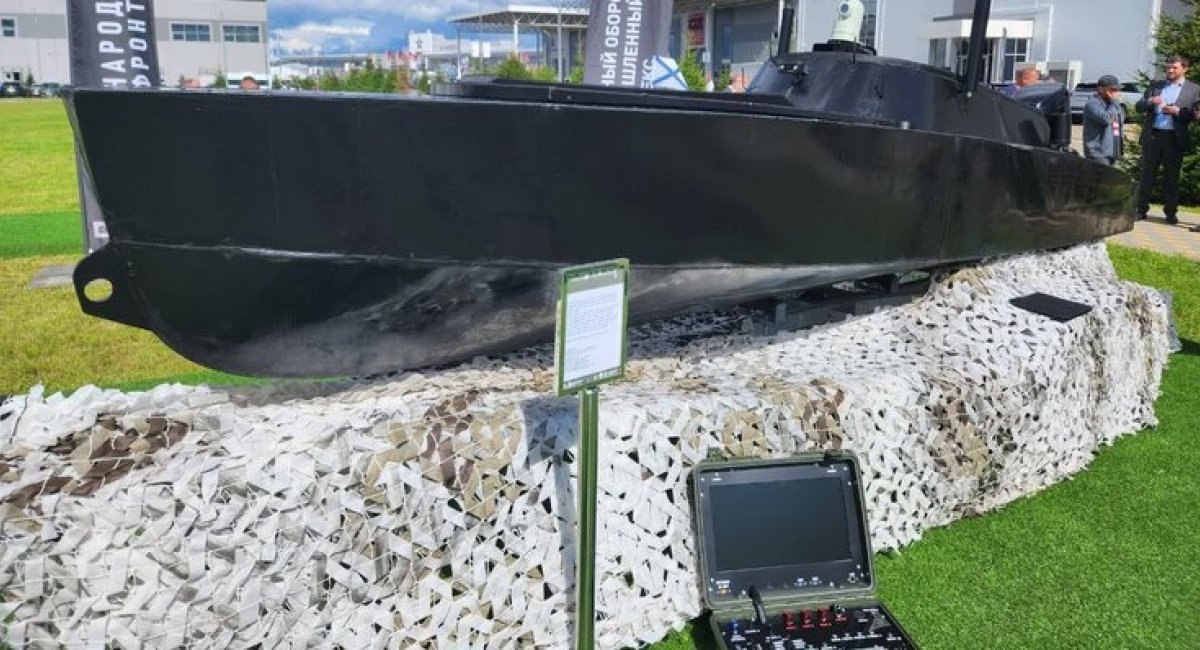
The “Sardina” USV is a compact unmanned surface vessel produced by the Navis and primarily designed for hydrographic surveys in difficult conditions such as rough weather and shallow waters. It can be launched either from shore or from a vessel and is noted for its high stability at sea. There is little publicly available information about combat use, but it forms part of Russia’s broader line-up of naval drones intended for reconnaissance and support missions — a typical example of the blend between Russia’s state-backed and so-called “people’s” defence industry.
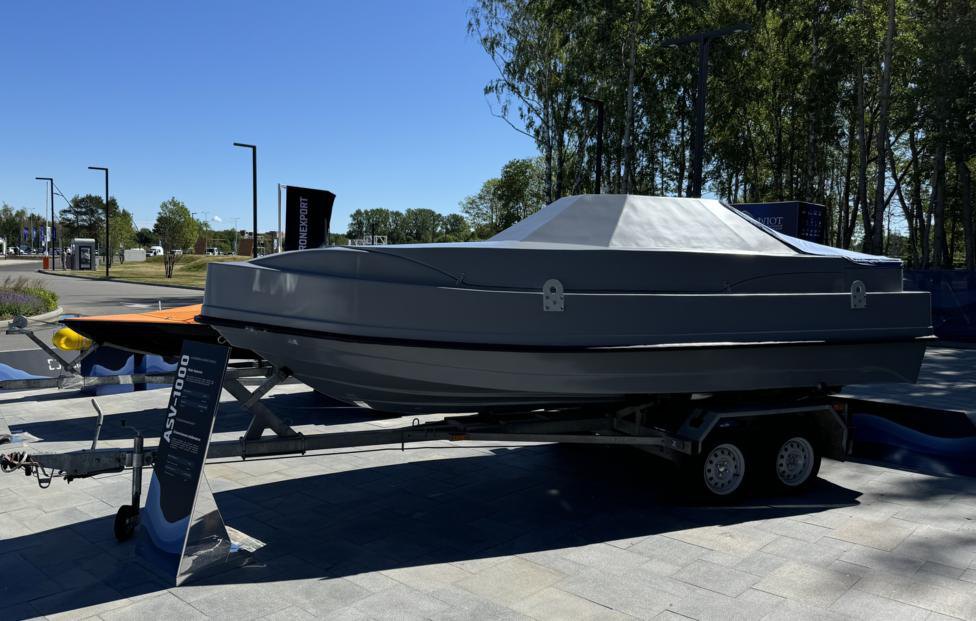
The “1000” USV is a heavy platform up to seven metres long, capable of carrying as much as one tonne of payload, including munitions or specialised equipment. The platform can be adapted for weapon systems or fitted with a large warhead. It was unveiled at the Fleet-2024 exhibition alongside the “Arkan” and “Vizir” USVs. The vessel is designed as a multipurpose platform, ranging from logistics support to strike missions. Its detailed specifications remain undisclosed, though developers emphasise its large payload capacity for complex operations.
Overall, Russian naval drones are a response to Ukraine’s successful USV operations in 2022–2024, with a focus on mass production, low cost and versatility. In 2025–2026, Russia planned to deploy naval drones on a large scale, including for strikes against Ukraine’s coastline.
The main problem is communications — especially after limitations affecting Starlink. This issue has been analysed in detail by Ukrainian expert Serhiy “Flash” Beskresnov. Russian forces are actively searching for solutions to control moving platforms at long distances while maintaining stable, high-quality connectivity. One of the systems mentioned is “Pautina” (“Web”), a radio-based solution developed within Russia’s defence ecosystem. Separately, Rosatom developed a rapidly deployable mobile security and surveillance system for its own needs, based on MESH networking technology. MESH technology connects multiple Wi-Fi nodes into a single seamless network under one SSID, allowing stable high-speed coverage over a wide area. Unlike traditional routers with repeaters, all nodes act as equal participants in the network, automatically switching devices to the strongest signal without connection drops.
“Pautina” reportedly ended up in military use, but its effective range is now limited to about 30 km, making it suitable only for coastal operations. Attempts to extend range using ship-based relay nodes failed due to signal loss in rough seas and during high-speed manoeuvres. The bandwidth also proved insufficient for controlling USVs effectively.
Using “ZALA” UAVs as airborne relays also did not deliver the expected results, and equipment from companies such as “Aeroscan” failed to meet requirements. More recent attempts involving equipment from ООО “PLAZ” were more successful and reportedly enabled more stable communications for coastal strike operations against Ukraine. However, there is a major drawback: naval drones are strong radio-emitting platforms, which makes them detectable at long range by Ukrainian electronic intelligence units — meaning detected USVs are often jammed or destroyed.
This creates a constant technological race in maritime robotics, with ongoing cycles of adaptation, strikes and countermeasures.
Finally, according to RFI and other sources, as of April 2026 a Ukrainian contingent of over 200 personnel and specialists is reportedly deployed in western Libya, including at the Air Force Academy in Misrata, near Zawiya (close to the Mellitah oil complex), and at facilities in Tripoli.
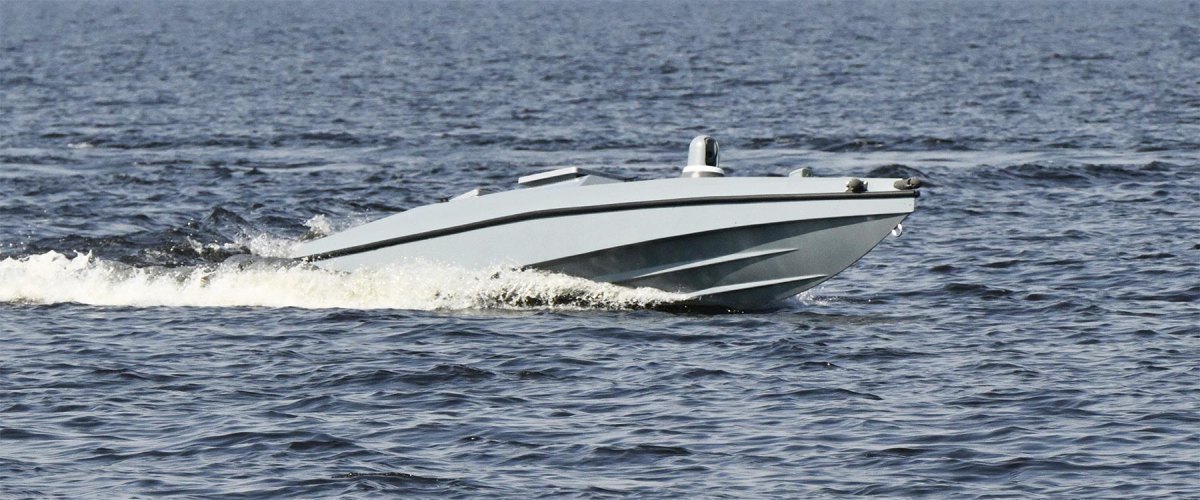
The Air Force Academy in Misrata is the main hub (in addition to our forces, the Turkish, Italian and US (AFRICOM) armed forces, as well as British intelligence, are present) used to control, train and launch UAVs; Zawiya is a key facility with direct access to the sea, equipped to launch the Magura V5. It is from here that most operations against the Russian shadow fleet are conducted. The base was modernised in the autumn of 2025. Facilities in Tripoli are used for coordinating and launching drones. RFI claims that it was from there that the USV that struck the Russian tanker was launched.
Ukraine’s interest lies in having a network of facilities to put pressure on the shadow fleet of the ‘mad petrol station’. In return, Ukraine trains Libyan military personnel in drone operations and provides certain equipment. All this is with the knowledge of the Libyan Government of National Unity led by Abdel Hamid Dbeibah.
Our people aren’t just sunbathing there. Last December, the tanker Qendil was struck; in March this year, the LNG tanker Arctic Metagaz was hit off the Libyan coast. A drone (presumably a Magura V5) struck the engine room; the ship sustained serious damage and was adrift.
The information is based on investigations by RFI, AP, the LA Times and Ukrainian media (April 2026).