





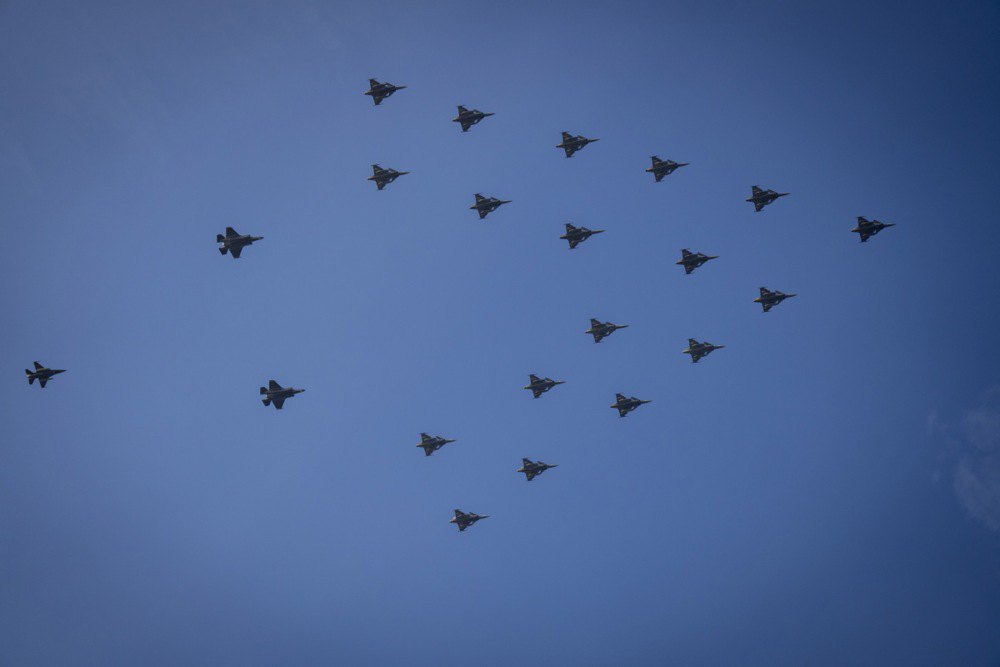
Reminder — pilot flight hours in the EU have long been 180 hours per year. This isn’t just straight-line flying. It includes aerial refueling, night missions at very low altitudes, operating in dense electronic warfare environments, and simulated engagements with “low-observable targets.” One hour of this intensity equals about three hours of standard patrol.
Dropping iron on coordinates of targets already destroyed doesn’t help in an air war against a peer opponent — for reference, consider Russian flight rates.
1. “Front line”: heavy and multirole fighters.
These are the aircraft that will take out Su-35s, intercept missiles, and work like a “scalpel” in the rear areas. In total, roughly 1,600 aircraft are on constant readiness: ~480 Eurofighter Typhoon (Europe’s main air defense), ~230 Dassault Rafale (including naval variants), ~550 F-16s (the most numerous “workhorse”), ~120 JAS 39 Gripen (“forest fighters,” capable of road takeoffs), ~140 F/A-18 Hornets, and ~80 Mirage 2000s.
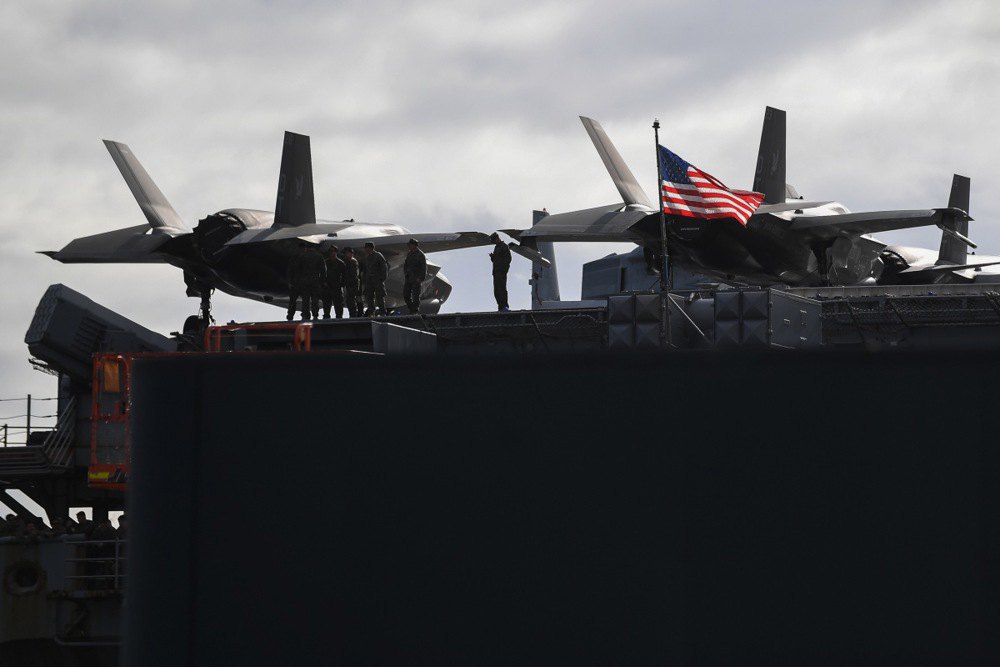
2. “Stealth list”: fifth generation (F-35 Lightning II).
As of 2026, deliveries are accelerating. These jets penetrate undetected and can take out radars and S-400 systems. Currently, there are ~200–220 F-35s (UK, Italy, Netherlands, Norway, Poland, Belgium, Denmark). Germany and Finland are preparing the infrastructure. By 2030, plans call for 600 aircraft — not 14 Su-35s per year.
The breakthrough weapon for the F-35 is the JSM missile with a 500 km range and small guided bombs like the SDB-II StormBreaker, with up to eight carried per aircraft. Europe is actively building its stockpile: Norway and Finland hold 200–300 JSMs, and the UK, Italy, and Norway have 1,500–2,500 StormBreakers. If just 50 F-35s are launched, they could deliver around 100 JSM missiles or 400 guided bombs in a single salvo. This swarm of small targets per minute would overload and neutralize any S-400 defensive area up to 100 km deep.
3. “Hunter Drones”: training and light combat aircraft.
These are the planes that save the expensive fighters’ flight hours by chasing “mopeds” and striking ground targets. Altogether around 500+ units: BAE Hawk, M-346 Master, L-39/L-159, Korean FA-50s, and turboprops like PC-21/Tucano. Some will launch unguided rockets and smart bombs, some will provide electronic warfare from containers, some will intercept small targets.
4.“Force Multipliers.”
Without them, combat aviation is just blind planes with empty tanks.
AEW&C (Eyes): ~25 units (Sentry, GlobalEye, CAEW). Russia has none; their program was killed off, leaving only three old planes in service. This is fatal for air ambushes and deep strikes — hundreds of kilometres inland will be fully visible.
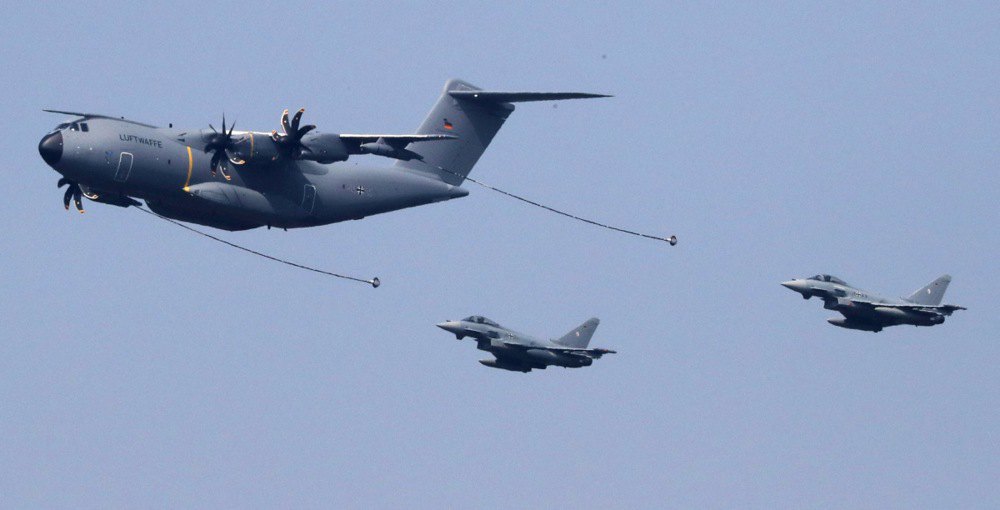
Tankers: ~50 units (A330 MRTT). Obvious purpose — allow operations from dozens of short-runway airfields across Western Europe while staying out of reach.
Maritime patrol aviation: ~60 units (P-8 Poseidon, Atlantic 2). Submarine hunters, but they will also strike land targets.
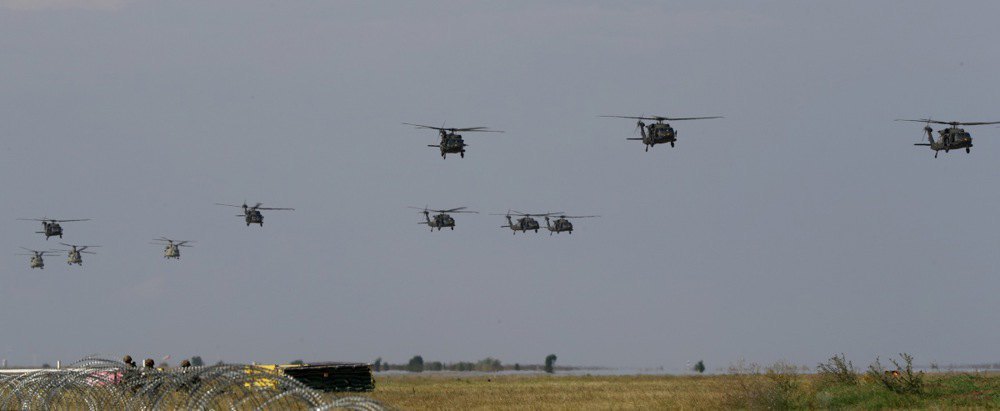
Helicopters: ~450 attack (Apache, Tiger, Mangusta) and ~1,800 transport-combat. Some think mounting a laser pointer and minigun in the cockpit is a Kyiv-only trick — they’ve got it too.
Reserves (“Plan B”): around 300 old F-16s and Mirages, ~100 Tornados, ~40–50 MiG-21/29s and Su-22/25s could be raised within 2–6 months.
Rocket salvo math: we only consider heavy cruise missiles (Storm Shadow, SCALP, Taurus) with 450–500 kg warheads and 500+ km range.
SCALP: 70 Rafale aircraft × 2 missiles = 140 units
Storm Shadow: 140 aircraft (Typhoon/Tornado) × 2 missiles = 280 units
Taurus: 110 aircraft (Eurofighter/Gripen/F-18) × 2 missiles = 220 units
Total first-wave salvo: 640 heavy cruise missiles in a single strike.
Such salvos could be launched at least five times per week, capable of hitting every fertilizer and chemical plant, each divisional-level HQ, and every major depot in European Russia. The EU can currently produce 15–20 of these missiles per month (with plans to reach 40–50), but remember Lend-Lease: the U.S. produces 720 JASSM-ER per year (planned 1,100) and is happy to sell them to the EU.
“Smart iron” (JDAM, Paveway, AASM Hammer).
These are “brains” kits ($25–50k each) that convert old bombs into precision-guided munitions (range 25–70 km). Germany, the UK, France (their Hammers reach 70 km), Poland, Italy, and the Netherlands collectively have 20–25 thousand of these. That’s enough to hit 20,000 command posts, pilot positions, communication nodes, and bridges. In a major war, this stockpile would last for about one and a half to two months of intense fighting.
The only catch is that dropping JDAMs requires first suppressing air defences—but Europeans can operate at very low altitudes, and their electronic warfare is better than Russia’s. Europe has enough “smart iron” to turn a country the size of Iran—or the European part of Russia—into a lunar landscape in a single devastating strike. Their goal: to halt Russian operations in the first 60 days.
For Russia, a prolonged war equals disaster. Europe’s total GDP is roughly 10–12 times larger than Russia’s. For every ruble Moscow spends, Europe can respond with ten euros, without straining the middle class. One to ten.
In a long war, Russia will rely on “analogue” iron and simple munitions, while the EU will scale up precision-guided weapons. Europe manufactures the machinery itself, while Russia will patch holes and cannibalize old stock.
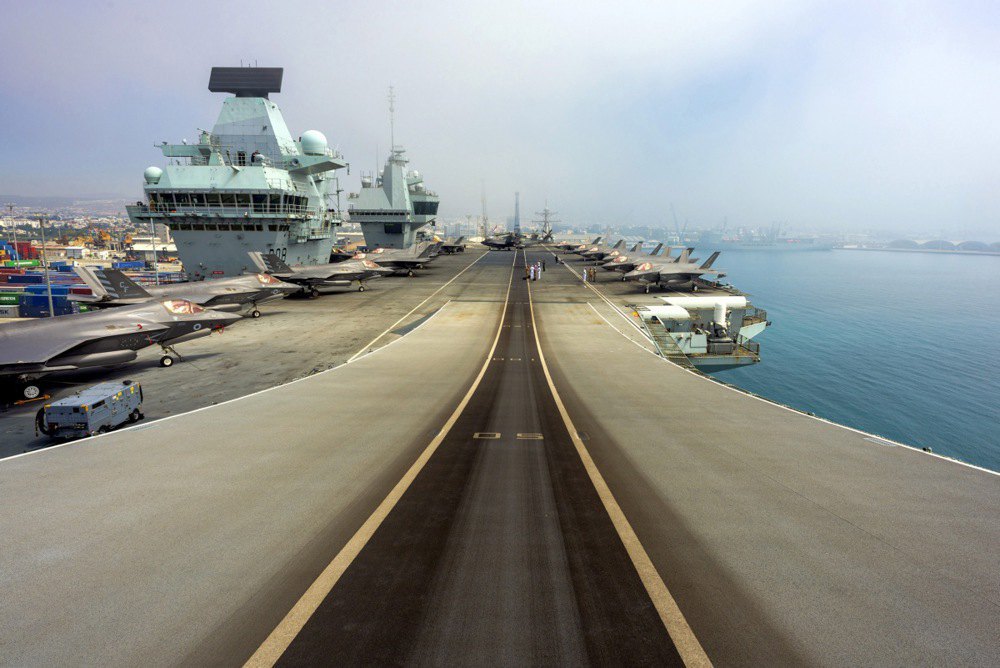
Fleet: Now it should be clear what a French aircraft carrier, two British carriers, and a dozen helicopter carriers can do to the Kuznetsovs. France deploys MdCN cruise missiles (Tomahawk equivalent) with a total stock of 250–300 on FREMM frigates and submarines, while the UK’s Royal Navy relies on 150 American Tomahawks aboard Astute-class nuclear submarines.
A single salvo from the European fleet, physically loaded in silos right now, would launch 100–120 cruise missiles hitting command posts from unexpected azimuths. In addition, Spain, Italy, Norway, Poland, and Germany have hundreds of heavy anti-ship missiles capable of striking coastal infrastructure 200–300 km away, taking out ports and warehouses.
Europe will not storm landings near Voronezh. It will systematically strike the rear: depots, bridges, substations, drone workshops, emergency vehicle assembly points. Even if Russia could do the same (spoiler: it cannot), it would be in the EU’s least developed areas, while Moscow would suffer to the fullest.