






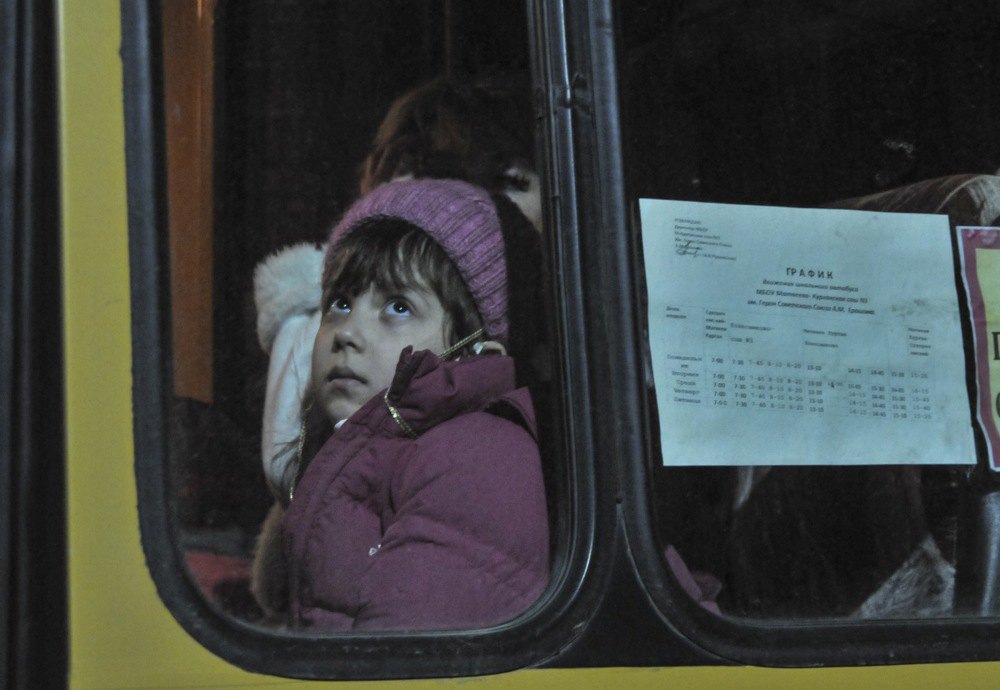
The Office of the Prosecutor General is currently investigating 19,546 cases of the forced transfer of Ukrainian children to Russia. Meanwhile, four indictments involving 11 individuals connected to the deportation and relocation of children from Kherson Region are under consideration in court.
At the end of 2025, investigators were able to establish the circumstances of another episode of child deportation from temporarily occupied territories of Donetsk Region a week before the full‑scale invasion. Five individuals have been notified of suspicion. They include Russian citizen Mykhaylo Kushakov, the so‑called “former Minister of Education and Science of the DPR,” and four of his accomplices: Ihor Lyzov, head of the “Administration of Amvrosiyivka District of the so-called DPR”; Oksana Plotnytska, director of the seized “Amvrosiyivka Boarding School No. 4”; Liliya Bilyk (Doskina), deputy director of the same boarding school; and Iryna Shetel, head of the seized “Vuhlehirsk Special Boarding School No. 6.”
Details of the case were provided by Yanina Tertychna, juvenile prosecutor at the Office of the Prosecutor General.
367 children deported from three Donetsk Region boarding schools
According to Yanina Tertychna, on 19 February 2022, by order of the highest political leadership of the aggressor state, the suspects organised the illegal transfer of Ukrainian children under the pretext of a “mass centralised evacuation” from Amvrosiyivka General Boarding School No. 4, Dokuchayevsk Special General Boarding School No. 27, and Vuhlehirsk Special General Boarding School No. 6.
“223 students from Amvrosiyivka and 11 from Dokuchayevsk boarding schools were deported to Kursk Region, while 130 children from Vuhlehirsk Special General Boarding School No. 6 were illegally transferred to Rostov Region by rail. On 15 March of the same year, three more children from Amvrosiyivka Boarding School No. 4 were deported to Kursk Region, where they stayed for a short period,” she said.
Investigators have established that none of the children were returned to the temporarily occupied territories, as required by international humanitarian law. Instead, 159 Ukrainian children were handed over to Russian families.
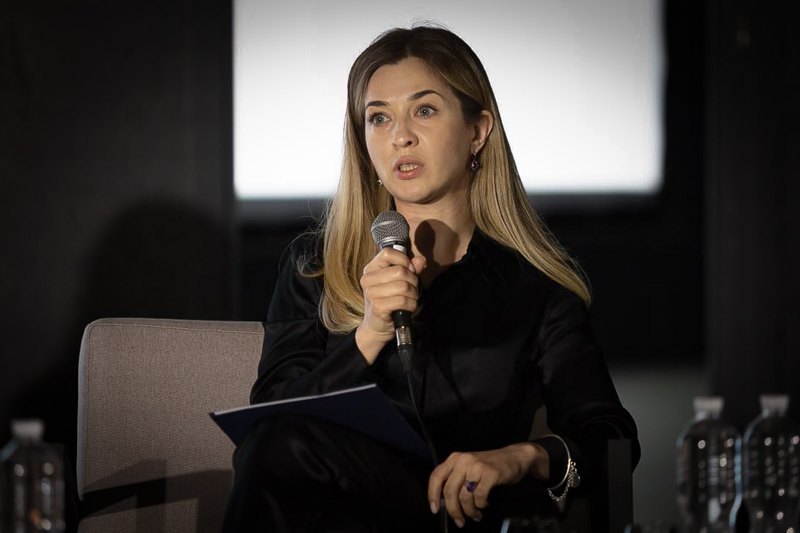
“We established that these families are located very far from the children’s homes, from where they were taken—effectively 3–4 thousand kilometres away. For example, Murmansk Region or the Yamalo-Nenets Autonomous Okrug in Tyumen Region, which is more than 4,000 kilometres from Donetsk Region,” Tertychna commented.
Deportation was planned
According to the juvenile prosecutor, investigators determined that the forced transfer of Ukrainian children was a premeditated operation. On 18 February 2022, the leaders of the so-called LPR and DPR issued statements announcing a “large-scale evacuation,” but these videos had actually been created earlier.
“These statements were produced on 16 February 2022, which indicates pre-planned actions. In addition, we identified documents they signed regarding the ‘evacuation,’ for which there were no legal grounds. At that time, when the orders were prepared and the video addresses published, the so-called ‘Minister of Education and Science of the DPR,’ who is actually a Russian citizen, issued an order to suspend the educational process and instructed school directors to ensure the children were taken away, while local administration heads were to ‘assist in the transfer of children.’ In compliance with these orders, the directors who we have charged—prepared the documents for removing the children and approved the corresponding lists of children to be deported,” she said.
According to the prosecutor, the suspects not only “facilitated and managed” the deportation but also accompanied the children to Russia.
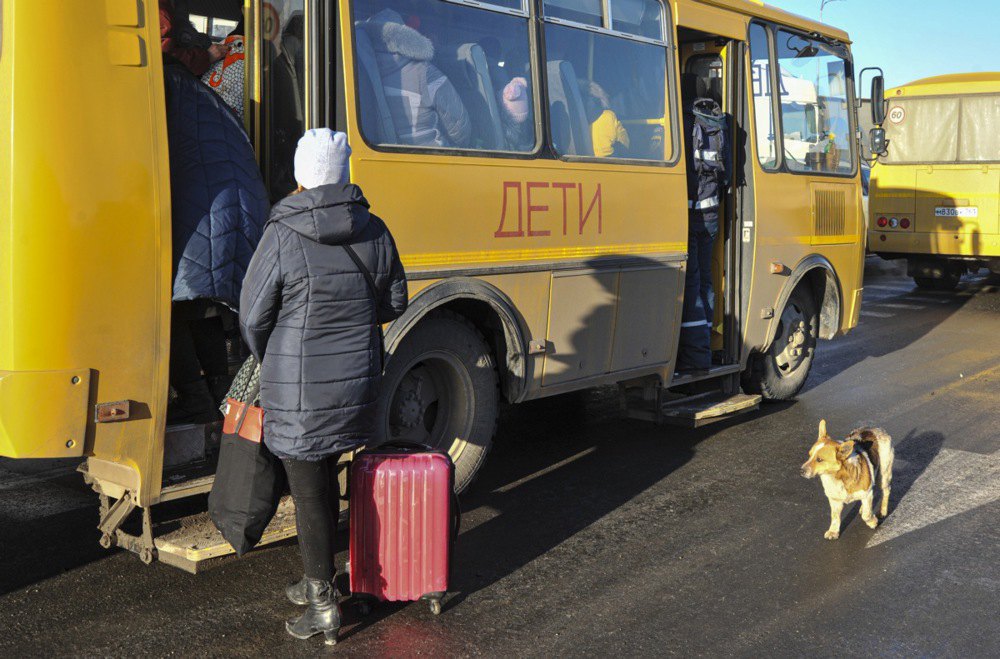
Deportation: baseless and harmful to children’s health
As noted earlier, there were no grounds for taking the children on 19 February 2022. Moreover, for most of them, the transfer was also dangerous.
“These institutional facilities housed children aged 4 to 17. Most of them had certain diagnoses, primarily mild intellectual disabilities and schizophrenia. As part of the criminal investigation, to determine whether it was necessary to remove these children, we interviewed a medical doctor. According to him, it is better to leave such children in their place of residence, because any change of environment affects their psycho-emotional state and can lead to its deterioration,” Yanina Tertychna said.
When asked whether any of these children had been returned to government-controlled territory, Tertychna declined to answer, citing the confidentiality of the investigation.
“This case is still under investigation as we identify all those involved. We hope to submit these indictments to court in the near future,” the prosecutor said.
Laid the ideological groundwork for future crimes
The large-scale deportation in temporarily occupied parts of Donetsk and Luhansk Regions before the full-scale invasion was also examined by representatives of the Regional Centre for Human Rights. Kateryna Rashevska, an expert in international justice and legal analysis at RCHR and one of the authors of the report The Deportation and Forcible Transfer of Ukrainian Children from Occupied Territories through the Prism of Change in Russian Propaganda Narratives, explains that this first stage of child deportation under the slogans of a “humanitarian mission” and alleged “protection” of Russian-speaking populations laid the ideological groundwork for future criminal actions by Russia.
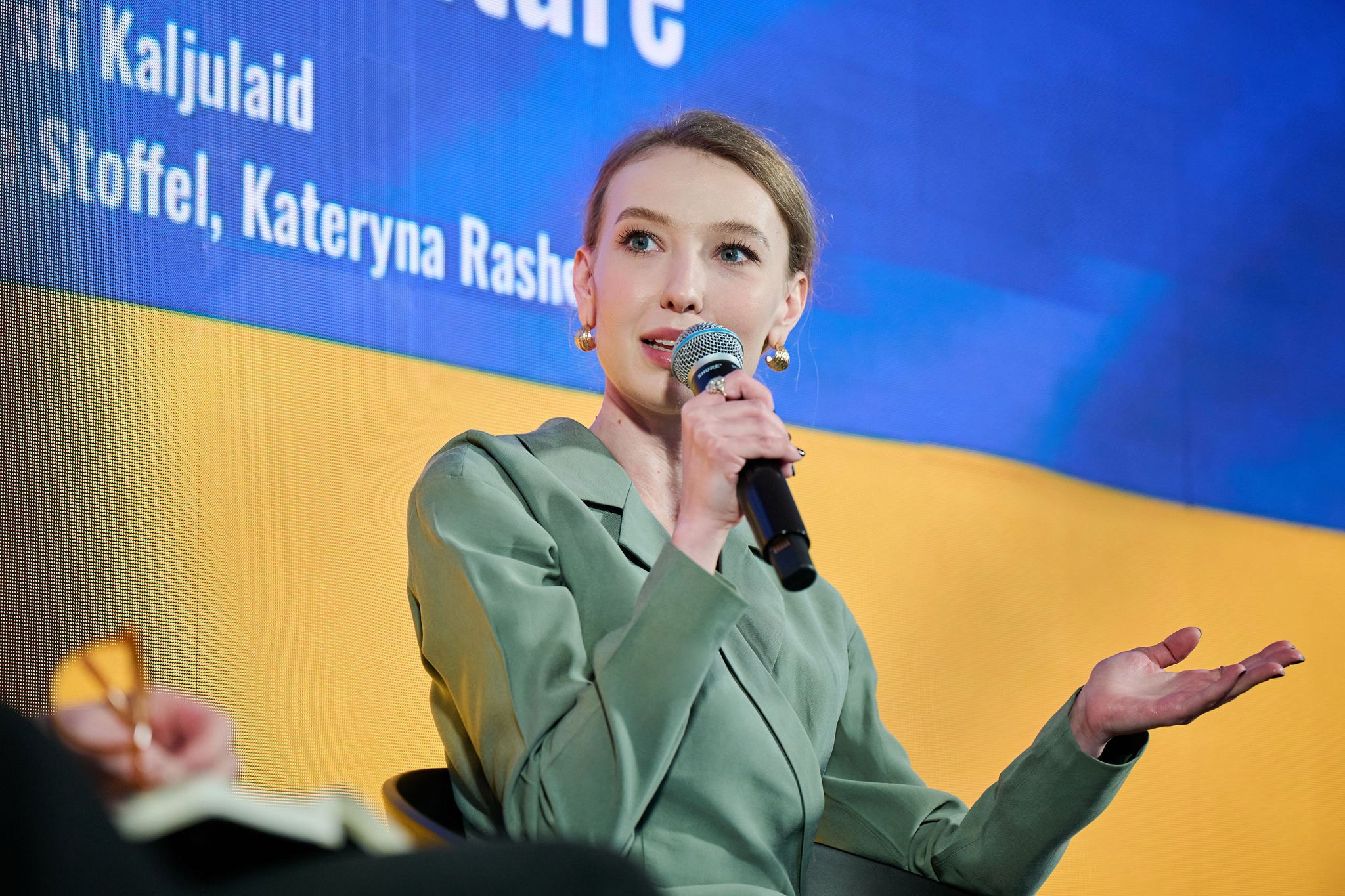
“The authorities of the unrecognised ‘LPR’ and ‘DPR’ acted in sync and in coordination with federal bodies on this issue. However, the intentions of the highest political leadership of the aggressor state were already clear. Immediately after the video addresses by Pushylin and Pasychnyk, Putin announced payments of 10,000 rubles to each refugee from the self-proclaimed republics. At the same time, Maria Lvova-Belova, the Commissioner for Children’s Rights under the Russian President, stated that she was ‘monitoring the situation.’ By 21 February, during a videoconference meeting, she said that ‘special attention’ was given to supporting orphans and children left without parental care, and that calls were already coming in from ‘concerned citizens’ ready to take children into their care,” Kateryna Rashevska explained.
Nearly a thousand children were removed before the start of the “special military operation”
According to the lawyer, their research established that children from two institutions in Donetsk were first evacuated: Donetsk Boarding School No. 1 and the Teremok Preschool Orphanage No. 1. The first institution housed 225 children aged 7 to 18, and the second 37 children aged 3 to 7.
“From open sources, it was clear that neither the children nor the staff knew where they were being taken or for how long, as interviews revealed that they were given only 15 minutes to prepare. Later, the children were searched for by their blood relatives, indicating that even the families were not informed of the minors’ transfer,” the expert said.
On the same day, children from Luhansk Orphanage No. 1 and the Republican Children’s Home in the ‘LPR’ were also evacuated. That accounted for 159 children, including 75 of preschool age and 17 infants under one year old.
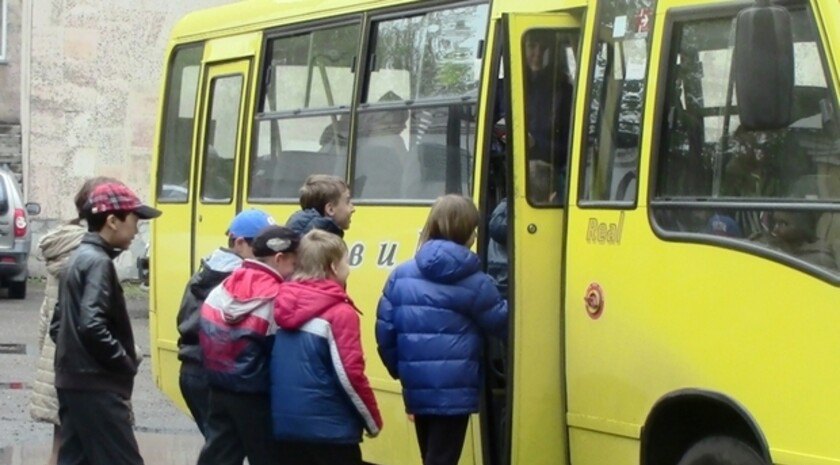
“On 18 February, the ‘Ministry of Education’ of the LPR announced that all children’s homes in the ‘republic’ would be ‘evacuated’ to Russia. Their statements also claimed this was temporary and that all children would eventually return. Because of this, some children were told by caregivers that they were going on a trip. However, there are reasonable grounds to believe that children from Donetsk Boarding School No. 1 and Teremok Preschool Orphanage No. 1 remained in Russia,” she said.
Rashevska also added that, unlike children from the DPR, orphans from the LPR were removed in two stages: first to the rear of occupied Luhansk Region, and then to Russia. On 19 February 2022, the so-called LPR Minister of Health stated that the children would be received in Rostov and Taganrog.
“By April 2022, 2,161 orphaned children had been taken to Russia from the DPR and LPR. Of these, according to the ‘DPR Human Rights Commissioner’ Daria Morozova, 71 children from three children’s homes under the ‘DPR Ministry of Health,’ 761 orphans and children left without parental care, and 165 residents of social children’s centres (a total of 997 children) were ‘evacuated’ before the start of the so-called ‘special military operation.’ However, we are confident that this number may be higher, as Maria Lvova-Belova reported different figures in various statements,” Rashevska said.
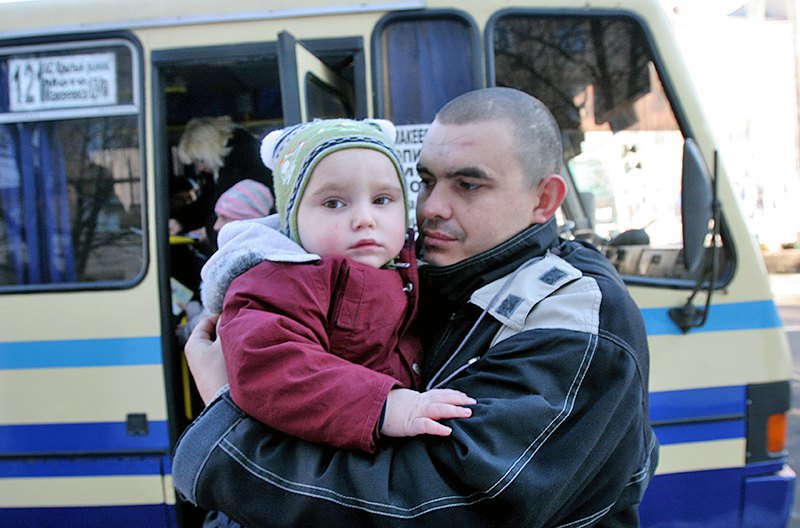
Illegal transfer also violated Russian law
The unlawful deportation of Ukrainian children from occupied Donbas before the full‑scale invasion differed in some ways from the deportations carried out by Russia after the start of the so-called “special military operation.” The lawyer emphasises that as of 18 February 2022, the so-called LPR and DPR were not recognised as independent states, not even by Russia. Although the State Duma voted for the annexation of the self-proclaimed republics on 15 February 2022, Putin signed these decrees only on 21 February—after the children had already been taken.
“Thus, from 18 to 21 February 2022, there were no legal grounds—neither under international law nor under any Russian authorities’ decrees—for the mass transfer of Ukrainian children from institutional care in the occupied parts of Donetsk and Luhansk Regions. This, along with other circumstances, allows this ‘evacuation’ to be classified as deportation and indicates the possibility of qualifying these acts as child abduction by an organised criminal group. From 21 February 2022 onwards, the situation changed only for Russia; the international community continues not to recognise the LPR and DPR, nor their annexation by Russia,” Rashevska said.
*** This material was prepared within the mentoring programme Justice in Media Focus, implemented by the NGO Human Rights Vector in cooperation with the Council of Judges of Ukraine and the National Union of Journalists of Ukraine, with support from the CEELI Institute (Prague). The content is the responsibility of the author and does not necessarily reflect the views of the programme organisers or donors.