






The world is defined here and now
I am deeply convinced that what the world will look like tomorrow is being determined today by Ukrainians in Ukraine. We have been given the task of fighting not only for our freedom, land or prosperity. We are compelled to fight for the very architecture of the future world: for the balance between good and evil, for the rules of the game, and for a new system of global security.
This is a responsibility we did not choose, but it is ours to bear. And this responsibility is owed not only to future generations of Ukrainians but also, however pompous it may sound, to the world at large.
That is why platforms for honest conversation are extremely important: for discussions not about slogans, but about the essence of who we are, what kind of country we are building, what relations between people of different views, confessions and ideologies will look like, and what our internal social contract will be. Because this is what will determine the future.
Davos 2026: the right words without awakening
Returning to the global context, I cannot help but mention Davos 2026. What was hardly discussed there? A just peace — its meaning, what justice should look like, and what security guarantees must stand behind the words. People must be at the centre of the new social contract, and this applies not only to domestic policy but also to international negotiations.
Our European and American partners have, to some extent, lost their sense of the tragedy of war. Since the end of the Second World War, several generations have grown up without experiencing it. They have never heard explosions nearby, packed an emergency suitcase, or said goodbye to loved ones “just in case”. For them, war is something seen on screens — in the news, in expert analyses, and in distant geographical locations.
They have observed wars from a safe distance. And the vast majority do not want to come closer to understanding their causes, interrelationships and consequences — especially while the Russian propaganda machine operates non-stop, systematically and cynically.
The initial shock of a major war in Europe has almost disappeared. Taxes, legal and illegal immigration, and the cost of utilities have become the main concerns in these countries — not survival, as it is for us.
That is why the Canadian Prime Minister’s speech caused such a stir in the Ukrainian bubble.
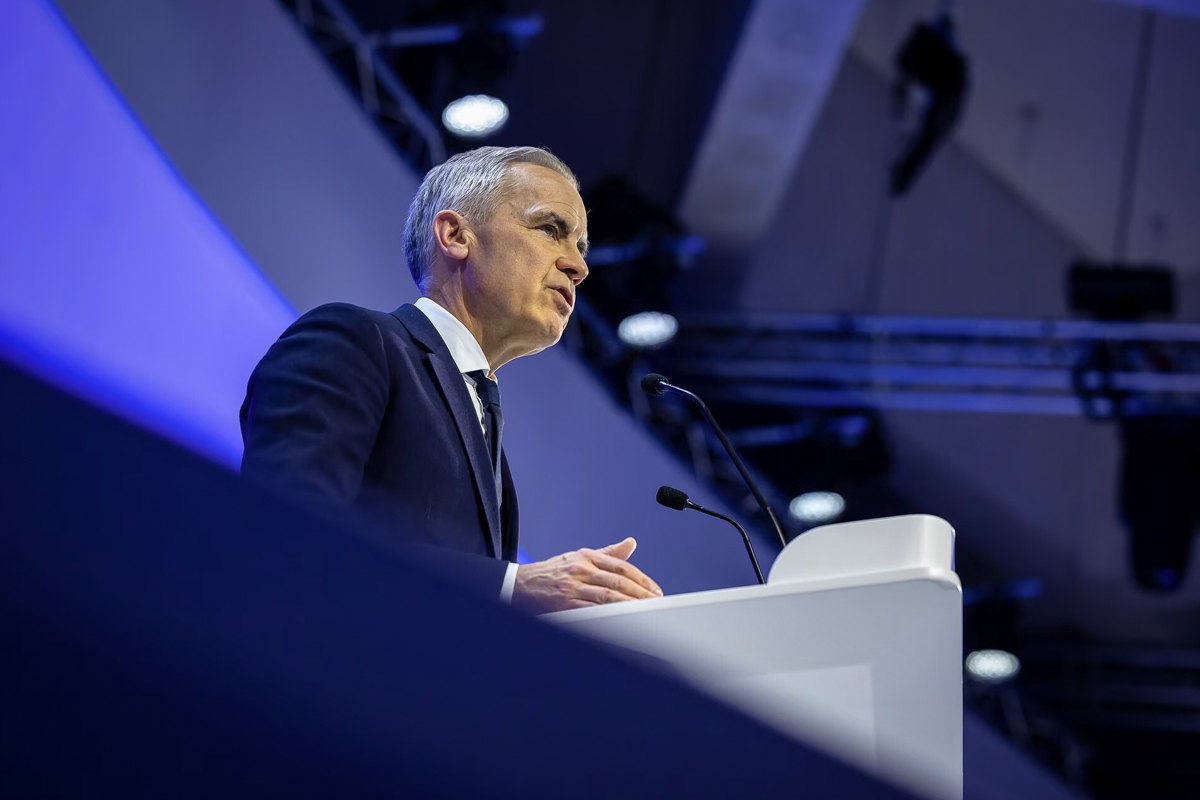
Not because he said anything new, but because he finally called a spade a spade. We have been saying this to the world for years. In the era of post-truth, hybrid wars and special operations, Ukrainians have become outspoken and demanding not out of idealism, but out of the experience of survival. Our historical experience has left us no other choice. That is why the Ukrainian voice sounds sharp, frank and demanding — not out of idealism, but out of experience.
Of course, we were talking about geopolitics and economics. Respect for human rights, justice and security are not optional extras to peace; they are its very essence. Powerful players are already redrawing the map of the world. And only when someone else’s hand is hanging over you do you suddenly realise that change is inevitable.
Globalisation in its classical sense is on its deathbed, and geopolitical processes are becoming not simpler, but painfully complex, no matter how much we would like to reduce them to black and white. The new reality brings economic uncertainty, political polarisation and technological revolutions. This includes the ubiquitous artificial intelligence — its threats to the labour market, challenges to the logic of business, and the way it calls old social contracts into question.
Formally, Davos 2026 is about dialogue
And so Davos 2026 is presented as an attempt at dialogue. In reality, no real dialogue took place. The powerful possess not only a strategy, but also a utopian ideology of their own righteousness. Many European countries appear confused and unprepared for tough, rapid and unpopular decisions. And we are not speaking only about energy security or democratic institutions. We are speaking about the ability to see a threat and react before it is too late.
What does this mean for Ukraine
And here we come to ourselves. For us, security challenges are undeniably real, as is the lack of reliable security guarantees. But we must also take into account the shortage of human capital and labour — a critical challenge that runs like a red thread through international reports and is already being felt acutely.
We remain dependent on international financial support. Of course, it helps us cope with the challenges and consequences of war, but this support cannot be considered eternal. These are uncomfortable truths. Yet mature countries begin with an honest look in the mirror.
The future is not built on concepts. It is built on decisions.
At the same time, we have something that many others do not:
- We have the experience of war. We understand the importance of the defence sector. Now is a unique opportunity to transform it into a driver of innovation, not merely survival.
- Ukraine also has the potential to become an energy hub after the war, given the new European security architecture.
- A digital state is not an experiment, but a real competitive advantage. Government services must be improved and work for Ukrainians and businesses.
We are no longer merely catching up. In some areas, we are already ahead.
- I believe that the future is not built on concepts; it is built on decisions.
- Concrete steps to attract private investment, not only donor funds.
A partnership between the state and business as the basis for reconstruction — not in words, but in workable models. We need project financing, the involvement of major international financial institutions, and state support not only in developing properly prepared projects, but also in creating conditions for their implementation. Only in this way can we launch a new wave of industrialisation.
About trust, investment and responsibility
The foundation of a new country is trust. Without it, there will be no future — trust in institutions, between the state and business, and between people.
We need a real meritocracy, where social lifts raise the most effective. We must unleash entrepreneurial energy, in particular through more active lending to the real sector, rather than locking finances exclusively in state instruments.
The state must act in a targeted and pragmatic manner: supporting new investment projects, creating mechanisms to insure military risks, and competing for new capital, technologies and enterprises. This is precisely what development requires.
And most importantly, we should not wait for decisions to come only from partners or authorities. There is no one else. The responsibility lies with us. We must propose, discuss, defend our positions and change the country through our own actions.
Ukraine already knows the true face of chaos. Our task is not to ask for a return to the old world, but to become co-creators of a new one.