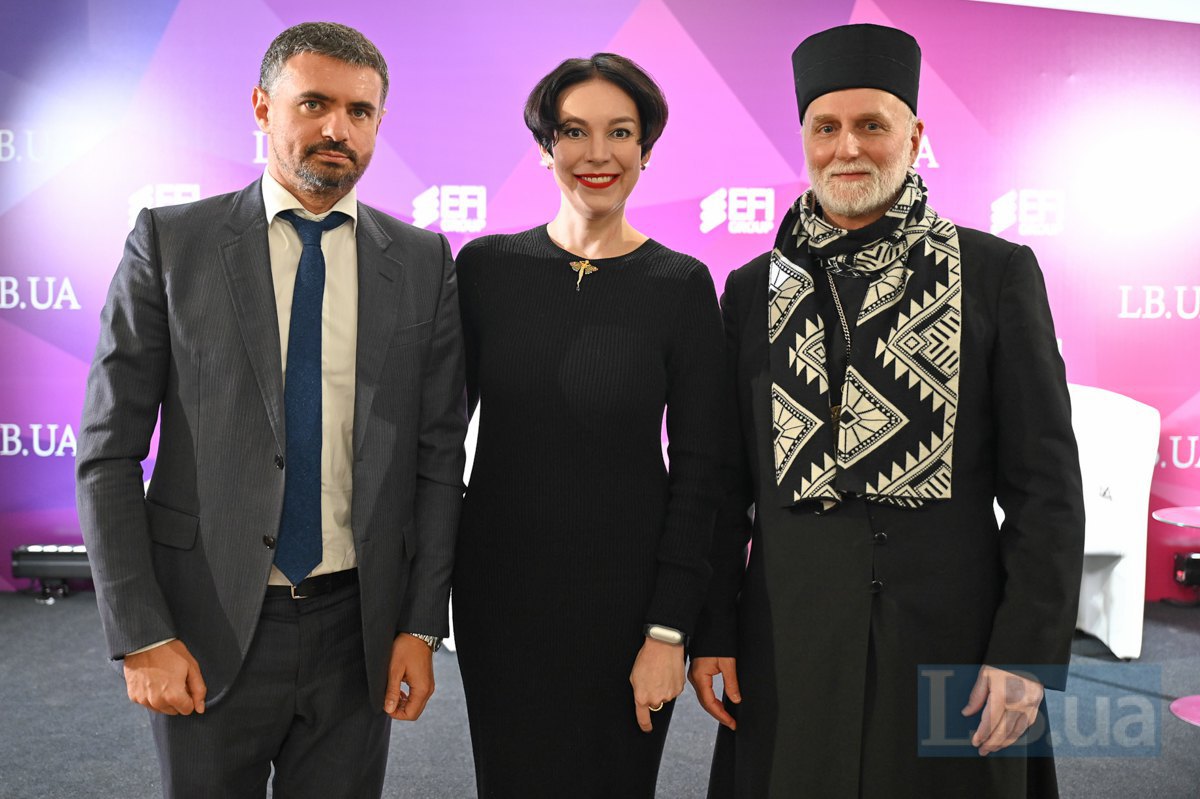





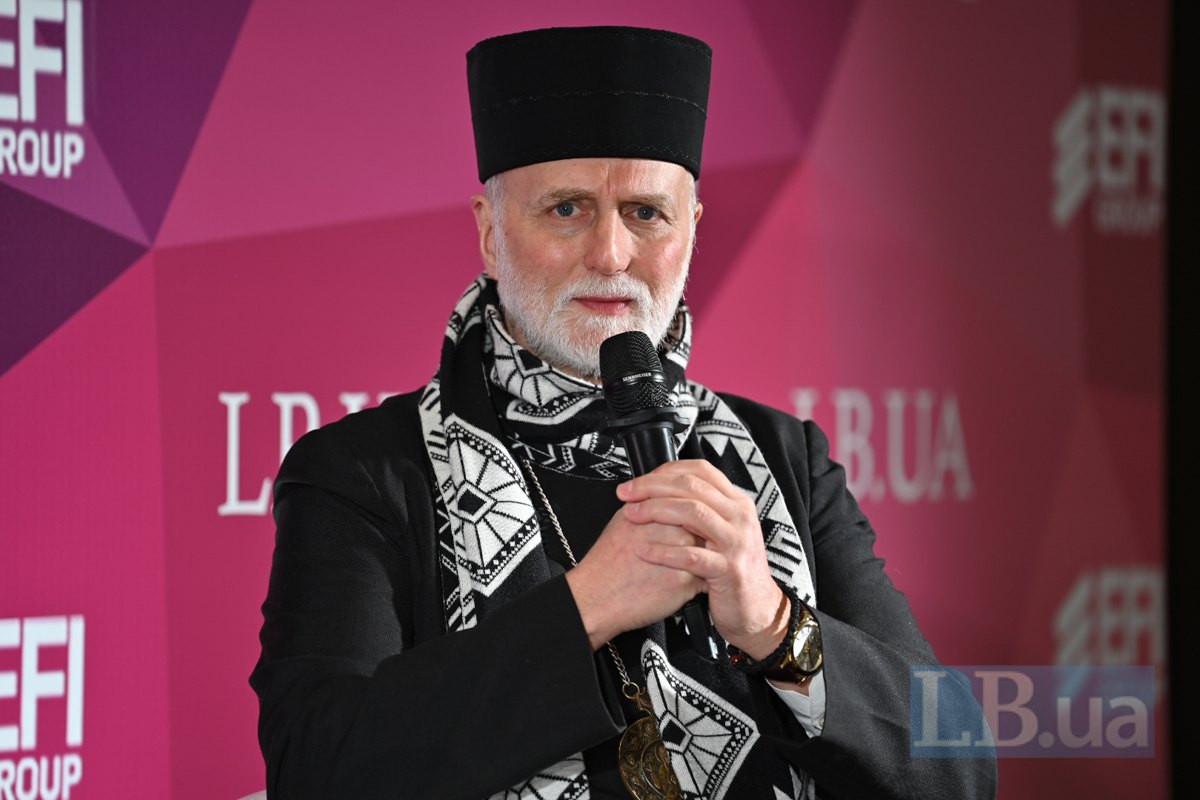
This is your 15th visit to Ukraine during the great war, which allows you to compare people’s moods very clearly. When we met last time, at the end of the summer — right after the Prayer Breakfast — we were already talking about fatigue, exhaustion, and depression.
From today’s perspective, it is even strange to recall this. In summer, it was warm, there were no such massive power cuts, and almost everyone had water. Today, much of this is gone, which inevitably has an additional impact on people, especially on vulnerable groups.
If we exclude the frontline regions, the situation in Kyiv is perhaps the most difficult. We are literally plunged into darkness and cold for most of the day. People try to help each other, but their strength is at its limit. It is easier for believers — we know whom to turn to for help. But what can secular people rely on? How can they avoid losing hope?
I have been in Ukraine for ten days, but only 36 hours in Kyiv, so I cannot say that I have experienced everything first-hand. However, we read, listen, observe, and pray for people and their various needs.
After travelling around Lviv, Ivano-Frankivsk, Kolomyya, Chortkiv, Buchach, Zarvanytsya, Ternopil, and Fastiv before Kyiv, I met with the families of the fallen, with people who are traumatised, who have disabilities, with internally displaced persons, and with those who accompany them. These are ordinary Ukrainians, primarily religious Ukrainians, churchgoers, but not only them.
And I will tell you: it is such a paradox, a mystery, that life is so concentrated in Ukraine. There is death, but there is also an experience of life that I do not feel in the United States or in Western Europe, where I have visited many different places and countries.
For me, your resilience — the resilience of our defenders — is striking. And we, you know, pray many times a day for the defenders, for the repair workers, the infrastructure specialists, the chaplains, the volunteers, for the authorities and the journalists — that is, we cherish a kind of shared, distant awareness. When I appear, for example, at a meeting with American Catholic bishops, and there are 271 of them, there is not a single bishop who does not support Ukraine. They have no doubts. They grew up during the Cold War, they know what Russian communism is, and they see this as a direct continuation of a terrorist policy.
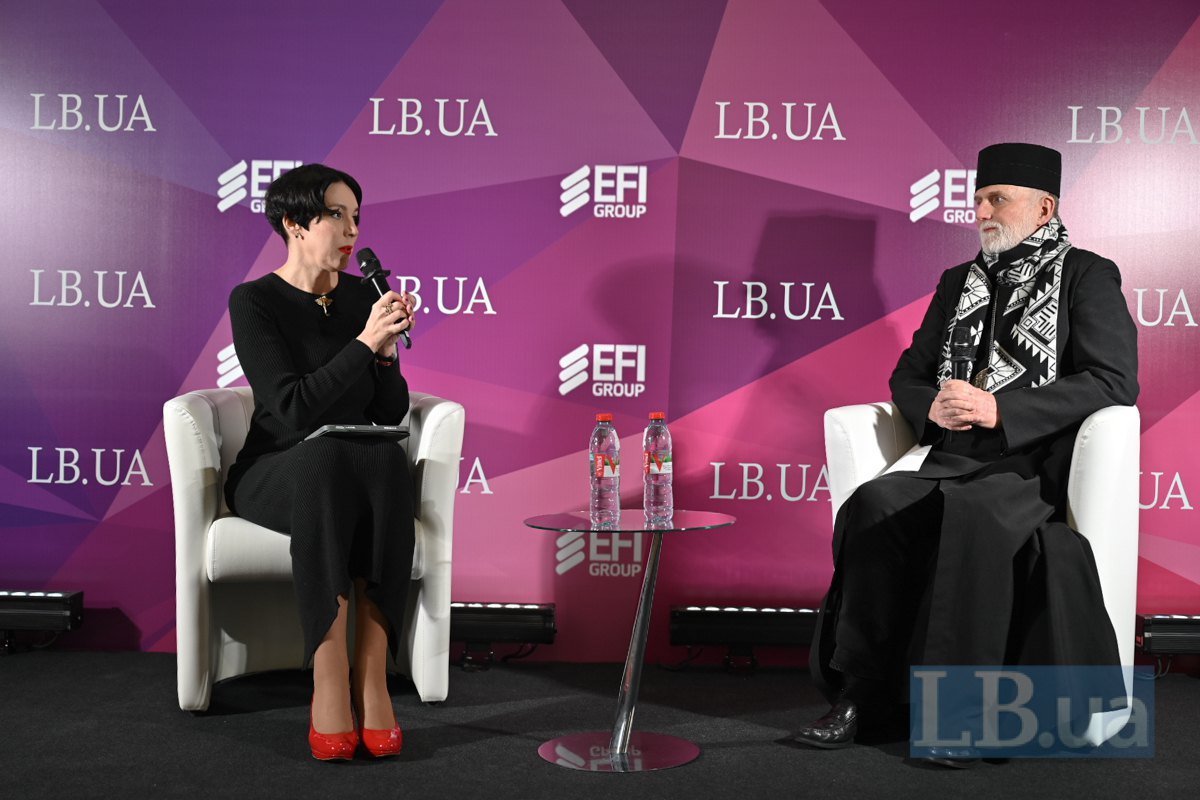
But whatever the awareness may be there, good and evil are clearly defined here. I thank you for that. Despite the state of the infrastructure in Kyiv, Troyeshchyna, and other parts of the country, you are here and now speaking about a new country — and that is right.
This is already a new country. Zelenskyy is no longer the Zelenskyy who once said, “What’s the difference?” Terekhov, whom I visited in September in Kharkiv… I remember when I came to the Kharkiv Law Academy as the rector of the Ukrainian Catholic University. From Kharkiv’s point of view, a Uniate priest was an incompatibility, you understand? And now I invite (Terekhov. — S.K.) to the Ukrainian Catholic University, where we have a strong leadership programme for veterans. The Mayor of Kharkiv comes, and we agree on cooperation and the transfer of experience. That is what a united country looks like.
It is a country that knows there is truth and there is falsehood in the world. In recent decades, particularly among leading intellectual circles, people believed: “There is no truth. There is your perspective and my perspective.” This is what Pope Benedict called the “dictatorship of subjectivity”. And we see how dangerous that is. When it was not acceptable to say that truth exists, that was yesterday — and you understand that all of this has now been deconstructed.
And Ukraine forces everyone — at least those who think — to think. This comes at a high price, but I want to begin by thanking you for making the world think. And I am convinced that truth will prevail.
So, believers know whom to appeal to, whom to turn to — but what can secular people cling to? Where is their hope, especially when you live in constant anticipation that things may become even worse?
In a few days, severe frosts will return, and it is obvious that there will be more attacks. It is also clear that the infrastructure facilities that have just been repaired will be damaged again.
Let us talk about secular people and believers. When we were building the campus, we held an international competition, and the winning company very much wanted to build a church. They had built a university in Singapore, worked for Harvard and Yale, and the architect had designed Boston City Hall. Some say it is among the ten most important buildings in America, while others say it is among the ten ugliest — such is its brutality. He said about 20 times, “I want to build a church, but I am not a believer.” And I replied, “Michael, are you trying to convince yourself or me?” (laughter in the hall. — S.K.).
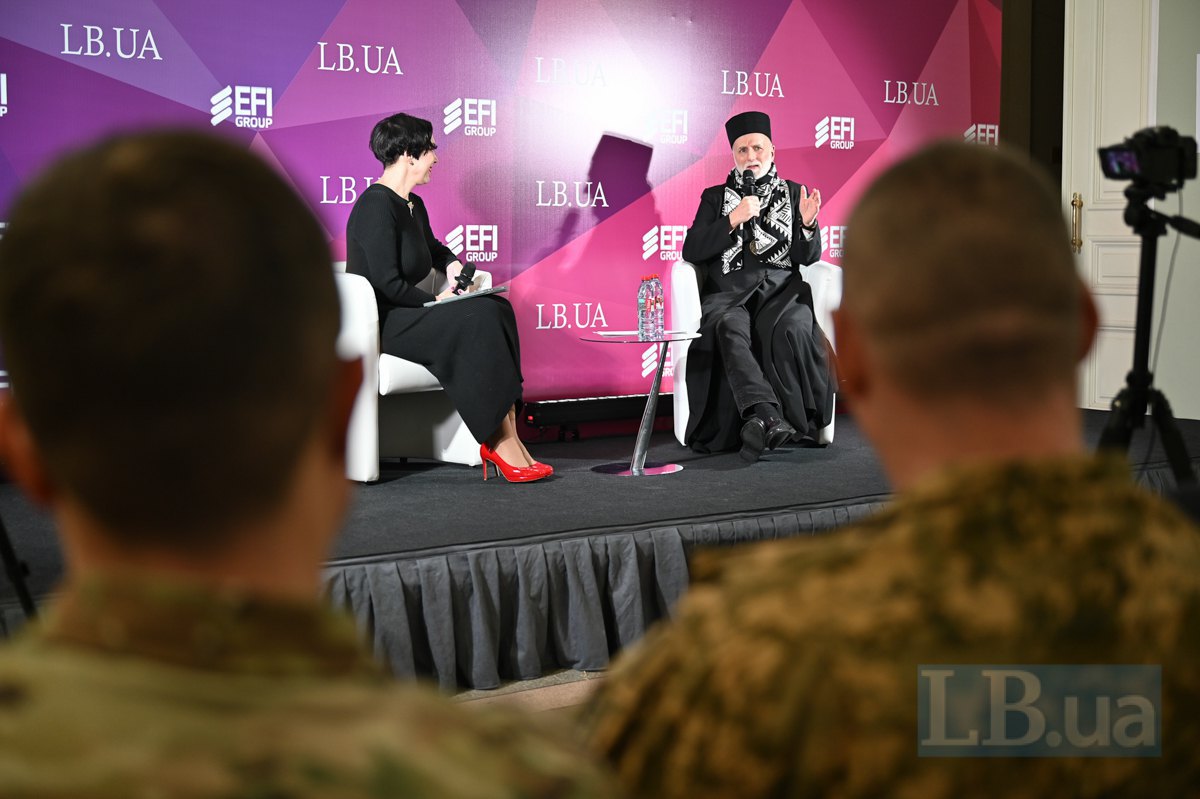
So, non-believers do not struggle in the same way as Ukrainians. This is a very sensitive and personal topic, but I would not so easily dismiss anyone or pigeonhole them.
I am now reflecting on my family history. My father was the tenth child in the family, born in 1926. His parents, my grandparents, buried eight children. The ninth was sent to Siberia, and my 18-year-old father went west — the Germans took him away.
Only now do I understand what a trauma that must have been. After the war, the Holocaust affected almost half a million western Ukrainians, including members of our family. That ninth brother was deported to Siberia. And somehow this boy managed to cope. People were refugees for four or five years in poor, bombed-out Western Europe, in Germany. They lived and gave life. There were seven million victims of the Second World War in Ukraine. But Ukraine exists today.
There have never been so many films, books, and examples of Ukrainian creativity as there are now, during the war. I met the poet Bohdana Matiyash, and she said, “There are 400 authors writing military literature.” So there is a certain surge.
Obviously, I am very concerned about demographics. This will be the number one problem in the future. But there are signs of hope all around us.
How do we approach this?
The aggressors send black drones — black for tactical reasons, but also with symbolic meaning. They are black evil that brings death. How do we fight them? We shine spotlights on them to neutralise them. We need to share the light.
We must shine light and nurture hope. But what is this light? Is it merely a spotlight, or just electricity? The most powerful light is love. Love transforms us.
In the Holy Scriptures, in the Book of Job, the question of evil, good, hope, and despair is addressed in a narrative and poetic way. A righteous man is tested: he loses first his flocks, then his estate, his workers, and finally his children. Yet Job keeps hope and knows that light will come, that night will turn into day. He remains faithful and loves.
Your Excellency, ordinary people often ask: "If God exists, why does he allow all this to happen? Why doesn't he punish Putin, and will we ever see this punishment here on earth?"
I don't know. It's hard for me to say.
But at meetings with medical students in Ternopil, I asked: do you know who Volodymyr Shcherbytskyy is? Not even one in 500 knew. They said something about the head of the Verkhovna Rada or something like that.
But this was a man who ruled Ukraine for almost 20 years. He imprisoned our Marynovych and arrested our priests. Those who lived then know how much fear the local KGB agent instilled. The first secretary of the Communist Party of Ukraine, today he is in the dustbin of history. You know how the Poles say: "nie kojarzę" (translation: I don't remember — S.K.). That is, evil will pass. Putin will join the ranks of Hitler, Stalin, and others.
But why are so many innocent people, children, suffering? Why was there the Holodomor? Where is the broader responsibility? Why is there such irresponsibility in the United States at the highest level today? Well, someone chose. Why was Yanukovych president? He didn't become president on his own. Ukrainians elected him.
That is our danger, that corruption is there, responsibility is there. Every good deed adds up, multiplies. During visits, people come up and say, "Your Eminence, you said something or did something." I don't remember that. But people remember some blessing, some kind gesture. The same goes for evil — it spreads like waves from a stone thrown into a pond.
There is no need to moralise too much, we need to help, to be close, because solidarity, closeness to pain, helps. We help each other to bear it. And that is why Christmas is so impressive. There are no Christmas themes there, there is God who becomes close. He is not frightening. He offers a baby in his right hand. I feel that wherever this happens, there is light. There is hope, and new strength appears.
We see that the Russian Orthodox Church has become one of the main instruments of Putin's regime and quite effective, including at the international level. Of course, the church is primarily about people and issues concerning people, but nevertheless, this is happening under God's omophorion, and secular people have, again, many questions and mistrust. Why is this so? How could this happen to the church?
These processes — and I see this from my own weaknesses and mistakes — do not happen suddenly, in one moment, in one fell swoop. They are connected with small compromises. And the leader of the Moscow Patriarchate, who perhaps in his youth had a sincere calling to our life or ministry, began, it seems to me, to make compromises very soon.
In order to travel as a representative of the Russian Orthodox Church in the 1970s, he had to sign a cooperation agreement (with the KGB — S.K.). He simply reported who was at the conference. It was as if he hadn't really betrayed or sold anyone, but one thing led to another, and the reward came. He received an apartment, a car, a plane, a factory, I don't know. And a person becomes dependent on this. That is why we need support. We need discussion, criticism, we need reviews.
When narcissism becomes as uncontrollable as it is now at various peaks on different continents, it is also present in the church. A cassock and a rank are no guarantee of anything if you do not live a spiritual life. If you do not follow the commandments. They apply to everyone; they are very democratic. And Christ directs his harshest words at the religious establishment, because it has the greatest temptation to make itself an idol. And we all have a tendency to seek idols. But the worst thing is when we make them out of ourselves.
And today, this distorted spiritual Christian church life is an absolute tragedy for Russia. And Russians reject it. I don't know if 1% of Russians attend church on any given Sunday. It has become a formality.
Lukashenka can say, "I am Orthodox, but I am an atheist." That is, it is devoid of meaning. It has anti-meaning. This must be acknowledged. There is a man named Sergey Shapnin who worked for Kirill but has now been in New York for six years, and he says bluntly: "This church needs to be rebuilt from scratch; it is rotten to the core."
We all hope for a just peace, but we see no signs that Russia is ready for reconciliation. Again: what should people do now — cling to hope, even if it is illusory, or try not to think about things they cannot influence (unless they are on the front line) so as not to suffer disappointment later (as was the case, for example, with the issue of the "1991 borders")?
We need to have a certain hygiene of expectations. Basically, disappointment is linked to expectations. When we have realistic approaches, our setbacks are milder, less profound.
I think that we are now in historical circumstances where we must bear in mind that all virtues, that the force of law has turned into the law of force. And here we cannot expect any sudden bursts of goodness, peace, or happiness. Although they say that tyrannies decay and degrade for a very long time before they suddenly fall. We remember what happened in Syria, for example. Obviously, there was internal resistance there.
I am thinking not so much about peace as about a broader solution to the issue — the collapse of the Russian Empire.
And will it collapse?
Yes.
When?
It is the last of the European empires that has not collapsed. The British, French, Ottoman, Spanish, Portuguese, Danish, Dutch, and German empires all had to give up their colonies. No one gave them up willingly. But it happened when the less powerful colonised peoples realised their dignity and said, "That's it, we won't take it anymore. Period." Some of us were born when England was an empire and when they said, "The sun never sets on our empire, it is always somewhere." And today, these nations and churches, which may have been associated to some extent with that colonial mentality, are repenting. Of course, there are reprisals, we hear about plans for new conquests. But I am convinced that this line (of collapse — S.K.) will continue and affect Russia.
Let us hope that this will happen in our lifetime, and that we will actively contribute to it.
Perhaps not in my lifetime, but in yours — it will happen.
It is important for Ukrainians that peace is not only lasting, but also just. However, it is obvious that, first of all, everyone has their own understanding of justice. Secondly, as a state, we will be forced to make compromises, perhaps even very painful ones — territorial ones. How can we cope with the inevitable disappointment and anger in such a case? Especially considering that the enemy will actively exploit this, stirring up society.
This will be a great challenge not only because of some compromises regarding peace agreements, but also because the trauma that exists today is multiplied by the fact that we all see it.
We did not think that there could be such a plague as Covid. I flew out of Kyiv on 18 March 2020 and could not have imagined that in a week my predecessor, the archbishop, who was healthy and 95 years old, would die. Do you understand? And we went through all of this.
Today, the war has healed us all — Covid is gone. That means people are strong, God is there. God blesses us with life. I've seen too many miracles not to believe, you know?
I do. I understand very well.
Remember also when Bush came to Kyiv in early August 1991 and nodded: "Don't think about your separatism, your nationalism." Three weeks later — the end of the Soviet Union. An empire armed with nuclear warheads and repressive mechanisms fell apart.
I have seen too much. Our Greek Catholic Church, which had 3,000 priests in 1939, had 300 in the catacombs after the 1950s, and their average age was higher than the mortality rate for men in Soviet Ukraine. Today, there are 3,000 priests.
In 1900, our church had three dioceses: Lviv, Przemyśl, and Stanislaviv (Ivano-Frankivsk). How many does it have today? Thirty-six. Sixteen in Ukraine and twenty abroad. Sixteen hundred parishes abroad. We have been in America for 140 years. The world has never been so Ukrainian. Do you understand?
And disasters caused this. I don't wish disasters on anyone, but we will live. After Christ, there will be a resurrection. We have seen it, and it will happen.
You are actively working in the United States, advocating for Ukraine's interests at all levels — from political circles to religious communities and ordinary Americans. This means you can also compare sentiments, and in a dynamic way.
In the autumn, a Harvard CAPS/Harris poll showed that 72% of Democratic voters and 73% of Republican voters support providing weapons to Ukraine and sanctions against Russia. These are figures, but how do public sentiments towards Ukraine feel right now (bearing in mind, of course, that Americans do not think about Ukrainians every minute)? And to what extent does this (not) influence Donald Trump's position on peace in Ukraine?
The position and these polls are more or less stable. That is, the majority of the American population, including the majority of registered members of the Republican Party, Trump's party, believe that America should help Ukraine more. Little has influenced Trump so far. Except Putin. That's how it looked until recently.
But you are witnessing how he has begun to make his first retreats in domestic politics. And this frightened Republican monolith is cracking. There are already a number of Republicans who say that, in particular, the attitude towards migrants and the methods of their deportation are excessive. It is necessary to retreat from this, and he (Trump — S.K.) had to change the leader of these actions in the state of Minnesota.
I think this is the beginning of the awakening of alternative positions. Time will tell. And the painfully slow awakening of Europe is also moving forward.
How sincere is Donald Trump, in your opinion, in his desire for peace? After all, we see his open admiration for the Russian dictator, his style of governance — he makes no secret of it. Do we really not care about his sincerity, as long as there are results?
We should not be indifferent to the sincerity of people who have great power, because a lack of sincerity means that we are shrouded in cynicism.
With Trump... You know, when people tell you something about themselves, you have to listen to them. Trump says, "I have power. And as long as I have power, I will use it." Well, there is only one way out. Do you understand? We need to put this power, this influence, in its place. And American society is talking about it.
...As for Trump, we just need to help the man calm down.
In conclusion, do you personally believe that in 2026 there will be lasting, just peace in Ukraine?
I live with this hope. I am not a prophet, but I think this will be a very important year, and I see tectonic shifts that are forcing people to move away from their way of thinking and their acceptance that there is a war in Ukraine.