





What the government is doing
Despite the difficulties everyone experienced last winter, the government has done a great deal to protect critical infrastructure, assures Serhiy Sukhomlyn, head of the State Agency for Infrastructure Restoration and Development of Ukraine. This protection was not perfect due to the intensity of the shelling, its frequency and the constant improvement of strike drones, he adds.
“In 2023, the warhead of a Shahed weighed 40 kg — now it is over 100. A different payload, a different speed; jet-powered Shaheds have appeared. The angle of attack used to be 40–45 degrees; today it is 80 degrees. These are completely different solutions, completely different requirements, which are constantly being ramped up,” noted Serhiy Sukhomlyn.
According to him, there are transformers that have recorded 60 direct hits from Shaheds, with the second-highest at 43 direct hits. A large substation in Kyiv was attacked by 24 missiles, with direct hits on the protected facility, yet the transformer withstood the attack and is still operational. The head of the State Agency for Recovery is confident that this demonstrates the protection is working, but it requires adjustments in line with the enemy’s evolving capabilities.
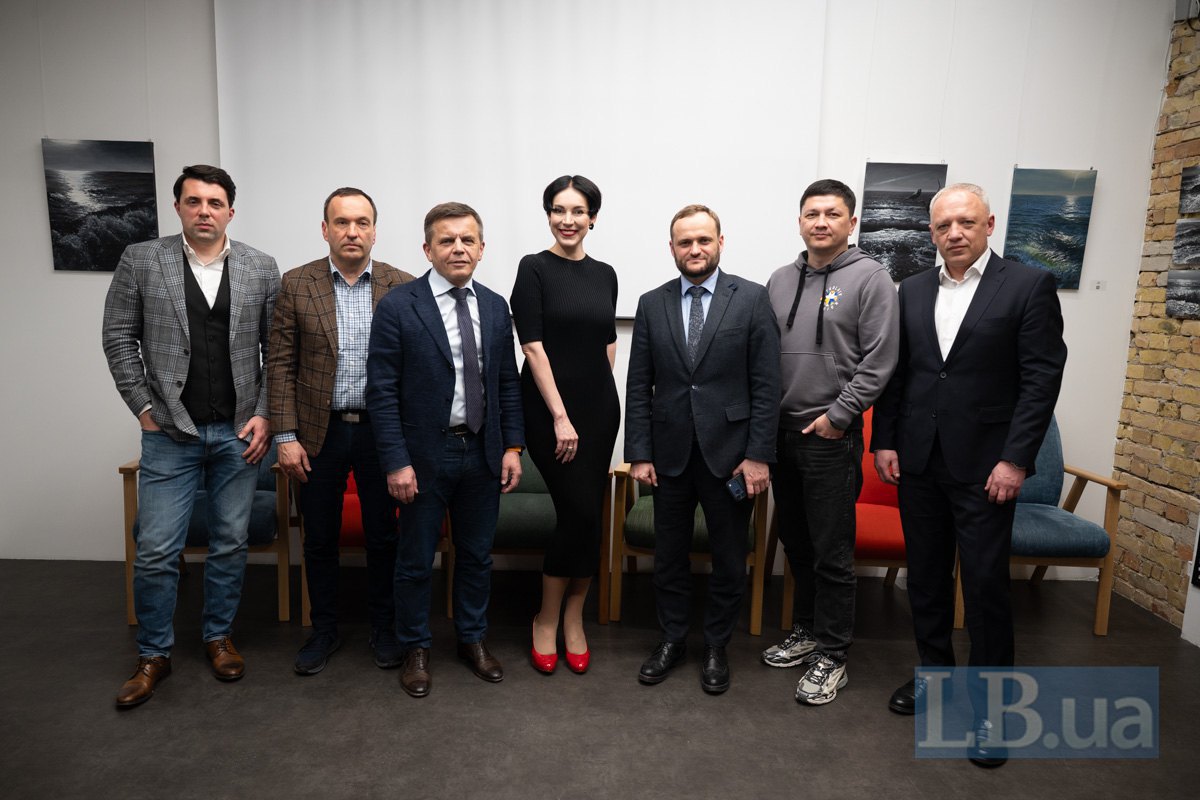
Deputy Prime Minister for the Restoration of Ukraine – Minister of Community and Territorial Development Oleksiy Kuleba believes it is important to note that, despite the devastating attacks, Ukraine’s infrastructure in areas where there were no critical hits has held up, and people have coped. And 99% of the country’s 70,241 multi-storey buildings were heated throughout the last heating season.

However, in preparation for next winter, the government is changing its defence strategy, Oleksiy Kuleba stated.
“In general, we are moving away from reactive measures — which, unfortunately, were implemented over the three years of the full-scale invasion following every attack, following changes in tactics and so on, to a more sustainable and clear-cut solution — a programme focused not merely on preserving the infrastructure, the critical infrastructure that remains, but on making it even more resilient and expanding it,” explains Kuleba.
To ensure comprehensive preparedness for the protection of critical infrastructure, regional military administrations, together with local authorities, have developed resilience plans for the regions. And separately for major strategic enterprises such as Ukrenergo and Naftogaz.
According to Oleksiy Kuleba, the document consists of four parts: the protection of critical infrastructure facilities (not only energy facilities, but all critical facilities, including housing and communal services, within a settlement or region); the development of distributed generation (mostly cogeneration plants — specific KPIs have been set for each city: the alternative source must provide the capacity required to power critical infrastructure); decentralisation of heat generation, water supply and wastewater management (providing alternative power sources with a capacity of at least 500 kW or 1 MW).
These measures are aimed at reducing the vulnerability of infrastructure, increasing its resilience by preparing contingency plans, and building up reserves. But, as Kuleba notes, they only work if there is a comprehensive approach comprising seven elements of protection at the intersection of military and civilian components.
“We are talking about air defence. Specifically, Ukraine has a solution that is unique in the world: small-scale air defence. Next come electronic warfare systems. We then discuss the need for facilities to be protected by a certain level of physical and engineering defences. This critical infrastructure facility must have an alternative power source, and it is desirable for this alternative source to also have a generator.
Only in this case can we say that the resilience of our critical infrastructure is truly such that it can withstand systemic attacks from various types of missiles and drones. This is a major undertaking for the coming decades,” asserts the Deputy Prime Minister for Community and Territorial Development.
In his view, the point of no return, when the energy sector and heating systems were monopolised, has been passed. And Ukraine is moving towards the decentralisation of the energy system and heating supply in populated areas.
“The situation is constantly changing. We live in a state of constant change, and all we need to do is learn not just to react, but to stay one step ahead, and to do that we need to build a new system. And this is an opportunity for the country,” emphasises Oleksiy Kuleba.
Particular attention is being paid to protecting the water supply. And although this is the responsibility of the balance sheet holders, the State Agency for Reconstruction, as stated by Serhiy Sukhomlyn, together with engineers, has studied the situation using Zaporizhzhya as an example and concluded that it is impossible to fully protect the water supply and heating systems.
“But what needs to be done first and foremost? Protect the pumping stations. These are specific solutions; such defences have already been built in several cities. They take about three months to construct and are relatively inexpensive.
We are protecting the principle, not the entire facility. We cannot physically do that. It is impossible to protect a thermal power station from a missile. But we can protect the critical elements of the facility. And even if five or ten ‘suicide drones’ strike, the facility will still be operational,” emphasised the head of the State Agency.
According to Volodymyr Kudrytskyy, head of Ukrenergo in 2020–2024, an eighth element should be added to the seven-part defence system mentioned by Oleksiy Kuleba: a critical reserve of equipment and specialists who can quickly replace damaged components.
“I do not have access to classified information, but from what I hear, I understand that in terms of protection, there is a chance that next winter will be better than this one. Because regional power companies’ substations and transformers at power stations are being protected. This is very important. They are protecting elements that do not belong to the power system: compressor stations that pump gas, pumping stations for water supply in key cities, other critical facilities, and so on.
In other words, from a security perspective (I’ll make a prediction, as I can unofficially afford to do so), things will be better,” said Volodymyr Kudrytskyy.

Can a nuclear reactor be buried underground?
In this context, people often cite the example of South Korea, which also has a dangerous neighbour. But opinions on this vary.
“I’ve been to Korea, studied their approach, and seen these transformers. When they build a metro station, they immediately construct an underground shelter in which they place a large transformer. This is a state programme that works and is implemented in peacetime.
Unfortunately, we do not have the resources for this today. There is neither the time nor the manpower to do this very quickly. We have taken a different path. First, they build the first level (mesh, gabions, sandbags. — Ed.), then the second level (concrete structures. — Ed.), and some facilities are also constructed at the third level (essentially the construction of new facilities that can be housed underground. — Ed.). And it works. “It’s much better than doing nothing,” noted Serhiy Sukhomlyn.
However, the former head of Ukrenergo, Volodymyr Kudrytskyy, states: there is no such ‘miracle’ regarding South Korea’s underground power grid.
“Type ‘South Korea, power station’ into Google, go to the ‘photos’ tab — and you’ll see that nothing is buried underground there. In 2017, KEPCO — the Korean power system operator — invited a Ukrenergo delegation to visit. The substations there are just like ours — the highest voltage class is 765 kV (ours is 750), the transformers are out in the open, just like everywhere else... And it’s impossible to bury substations or power stations covering an area of between 20 and 200 hectares underground,” noted

Serhiy Sukhomlyn noted that there are examples in Ukraine of third-level protection, where 330 kV and 750 kV transformers are buried underground. However, since September, the enemy has been actively targeting small 110 kV and 150 kV substations, and the State Agency has been tasked with protecting them.
“In November, we began constructing protection for 120 facilities in frontline areas. It must be understood that this construction is taking place during air raid alerts. During air raid alerts, staff at many substations did not even leave the premises (they have tablets — they can see where the drones are flying). We worked mainly in two shifts, in freezing conditions. By 20 May, we will have completed 90% of the facilities (transformers) ready for commissioning. So the question here is how much time and resources are needed,” noted Sukhomlyn.
Distributed generation under threat
Ukraine has a single power system, and two factors ensure its stability — strengthening defences and rolling out new generation capacity. And while the situation with defences is more or less optimistic, problems are arising with new generation capacity, notes Volodymyr Kudrytskyy.

“Just a month and a half ago, we were experiencing four rounds of power cuts. Then the weather warmed up, and all the focus that had been on rolling out distributed generation in February and January faded away. And several things happened.
The first event was that on 14 March, the operators of these new gas-fired power stations received a notice stating that, from 9 March, they had not been consuming gas supplied at a special price, and that for the period from the 9th to the 14th, they would have to pay a fine because the government had adopted a retroactive decision,” noted Kudrytskyy.
“The second fact. On 30 March, the government, amending its previous decision, stated that we are providing subsidised gas to frontline territories where there are gas piston and gas turbine units, but only to those commissioned from 1 December 2025. Those gas piston units that were operating in November 2025, in October (remember how well things were going for us?), are deemed unnecessary and harmful. Their gas price will be one and a half to two times higher.
And the third fact. From 1 April, our energy regulator, in its infinite wisdom, is lowering the price of electricity at which I am entitled to sell the power generated by the power station on the market. So there is a buyer who wants to pay 7,000 UAH per MWh, and there is a seller who can sell for 7,000 UAH. Then there is the regulator, Mr Vlasenko (Yuriy Vlasenko, head of the NEURC — Ed.), who says: ‘5,600 is your maximum.’ Consequently, the market price of gas against the backdrop of the Iranian crisis and the administrative cap on the price of electricity, the product produced from this gas,” added Volodymyr Kudrytskyy.

As a result, according to the former head of Ukrenergo, investors building new generation capacity have adopted a wait-and-see approach and are currently putting their projects on hold. They are waiting to see what the government intends to do next regarding electricity and gas prices.
“It is now early April, and it takes 8–10 months to commission this new generation capacity. So we can plan for the commissioning of this new generation capacity and look forward to it, but the decision on this generation capacity is not made by the Prime Minister, the President, the government or a Member of Parliament. It is made by the investor,” the expert noted.
Just two administrative decisions, Kudrytskyy emphasises, have caused imports to collapse and halted the gas-piston generation that had already been built.
“I want to draw attention to this. There are stories about strategic matters, about air defence, and there are stories about two decisions which mean that gas-fired generation will not be operational tomorrow and there are no imports. It is quite easy to rectify them. It seems to me that this is a practical matter.
…I very much hope that the administrative decisions that will unblock this process will give us, if not next year, then at least by the end of winter, the opportunity to obtain this 1.5 GW of additional capacity, without which we face the same situation as last winter,” concluded Kudrytskyy.
What is the situation regarding preparations in the regions?
Vitaliy Kim, Head of the Mykolayiv Military Administration, believes that frontline regions were far better prepared for the last heating season than so-called rear regions. He cites the example of the Mykolayiv Region, which in 2022 suffered daily rocket attacks and prioritised security issues, yet by 2023 had built 1 GW of alternative energy capacity.
“The cities weren’t preparing for anything, especially those in the west. They aren’t being targeted, so why bother? We, they say, will implement economic projects, work with displaced people, and prepare new hospitals and schools. Businesses have relocated here, and our tax revenue is up by 30%.
Indeed, they should work and pay taxes so that we can buy weapons with that money. But the way budgets are allocated between frontline and non-frontline towns varies greatly. We have to repair something every day. Besides, we cannot do without a stock of equipment. That is why we are preparing [for next winter] right now,” says Kim.
According to him, all critical infrastructure in the region is now backed up by two sources of emergency power.
“I didn’t want to answer questions about who did what and how well everyone is prepared for the heating season. But I’ll have to. Mykolayiv Region generates just over 4 GW of electricity. It consumes 300 MW. Yes, the nuclear power station generates 3 GW, but we’ve built an additional 1 GW of alternative capacity. 189 MW from wind. During the war. We consume 300 MW, generate 4 GW. And we supply, I think, another three or four regions.
We have 40 MW of critical capacity; we’re covered by generators to double that. Our grid is 95% connected. We switched it on quietly; people were surprised why we had light, why we had heat. We have 91 thermal substations in the regional heating and power company, and the state has now added 18; we have 100% diversified heating coverage in the region. That is, a twofold surplus by many measures. We buried the gas in 2023, when no one else had planned to do so.
There is the same difference in tariffs at the regional heating and water utility, which needs to be compensated for. Despite this, we are building infrastructure and sharing with other regions that are struggling. And I’m not blaming the government,” Kim noted.
The Mayor of Chernivtsi, Roman Klichuk, stated that his city has been following a preparation plan since 2023: four cogeneration plants have been installed in the city, with plans to install a further five.
“As for the renovation of the boiler houses, this year we’ve tried to link two networks so that, if there’s a power cut or something happens to one network, the other can cover the two neighbourhoods, particularly the one affected. The plan is to interconnect all three. It’s very expensive, but we’ll get it done within the year,” says Klichuk.
According to him, the speed of preparation largely depends on funding — they are seeking it ‘wherever possible’: from the local budget, from donors, and through cooperation with the government. But cooperation between mayors and regional administration heads also plays a role.
“I work closely with the current [head of the regional state administration], but I had my differences with the previous one. If we’d been given this head of administration a year ago, I’m convinced we’d be far better prepared for winter,” stated the mayor of Chernivtsi.
It should be noted that a number of regional centres do not have mayors (namely: Sumy, Poltava, Zaporizhzhya, Kherson, Odesa, Chernihiv), and the introduction of military administrations, according to Deputy Prime Minister for Recovery Oleksiy Kuleba, in cities close to the front line is a necessary measure.

“We have around 10 frontline regions and 245 communities located within the zone of active or combat operations. This constitutes our country’s security belt. Around 10 million people live within this security belt. These are major cities: Kharkiv (the mayor is present — Ed.), Zaporizhzhya, Sumy, Chernihiv... And when there is a large number of tasks related to security and military matters concerning defence, the introduction of martial law is necessary to ensure the region is managed and decisions are made quickly and effectively.
This is temporary, exclusively for the period of martial law. It does not mean that we are rolling back decentralisation or abandoning local self-government. In many of these cities, city councils continue to operate today and councillors are working,” commented Kuleba.
For Kharkiv, this heating season has been the most difficult in years, noted Ivan Kuznetsov, Deputy Mayor of Kharkiv for City Services. The city’s heating system has been restarted more than 20 times. However, heat was restored within a day or two instead of a week of emergency repairs (as was the case in peacetime), he added.
According to Kuznetsov, Kharkiv began moving away from the outdated Soviet system as early as 2021. At that time, says Ihor Terekhov’s deputy, the city installed its first 5 MW cogeneration plant and began installing modular boiler houses. And now, Kuznetsov notes, Kharkiv is a city with perhaps the largest variety of energy equipment.
“We have seen that both cogeneration units and gas generators have proven their effectiveness during power surges or power cuts. And so today, at all major heat and water supply sources, we have two backup power sources. These are diesel generators and either a cogeneration plant or a gas generator,” noted the deputy mayor of Kharkiv.
In his view, the next heating season will be tougher than this one, so Kharkiv is already preparing.
“We need to replace the capacity of TPP-5, which has been completely destroyed, and continue to protect not only the equipment but also the staff by constructing protective structures. We also need to build turbines and cogeneration units and, most importantly, build up the necessary stockpile of materials and equipment.
And another priority task that we will be implementing this year is the creation of our own power grid, which will supply not only large boiler houses and modular boiler houses, but also individual heating stations and central heating stations,” said Ivan Kuznetsov. He also thanked “the President of Ukraine, the government, the relevant ministries, the Ministry of Community and Territorial Development, the Ministry of Energy, and the Recovery Agency for the funds allocated from the reserve fund to implement this sustainability plan.”

In response, Vitaliy Kim, head of the Mykolayiv RMA, noted that Kharkiv had received significantly more aid from the government this winter than other frontline cities, in order to stabilise the situation in the city, as it was extremely difficult. (It should be noted that in 2024, Shmyhal’s government transferred 127 cogeneration units and eight gas piston units to Kharkiv. — Ed.)
Oleksiy Kuleba, having expressed his respect for the people of Kharkiv, the city and the mayor, also pointed out that Kharkiv has huge debts for electricity, heating and other bills.
“At present, I think the balance is maintained because the city is on the front line. But, most likely, it will change, because the debts will have to be paid. We need to prepare for this. So, please pay attention to this, study the structure of the debt — and we will approach this,” Kuleba emphasised.
But if large cities have a sufficient budget to cope with the challenges and receive timely assistance from the government, how should small frontline towns, which lack all of this, prepare? This question was raised by Oleksandr Kachura, a Member of Parliament from the Servant of the People party.
“When the tragedy struck in Shostka—the strike on an infrastructure facility—the local authorities were effectively left to fend for themselves. The government did, of course, provide assistance, but what it promised last winter has still not materialised.
That is why there are cities like Kyiv, with a budget of hundreds of billions, but there are also cities like Hlukhiv, Shostka, Konotop, and other towns in my native Sumy Region, which effectively do not have such a budget. Businesses and people are leaving those places; potential is being lost. Therefore, to ensure that people do not have to cook their food over a campfire, and children do not have to search for the highest hill where they can get a signal to take a screenshot of their homework, we must not fight against local government; on the contrary, we must help it. I urge you not to leave local authorities to face this crisis alone. As has actually happened,” Kachura stated.
What about Kyiv?
Kyiv spent 3 billion hryvnyas on preparations for the last heating season and the restoration of damaged critical infrastructure, said Petro Panteleyev, deputy head of the Kyiv City State Administration. He therefore considers it unconstructive to compare cities and their readiness for winter. After all, not a single city was left with full power following the shelling. And for Kyiv, the enemy had prepared a ‘special’ menu, he notes, after which the capital can no longer provide energy for itself and several regions, as was the case in 2022 and before.
“We realise that we effectively need to build a new backup heating supply system for the city of Kyiv. And we see this as a priority. Kyiv’s critical infrastructure is highly centralised. From an environmental perspective, that’s great, brilliant. But from a security perspective, it’s a problem. I don’t want to disclose sensitive information at this stage, but we’re looking at large combined heat and power plants. It is virtually impossible to protect them — there are many vulnerable elements. We are working on physical protection. Key facilities will be protected, but if we are talking about what needs to be rethought in light of this winter’s analysis, the first priority is to build new backup capacity for those facilities that we cannot protect 100 per cent. These are ambitious projects, not straightforward ones. But I am convinced that, together with the government (it is not even about money, but about mobilising technical and organisational resources), we will implement them. After all, in addition to building new facilities, we also need to restore what has been damaged in parallel,” stated Petro Panteleyev.
According to him, a specific decision has already been made regarding the area near Teremky, which is supplied with heat by TPP-5, says the deputy head of the Kyiv City State Administration.
“There were problems there in winter because this area is the last in the heat supply chain, with the corresponding consequences. There is a specific solution for it — to lay pipelines and connect to the Teremky boiler house, which is being modernised: additional boilers and boiler units are being installed. The cost is one billion. This work is ongoing. The project is feasible and can be implemented.
As for the rest of the TPP-5 zone, to be frank, it is more complicated. This is due to the terrain and the capacity of TPP-5. It is the most powerful power station in Ukraine. Therefore, separate solutions will be required for it, including separate works to build new boiler houses (90% of which will be funded by the city. — Ed.). And, obviously, the construction of what is effectively a new backup heat supply system,” says Petro Panteleyev.

Secondly, the Kyiv authorities are focusing on installing combined heat and power plants to power critical infrastructure. The deputy head of the Kyiv City State Administration considers it unrealistic to fully replace consumption. (To cover critical needs, Kyiv needs to build at least 300–310 MW of distributed generation, according to Serhiy Sukhomlyn’s calculations.)
Here, Panteleyev supported Volodymyr Kudrytskyy’s point that the state must create the right conditions for business, because if we rely solely on the utilities sector or state funding for cogeneration, ‘everything may remain as it is’, and there will be no additional capacity.
Thirdly, what the Kyiv authorities are focusing on are co-financing programmes for residents, which have been available for five years now, according to Panteleyev. “And the thousand homes that took advantage of them ‘felt quite comfortable’ this winter. Some buildings were self-sufficient, disconnected from the city’s networks, for two days,” said the deputy head of the Kyiv City State Administration.
Oleksiy Kuleba described Petro Panteleyev as “the man thanks to whom Kyiv survived this winter”. “He effectively managed emergency operations in the city 24/7. But that’s all the good news,” noted Kuleba.
The Deputy Prime Minister noted that in 2025, the task force responsible for preparing for the heating season held 15 meetings. The mayor did not attend a single one.
“The mayor and the local council are responsible for centralised heat supply. And those mayors who are aware of this participate diligently, because it is their area of responsibility. I spoke to Vitaliy Klichko about this, and I can say the same here. We had a lively discussion on this matter in January. When it comes to other cities, it is important to talk not about the fact that someone installed 78 [cogeneration plants, like Kharkiv, for example], but when they started installing them. And if we look at examples from other cities, they began this work in 2023, continued in 2024, and saw results in 2025. And there are cities that began doing this even before the full-scale invasion and are now dealing with different input data as the heating season progresses,” Kuleba stated.
He therefore considers the situation in the capital to be challenging.
“When we talk today about resilience plans, the city of Kyiv’s position is as follows: we will need the government’s help; we will need funds. The government’s position is: we are already helping, we will help, including with money, but the city needs to review its budget,” the Deputy Prime Minister emphasised.

Petro Panteleyev disagreed with the suggestion that Kyiv had started working on cogeneration too late, but acknowledged that there was not enough of it [according to the latest figures, three].
“If you recall, we were the first to raise the issue of distributed energy and approve the concept. We began purchasing cogeneration plants back in 2024. Are there enough of them? Well, not enough. We need more and more,” said Panteleyev. “As for the money, Oleksiy [Kuleba] is right. Given the current challenges, we need to review the budget. And the city of Kyiv is preparing a budget review in order to allocate additional funds on top of those currently available. Measures are currently being implemented to the tune of around 10 billion (the budget of the as-yet-unapproved Sustainability Plan for Kyiv is 60 billion — Ed.), but this is not enough, and the budget will be reviewed in order to add as much funding as possible to implement the measures.”
Maksym Bakhmatov, head of the Desnyanskyy District State Administration, also joined the discussion on Kyiv’s problems, ‘criticising the Kyiv authorities’.

“Troyeshchyna is said to be the largest district in Ukraine. And we went into the heating season with no large generators at all. We didn’t have a single large generator. Just small ones in schools — 5–7 kW each. Thanks to our partners, we managed to accumulate 3.5 MW of generators without spending the district’s funds. We don’t have any; the city didn’t allocate any.
Did it help with food (for people left without heating in severe frosts and warming themselves in resilience centres. — Ed.)? No, it didn’t. If we’d prepared in 2022, 2023, 2024 or 2025, I wouldn’t be saying this now,” Bakhmatov snapped.
(Petro Panteleyev pointed out that the budgets of Kyiv’s districts are equivalent to those of some cities. And the provision of generators falls within the remit of the district administration heads.)
Furthermore, Bakhmatov claims: he wanted to go on a business trip to Mykolayiv to see their experience, but “Klitschko didn’t approve the trip”.
“I was travelling incognito, on a Saturday, so that I wouldn’t be seen, using some sort of transfer arrangements. And actually, in Mykolayiv, everything is ready for winter. There are 18 or so backup stations, there is cogeneration everywhere, and the thermal power station has protective measures in place. The city has a budget of 5 billion — that’s the budget of the Desnyanskyy district, and the population is the same. It turns out it is possible if you plan and work systematically,” added Bakhmatov.

The head of the Desnyanskyy District State Administration stated that, together with a group of experts, he had developed a concept for energy resilience and energy independence for his district for 2026/2027 and had already sent it to the Deputy Prime Minister for Recovery and the Mayor of Kyiv.
“Incidentally, I have not received a single response to my technical enquiries from Kyiv’s utility companies. A month has passed. But I am proposing 100 MW of electricity for the Desnyanskyy district, 300 MW of heat... I believe the mayor must live up to his reputation, help out and provide KPIs based on the number of megawatts that will be operational. At present, we have started with zero of these megawatts,” concluded Maksym Bakhmatov.
Kyrylo Fesyk, Head of the Obolon District State Administration of Kyiv (in office since 2020 — Ed.), in turn, pointed to another critical factor affecting overall energy resilience — DTEK’s inadequate infrastructure.
“After every power grid restart in Kyiv, there were hundreds of incidents. All the roadblocks (and the enemy’s main objective was precisely to create images of blocked roads and stir up public discontent) were linked to power cuts lasting three, five, seven, and sometimes ten days. But there had never been a situation where the centralised power supply to the capital was cut off for such a long period.
This is because either a DTEK transformer had burnt out, or the internal building networks could not cope with the load, as they had never been a strategic priority — they were not systematically maintained. Unfortunately, there is a certain degree of inertia within the Kyiv City Council, which is the main budget administrator. To put it into perspective, it was only in 2024 that shelters became a funding priority. Now, Petro [Panteleyev] is actually helping with this,” stated Fesyk.
The district administration cannot influence DTEK, as the company is private, he adds.
“It is important to pay attention to this issue even at government level, because in reality the capital’s energy resilience depends on the energy resilience of every single building.
For example, in the Obolon district, there was the first incident of a central heating plant being powered by a generator, and a person died... As of today, there is no strategy on what to do with central heating plants. There is a procedure from KTE (Kyivteploenergo. — Ed.) regarding the installation of generators there. So far, not a single building has made use of this procedure.
The conclusion is simple: we must focus on local energy resilience solutions. Otherwise, after every restart, we will have 100 micro-areas in the capital without power,” laments the head of the Obolon District State Administration.

Petro Panteleyev, Deputy Head of the Kyiv City State Administration, assured that a joint programme with DTEK is already in place, and that constructive dialogue is ongoing to prepare for ‘such emergencies’.
“When we talk about preparedness measures, this is a very complex issue. It ranges from the flat, to the building, to the district, to the city. I would recommend, colleagues, that you focus on your own area of responsibility. The government has introduced a new programme to install generators, funded by the state, in buildings where the heating system relies on electricity. So, our task in every district is to cooperate as much as possible in this area with the residents’ associations. Then we’ll see what the outcome KPIs are. That’s why we’re working, focusing on our responsibilities and helping one another,” said Petro Panteleyev.