





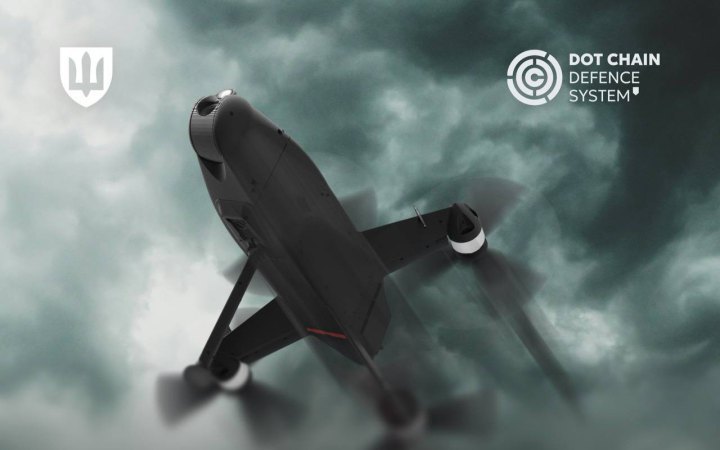
Ukrainian interceptors have successfully shot down Iranian drones in the Middle East. In some cases, Ukrainian experts themselves took part in these operations. This took place in several countries, President Volodymyr Zelenskyy said at a meeting with journalists.
He described this as a success and emphasised that it was not a training mission or a set of drills, but rather support in building a modern air defence system capable of operating effectively. In countries that opened their air defence systems to cooperation, Ukrainian experts were able to provide rapid advice on strengthening them.
“And in some cases, we shared our experience directly in defence. In any case, all of this had a very positive outcome and adds to Ukraine’s standing. We also shot down jet-powered drones. That is a very good sign, I think. We have shown that it works. Now it is only a matter of time before we mass-produce interceptors capable of destroying jet-powered drones,” said the president.
He added that Ukraine has demonstrated that achieving results requires systematic solutions, particularly in the field of electronic warfare. An effective air defence system must consist of various components that are properly integrated. Ukraine supports the development of such systems capable of countering all types of threats.
“These are our consistent steps, and they will, in the best sense of the word, be successful. We have agreements on ten-year contracts with three countries. Ukrainian companies will work with the armed forces of these countries to protect various facilities. My task is to negotiate the scope, the services and the types of weaponry. Such security talks are currently underway with Oman, and we are also in discussions with Kuwait and Bahrain — in addition to the countries with which we have already reached agreements, as has been publicly reported,” he said.
In exchange for Ukrainian expertise, Ukraine is to receive various forms of support.
“In some cases, this involves interceptors to protect our energy sector; in others, there are financial agreements. All of this will strengthen our energy stability — we have agreements for one year. There is also oil and diesel for Ukraine. In some cases, we receive oil that will be sent to relevant refineries in Europe for processing. In other cases, we are discussing the finished product — diesel. In other words, we are effectively helping to strengthen their security in exchange for a contribution to our country’s stability, and this is much more than simply receiving money,” he said.
So far, there are general agreements with Oman on a system of cooperation similar to that already in place with Qatar, the UAE and Saudi Arabia.
“Next, based on the results of our work, we will propose: here are our findings; let us agree on cooperation in these areas and on this scale. For example, a certain country cooperates with us in the security sector to the tune of a billion a year. They want the first, second and third. They may be more interested in maritime defence or energy security. These are different approaches. We say: a systematic approach is needed; you require three lines of defence. You cover some threats with your own resources – anti-ballistic systems such as ‘Patriots’ and others; we cover other threats with our own resources, and we integrate all of this into a single system. If we see that we will be working with a particular country, I then meet with the leader to discuss the duration of the agreement and the financial terms. The relevant security and economic work then begins,” he said.
Context
Following the outbreak of war in the Middle East, the Gulf states approached Ukraine with a request for assistance in repelling attacks by Iranian strike UAVs. In total, Kyiv received at least 11 requests and dispatched expert teams to Jordan, Saudi Arabia, the UAE and Qatar.
The experts helped deploy drone interceptors and integrate them into the overall air defence system.
The President then travelled to these countries to finalise the agreements. The parties signed security agreements.