







Signs of genocide, the Ukrainian war and a “simple Russian scientist” in Crimea
Let us begin with the very concept of genocide — can it be applied to the destruction of our heritage and cultural objects? Can we speak about it in such terms?
The most important issue is not the legal nuances. Everything was explained 80 years ago. Despite my best intentions, I cannot add anything new in a legal context to explain the elements of the crime of genocide. There is a great deal of political context surrounding the term genocide, and any decision that is made carries this dimension. Accordingly, legal justifications and arguments are often not the primary factor.
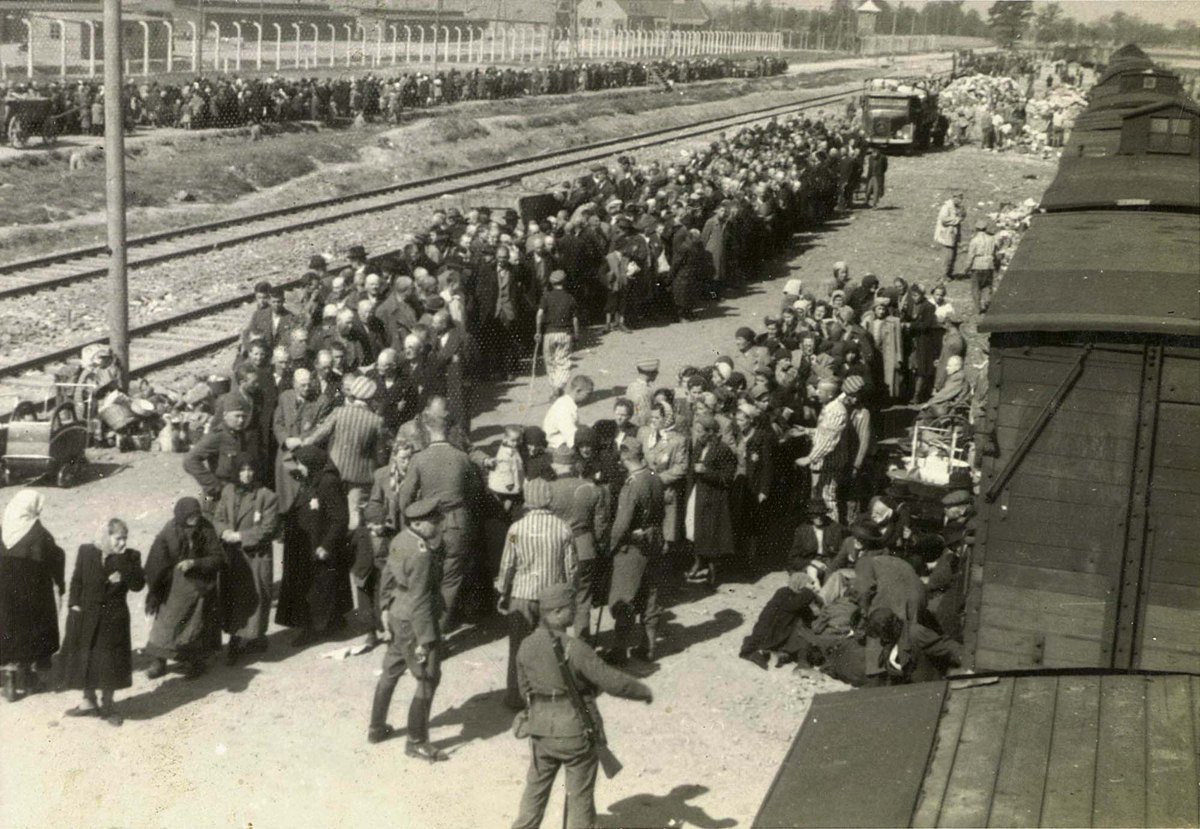
Because of the politicisation of genocide, many narratives have emerged that do not clarify the issue but rather distort its essence. In fact, it is quite simple: in 1946, the UN General Assembly adopted a resolution which, referring to a quote by Winston Churchill who commented on the Holocaust as a “crime without a name”, gave this crime a name — genocide — and explained in the text what it means. This is helpful because it was formulated in accessible language. Anyone can open the document and read it — the questions you asked will then be answered. It states that genocide is a crime committed against a group of people and that the group itself is the target. Accordingly, the group can be destroyed by physical, biological and cultural means. There is no difference between them in terms of the concept itself. The method does not change the essence — the destruction of a group is taking place.
The text of the convention retains three types of methods — physical, biological and cultural. However, the part concerning cultural extermination underwent significant changes. Actions aimed at destroying cultural objects were removed from the text. Only one element of cultural genocide remains — the forcible transfer of children to other groups. This is an important point, because many commentators and experts in international law tend to avoid mentioning it, suggesting that the signs of cultural genocide have disappeared. In fact, this is not true. The convention simply became incomplete in relation to destruction carried out through culture. Actions aimed at destroying the identity of a group — the destruction of cultural heritage, persecution of language, and both tangible and intangible culture — were removed from the text of the convention. They had originally been included in the draft convention written by lawyer Raphael Lemkin, Romanian diplomat and jurist Vespasian Pella, and French professor Henri Donnedieu de Vabres.
Why was this part removed? For purely political reasons, as there was no legal justification for doing so. In other words, cultural genocide, or genocide carried out through cultural means, is not something separate. There is simply genocide, which may employ different instruments: cultural, physical or biological.
It was precisely the cultural dimension that formed the original basis for adopting the convention. It explicitly states that the purpose of criminalising genocide is to prevent the loss of cultural diversity in the world. However, as a result of political developments, actions aimed at destroying culture — in the broad sense of both tangible and intangible — disappeared from the convention. This has given rise to discussion and misunderstanding.
It should be clarified that the destruction of cultural objects cannot in itself automatically be considered genocide. In criminal law, as with any other crime, it is essential to establish the so-called subjective element — that is, the intention of the person who committed it. This is not a special requirement unique to genocide, as is sometimes suggested by international lawyers who do not specialise in criminal law. They often emphasise that in order to prove genocide it is necessary to establish “genocidal intent”, as if this were something exceptional. In fact, for a criminal lawyer this is a standard requirement: in any intentional crime, regardless of its severity — and international crimes are among the most serious — intent must be proven. Only in cases of negligent crimes does the subjective element not play a decisive role.
If such signs are established, the crime can indeed be classified as genocide. These signs include state-level policy, systematic actions, large-scale implementation and certain recurring practices. In other words, the subject of genocide in an international context is typically the highest political leadership — the military-political leadership that makes the relevant decisions. In the terminology of our criminal law, these individuals would be considered the organisers and instigators of the crime.
But we cannot condemn all leaders, can we? Is that correct?
Yes, hypothetically, a specific military officer sitting at the control panel of a Russian missile and pressing the button might not personally hold genocidal ideas.
He is following orders…
He is following orders, but under the same international law this still constitutes complicity. The problem in the context of what we are currently trying to address is connected with the specific nature of international criminal law. This field is partially codified in international documents — in particular the Convention on the Prevention of Genocide and the Rome Statute — which set out how such crimes must be proven. However, this approach differs from that to which lawyers in countries with a continental legal system are accustomed.
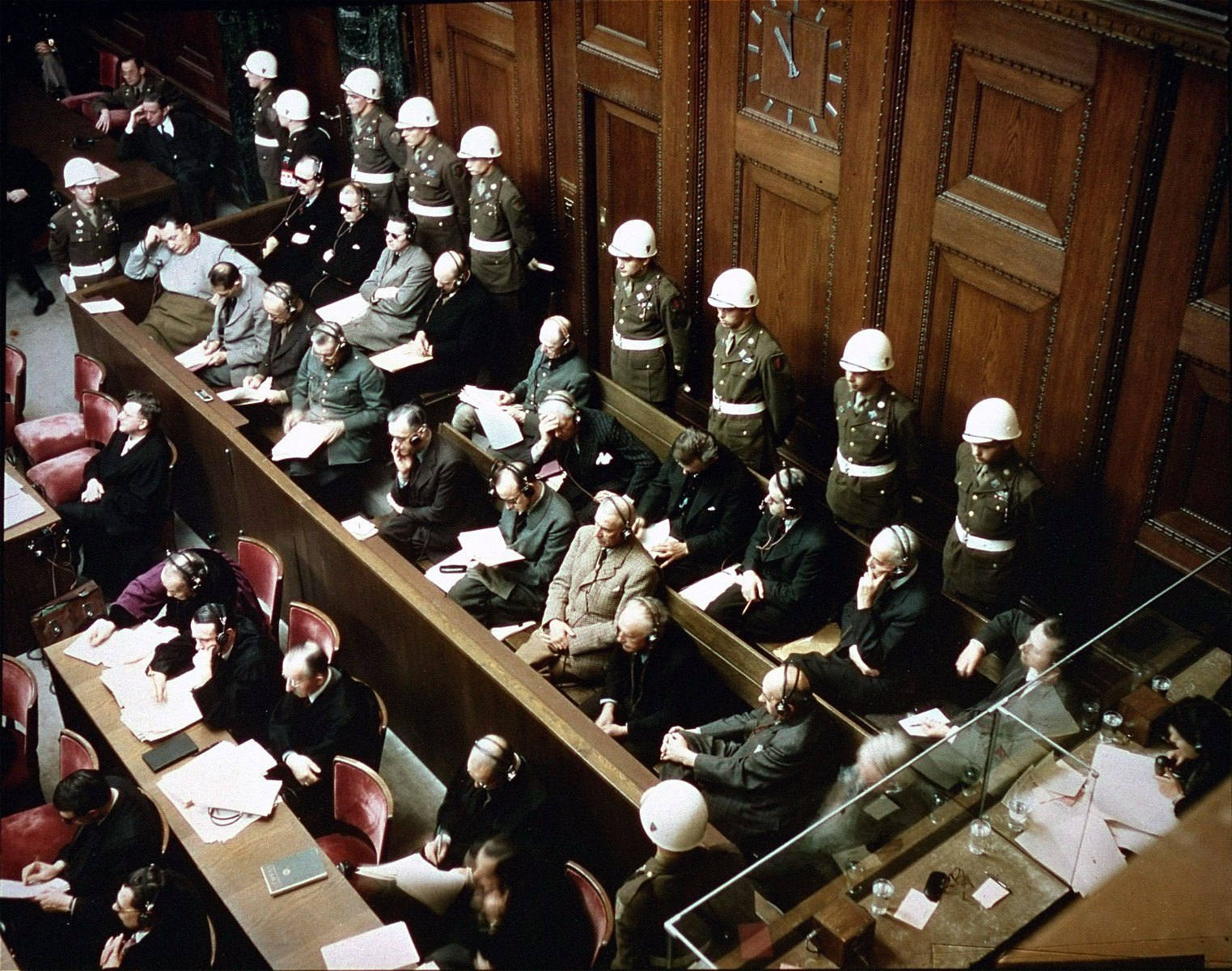
Lawyers practising continental law — not only Ukrainian, but European in general — follow a different logic: the law is clearly codified and based on established criminal law doctrine. First, there is the doctrine, on the basis of which the criminal code is formed, and then the law is applied within the framework of this system.
In contrast, in countries with an Anglo-Saxon legal tradition, particularly in the United States and Great Britain, case law (i.e., where previous court decisions are important) plays a significant role. It is the combination of case law with relatively weak codification (the organisation and systematisation of legal norms into a single harmonised law or code — Ed.) that creates certain difficulties and ambiguities — problems that seem unusual or even unnecessary to lawyers from the continental legal system.
Let's move on to the Butyagin case. Why weren't questions raised earlier? Why has this story come up now, and why is this example so important for us right now?
The practice of foreign archaeologists working in the territory of another state is regulated. Every country has legislation on the protection of cultural heritage. Even the most civilisational states, as a rule, are very scrupulous about this, so that no one takes anything away or steals anything. Therefore, in accordance with national legislation and international UNESCO documents (which define this as a shared cultural value), an expedition is proposed; it draws up a plan, which is approved and authorised by the state. Such an expedition usually includes an expedition leader and a Ukrainian specialist — a national archaeologist. They control and approve all plans for scientific activity. In other words, the Russians sat quietly in Crimea and dug up whatever they wanted.
And here's an important point: our archaeologists had no funding, while the Russians were funded. Because, you know who oversees historical matters in Russia? Naryshkin. In other words, the budgets were incomparable to those in Ukraine.
I come from a family of mountaineers and tourists, so we walked all over Crimea, and I saw some of the Russian excavations.
I also come from such a family, so we are almost colleagues (laughs). My first degree is in geology.
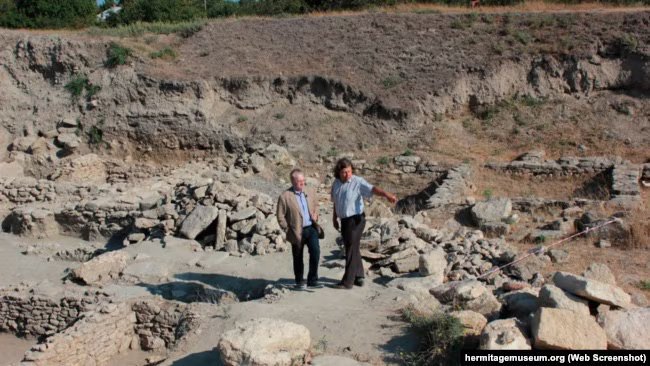
So, the Russians were digging in Crimea. And Butyagin, hypothetically, did not violate anything before the invasion. They acted accordingly, obtained permits for excavations with all the necessary documents. The question is what they did with the artefacts.
That's the thing...
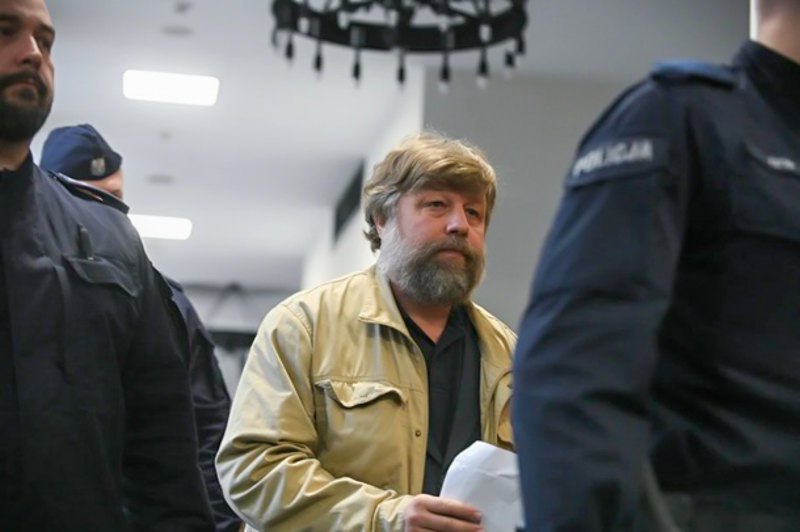
As of now, we don't know. Obviously, they weren't supposed to take anything out, but I suspect that something was going on. And what is Butyagin being charged with now? That he participated in large-scale excavations on the territory of the sovereign state of Ukraine without these permits. Moreover, he took artefacts out of the territory.
The problem is that, returning to the general framework, what he is being charged with is an ordinary crime. It is in no way related to genocide. At least, I have not seen any such suspicion. In other words, he is just a simple scientist from Russia who is "outside politics".
So, roughly speaking, this does not concern the issue of genocide and war, but rather the issue that he simply violated procedure?
What do we see and why are we drawing attention to this case? Extradition on such suspicion is more likely to be harmful. I do not know what strategic plans our lawyers have, who is implementing them. There is no strategy — even in the context of interpreting the criminal code. There is a strategy of the Prosecutor General's Office, approved by the Prosecutor General, according to which, as we tell them, you must consider this crime as part of a genocidal war, as measures aimed at destroying the culture of a group — and classify it as such. I am not even talking about the 2022 resolution of the Verkhovna Rada, which clearly defines everything. But from a legal point of view, this is an objective crime. Therefore, when they incriminate a crime, they must proceed from the fact that in order to prove the subjective side, it is necessary to take into account the intention to destroy the culture of a particular group. This approach is already enshrined in legislation, and they are obliged to apply it.
But Butyagin is suspected of committing an ordinary crime — that is, conducting excavations and moving artefacts without the appropriate permits. In other words, extrapolating from what we discussed earlier, it would be as if he had come here, failed to obtain a permit in 2014, before the aggression began, and carried out such actions — then this article would apply as a violation of administrative procedures. And they may have certain negative consequences. But the expedition led by Butyagin continued its fieldwork after Russia's full-scale invasion, and the excavations were carried out without the permission of the Ukrainian state, which legally remains the owner of archaeological sites in Crimea.
And this fits in very well with the messages spread by the "good Russians" and their friends abroad: don't touch the scientist, he's a man of science. And that an ordinary scientist was digging for himself, taking his finds to the Hermitage Museum, and he had permits from the official administration. This also has a certain legal logic, since according to international law, the occupying country is responsible for the preservation of cultural heritage in the occupied territories. And this construct has been used officially by the Russians on numerous occasions (in the case of Kherson, for example, they say that it is an "evacuation" and not a theft of works of art, referring to Article 54 of the Hague Convention).
After the arrival of deviants in the White House, Putin demonstratively escalates the violations. Remember 2022 — what discussions there were about Bucha, about genocide. The whole world was talking about it. And then the deportation of children took place — a clear sign of genocide. And what do we see? The strongest wording is "war crimes"; the topic of genocide has died down.
This winter, another manifestation of genocide continued — the creation of impossible living conditions for a group, i.e., the destruction of infrastructure. But again, this is not called genocide. Putin is raising the bar — and this is completely understandable, because the main factor for which criminalisation is intended — the prevention of crimes — has not worked. If it "got away with it", then criminal behaviour will only multiply.
Now it is openly genocidal action, which is clearly defined even in the "truncated" convention. But none of our Western partners are talking about it directly. And journalists have come up with a sea of formulations: "terrorist attacks", "cold genocide". But this is clearly genocide, as defined by the convention. Therefore, it must be called what it is and such actions must be prosecuted.
The Holodomor, Israel's influence and our ambassadors in Europe
When, during Yushchenko's time, people voted to recognise the Holodomor of 1932–1933 as genocide of the Ukrainian people, I remember that there were a number of countries that categorically did not recognise it. Among them was Israel. Is this country influencing the current war, preventing Russia's current actions from being recognised as genocide? And in general, can we say that calling the genocide against Ukrainians by its name raises a lot of illusions and interests of other partners regarding Russia, because these are common trade interests, money, influence, resources, etc.?
Regarding Israel, in short, recognition by countries is not a process, but rather the recognition of an event, and first and foremost, political factors, which often have even more influence than the actual proof of crimes. Each country has its own memory and reasons for saying one thing or another. The reasons why Israeli representatives did not support our recognition at that time is a separate issue.
I was in touch with Jewish colleagues in Ukraine and Israel before and after the full-scale invasion, and they had different approaches. What did I hear from them? Political proof is a very long road. They said that before Yushchenko, we ourselves didn't care about the Holodomor. Moreover, the “regionals” were doing the exact opposite in the Verkhovna Rada at the time. And then suddenly we wanted everything to happen instantly: we quickly wrote a text and said that Israel should support it. But they have been proving this point over and over again for 80 years, working on the issue. And this argument matters.
As for the Holodomor, credit and praise to Yushchenko for raising this issue. But his advisers were weak (perhaps it is always easy to judge from the outside). But what did they do wrong? They had a document entitled Soviet Genocide in Ukraine by the author of the concept of genocide as such, but they distorted it and came up with a name for the genocide — Holodomor — although according to Lemkin, it is one of the most extensive (but not the main) aspects of Soviet cultural genocide in terms of physical casualties.
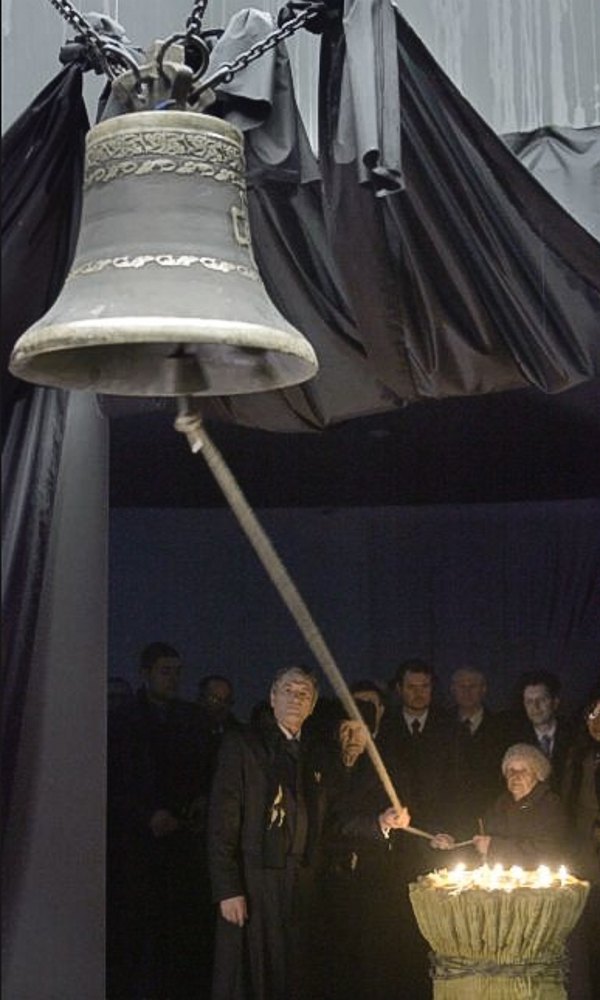
What were the arguments? In addition to the involvement of various KGB figures, such as Shabbs (an international lawyer and opponent of recognition), a legal trap was created. According to the Convention, for genocide to be recognised, there must be a racial, ethnic, religious or national group, but here we were talking about a social group — free farmers, as Lemkin called them. And they supposedly did not fall under this category. They said, we recognise that the famine was artificially created, but "this is something else" (ironically).
This is, first and foremost, the destruction of the soul, the destruction of the church, the destruction of the intelligentsia — the brain of the nation, the displacement of children and the masses of the people. The Holodomor is the extermination of the bearers of the Ukrainian cultural code. And we understand that the territory of the Holodomor is the territory of key uprisings with which the Ukrainian nation responded when they tried to make us "Soviet people." Ukrainians' rejection of bondage and their desire to do something independently on their own land were destroyed. And later, other ethnic groups settled in the cleared territories. As a result, we now have what is called the "Russian-speaking population" because the bearers of Ukrainian culture were destroyed: through terror, intimidation, and murder by starvation.
Let's return to the second part of the question, regarding Israel's influence.
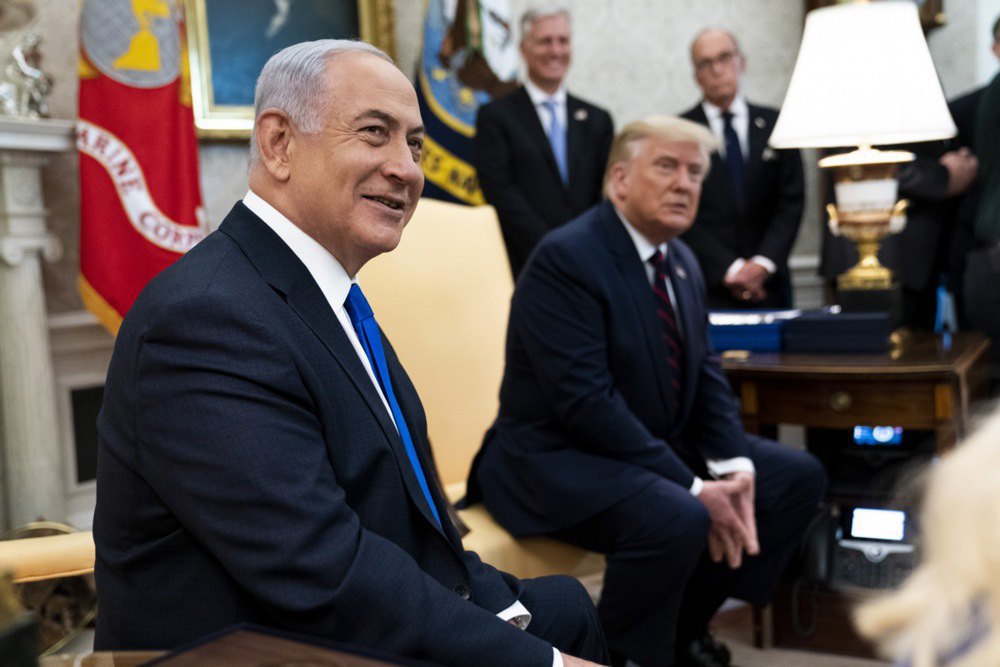
Yes, in the case of Israel, there is a very important point that has been bothering me since Israel's initial response to Hamas's genocidal attack. I am referring to what Netanyahu (Prime Minister of Israel — Ed.) did. He publicly said: commit war crimes — and you will not be punished for it. This seems very strange to me, because we certainly do not consider Jews to be idiots. And in general, in my opinion, Israel itself provoked and created the conditions for such international reactions. This is my view on the matter, and each of their actions requires separate examination.
It is obvious that in the Middle East, in the context of Israel, all so-called terrorist organisations are a phenomenon with a long history. Palestinian militants, for example, studied at Patrice Lumumba University at one time. Hamas has long existed in a complex system of interdependence with Israel itself — everyone knows that Gaza received electricity, resources, and humanitarian supplies. And then suddenly — escalation. Of course, everyone understood that there would be a response. They prepared, hid, and used civilians, including children, as cover. But then the question arises: how could Israeli intelligence have missed this? After all, Mossad is one of the most powerful intelligence agencies in the world.
Netanyahu is, to a certain extent, a political figure who can be compared to other leaders who use crisis or war as a means of retaining power or diverting attention from domestic problems. For such politicians, war sometimes becomes a way to avoid legal responsibility or political collapse.
In answer to your question, we can say that Israel, willingly or unwillingly, along with other global political actors, sometimes becomes part of a process that distracts the attention of the international community. In international politics, the focus of attention is constantly shifting, and this undoubtedly affects how other wars are perceived, in particular Russia's war against Ukraine.
The mere fact that there are ongoing discussions about the role of international institutions, in particular the International Criminal Court, shows how politicised the field of international law is. Any decisions, orders or investigations provoke political reactions from states.
Similarly, comparisons between Putin's regime and Hitler's regime and parallels with the events of the Second World War are becoming blurred. The argument that "things were different back then" is often heard. But in fact, many of the tools that were used back then still exist in the world today and are used in various conflicts. So the essence has not changed?
Yes, Professor Timothy Snyder has written extensively about this. He pointed out that for the first time since Nazi Germany, we have a situation where genocide is actually declared at the level of political rhetoric and practices. Even if there were no Bucha, deportations of children and other components, the very preparation, the creation of conditions for the destruction of a group, could already constitute the crime of genocide. And when a significant amount of evidence has been accumulated over four years, but many are "ashamed" to directly call it genocide, a paradox arises: legal instruments exist, facts are accumulating, but everyone is "ashamed" to say that this is genocide and nothing else.
Let's try to find some good news. Do the speeches, confirmations, and statements of European officials and representatives of our partner countries, who nevertheless recognise and call our war genocide, have any impact on the overall process? Do they have any legal or political significance for us?
If we are talking about so-called "soft law", i.e. declarations, statements, resolutions of the Council of Europe, PACE, not to mention the UN General Assembly, then they are part of the process of proving. They can be referred to as proven facts, so the official position is important to us.
But in the context of advocacy, this cannot be done in a day. Just as it did not happen quickly in the case of the recognition of the Holocaust. We need to prepare systematically, look for people, partners, our ambassadors who are ready to promote these issues at the international level. Our task is to fill such statements with documentary content, that is, to prove them. It is not enough to simply state, as the Ministry of Culture does, that a certain number of museums or cultural objects have been destroyed. That in itself proves nothing. It is very easy to respond to this: there is a war going on, and during any war, something gets destroyed, and Ukraine is no exception.
We are not satisfied with this logic. We must prove intent — the intention that constitutes a crime. We need to present arguments: why these actions are not simply a consequence of war, but a deliberate policy. And on the basis of such arguments, we can work in international legal forums. In any case, there are still institutions such as the International Criminal Court, the UN International Court of Justice, and the future special tribunal for the crime of aggression.
But declarations are not enough for all these institutions. Evidence collected in accordance with international criminal law is needed. And here, the national level is of primary importance — how this evidence is collected in Ukraine and how it is classified within the Ukrainian legal system. The quality of this work will largely determine whether international judicial institutions will be able to use this material in future proceedings.
And here we return to the Butyagin case.
If such systematic destruction of national cultural heritage is called an ordinary crime — "conducting excavations without permission" — then who and what are we going to prove further?
Destruction of the cultural heritage of the peoples of Ukraine and the future trial for Russia
And how is the destruction of the cultural heritage of other peoples on our territory, for example, the Crimean Tatars, which also has signs of genocide, defined?
The cultural heritage of the Ukrainian ethnic group as a state-forming people on its territory and the cultural heritage of the Crimean Tatar people — the Krymly — are equally important. These are two state-forming peoples. But there are other peoples within our ethnic national community. They are not state-forming — they are Jews, Poles, Russians, Armenians and others. And each ethnic group has its own cultural characteristics, which are the heritage of both our national community and the whole world. Accordingly, this heritage is also subject to protection.
There is another interesting aspect: Ukraine has cultural heritage of global significance. It is part of the world's heritage, but it is not tied to a specific people — instead, it is territorially linked to the national entity within which this heritage has been preserved. For example, we can talk about the heritage of the ancient Greeks in the Black Sea region or the Scythian heritage of our steppes. It is not the heritage of the Ukrainian people directly, but it is part of our cultural fund. And it is precisely this heritage that is also being encroached upon.
Am I right in understanding that, in the context of Crimean Tatar heritage, if, for example, the destruction of the Khan's Palace in Bakhchisarai or cemeteries can be proven to be genocidal acts, then the destruction of Chersonesus cannot, because it is not tied to a specific people?
We can prove this too, because Chersonesus Taurica is linked to a national group. It is a national monument, because the Russians are destroying heritage that belongs to us: we preserve it, study it, care for it, and it is part of our culture.
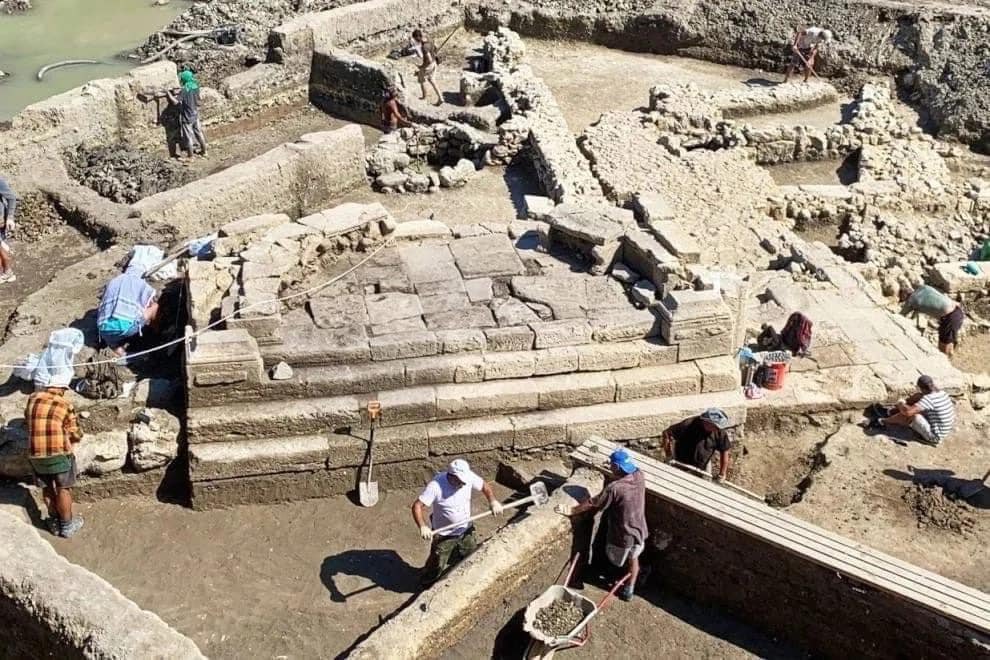
And how is this related to genocide? Putin's declared policy is that Ukrainians supposedly do not exist at all: they have no historical continuity, no territory, no statehood. That is why all manifestations of historical presence are under attack — Ukrainian, Crimean Tatar, as well as the heritage of other ethnic or religious groups. This is done in order to "clean up" this area.
The heritage of groups that existed in this territory is attacked because of their belonging to the Ukrainian national community and to the Ukrainian state that was formed here. This is how this mechanism works. Therefore, it is not surprising why even issues such as the looting of Scythian graves or interference with monuments such as Chersonesus are so important.
Understanding this is part of our work. This is precisely why the Raphael Lemkin Society exists. We work in two areas: the first is legal representation of the interests of affected museums and cultural institutions, and the second is involving experts in the process. After all, any investigation of crimes against culture, especially cultural genocide, cannot take place without expert participation — both under national law and in accordance with the International Criminal Court's policy on investigating crimes against culture. These documents emphasise the need to involve experts on literally every page. This is one of the key elements of evidence in cases involving the destruction of cultural heritage.
And who are these experts? How are they determined?
An expert is a person who has experience and professional expertise in a specific issue that may be brought before them by a court.
So, a situation where, for example, a French specialist who graduated from St. Petersburg University is among the experts is out of the question?
There is a different approach there. But I understand what you are talking about — we all have a certain professional bias due to our experience with our justice system. Let's imagine a court where there are parties and they are proving something. Each party invites its own experts, who provide their professional understanding of the subject of the expertise. Professionalism is determined very simply: publications, awards, international recognition, education, experience. There is also the institution of reputation. That is, if a person is biased or acting in someone's interests, this will immediately become apparent in the court proceedings.
When it comes to Russians, they are very afraid of being exposed in Europe. It is one thing to write something for money, but it is quite another to come to court and testify under your own name. They understand perfectly well that this poses a risk to their reputation. There is another point: when a person testifies in court, the lawyer can always ask direct questions and put them in context. For example: how do you feel about Russia's aggression or occupation? And then the expert is forced to answer.
We see that Russians are very active in cultural diplomacy. Even in our editorial office, we have repeatedly written about attempts by pro-Putin artists to perform in Europe and the United States.
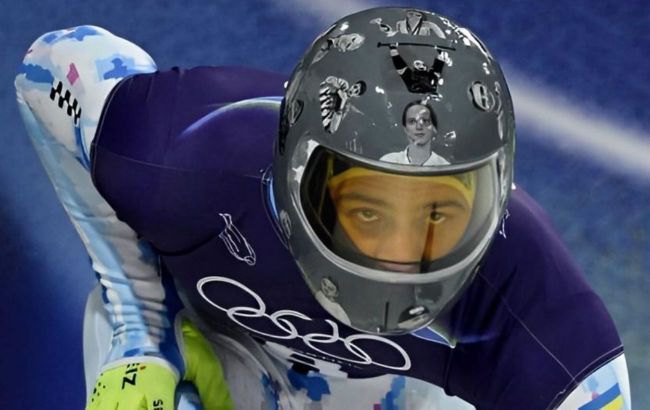
You are doing a great job by talking about what is really happening. This is also part of the real war — a strategic, cognitive war that is generously funded by the Russian Federation. We see what is happening, for example, in the International Olympic Committee regarding Ukrainian athlete Vladyslav Heraskevych.
There is another example. Our law firm is an institutional member of the International Council of Museums (ICOM), and we have submitted an official request for disciplinary measures to be taken against individuals such as Butyagin. We are currently awaiting a response.
What happened before? For four years, the head of ICOM Ukraine wrote to the president of the organisation, reporting that dozens of museums had been destroyed in Ukraine, that they had been attacked, that employees were being persecuted, and that museums were being looted — with the involvement of members of the Russian branch of ICOM. And there was virtually no response. There were only general statements such as: "Museums should not suffer during the war." They should not — but they do suffer.
That is why we are seeking an official position. It is necessary in order to then talk about it in court and not allow the Russians to evade responsibility. The truth is on our side. And the cognitive front is extremely important here. Even if, politically, it seems to us that someone like Trump is trying to knock us off our feet, we are not going to give up.
What else can Ukraine do as a party to prove this genocide? Is this exclusively a legal issue?
Despite the fact that many people today talk about the actual paralysis or crisis of international judicial mechanisms, this is no reason to stop. We need to start with the basics — bringing national legislation into line with international law. At present, it does not meet our needs and does not demonstrate a real desire to prove the genocide that the Russians are committing on a cultural basis.
Therefore, the first step is to bring Ukrainian legislation into line with international documents and requirements. What was originally laid down in the initial drafts by Raphael Lemkin and his colleagues — crimes against culture — must be reinstated as part of this crime.
No one restricts us at the national level in prosecuting such crimes. If this is clearly spelled out, it will also affect the work of prosecutors — they will not be able to simply tell fairy tales or reduce everything to everyday offences, but will be forced to act in accordance with clearly defined norms. We return again to the key point: genocide on cultural grounds. This may seem like a small, asymmetrical step, but it is very important.
After that, it will be possible to advocate for changes to the Convention on the Prevention of Genocide at the international level and explain that the removal of the clause on cultural genocide has effectively deprived the document of part of its function. Why? Because the convention should not only punish but also prevent genocide. And has it prevented it? Obviously not. Criminology says it very simply: a crime can only be effectively prevented if its composition is clearly defined and understood. Russia actively exploits loopholes in the interpretation of the convention in a way that suits it.
What else can we do? Document the crimes. But do it properly. Today, there are many non-governmental organisations in Ukraine that are engaged in this and receive grants for it. Among them, for example, is the HEMO initiative, a public association of Ukrainian experts and scientists in the field of cultural heritage preservation. They are actually one of the leaders in this process and carry out documentation using appropriate chronological methodologies. But this is not enough for legal proof.
The problem is that without facts and information of a military nature, these materials often cannot be classified as crimes. In such cases, they are considered only as collateral damage during the war — something that "happens" in armed conflicts. That is why, in order to prove genocide, it is necessary not only to record the destruction, but also to prove the intent, context and systematic nature of such actions. Only then can it be transformed from a statement of losses into legal evidence of a crime.