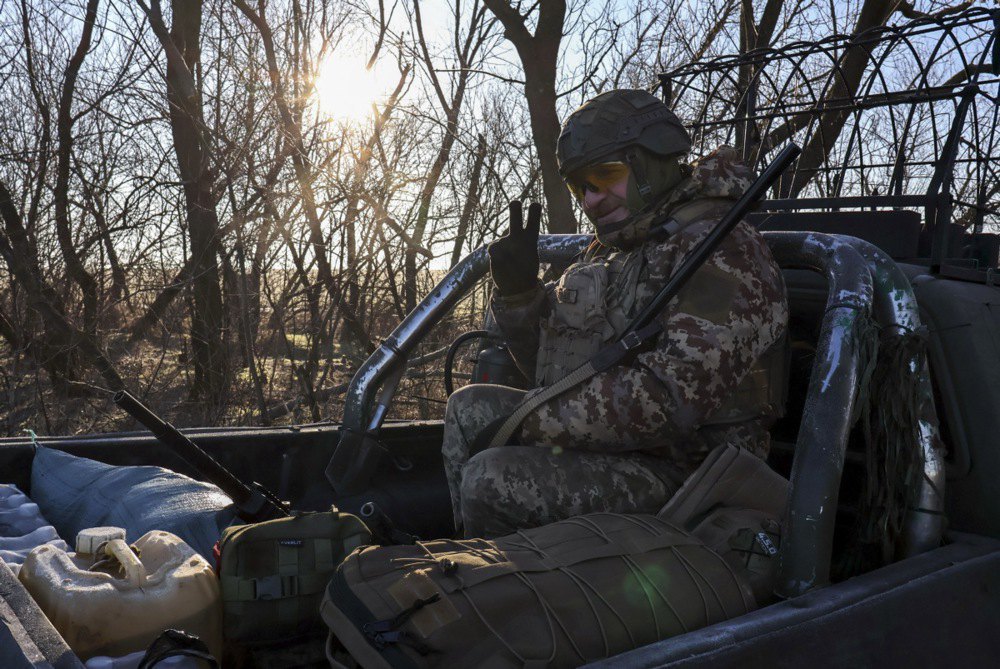





Russians are waiting for the foliage
That is when they plan to infiltrate en masse, as stealthily as possible, into the gaps between our brigades and battalions. Their plan for the summer is not just assaults—it is an attempt to deploy signal repeaters and Wi-Fi bridges in the bushes, equipped with powerful external antennas.
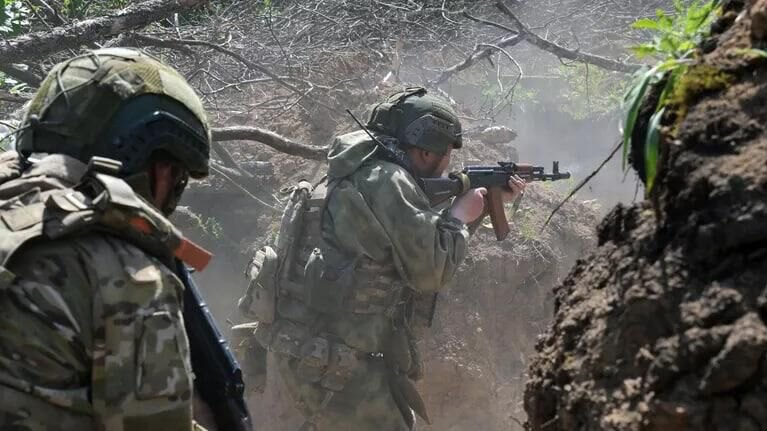
They aim to bypass our strongpoints, build up in basements, and set up local hubs for drone control and artillery targeting. It’s an attempt to turn every square metre of the grey zone into a digital battlefield, where behind every bush sits an operator with a tablet. They will increase the number of their drone pilots and push them closer to the line, despite the risks.
Their goal is to push our Unmanned Systems Forces (USF) out of positions they have held over the winter, force them to manoeuvre under glide bomb strikes, and disrupt communications and supplies—fuel, warheads, and more.
At the same time, they are trying to leverage their advantage in equipment, and it looks like a last-ditch attempt to squeeze their reserves dry. When donkeys, horses, motorcycles, and rusted vans are sent into battle, it’s clearly not out of abundance. Their stockpiles of T-55 and T-62 tanks, pulled from storage, are also finite—and this Soviet-era arsenal is steadily being burned down by our FPV drones.
What are they doing right now?
Russia is aggressively pushing into the grey zone. The aim is to get as close as possible to our positions and, despite heavy losses, try to push our drone and artillery crews further into the rear. They want to force our command structures deeper back, disrupt communications, and cut logistics with glide bombs. They are urgently searching for weak points in our coordination. If they detect delays in response at unit junctions or manage to break into a position, they immediately commit their main reserves there. They press the attack wherever they gain even a slight foothold—but so far, to their misfortune, they haven’t succeeded anywhere.
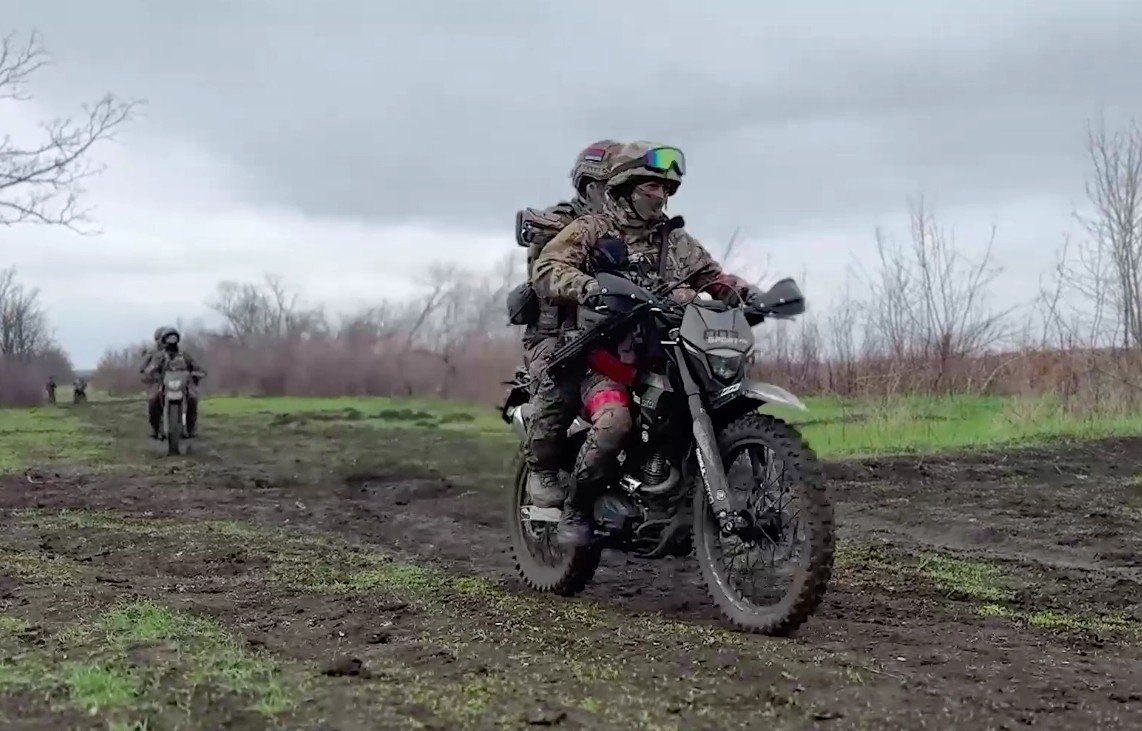
Russian small assault groups of three to five men on golf carts or motorcycles are not warriors — they are disposable sensors for their artillery. The goal is to expose our firing positions and drone operators. The moment we open fire or launch additional drones, a glide bomb is immediately directed there or artillery strikes follow, including precision fire.
The Russians are interested in everything: how our electronic warfare works, how we hop frequencies, how many drones are on duty in the air, where we launch from, and whether they can detect our antennas and cable infrastructure.
But we are better prepared. Our fibre-optic systems are developing faster than their reconnaissance, creating communication channels that are immune to electronic warfare. We have moved to higher frequencies where their jammers are, for now, just piles of scrap metal, and now enemy pilots and operators are taking hits like never before. On top of that, we are systematically targeting Russian drone crews. Not everything can be said yet—but there is plenty, believe me.
Mathematics of death
The statistics speak for themselves. Since January, this “permanent pressure” has cost them approximately 60,000–70,000 irrecoverable losses—killed, maimed, written off for health reasons, those who died during evacuation, or went AWOL.
That is already a second army corps effectively taken out over the winter. And this comes after the smug “sun of democracy in the West” claimed we had no chance and that Donbas would soon be taken anyway. In reality, over the winter they managed to advance only 5–7 km in certain areas—at the cost of an entire army of dead and wounded.
Data from the Unmanned Systems Forces for the past week (14–21 March 2026): the Unmanned Systems Forces and the General Staff confirm the elimination of over 10,500 occupiers. That’s the equivalent of two brigades in a week. Enormous losses.
Americans remember the Vietnam War as a national tragedy, having lost 58,000 over ten years—while the Russians are burning through a fifth of that figure in just a week near Donetsk and Kupyansk. This is combat intensity on the level of World War II, but concentrated in a narrow sector of the front, where instead of divisions, small assault groups are thrown head-on. No modern democratic country could politically withstand such losses even for a single day, yet in the Kremlin it is treated as a mere “statistical margin” on the way to capturing another shattered basement.
In terms of equipment, there is near stagnation: only 13 tanks destroyed across the entire front. That’s negligible for an army that once dreamed of a parade in Kyiv. It confirms they are conserving what remains of their armour, throwing infantry on scooters and horses under our drone drops. These were likely so-called “tsar-barbecue” vehicles—attempts to deploy electronic warfare systems and land assault troops.
A separate level of absurdity is the loss of two Kamov Ka-52 helicopters in a single week (each costing around €16 million pre-war, and now roughly triple that due to sanctions on electronics). Training a top-tier pilot adds another €5 million and ten years of life. Yet they send these expensive machines to fire unguided rockets in a lofted trajectory that physically cannot hit a specific frontline position—just to tick the box of a combat sortie.
This is the real face of their “brilliant” command.
Did they suppress air defence? No. Did they cripple drone production? No. They tried to freeze the people of Kyiv out. Did it work? No. Alright then—just throw more fire support somewhere over there, everything is “going according to plan.” Call the wives, tell them to put the dumplings on.
Our plan is to hold
While villages near Chasiv Yar change hands and the enemy vainly tries to reach the heights, strategic facilities are burning deep in their rear. We are hitting not only machinery at aircraft plants but also taking out A-50s near production sites, setting fire to nitrate stockpiles and food-supply factories. Massive holes in Iskander production facilities are our answer to their terror against our cities.
Our plan is clear: if another defensive position falls, there is already a trench behind it, lined with razor wire, and beyond that a network of interconnected positions with both smart and conventional mines. And from behind them, our heavy drones rise again and strike their dugouts. Our artillery is working—now finally supplied with millions of shells from the West. Our missiles reach Bryansk, and drones at sea strike tankers and gas carriers.
The war remains fierce. For 12 years, we have resisted a vast totalitarian state—and it still cannot defeat us. We are leaping ahead in technology while they search villages for scooters. The deconstruction of the empire is happening in real time: while oil at $112 feeds their illusions, we are methodically blinding them in Crimea and destroying the future of their next generation in the tree lines near Chasiv Yar. A First World War fought in digital colour.
Eternal memory to those who fell defending our state. We stand.