






What Polish farmers are afraid of
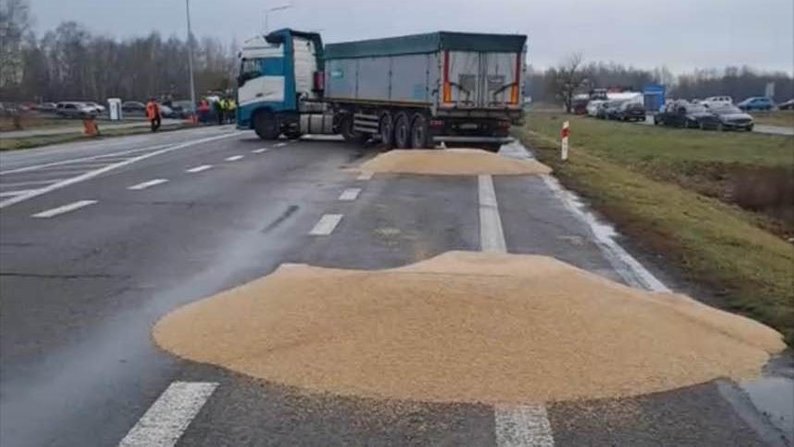
For Ukrainians, ‘Polish farmers’ are now largely associated with the events of 2024 — border blockades, delays to lorries, and Ukrainian grain being dumped. However, it is increasingly clear that building dialogue with neighbours through confrontation is counterproductive.
Taras Kachka, Deputy Prime Minister for European Integration, recently stated at a public event in Kyiv: “We are ready to find a balance that allows us to avoid creating any obstacles or even fears for Polish or French farmers, or indeed for all farmers in the European Union.”
But to what extent are Polish farmers’ attitudes towards Ukraine’s EU accession — and their concerns about price competition — based on objective data, and to what extent are they shaped by emotion and political narratives? And will it be possible to strike this balance?
Polish farmers are driven primarily by uncertainty, explains Sławomir Kalinowski. This stems from a combination of factors that lead them to perceive Ukraine’s accession to the EU as a potential threat.
Furthermore, commodity prices are currently falling in Poland and across the EU, meaning that Ukraine’s predominantly commodity-based agricultural sector is seen as an additional source of pressure.
“It is not so much that our farmers do not want to see Ukraine in the EU, but rather that they are driven by uncertainty about the future,” the analyst explains.
Profitability in the production of cereals and oilseeds is relatively low, and any market fluctuations tend to amplify fears and perceptions of risk.
“In terms of trade between Ukraine and Poland, we generally observe a surplus: we export more to Ukraine than we import. However, in the grain sector (and, to some extent, in oilseeds — which we do not significantly specialise in), the situation is less favourable for us,” says Kalinowski.
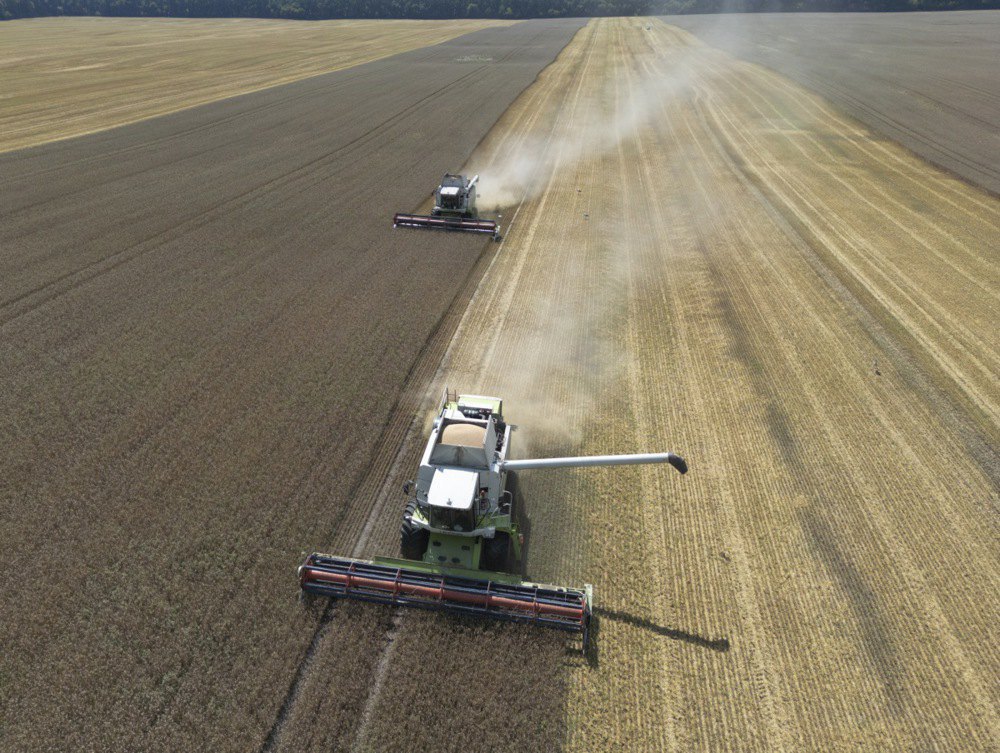
Poland produces around 35 million tonnes of grain annually, whilst consuming 26 million tonnes — creating a surplus. In such conditions, any additional supply entering the market, including from Ukraine, may be perceived as a threat.
Is there evidence that Ukrainian imports are systematically displacing Polish products from the EU market?
As the analyst explains, Polish farmers, as a social group, are more often guided by perception than by precise data. Against the backdrop of falling grain prices and rising production costs, they do not require concrete examples or clear evidence of competition to experience anxiety.
“This tension is simply in the air. Everyone remembers that when the full-scale war began, around five million tonnes of grain ended up in Poland and what the consequences were (the large volume of Ukrainian grain remaining in Poland led to a crisis in the agricultural market, triggered farmers’ protests, and overburdened the logistics system. — Ed.),” he says. “Responsibility lay on both sides: firstly with the sellers, and secondly with those who were supposed to transport the grain onwards, yet insisted it had not remained in Poland.”
Political manipulation plays a role
Such sentiments do not arise in isolation; they are often reinforced by external influences, particularly political actors. At the same time, the strong performance of Polish goods on the Ukrainian market is largely absent from public discourse.
“I often visit Lviv, Kyiv and Ivano-Frankivsk, and I am pleased to see so many Polish goods on shop shelves — this is beneficial for the Polish economy. We emphasise this constantly, noting that Ukraine ranks seventh among our export destinations, particularly for agri-food products,” the expert explains. “However, the nature of the problem is partly political.”
There are approximately 1.3 million farms operating in Poland. If we include family members of farmers who are eligible to vote, this represents no fewer than two million voters during elections. This leads to a rather sobering explanation: it is in politicians’ interests to capitalise on these fears for electoral gain.
Notably, the political forces that exploit this issue tend to be sceptical not only of Ukraine, but also of the European Union and countries such as Germany, Kalinowski adds. In this context, Ukraine becomes just one of several factors used in broader political narratives.
The key to cooperation: Ukrainian raw materials and Polish processing
“In our report, we highlight the benefits that are evident for both sides. For those working in the processing sector, cooperation with Ukraine is — and will remain — advantageous, as it provides access to relatively inexpensive raw materials,” says Kalinowski.
Cooperation with Ukraine would also contribute to the development of logistics in Poland. If Poland supports the growth of Ukraine’s agri-food sector, and Ukraine correspondingly increases its production and exports, this would benefit Polish logistics and the broader economy.
For Polish farmers, three key factors define their perception of Ukrainian agriculture. First and foremost is Ukraine’s renowned black soil. By contrast, soil quality in Poland is relatively low, with only around 3% meeting high standards.
The second factor, well known among Polish farmers, is the lower cost of production in Ukraine. The third is the structure of farms: Ukraine is characterised by large agricultural holdings, whereas Poland is dominated by small farms. In Poland, farms of between 5 and 10 hectares prevail, with these two categories accounting for over 70% of all farms. This significantly limits efficiency, particularly when compared with Ukraine, where the average farm size is approximately 130 hectares. “We tell Polish farmers that they need to unite and establish cooperatives, but they remain reluctant. This is likely due to lingering associations with the era of collective farms. Although these have not existed since 1991, the fear persists and works against us,” the analyst notes.

The Batory Foundation also emphasises in its report that Polish farmers should place greater focus on processing their produce. This would enhance their competitiveness not only vis-à-vis Ukraine but also within the European Union as a whole. If the Polish agricultural model is based on family farms and higher value-added production, then the presence of large Ukrainian agricultural holdings should not constitute the kind of unfair competition that currently concerns their neighbours.
There is, in fact, little direct competition between small-scale farms and large agricultural holdings, as they operate in fundamentally different segments. However, as Kalinowski reiterates, perceptions are often driven more by emotion than by economic reality.
“Our small and medium-sized farms fear being pushed out of the market. Rational analysis tends to give way to anxiety. At the same time, Poland should be supporting Ukraine in exporting agricultural products to third markets, particularly in Africa and Asia,” the analyst argues.
According to him, the Polish agricultural sector continues to move from one crisis to another, lacking stable, long-term mechanisms for resilience. Political responses tend to be reactive rather than structural, with insufficient effort devoted to creating conditions for farms to grow, cooperate, adapt and become more competitive.
Of the approximately 1.3 million farms in Poland, only around 340,000 are profitable and efficient. The remainder operate on the margins of profitability, or treat farming as a secondary activity. It is these groups that feel most vulnerable to potential disruption.
“However, our research indicates that, over the past year, Ukraine has not been a decisive factor. Import volumes of grain and poultry, for example, have remained relatively low and do not pose a significant threat,” the economist concludes.
Ukrainian agriculture within the ‘impossible triangle’
The debate on integrating Ukrainian agriculture into the EU’s internal market can be framed through the concept of the so-called “impossible triangle”, whereby only two of three objectives can be achieved simultaneously, explains Yana Okhrimenko, senior economist at the Centre for Economic Strategy.
Let us imagine a triangle with three vertices:
— integration: the removal of tariffs, quotas and other barriers for Ukrainian products, in line with the principles of the EU single market (that is, rapid, full and comprehensive trade liberalisation for Ukraine);
— stability, or the protection of the traditional farming model in many EU countries: preserving the viability of small and medium-sized family farms in Poland and across the EU, which form the backbone of agricultural production;
— competitiveness of Ukrainian producers: maintaining large-scale, low-cost production that underpins Ukraine’s global advantage.
“It is clear that it is impossible to achieve all of these objectives simultaneously, so three distinct strategies emerge,” the expert explains.
If the priority is rapid integration combined with maintaining the competitiveness of Ukrainian producers, this implies that Ukrainian producers would compete on equal terms with those in the EU. At the same time, EU producers would continue to comply fully with existing regulatory standards, whereas Ukrainian producers would face a more gradual alignment process.
“Personally, I am convinced that even under such a scenario, a crisis would not occur (at least, I have not found convincing evidence that the introduction of visa-free trade with Ukraine has significantly depressed prices in the EU). However, it would be a politically unpopular decision, making this scenario unlikely in practice,” notes Yana Okhrimenko.
If, instead, the priority is to protect EU farmers while preserving the competitiveness of Ukrainian producers, full liberalisation would have to be curtailed. This would entail lengthy transition periods, safeguard mechanisms, or even permanent restrictions on Ukrainian products. In effect, rapid integration would be postponed, leaving Ukraine on the margins of the internal market.

“We are not in favour of this scenario,” the economist admits.
If the focus shifts to rapid integration while safeguarding EU farmers, Ukraine would need to undertake a substantial restructuring of its agricultural sector. This would involve limiting the dominance of large agricultural holdings in favour of supporting small and medium-sized farms more closely aligned with the European model. It would also require strict compliance with EU environmental and social standards, potentially eroding the current price advantage of Ukrainian raw materials.
“This is also a less favourable scenario from Ukraine’s perspective,” the CES analyst adds.
Given that no single approach can fully satisfy all parties, the “balance” referred to by Taras Kachka represents an attempt to remain at the centre of this triangle — where no side achieves all its objectives, but each avoids the worst-case outcome by accepting certain compromises, Okhrimenko explains.
For example, there is ongoing discussion within the EU about reforming the Common Agricultural Policy in order to strengthen the competitiveness of European producers and, potentially, to ease certain environmental requirements in favour of strategic autonomy and food security.
At the same time, Ukraine is accelerating the implementation of the European agricultural acquis (the EU’s legal framework).
Thirdly, some Polish experts acknowledge the need for Poland to modernise its agricultural sector and shift towards higher value-added production. In such a scenario, efficient Ukrainian production would be viewed not as a threat, but as an opportunity.
“Overall, a mutually beneficial agreement is achievable, but the process will inevitably involve dissatisfaction, concessions and the usual complexities of negotiation,” concludes Yana Okhrimenko.