





A shortfall of thousands of missiles
In 2025, Lockheed Martin produced 620 PAC-3 MSE anti-aircraft guided missiles for Patriot systems — 20% more than in 2024, yet still far too few to counter all Russian ballistic threats. In the same year, Russia planned to produce 750 missiles for the Iskander-M tactical ballistic missile system and up to 100 Kinzhal missiles; Ukraine’s Defence Intelligence also reported plans to procure around 150 ballistic missiles from North Korea. Given that at least two interceptors are typically required per target, this implies a need for no fewer than 2,000 PAC-3 missiles. Even last year, there were insufficient anti-missile systems globally to intercept all Russian weapons — and Iranian arsenals must now also be taken into account.
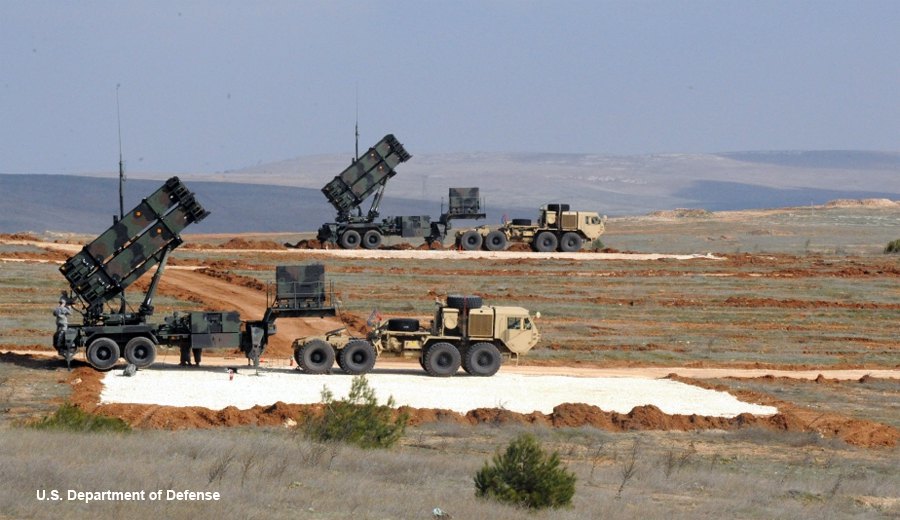
The American manufacturer is already expanding output: production plans initially set at 600 PAC-3 missiles for 2025 reached 620, while this year’s target stands at 650 and may be exceeded, according to Oleh Katkov, editor-in-chief of the Defense Express portal. Production is increasing, as is the number of countries operating Patriot systems.
Previously, PAC-3 MSE missiles were used primarily by Ukraine and Israel. More recently, the United States, Qatar, Bahrain, Kuwait and the United Arab Emirates have also deployed them. According to available data, by the end of the second week of hostilities, the Gulf states collectively (excluding Saudi Arabia, which does not disclose such figures) had intercepted around 800 Iranian ballistic missiles, although these estimates may be somewhat inflated.
“The standard expenditure of MSE missiles is two per target, but there are numerous videos showing that they are firing three or four at a time without success,” Katkov notes. “Most likely, a vast number of missiles have already been used, and meeting this demand alone could tie up Lockheed Martin’s production capacity for several years.”
This implies the use of at least 1,600 interceptors — while Iran continues its strikes, necessitating further launches. At current production rates, replenishing depleted stocks could take approximately two and a half years. Consequently, a shortage of PAC-3 MSE missiles and intensified competition from wealthier Gulf states is likely in the near term, according to Oleksiy Yizhak, an analyst at the National Institute for Strategic Studies and co-founder of the Defence Information Consortium.
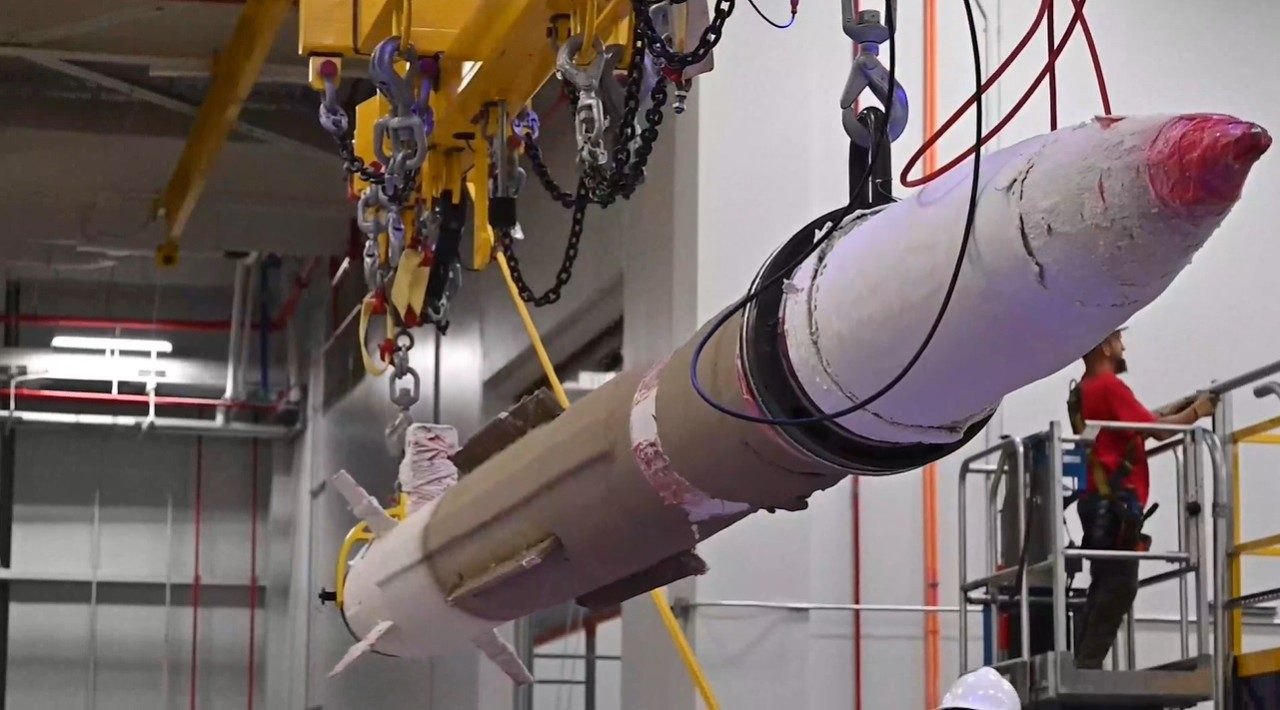
“There’s no need to overstate the capabilities of Iran’s ballistic missile arsenal; Israel and the US will simply take out the main targets — and that will be the end of it — but just in case, they’ll want to replenish their stocks of spent anti-missile missiles,” he believes.
Lockheed Martin might well be happy to meet the demand, but the corporation relies on a vast network of component suppliers. They, too, are trying to ramp up production, but such a pace is already a sprint for them. Boeing, for instance, manufactures unique homing heads for the PAC-3 — but it is also dependent on suppliers for its own components.
“Presumably, the plans to ramp up PAC-3 production to 2,000 units a year over seven years are a compromise with the US Department of Defence, which has stated that demand is growing,” Katkov surmises. “But that’s the absolute maximum. Because after the framework contracts were signed with the manufacturer, there was another emergency meeting at the White House (the administration might have asked or demanded even more from him), but no further contracts were signed.”
It all comes down to licences
In theory, the Americans could delegate production under licence to other manufacturers. But Lockheed Martin is a private company and the owner of the patents. If the US government had sought to expand production, it would first have had to buy them out, explains Oleh Katkov.
There was a time when Washington wanted to expand the maintenance of ATACMS missiles. ‘We had to resort to reverse engineering (the study of a device or programme to understand how it works. — Ed.) of the guidance unit, because the manufacturer (apparently Boeing) did not want to provide the technical documentation so that another company could produce this navigation unit more cheaply and in greater quantities,” explains the expert.
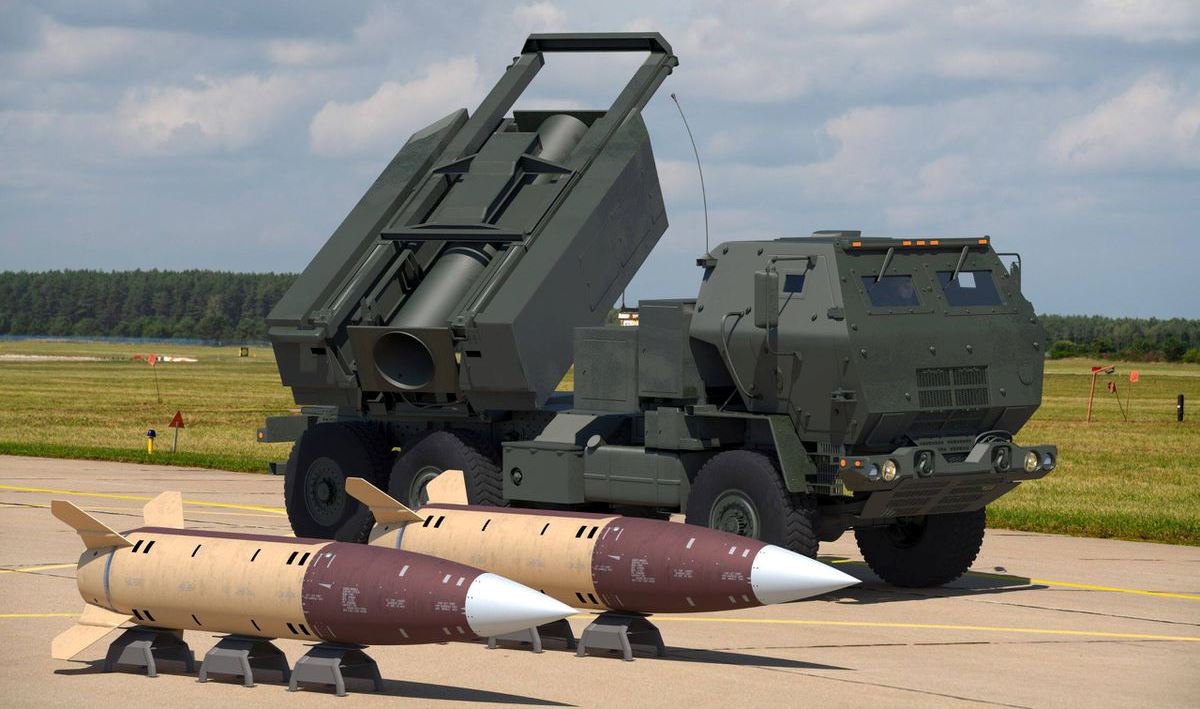
The sole partner entrusted with PAC-3 technology is the Japanese giant Mitsubishi Heavy Industries (MHI). However, it produces just 30 missiles a year for its own use, with no right to re-export them, and even then using American components. About two years ago, Reuters, citing its own sources, reported that the company could potentially increase production to 60 missiles, but expansion is impossible without supplies of seeker heads, which guide the missiles during the final stages of flight. “Due to a lack of equipment, it may take MHI several years before it can increase production volumes,” one of its sources told the agency.
To secure the right to produce at least those thirty missiles, Japan initially purchased as many as 24 Patriot batteries, says Oleh Katkov. When you buy such a batch, you can already negotiate the production of the missiles yourself — at least in such a limited capacity.
“It cannot be ruled out that, in light of current events, someone will indeed obtain a licence to manufacture PAC-3s,” suggests Oleksiy Yizhak. But for now, there is no sign that the number of anti-missile systems will suddenly increase and be enough for everyone.
Japan, too, will not be able to share its stocks, however modest they may be. “Thirty missiles a year is nothing, though we’d be happy with even ten,” admits aviation expert Valery Romanenko. “I spoke with Japanese colleagues — Tokyo would have to amend its Constitution to supply missiles to a country at war.”
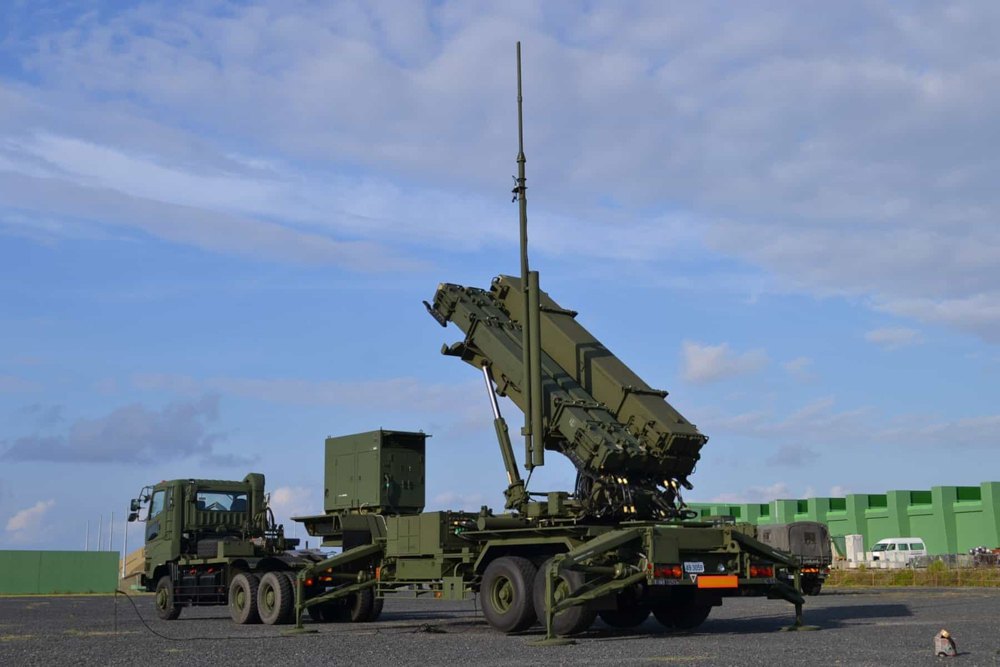
According to the expert, Ukraine would be happy with missile supplies in component form: they would assemble them themselves. And there should be a certain reserve in Japan: they didn’t even use all of those 30 missiles a year for training exercises.
What is needed for our own anti-ballistic defence
If there is nowhere to buy them and a licence to manufacture missiles is unlikely to be granted, we need to consider our own air defence system, said President Volodymyr Zelenskyy recently, and Defence Minister Mykhaylo Fedorov before him.
The main components of such systems are phased-array radars, capable of detecting targets at long ranges, control stations and missiles.
“We are not yet capable of manufacturing any of these components. At best, we could assemble missiles from components supplied by other companies,” notes Valeriy Romanenko.
Nevertheless, he believes such developments lie ahead. There are enterprises in Ukraine that have produced missiles and are theoretically capable of manufacturing anti-missiles. Manufacturers of radars and control stations could also be found.
“But we lack the necessary experience,” notes Romanenko.
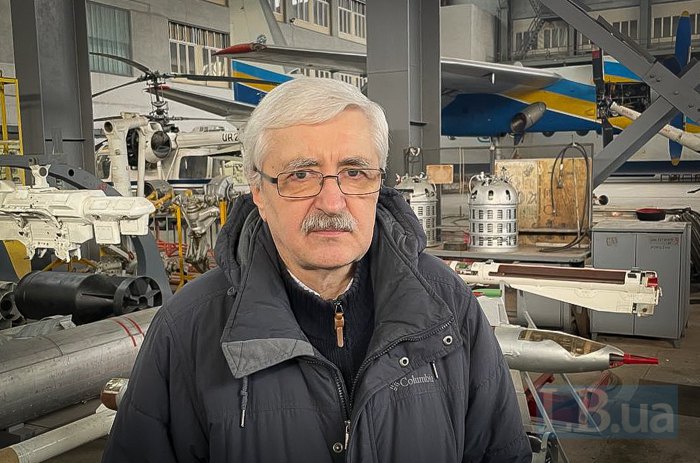
Developing our own anti-ballistic missile systems is a realistic goal, but it’s a question of money and time, says Oleh Katkov. And a considerable amount of both, as we lack our own expertise in this field.
“We used to produce certain components, but never full-fledged air defence systems,” he explains. “Missile defence is advanced mathematics. First, we need to establish mass production of air defence systems capable of effectively shooting down aerodynamic targets, and then we can plan our steps towards missile defence systems with greater confidence.”
The examples of developments in Turkey and South Korea best illustrate how much time and money this may take. The Turkish HISAR air defence system, which is now in serial production, was developed in several stages, from the production of short- and medium-range systems to a 100-kilometre range (the Siper air defence system). The systems have been in service since 2024, but work on them began as far back as 2009. Fifteen years have passed, and the latest variant — Siper — still cannot intercept ballistic missiles, notes Katkov.
“The cost of all the work is unknown, but for the short-range system alone (and the developments build upon one another into a comprehensive strategic national project), Aselsan (Turkish companies Roketsan, Aselsan and the Tubitak SAGE Institute for Defence Industry Research and Development worked on all the air defence systems. — Ed.) invested around $0.5 billion of its own funds.”
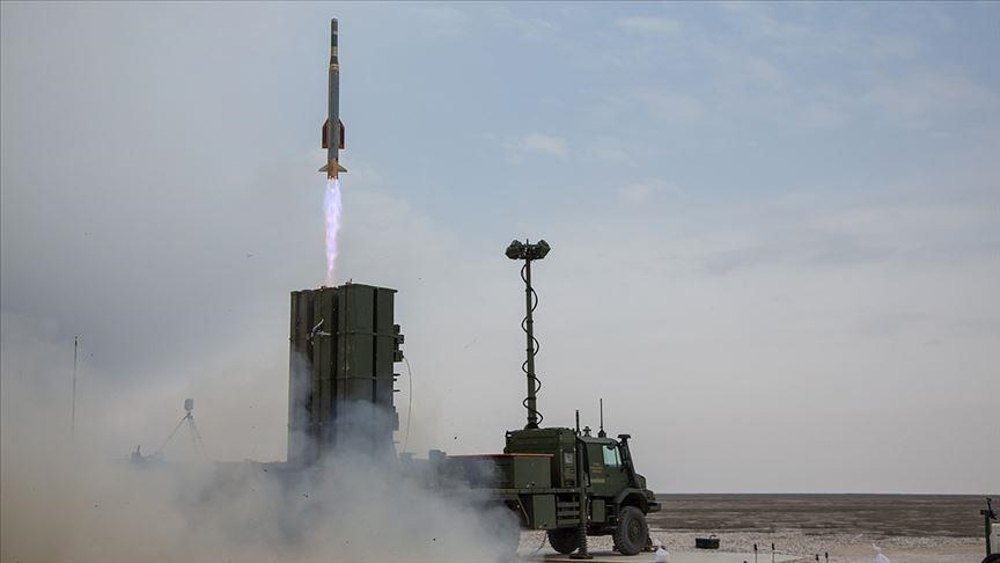
South Korea has been working on its KM-SAM air defence system since the 2000s, and the system only shot down a ballistic missile for the first time in 2026 in Saudi Arabia.
“Developing a missile defence system is a national strategic programme that requires significant investment in expertise, equipment and manufacturing,” concludes Oleh Katkov.
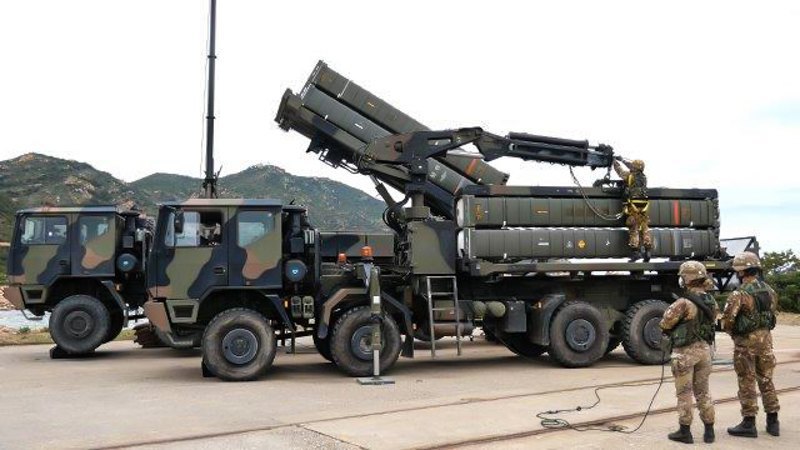
European partners promised that Ukraine would be the first to receive the upgraded Italian-French SAMP/T NG air defence systems. Yet even this upgrade is a slow process. The project itself began back in 1989, and it was not until 2014 that the systems entered service. The decision to upgrade the system to counter ballistic missiles was made in 2023. The previous version of the SAMP/T has been in service with the Ukrainian Armed Forces for over a year and proved ineffective against ballistic missiles, says Valeriy Romanenko.
The SAMP/T NG system has now been tested at ranges in France and Italy, and its components have been handed over to the armed forces of both countries for testing, explains Katkov.
“No one ever said that Ukraine would develop its own missile defence system or receive the promised SAMP/T NG within a year,” he notes.
Asymmetric defence: selling interceptors and targeting Russian factories
Oleksiy Yizhak believes that within a few years, the global shortage of anti-ballistic systems will be resolved; for now, however, defence will have to be achieved through various indirect means.
“This is exactly what we are doing: we are offering our assistance to the Gulf states in the form of anti-aircraft drones. The more cheap, mass-produced systems they acquire, the fewer expensive missiles they will have to use,” he explains. After all, Patriots operate in a fairly narrow sector, and cheaper systems can be used against targets such as enemy aircraft.
Read alsoStrikes on 123 ARZ and Aviastar: a strategic blow to Russia’s military logistics
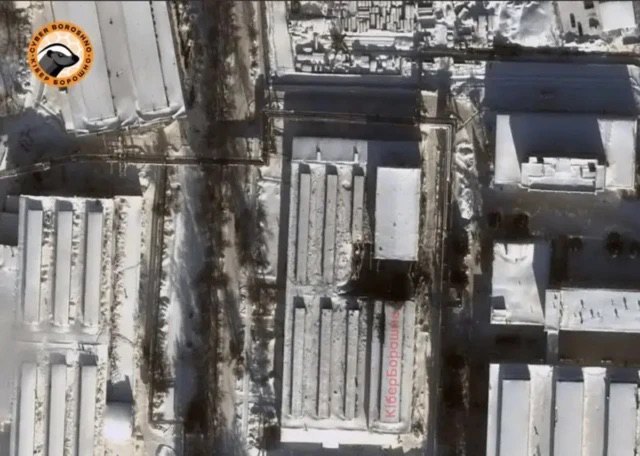
The imbalance with the PAC-3 can be offset by continuing to destroy Russia’s ballistic missile production capacity. There are around a dozen facilities in Russia, such as the Kremniy-El and Votkinsk plants, whose destruction would have a significant impact, says Yizhak.
The sites where ballistic missile-class products are manufactured are large hubs, centralised production facilities dating back to the Soviet era with underground workshops designed to withstand the conditions of a nuclear war. To strike them, one needs one’s own ballistic missiles or large cruise missiles.
“We were forbidden from targeting such facilities with Western weapons. Although we are now seeing some progress on this issue, I believe the main strikes will be delivered using our own weapons,” says the expert from the National Institute for Strategic Studies.
We first heard about the successful testing of their own ballistic missile back in August 2024; since then, there has been no widespread use against targets in the Russian Federation. The products are still being refined, suggests Oleksiy Yizhak. A ballistic missile has a very specific inertial guidance system, and striking targets at long ranges requires pinpoint accuracy.
This is because it is necessary to hit a ventilation shaft or other opening with pinpoint accuracy. “But now, they have probably overcome the problem and ensured accuracy,” says Oleksiy Yizhak.
“The strike on the Votkinsk plant was spot on,” notes Oleh Katkov. “In 2025, it would have been hard to even imagine such a thing.”
In other words, a situation could arise similar to that in 2022, when there was no mention of Patriot defence. Yet now Ukraine has the capability to strike, and that is a significant advantage.
“There is the ability to strike production facilities, and we hope they will increase their capacity to destroy launchers along with their crews (Iskander launchers have already been hit, though those were rare instances) — the means for counter-battery warfare are in place,” says the Defence Express analyst.
To secure one of the top spots in the queue for PAC-3 missiles, we will need to work hard on the diplomatic and political front. Saudi Arabia or the UAE may be willing to pay whatever it takes for the missiles, but our European partners are not so willing to spend money.
“Lockheed Martin and other American arms manufacturers are not parties to defence contracts with states; it is not the manufacturer selling us its missiles via PURL, but the US government,” explains Katkov. We need to maintain close ties with them. And it is very much up to our European partners to ensure that these sales continue, and in the volumes that Ukraine needs.
The crisis situation with Patriot missiles is now clear to the whole world: you can buy American systems by the dozen, but you have nothing to fire them with. And they are in South Korea, Taiwan, the Netherlands, Sweden, Germany, Romania and a number of other countries, yet there are only 620 missiles a year for all users. So why did they spend billions on the systems?
“They will probably raise the issue of integrating other missiles into the Patriot system if there is a bottleneck — Lockheed Martin not producing enough PAC-3s,” believes Oleh Katkov. “And Europe’s defence capability, and not only Europe’s, depends on this.”
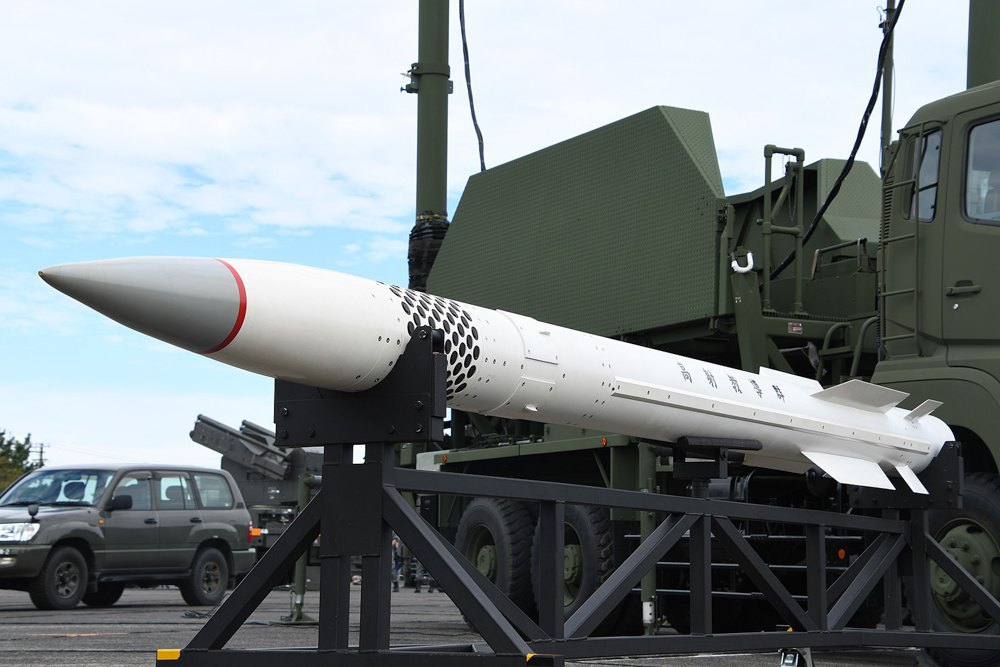
Whether the US will agree to transfer licences, relocate, expand production or integrate other missiles that can be manufactured independently of Lockheed Martin (and at a significantly lower cost) remains to be seen, as the Americans have no interest in this. But the shortage of anti-missile systems is no longer solely Ukraine’s problem, so the current situation could become a catalyst for change.