





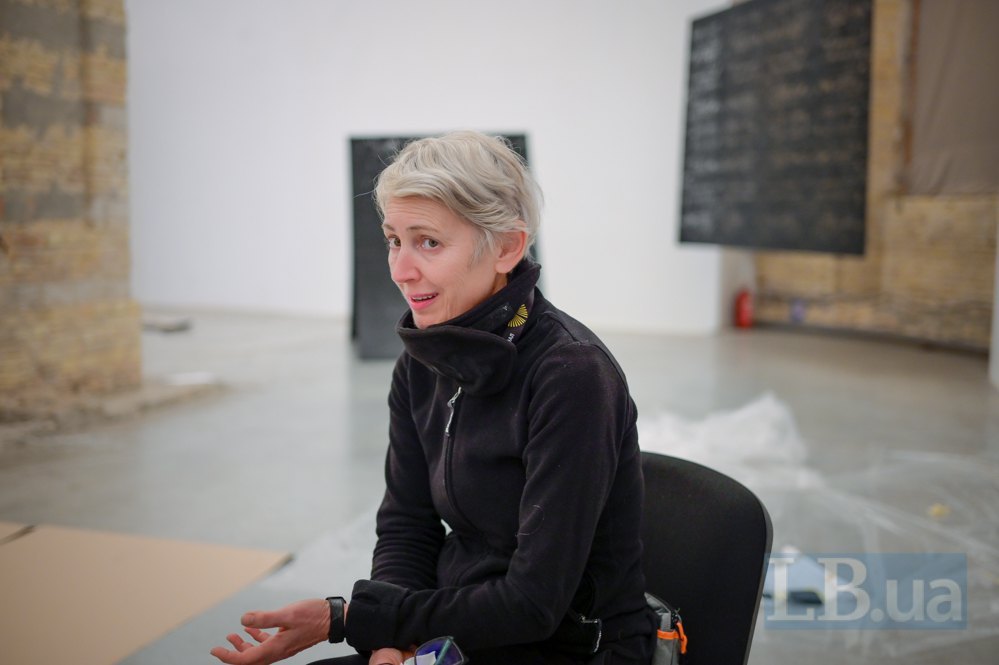
“For me, a personal discovery was Kulchytska’s connection with the Swiss Symbolists.”
At the beginning of the art book, you mention that you were familiar with Olena Kulchytska’s work even before becoming a practising artist. Why did her figure, in particular, draw you towards reinterpretation?
When you grow up surrounded by someone’s works and they are constantly part of your life, it’s a bit like family: you live with them, yet in reality you don’t quite know who these people truly are. The closer something or someone is to us, the less we tend to reflect on it, the less we actually know. At a certain point, I fixated on exactly this: I grew up surrounded by Olena Kulchytska’s works. Did this fact influence me as an artist in any way? If so, how? What do I actually know about her? I think that question became central — to understand whether there had been any influence on me.
I had always liked what she did. At first, as a child, I simply enjoyed looking at her works; later, during my studies, I often checked myself against them. When I was studying, we had an assignment in watercolour — her wonderful willow, painted in watercolour, hung in our living room, and naturally I tried to understand how it had been done. I decided to start with what felt closest. At the same time, I couldn’t let go of the idea of continuity — of historical repetitions and cause-and-effect relationships.
It was precisely from this swirl of thoughts — about destruction and restoration, about what remains, about how we can reconstruct something from fragments and remnants, what we can build and understand from all of this, and how it might influence us — together with the constant presence of Olena Kulchytska in my life, that the idea for this project emerged.
You mentioned that you grew up surrounded by her works. How did they end up in your family?
In very different ways. Part of our family was friends with artists. Some works were gifts, others were exchanged. A few of the pieces I have at home, according to family stories, were rescued by my grandfather from a rubbish heap near the National Museum (the Andriy Sheptytsky National Museum in Lviv — ed.); some he bought. One of our relatives was, for a time, close to Olena Kulchytska and carefully collected the graphic prints the artist had rejected. I consider those prints the most valuable part of my collection — you can see the process in them.
Family stories are a fascinating subject. I don’t remember that relative — I was a child when she passed away. But I vividly remember the things she left behind: albums with gilded edges that locked with a tiny key, remnants of a ball gown embroidered with glass beads, which my sister and I would pick apart for our dolls’ dresses, a fan made of ostrich feathers. Fragments of some other, mysterious, fantastically beautiful life. Shards of another world.
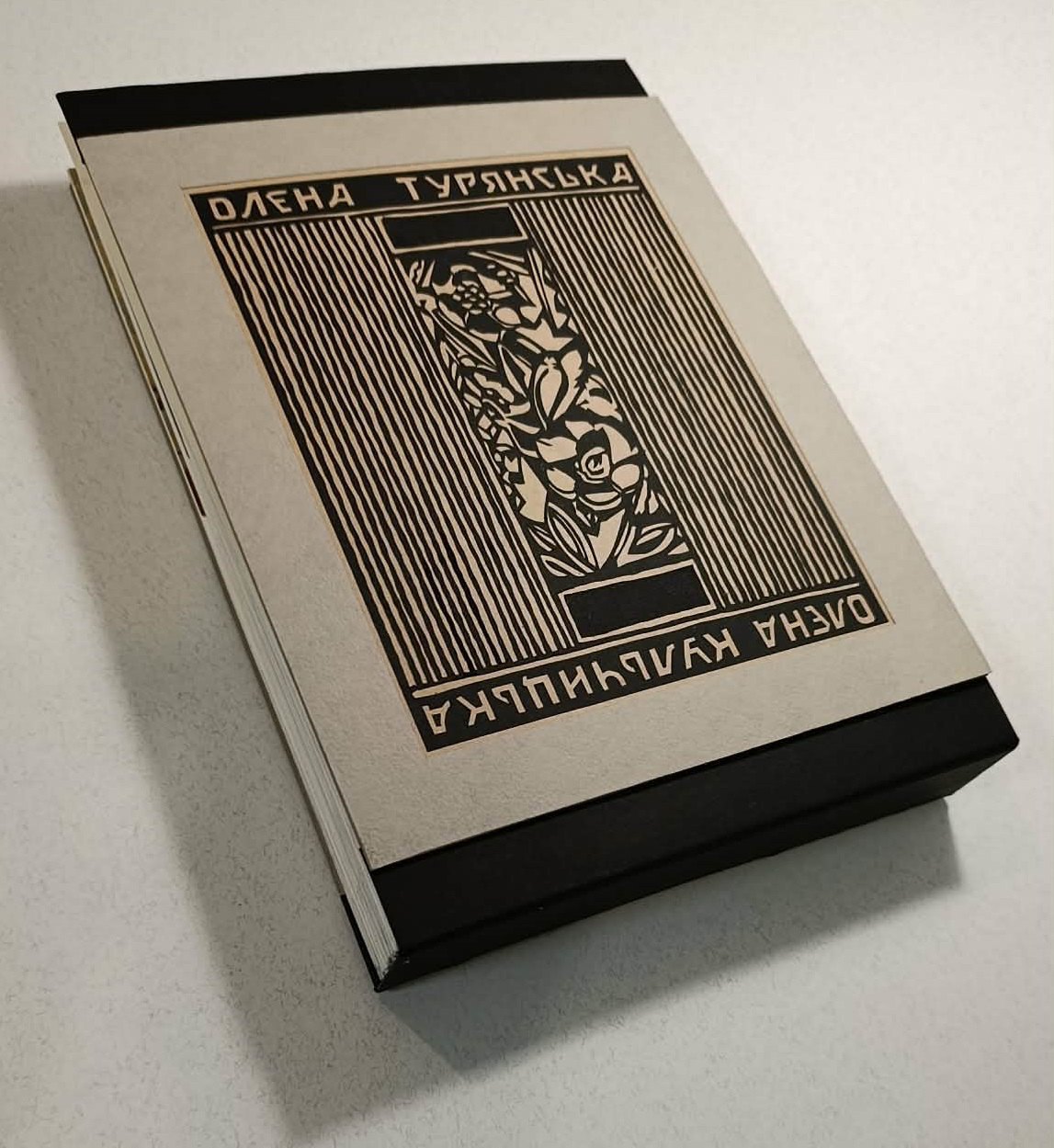
It is indeed fascinating to trace these influences. I noticed them, although I must admit I am not very familiar with the Lviv school in terms of continuity.
Unfortunately, very few people outside Lviv are closely acquainted with it at all. This is yet another indication that we all live in one country but have a rather limited understanding of its regional particularities. A great deal of effort was made by previous regimes to ensure this. Everything of value and quality was deliberately destroyed or marginalised. That marginalisation has not disappeared; the inherited research methodology has not been the best. Much good has also been done, and much has been preserved at great risk, but there is still a vast amount of work to be done.
This is also connected to how education itself is structured and to the methodology of studying art. In particular, isn’t it a problem that Ukrainian art is often presented in a very fragmented way in educational programmes — especially when it comes to regions outside Kyiv — and that the inclusion of women in art history frequently occurs without rethinking the research perspective itself?
In Lviv, this topic has been addressed for quite some time. Female figures such as Margit Selska or Debora Vogel have already been sufficiently brought into view, and much has been written about them. They now occupy fully equal positions within art history. But again, this remains a rather local situation when viewed from the perspective of Ukrainian art history as a whole.
To me, in Ukraine this still looks like the inclusion of individual female figures into an already established narrative, rather than an attempt to radically rethink and restructure that narrative itself.
Context is extremely important to me. This is precisely what I value in local research: we work not only with significant figures but also with context. That is how you begin to understand not only the importance of an individual but also the era, the interconnections, and the influences.
For me, a personal discovery was Kulchytska’s connection with the Swiss Symbolists. This tentative discovery emerged precisely from close attention to context. I was not conducting an art historical study; rather, I was assembling facts — about her, about the period, about her works — using what lay on the surface.
However, I found no written confirmation of this connection. In the Soviet Union, it was impossible to openly admit admiration for Swiss Symbolism; people often destroyed any records that might reveal views considered risky in relation to the dominant ideology.
My research was based on comparing visual images that reflected the context. In the art book, I deliberately juxtapose her works with those of Félix Vallotton, Ferdinand Hodler, and other artists who were important to her. A figure does not exist in isolation. It was precisely this principle of montage that allowed me to trace mutual influences and connections. It is somewhat like the work of an archaeologist, because you are dealing with remnants and fragments. During the Soviet period, a vast amount of material was deliberately destroyed, making it difficult to establish facts.
In my case, it was somewhat easier: I look as an artist, my perspective is subjective, and I do not require the same level of documentary evidence that scholars and researchers do to support their assumptions. I try to find that foundation for myself in visual material, in the works themselves.
It was an incredible privilege to receive permission from the Olena Kulchytska Memorial Museum in Lviv to work with her drafts.
These were drafts of her work The Value of Learning Drawing, part of her methodological approach to teaching drawing. The text was written in Przemyśl. At that time, the head of the education department was a man who knew about Kulchytska’s first-rate Viennese education and understood the subject well. The topic of her diploma thesis in Vienna was a comparison of the theories of John Ruskin and Alois Riegl, two major theorists. In the drafts, she examines their theories and supplements them with quotations from many other authors important to her. This document became the cornerstone of my research. Before that, I had been working almost by intuition, guided by visual perception, trying to assemble and reconstruct her worldview and method; once I obtained these notes, I gained theoretical confirmation of my assumptions.
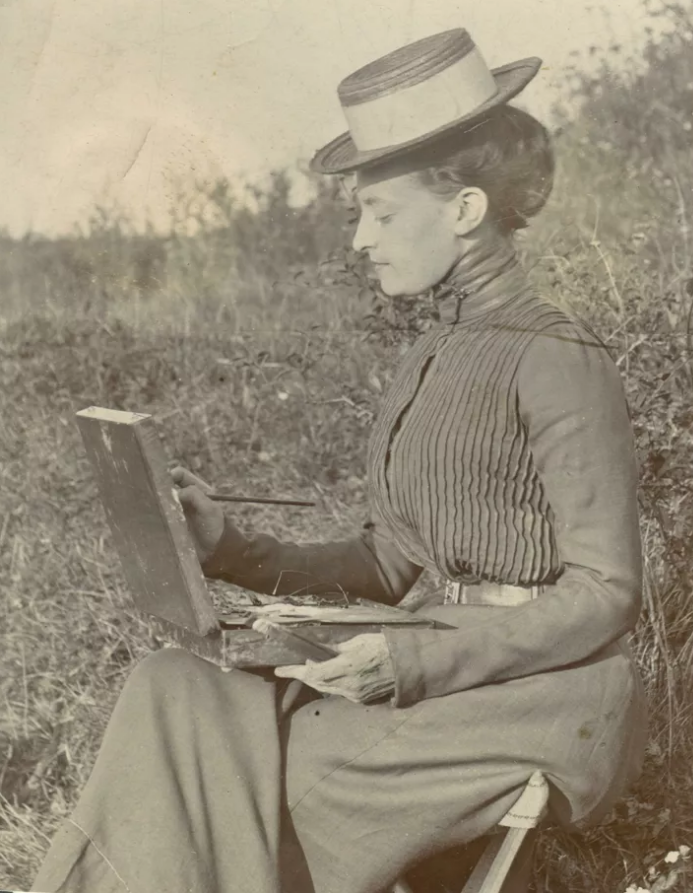
“Alois Riegl and Olena Kulchytska are connected, in particular through the name of Dariia Vikonska”
These textual fragments clearly help to understand how her intellectual outlook was formed. I am currently researching the intellectual networks of Kyiv in the early 1920s, and most authors there refer to the works of Alois Riegl, so it is especially interesting that Kulchytska also wrote her diploma thesis about him.
Did you know that Riegl visited the Ternopil Region? It’s a great story and a good illustration of how everything is, in fact, interconnected. Riegl and Kulchytska are linked, among other things, through the name of Dariia Vikonska, a scholar who, in the interwar period, wrote introductory texts for Kulchytska’s catalogues.
Dariia Vikonska was a pseudonym; her real name was Ivanna-Karolina Volodyslavivna Fedorovych-Malytska. She was a journalist, poet, philosopher, and art historian — a highly educated and multifaceted personality. Vikonska’s father, Volodyslav Fedorovych, was a Galician landowner, political figure, publicist, and patron of the arts. He served as a deputy to the Austrian parliament and owned an extensive library, a collection of folk art, and a collection of European painting. On his estate near Ternopil, in the village of Vikno, he established a school and a carpet workshop. These weaving workshops studied the ornaments of local carpets; the products of the Vikno school were in high demand in Western Europe, competing with the finest carpets from Persia and Turkestan. The institution in Vikno also attracted great interest from ethnographers, historians, and art historians of the time. Volodyslav Fedorovych provided Alois Riegl with a substantial body of ethnographic material. Riegl visited his estate and described and studied Podillian carpet weaving. In 1917, the estate, the school, and the workshops were all destroyed by the Bolsheviks.
Dariia Vikonska (Fedorovych’s illegitimate daughter) was born in Vienna. Her mother was Austrian, and until the age of twenty Dariia did not speak Ukrainian at all. To remedy this, Fedorovych hired a tutor, Mykola Malytskyi, whom she would later marry against her father’s wishes. Their estate was often visited by Oleksa Novakivskyi and Yevhen Malaniuk.
What kind of relationship did Kulchytska and Vikonska have — two women of different generations, yet united by shared interests? What did they talk about? Did they correspond? Most likely.
Dariia Vikonska’s fate was incredibly tragic. In 1944, she returned to Vienna; when the Soviet army entered the city, she already knew that SMERSH was searching for her. When they came for her, she threw herself out of a window. She was 53. Only a small literary legacy remains, yet it still testifies to the breadth and depth of her interests, the uniqueness of her personality, and her deep connection to the intellectual life of Europe.
Even if Kulchytska had any documents related to Vikonska, she most likely got rid of them. It was extremely dangerous to possess papers linking you to someone sought by SMERSH. Do any documents survive that could shed light on the communication between these two women? Once again, a broken connection, destruction, blank spots — and more questions than answers.
It was precisely in attempting, to some extent, to reconstruct these connections, interrelations, and the continuity of an intellectual tradition — and their reflection in the visual realm — that I saw the main objective of this project.
“There is a tendency today, in discussions about art, to declare that a particular artist — say, Malevich — is Ukrainian, and stop there. In your research, by contrast, there is a clear effort to show the complex interconnections between artists, ideas, and contexts. How important is this network of interrelated influences for your understanding of art history?”
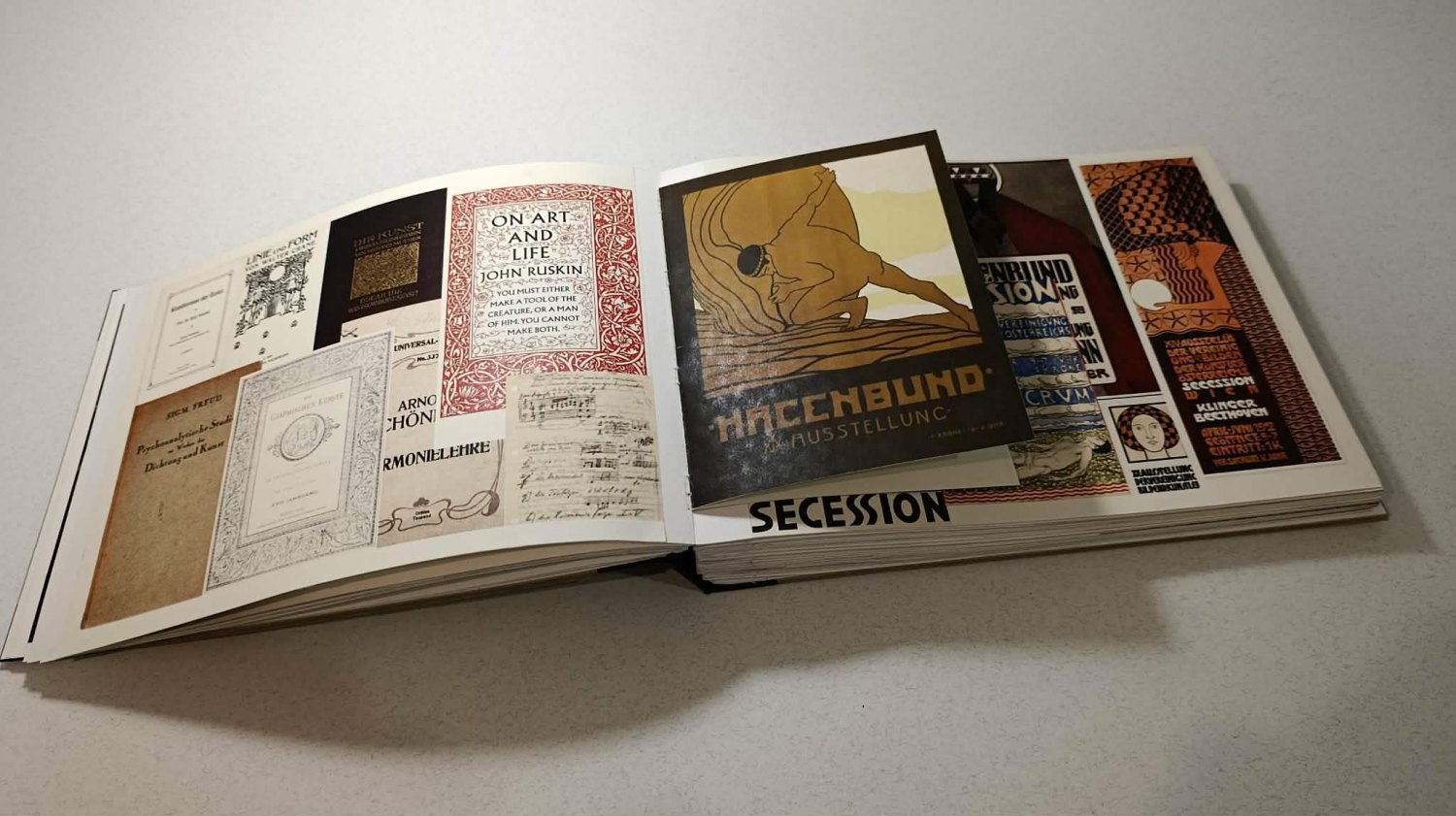
I am deeply convinced that everything is interconnected. In the art book, there is a quotation from the composer Arnold Schoenberg. At first glance, what does Schoenberg have to do with it? Yet what he articulated in music coincided with what was being expressed in visual art at the time. They were speaking about the same things, just in different ways.
Later, Schoenberg had a remarkable correspondence with Wassily Kandinsky. They exchanged letters, made sketches, explained their theories — essentially, they shared ideas and influenced one another. Visually, I even find Schoenberg’s letters more interesting than Kandinsky’s.
There are also many interconnections in life. Later on, Schoenberg’s grandson, an American lawyer, succeeded in securing the restitution of several works by Klimt to their heirs — this is the story told in the film Woman in Gold.
“I approached this research using the method of montage/collage. I don’t really possess other methods.”
Had you undertaken similar research before?
Never. I approached this research using the method of montage/collage — I don’t really have other methods. I started from visual comparisons, searching for connections that seemed significant in relation to Kulchytska.
As I went on, I delved deeper into the context: what was happening at the time in the places where she lived, what she might have seen. In the art book, I also included exhibition programmes from Lviv museums of that period. I was struck by them — what was shown in Vienna and then brought to Lviv. I was amazed by the capacity of museums at the time to acquire works at the Paris World’s Fair, for example jewellery by René Lalique. That means that even when Kulchytska was still studying in a private studio in Lviv, before her education in Vienna, she was already familiar with the work of artists who would later become significant for her. She had already learned how to “see”, as she later wrote.
Today, unfortunately, it is almost impossible for us to see old masters’ art here.
Well, something can still be seen. But to form a comprehensive understanding of a given period, it is not enough — it requires a great deal of effort and research.
From fragments, remnants, and conjectures, I assembled the work, like a collage. I am very glad that this collage turned out at least somewhat grounded — it could easily have been otherwise. I cannot say that my principle was simply “I am an artist, this is how I see it”. I discovered many things, much knowledge and information that, to be honest, I should have known long ago but did not. I also clarified a great deal for myself, structured it, built it into a configuration that I could rely on.
You describe this project as a dialogue with Olena Kulchytska. For me, dialogue with another person is always a way of discovering something about oneself. Did this process reveal anything about you that you had not realised before?
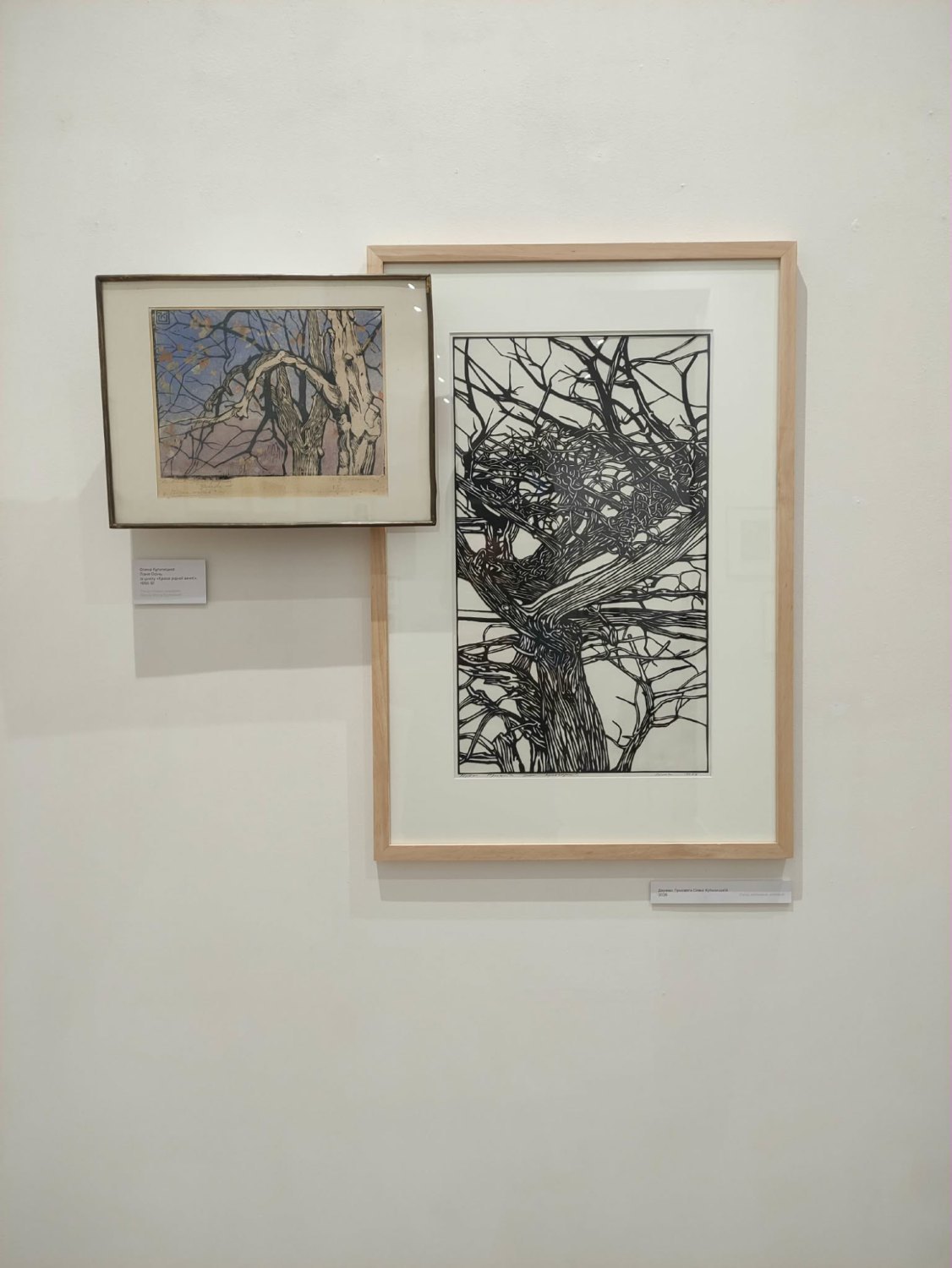
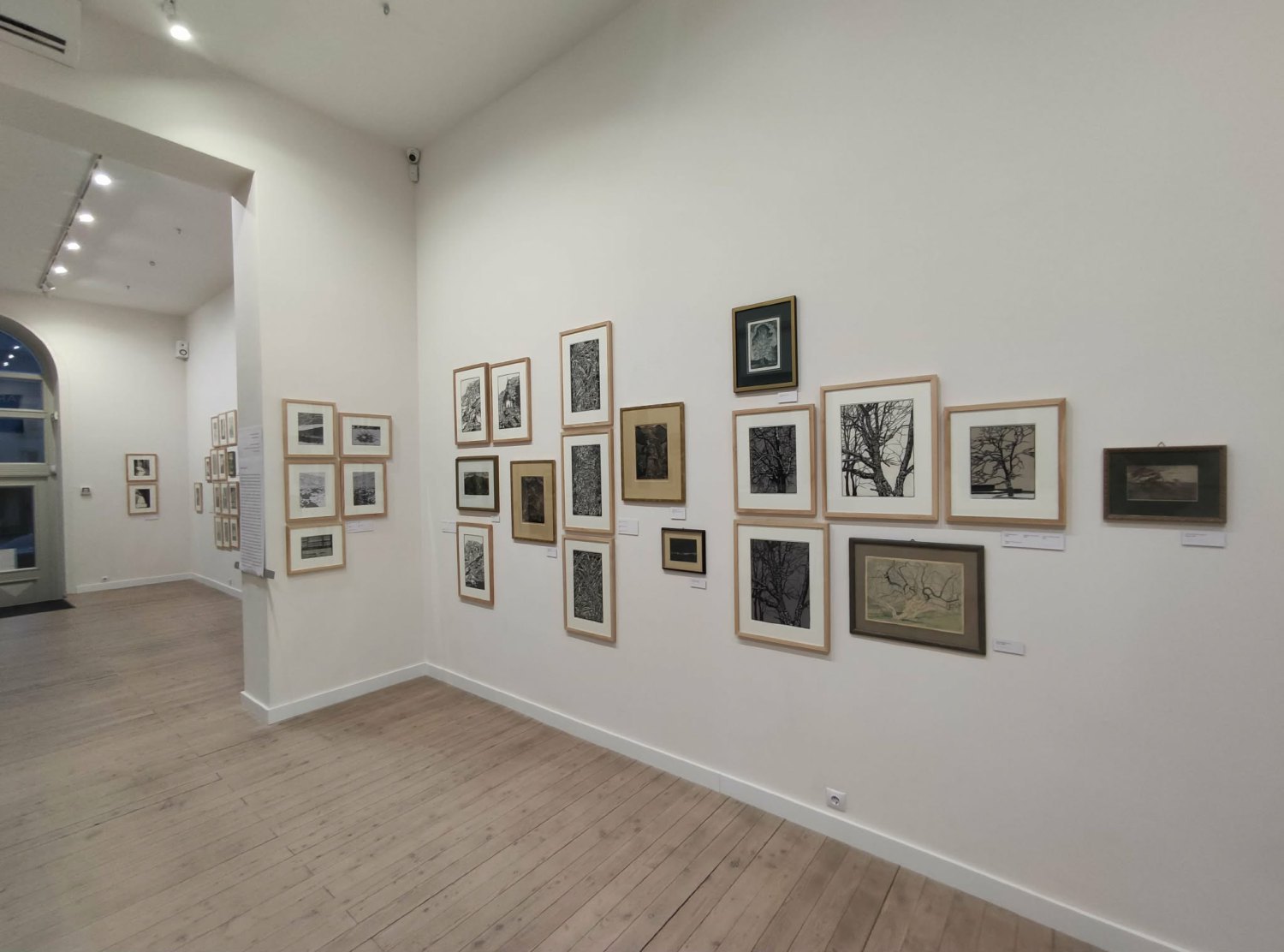
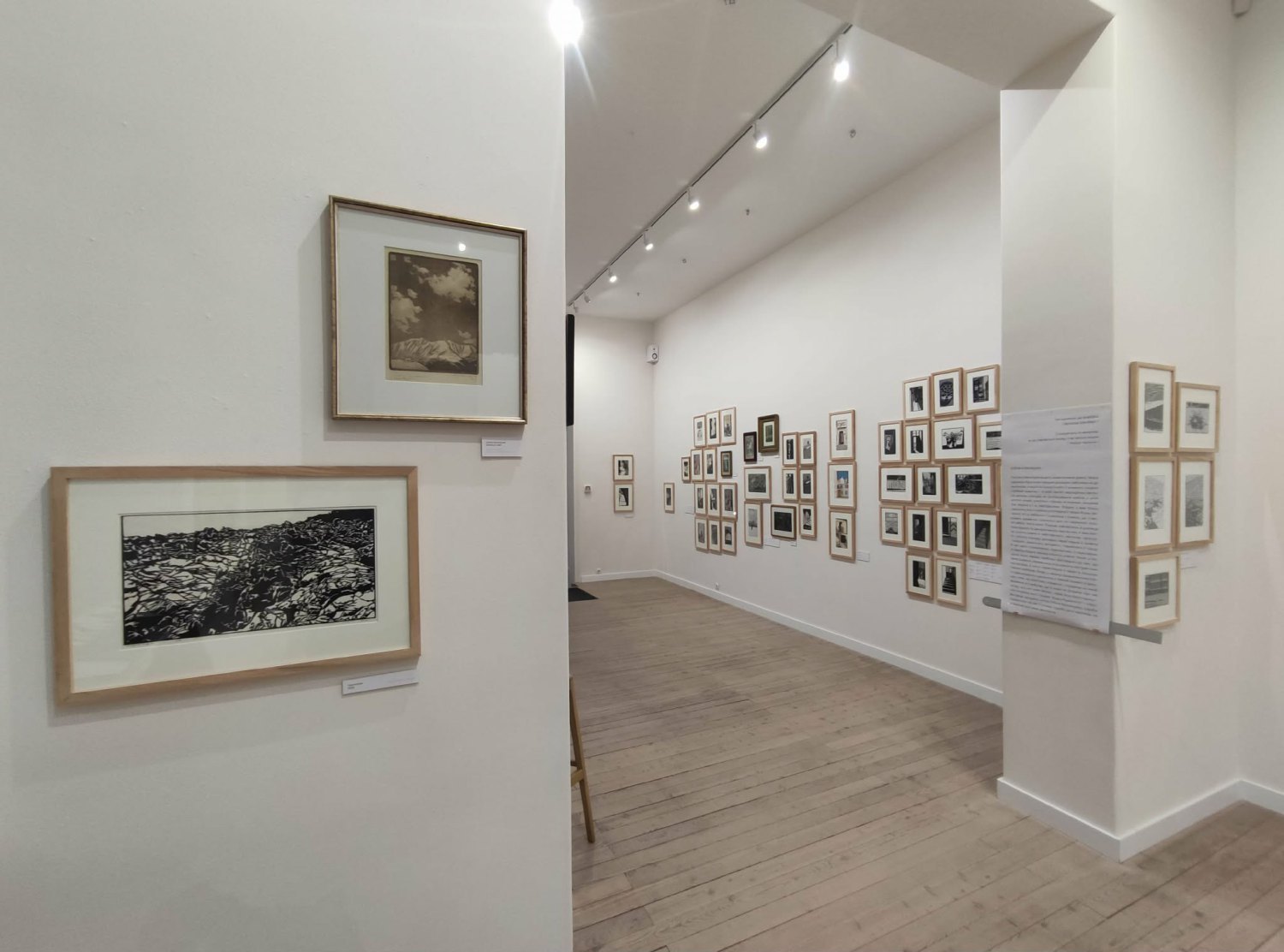
A major discovery about myself was that, when you try to understand someone’s method — more than that, when you try to enter into it, to see the world through the eyes of the person who used it — you can also work within it. The biggest surprise was that, after 30 years of working in abstract art, I suddenly began creating mimetic images. One cannot say that abstract art depicts nothing — it simply does so differently. Realistic images — trees, gates, courtyards (though, according to Kulchytska’s method, not entirely realistic) — turned out to feel very close to me.
Moreover, I began to understand that, since there is a certain continuity between my work and this method, I am also transformed within it. The framework of the method expands; the character of the works changes. What interested me was this moment of identifying with the method and turning it into my own tool. A very engaging experience.
When I looked at these works, it was difficult for me to immediately recognise them as yours — they look quite different. How was it for you to work within this perspective? Was it comfortable?
I was amazed at how easily everything came together. I felt like a fish in water — I had no difficulties at all. I set myself tasks that interested me, solved them, saw further possible directions of development. It was a fascinating process. And I do wonder whether my context — having been familiar since childhood with Kulchytska’s works, whose method I was trying to interpret — made this ease possible.
Was it easy to step out of that state?
I cannot say that I have stepped out of it. I will only be able to say something after I complete the project at Shum Gallery, where both my works and Kulchytska’s will be shown. Distance is needed.
I am always interested in what artists say about the academy. It can be traumatic, melancholic, and everyone has a different experience. Mimetic art seems quite academic to me, since the academy teaches us to imitate nature through composition and drawing. Your turn to Kulchytska’s method appears almost like a return to the academic.
I would not put it that way. Kulchytska had her own synthesised method; she masterfully combined the real and the conventional.
If we look at her work from the perspective of strict academicism, her graphic art — which is what I focus on, as it is closer to me — is actually far removed from it. This stems from her worldview and the ideas she embraced. In the art book, I try to trace this line through concepts such as Stimmung (mood), Kunstwollen (artistic will, the drive towards art), Lebenswende (a turning point in life), and so on.
This kind of approach is often described today as interdisciplinary.
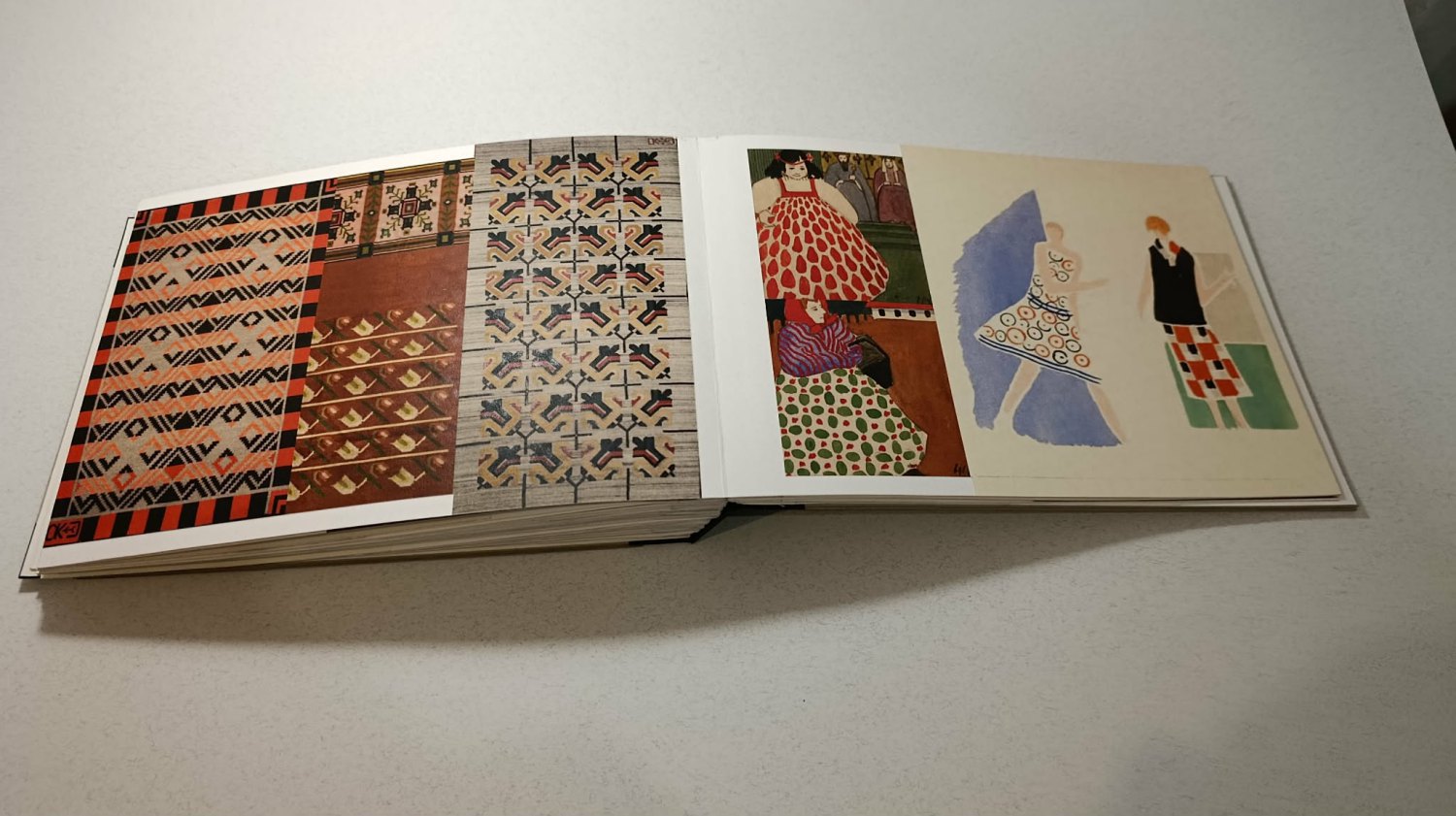
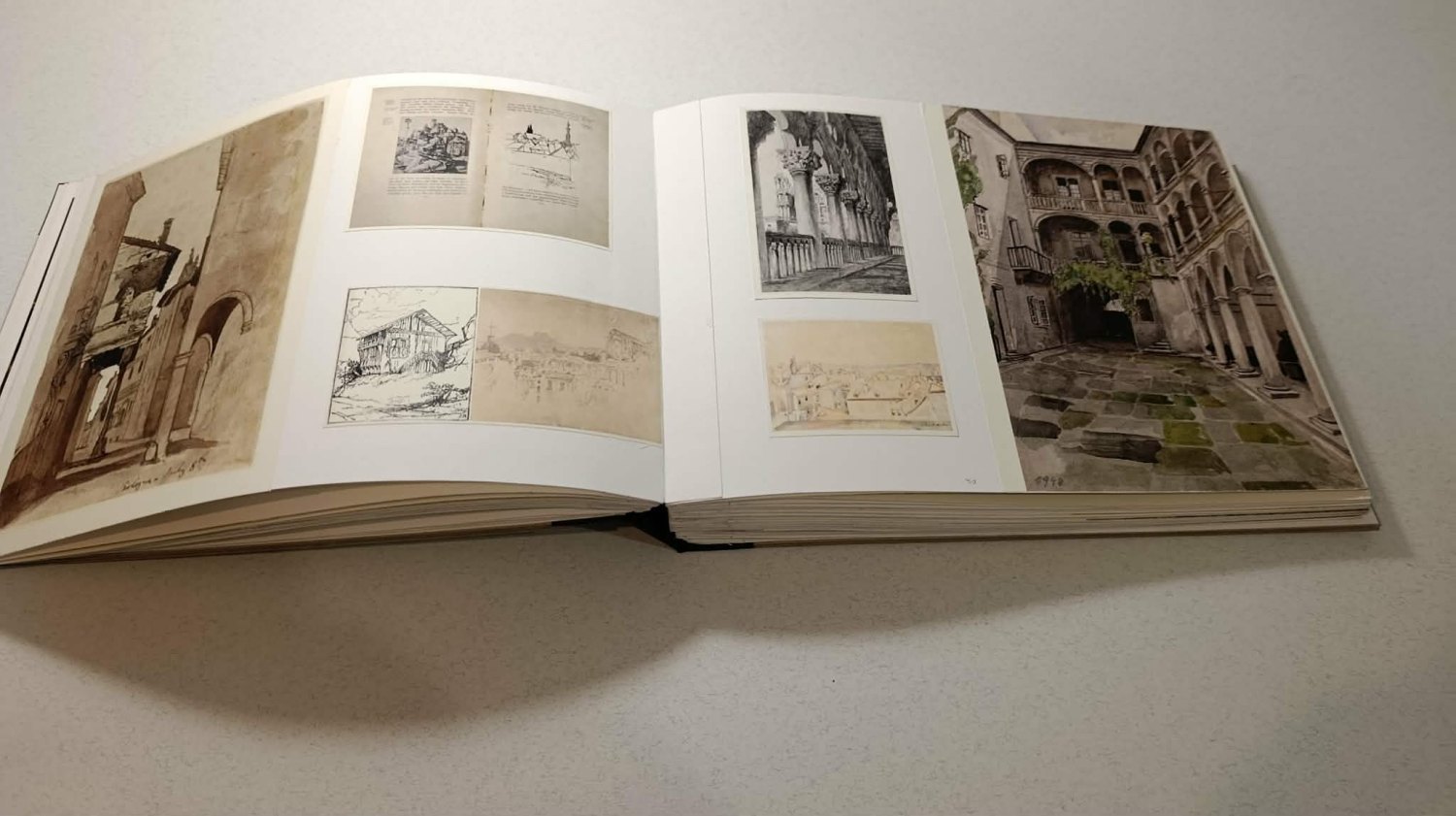
I’m glad you mentioned interdisciplinarity — it was one of the reasons that prompted me to undertake this research. At a certain point, I realised that Kulchytska worked across a wide range of fields: graphic art, painting, carpet design, furniture design, book illustration, architectural studies. It is such a broad spectrum of activity, yet her authorship remains entirely recognisable, and all of it feels coherent.
How so? I came to understand that she had a strong, consistent method, which she applied across all these fields, adapting and modifying it according to the task and the material. It is a very solid foundational core.
What does this method consist of?
She had a clear and structured vision of the process. In her notes To What Extent the Study of Drawing Is a Science of Art, one can clearly trace the principles of her practice — they are quite universal and could be applied to any form of visual activity. An essential skill is observation, something also emphasised by the theorists she cites. She had her own method of observation in order to “see the world”. I particularly like her phrase “to look and to see”.
She applied this way of looking-seeing to everything, projecting her individuality onto all that she did. A strong internal concept.
Did you feel a temporal distance from Kulchytska?
Of course I felt that distance; I was not trying to copy her. Kulchytska herself, when studying artists close to her, did not copy them either. It is a matter of interpretation.
“In the art book, there is an attempt to foreground Kulchytska’s belonging to the artistic context of Central and Eastern Europe”
When you began working within Kulchytska’s method, was that transition unexpected?
Not at all. It felt as if I had simply changed from one pair of slippers into another. Perhaps because, after all, we share the same mentality. Perhaps because my family belonged to the same milieu that Kulchytska once did. The continuity of tradition, upbringing — her way of seeing the world is understandable to me; these were the views of the older generation in my family.
As I understand it, the art book is a montage of Kulchytska’s works with those of other artists, alongside textual parallels between her ideas and those of art theorists.
More precisely, it is a combination of quotations and interpretations. Kulchytska quotes specific authors extensively, so it is interesting to see how she juxtaposes and analyses them. Through the way she constructs these comparisons, we can partially grasp her system of perception. For example, there is a passage where she writes that John Ruskin is an aesthete, whereas Ernst Haeckel is a realist. Through such remarks, we can see her attitude.
This seems like an attempt to reconstruct her way of seeing, including through visual comparisons. Would it then be fair to say that the exhibition is your direct dialogue with her and a form of working within her method?
In the art book, my dialogue with her is an attempt to make visible Olena Kulchytska’s belonging to the artistic context of Central and Eastern Europe, to emphasise the continuity of the European visual tradition in her works. The exhibition, on the other hand, is more of an attempt to understand myself, to visualise my own connection with Olena Kulchytska.
There is an idea that to mention authors is to thank them. It seems that your research on Kulchytska can also be seen as a gesture of gratitude — for her works and perhaps for the experience of growing up alongside them.
While assembling my understanding of her context, I came to better understand my own. A whole chain of cause-and-effect relationships. If her works had not been present in my family and around me, I am not sure this project would have existed. If not for her method — which she continued to use even in Soviet times, carrying forward a European tradition that I was able to grasp and develop further — perhaps I would have been engaged in entirely different art. I am truly grateful. It was incredibly interesting to construct, for myself, a vision of the broader current in which she was also a kind of stream — just as my own practice is now.
Is it like moving from a personal story to a broader context and back again?
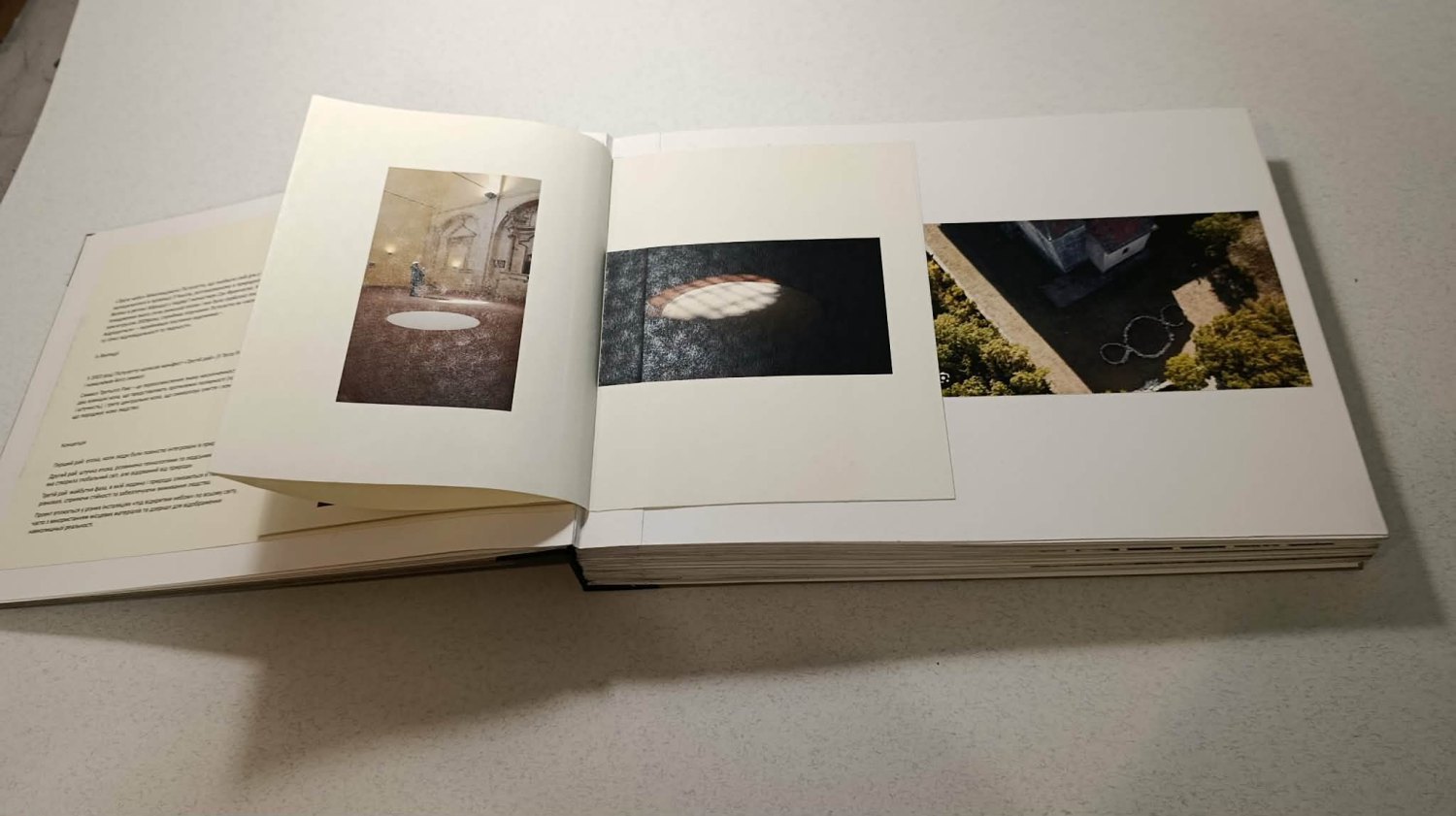
Exactly. The art book begins with the story of how this project came about. The idea came to me in Italy, in front of an installation by Michelangelo Pistoletto — his series The Third Paradise. It is the infinity symbol with an additional circle in the middle. When you stand inside that circle, the past and the future symbolically and endlessly flow through you.
In Pistoletto’s concept of the three paradises, paradise appears as a utopian symbol. Lately, I’ve often found myself reflecting on this idea from different perspectives. For example, when I lived in Kharkiv, the feeling of life there was very intense because of its proximity to the front line; yet at the same time, a kind of harmony and calm could be found in Pavlo Makov’s studio — a space where you could pause and think. When you step outside, it feels like returning to completely different, very ordinary realities. Would it be fair to say that, in this project, paradise also appears for you as a fleeting state of harmony or inner balance that exists alongside reality?
I understand those moments of switching into one’s own reality in the studio very well. When I enter my studio, I switch modes.
At the same time, within this concept of paradise, you write your own story, where you mention many symbolic elements.
The place where Pistoletto created this installation was heavily damaged by an earthquake. The towns were destroyed. The installation is made of stones from a wall ruined by the earthquake, and around it are rocky mountains, a nature reserve. At some point, someone quarried these stones from the mountain and built a wall. Then an earthquake destroyed it. Later, Pistoletto came and arranged those same stones into the symbol of his Third Paradise. Continuity, transformation, change. The infinity symbol with an additional circle inside. Where is my place in all of this? What has influenced me? What can I influence? How does it all interact? These were the questions I was trying to answer.
Is this an attempt to respond to the concept of a utopian paradise? Or to show that such a utopia is impossible?
No, I think for me it is more of a symbol. At the time — and even now — I cannot fully align myself with Pistoletto’s theoretical framework, what he writes about his Third Paradise creates a certain distance for me.
What moved me was the symbol itself, laid out from stones that had such a long and varied history, including entirely utilitarian uses. This utopian symbol was not made from some kind of cosmic dust, but from concrete objects, each with its own history. Each had its place there, then another place here, now it has a place where it is — and no one knows what place it will have next. For me, this once again emphasised the fluidity and constant transformation of everything in the world. The interconnectedness of everything and its perpetual change.
***
Olena Turyanska donated the art book to the Olena Kulchytska Memorial Museum. It was created with the support of the Key Work: Art Grants programme by RIBBON International in partnership with Jam Factory Art Center. The exhibition Beauty of the Everyday at Shum Art Gallery will run until 10 May 2026.
Read alsoArtist Maria Kulikovska: “In the fragile house I am creating, there is an opportunity to regain control over life”
The Territories of Culture project is published in partnership with Persha Pryvatna Brovarnia and is dedicated to exploring the history and transformation of Ukrainian cultural identity.