





A shortfall of 25,000 tonnes per day
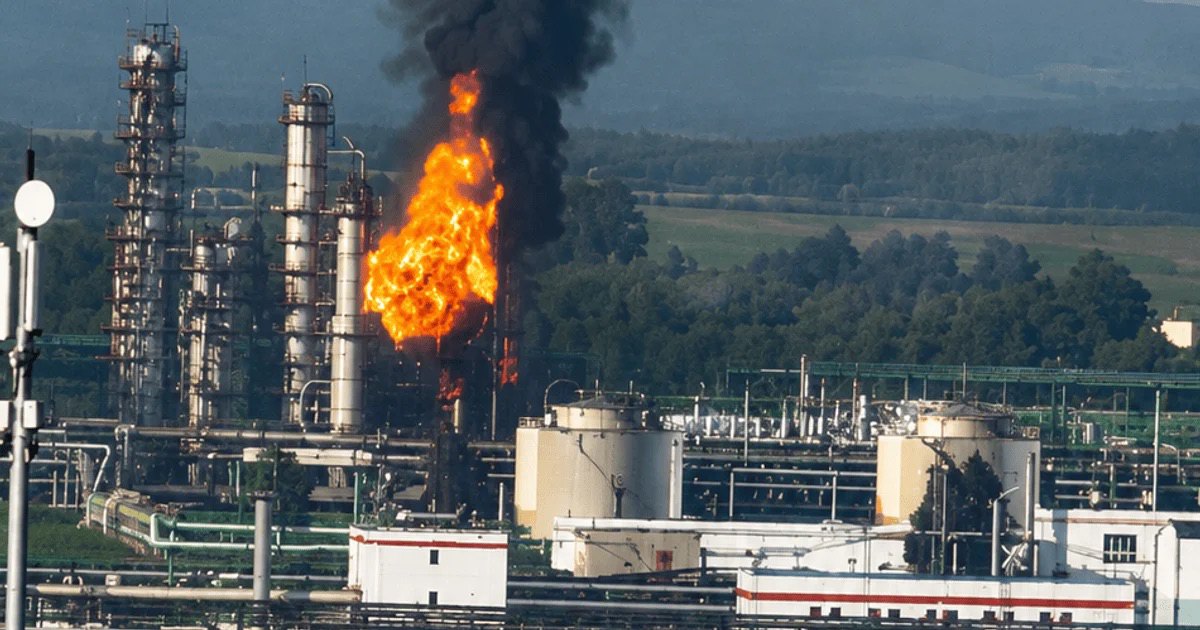
The massive drone campaign in May–June 2026 caused petrol production in the Russian Federation to plummet by at least 25 per cent. Currently, their total oil refining capacity stands at around 85,000 tonnes per day, whilst actual summer demand stands at 110,000 tonnes. This daily shortfall of 25,000 tonnes will systematically drain the remaining reserves of the contingency fuel fund.
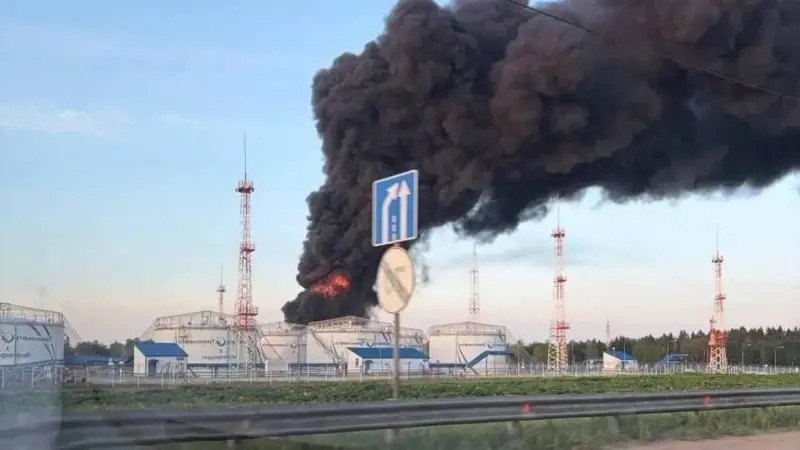
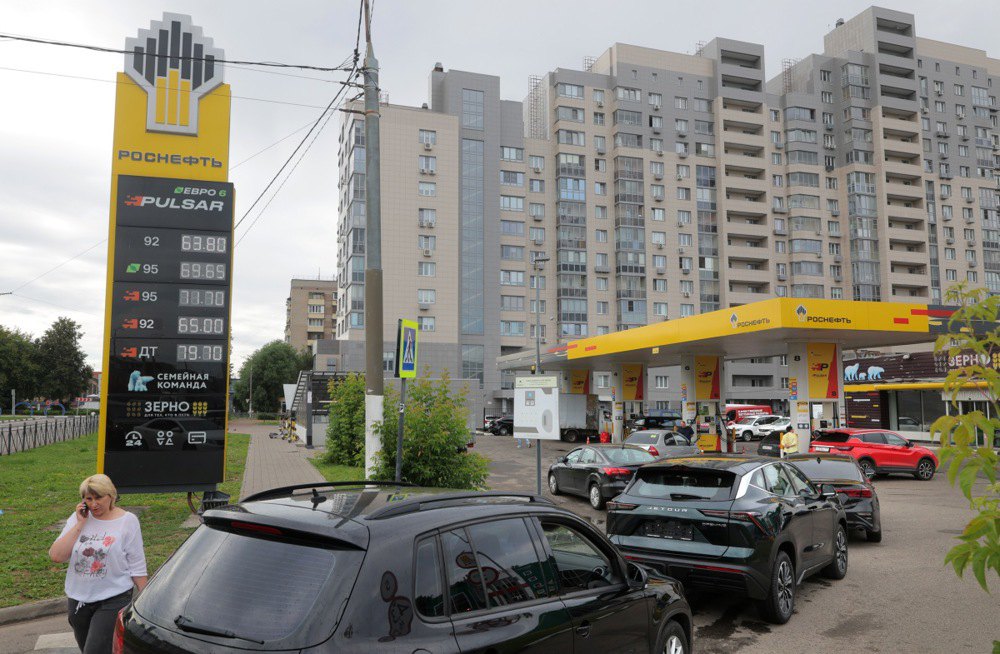
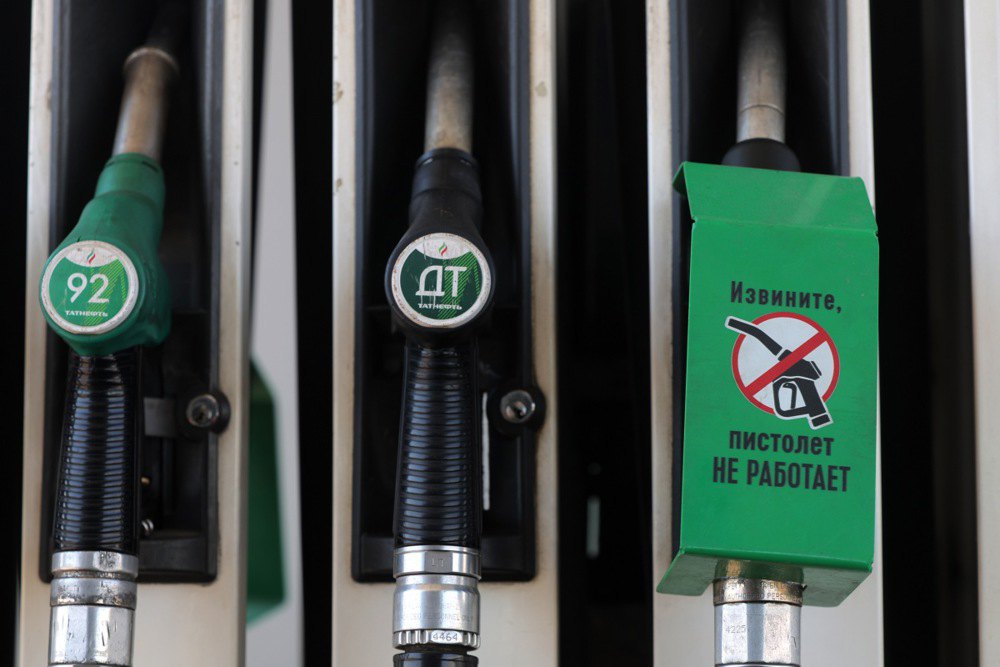
As of late June 2026, official restrictions on fuel sales had already been introduced in 44 regions, while complaints about supply disruptions were being recorded in 85 regions. The problems have spread across the entire territory of Russia. In Leningrad Region and St. Petersburg, disruptions in food deliveries to stores have already been reported, and in Moscow queues have appeared in Rublyovka and at most Rosneft filling stations — an extremely telling marker.
Because in Russia as of 2026, fuel is distributed according to a rigid caste-based priority system:
- the army, the defence industry, and first-tier officials (because ‘USSR 2.0’ won’t build itself);
- security services, Russian Railways, and privileged agroholdings (at the level of Patrushev Jr.);
- million-plus cities (to avoid social unrest and a collapse of the service economy) and the rest of the agricultural sector.
Everyone else gets what’s left.
If the shortage has reached filling stations in the capital’s elite suburbs, it means they can no longer ensure uninterrupted supply even for the third-tier priority (Moscow and the surrounding region). Fuel tankers simply can’t keep up with deliveries from the surviving plants beyond the Urals.
The dominoes are falling
The next clear marker is the large-scale collapse of transport companies. By the end of spring, 30,000 seized vehicles were sitting in leasing companies’ impound lots due to overdue payments, including 15,000 long-haul trucks.
Overall, about 90,000 trucks dropped out of the market last year. Sky-high accident rates (due to a lack of branded spare parts), the inability to service loans at the Central Bank’s punishing interest rates, extortion by the Platon toll system, rising taxes, and a 22% increase in diesel prices have thinned the truck fleet.
About 25% of logistics companies (mostly small and mid-sized businesses) have not formally entered bankruptcy proceedings yet, but they have declared “zero” profit, sent staff on unpaid leave, and are simply waiting to see how things play out.
Prime Minister Mishustin’s decision to allow circulation of ‘Euro-3’ gasoline until the end of the year only adds fuel to the fire. A cut-out catalytic converter is only half the problem; modern injectors and fuel systems will fail en masse on this kind of surrogate. Yet a major engine overhaul for a truck does not exempt anyone from monthly loan payments. The state doesn’t care that in six months thousands of Chinese trucks under lease will need replacement fuel equipment, turbines, and cylinders costing millions of rubles. For the defence industry they are consumables, just like the mobilised. The engine overhaul is on you — and either keep paying the lease or hand the vehicle over to the impound lot
August peak ahead
Emergency imports of 60,000 tonnes of fuel from India and at least 70,000 tonnes from Belarus are a cry for help. No one burns scarce hard currency ($50–70 million for a large shipment plus gold-plated logistics) if they can simply shut off the tap on domestic exports. But the main test lies ahead — in August–September, when the vacation season, the harvest, and active combat operations all converge. Current import volumes amount to fuel for literally just a few days of peak consumption.
During this period, domestic diesel consumption jumps from a baseline 3.5 million to 4.2–4.5 million tonnes per month. In daily terms, that is 135,000–150,000 tonnes of diesel. Two brutal factors overlap: the mass harvest campaign (farmers scoop everything out dry) and the active phase of the “northern delivery” (emergency shipments of fuel to Arctic regions before the ice sets in).
In neighboring Kazakhstan, a major refinery is down for maintenance, but even if it were operating, they have nothing with which to cover a quarter of the Russian market. Creating an operational stockpile, as was usually done in spring, through imports is physically impossible. It is precisely this summer gasoline gap (minus 25,000 tonnes daily) and the August diesel surge that completely burn through the “stash” at fuel depots, since they were never allowed to build reserves.
Moscow’s transport blood clot
Given that the strategic Kstovo refinery caught fire again (where drones knocked out the key primary processing unit AVT-6), the Moscow refinery has been completely knocked out of the chain due to heavy repairs until early 2027, and the Yaroslavl plant (Slavneft-YANOS) has been hit by several waves — the entire Moscow fuel hub is now critically dependent on rail.
And Russian Railways itself is already stretched thin between:
- queues in Rublyovka;
- filling stations in Saratov, Volgograd, and Krasnodar, where fuel is issued strictly on official IDs to government officials and security personnel;
- a four-kilometer queue of 800 vehicles at a filling station in Zabaykalskiy Krai, where tank cars simply do not make it.
At the same time, strikes on the Slavyansk refinery in Krasnodar Krai have pushed the local shortage in the South and in occupied Crimea to the limit — reports are coming in that Novorossiysk has run dry of fuel.
Novorossiysk is the largest export oil hub in southern Russia. If fuel disappears in a port city where pipelines converge, it means the tanks at pumping stations and at bulk terminal bases have been drained to the bottom.
Civilian farmers there are openly being refused diesel shipments, because all rail and fuel-depot capacity has been allocated to supplying the occupation grouping Dnipro and what remains of the Black Sea Fleet.
Will Russians be able to restore the plants by autumn? Obviously not. So in August–September, the fuel hammer will hit them with maximum destructive force.
A shortfall of 35 billion dollars
All of this is unfolding against the backdrop of a full-blown financial storm. Russia’s federal budget deficit already exceeds the liquid portion of the National Wealth Fund (NWF) by a factor of two — and that is even before the full impact of the Urals price drop to $40–42.
Add to this a 5–7% decline in rail load. Each percentage point of that decline is a net loss of 30–40 billion rubles in revenue for the Russian Railways monopoly. Because of the logistics “blood clot,” with civilian cargo sitting in sidings for months, Russian steelmakers and coal producers have already lost about $2 billion in export revenue because they physically could not get raw materials to ports.
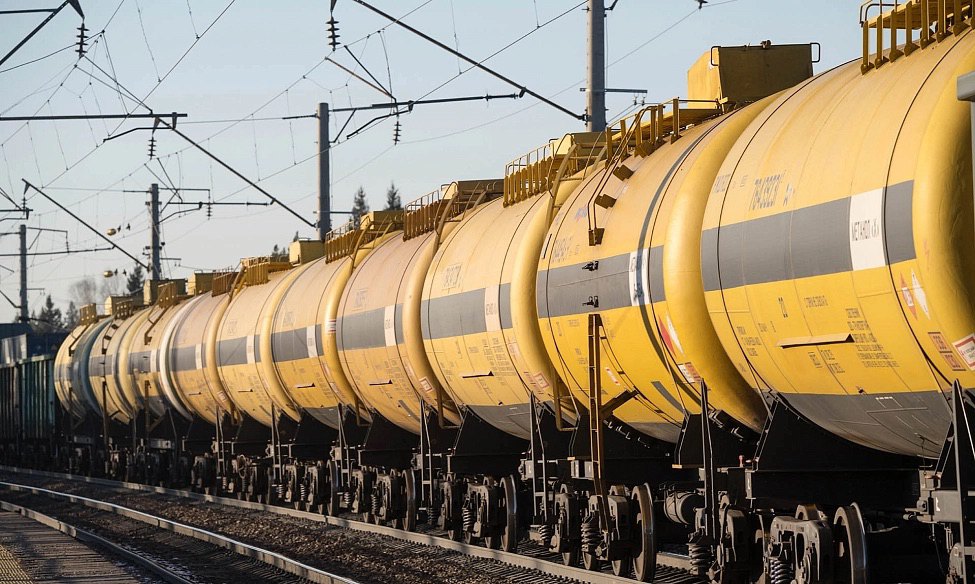
When logistics costs rise by 20%, it automatically becomes a “fuel tax” on any product. A bottle of milk in, say, St. Petersburg gets more expensive not because the cow started eating more, but because the truck carrying that milk spent three days scraping together surrogate fuel at filling stations or sitting in line. Russia’s economy is taking a classic stagflation hit: fuel shortages push prices up, while real output falls due to downtime.
And the cherry on top is a banking liquidity crisis that is rapidly gaining momentum. For the fifth month in a row, the volume of cash in the system has been rising abnormally (as of May, +18% year-on-year). Against the backdrop of panic, queues at filling stations, mobile internet shutdowns, and local disruptions even in basic products like milk, Russians are frantically pulling money out of their accounts. In a single week of such panic, up to a billion dollars’ worth in equivalent “floats” under mattresses.
Overall bottom line
If you add up the direct budget losses from falling global oil prices, the foregone gains from reduced exports of petroleum products, the critical rise in domestic logistics costs, and the colossal expenses for emergency fuel imports, the total monetary equivalent of Russia’s fuel-and-energy crisis in the first half of 2026 confidently breaks the $30–35 billion mark in net losses. That is effectively the annual budget of their entire “defense-industrial complex development” program.
In other words, by continuing the war, Russia has burned through, in monetary terms, as much in a few months as the Kremlin invests in tank and missile production plants in a year.
The goal of the UAF campaign was to force Russia to burn through its operational rear-area fuel reserves and to knock out storage capacity before the critical autumn peak. This stage is complete — the safety cushion has been burned. The set is in place, the gun in the first act is loaded. Now we wait for the shot in August.