





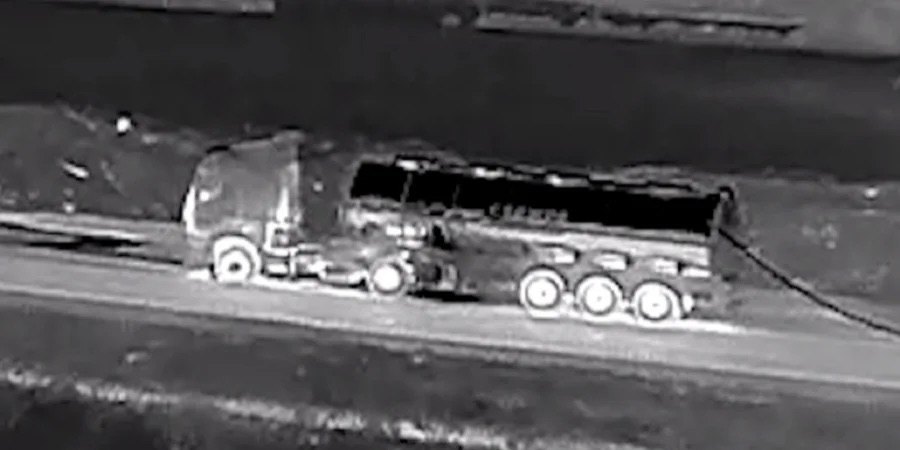
The so-called ‘showcase of the Russian world’ is now turning into a black hole for resources. There are no longer any guarantees that military or commercial vehicles will successfully traverse the notorious ‘Novorossiya route’ (R-280). The land corridor is not infinitely flexible. Rail transport reaches only as far as Kerch, as any further journey would almost certainly risk the loss of a scarce locomotive.
The bridges across Perekop have not been completely destroyed, but they are regularly struck, with sections of the roadbed damaged. Earthen embankments cannot be rebuilt quickly, and the heavy machinery and engineering teams deployed for repairs may themselves become targets for Ukrainian UAVs.
All of this creates classic bottlenecks: queues stretching for many kilometres, overnight waits for heavy goods vehicles, and delays at pontoon crossings, where Ukrainian drones can operate with relative freedom. Fuel tankers accumulate in Chaplynka and Armyansk, while reports of lorries being set alight have become routine. Logistics now functions like a game of Russian roulette, with no certainty that supplies urgently required will actually reach their destination.
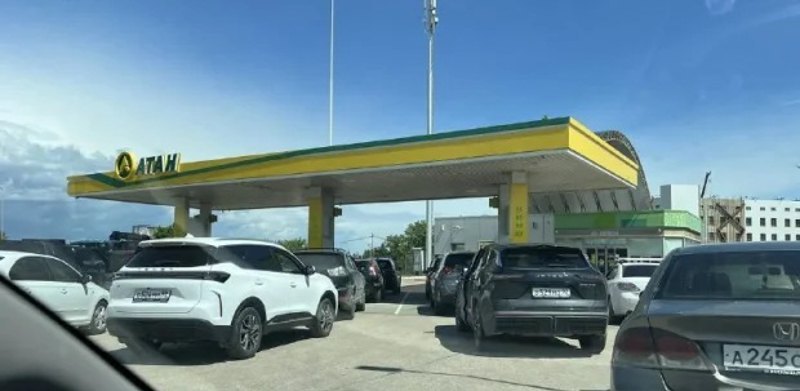
The numerous restrictions on public transport and street lighting, reduced opening hours for shopping centres, the complete suspension of petrol sales to civilians, the halt in tourist bookings and accommodation services, the cancellation of ferry operations, and the regular power outages and scheduled blackouts in Sevastopol are not merely temporary inconveniences. They are indicators of a deep structural crisis. The primary objective is not simply to make life on the peninsula more difficult for the Russian occupiers, although that may be an additional consequence. Rather, it is to divert as many Russian resources as possible away from the front line and force Moscow to bear the burden of sustaining Crimea for as long as possible and at ever-increasing cost.
‘Artek’ (an international children's center — Ed.) is effectively off the cards for now. Children can no longer be sent there on holiday, leaving the occupying administration with a choice: either expend scarce resources to maintain the illusion of normal civilian life or pay compensation. Train services are currently suspended, and airports in southern Russia have long since ceased operations. All of this reflects the true cost of war. Power outages are causing catastrophic losses in the HoReCa sector, with tonnes of food spoiling in refrigeration units, bookings being cancelled, and the tourist season effectively collapsing.
Against the backdrop of strict petrol rationing and public transport operating on rigid schedules in the rear, it is difficult to imagine that Russian garrisons near Stepnogorsk and Mala Tokmachka are enjoying an abundance of resources. This is particularly true following the strike on the bridge in Vasylivka. The repeated repairs required for destroyed fuel storage facilities, thermal power plants, gas storage sites and ferries are consuming money, construction materials and skilled labour at an alarming rate, diverting them from priority tasks on the front line.
Meanwhile, enormous queues of tourists — along with those who once assumed that a brief and distant military operation would never affect their lives but are now rushing back to the Russian Federation — have brought traffic on the Crimean Bridge to a standstill. All rail ferries have been withdrawn from service, and the Ukrainian Defence Forces have now shifted their focus to road ferries. In doing so, they have effectively exploited Russian concerns over the security of one of the Kremlin’s most symbolic infrastructure projects. Following a series of successful sabotage operations, a strict ban on the movement of lorries and fuel tankers across the bridge remains in place. The occupiers fear the consequences of a fuel tanker exploding directly on the bridge spans. As a result, fuel and cargo have been transported exclusively by sea.
Now even this limited supply route is beginning to dry up. The sinking of ferries — most notably the Panagia — and the suspension of lorry transhipment operations point to an inevitable worsening of the crisis within a matter of weeks. The result will be a minimum 500-kilometre extension of supply routes around the Sea of Azov. This will increase wear and tear on thousands of lorries, place additional pressure on mobile fire support and air defence units along the route, require constant vehicle repairs, and lead to further losses of personnel and equipment during transit.
At the same time, the Special Operations Forces have successfully struck four gas compressor stations in Zhuravlivka, Aromatne, Klyuchy and Lokhivka. Severe fires and dense smoke have been reported at all four sites. The logic behind these strikes is straightforward. The Tavriyska thermal power plant operates primarily on natural gas and relies on diesel fuel as an emergency backup. Given the increasingly critical diesel shortage in Crimea, attention has now shifted to the gas supply network. On the night of 20 June, the thermal power plant in Simferopol itself was struck. A fuel storage tank was destroyed, and several key facilities sustained direct hits. Damage to the turbine hall or the turbines themselves would have particularly serious consequences. Russia originally acquired these Siemens turbines through grey-market procurement schemes, and repairing them under current sanctions would be both extremely costly and time-consuming. Should the peninsula’s core power generation capacity fail, military bases, headquarters and industrial facilities would be forced to rely on diesel generators, accelerating fuel consumption and deepening the crisis still further. It is a self-reinforcing cycle.
Read alsoRussia’s oil paralysis: why today's crisis is omly a warm-up for a disaster
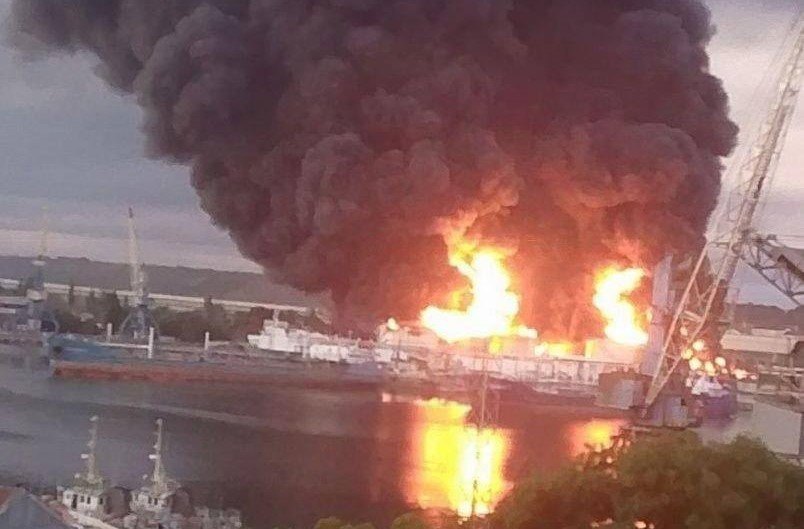
Fuel infrastructure has also come under sustained pressure. The TES-1 oil terminal in Kerch, the principal hub where fuel oil and refined petroleum products were unloaded and distributed across the peninsula by rail, was engulfed by fire. At least four of its seven storage tanks are believed to have been completely destroyed, although the full extent of the damage will only become clear once satellite imagery is available following the dissipation of smoke and fire. Even the loss of four fully loaded tanks represents direct losses worth an estimated $20 million in petroleum products alone, excluding the cost of rebuilding the damaged infrastructure. The village of Chushka and the oil terminal at the Port of Kavkaz were also targeted. As a result, the TES petrol station network on the peninsula is reportedly operating solely to supply emergency services.
The list of priority targets also included purely military facilities, among them radar stations supporting long-range air defence systems such as the Nebo-U and Kasta-2E2, Pantsir systems, the FSB headquarters in Armyansk, and the railway battalion (military unit 98546) in Kerch. The strikes on the latter were strategically significant in their own right. This engineering unit is responsible for repairing railway infrastructure damaged by air strikes. If the battalion’s operational capabilities are degraded, subsequent attacks on railway lines are likely to have a more substantial impact on logistics. As for air defence, the destruction of radar systems — representing more than $350 million worth of equipment — has significantly reduced the Russia’s situational awareness and restricted its ability to manoeuvre forces. The air defence network is increasingly forced to concentrate on protecting its own assets, key airfields and command centres, leaving growing gaps in the coverage of critical infrastructure.
Conclusion: we are witnessing a deliberate logistical breakdown and the rapid degradation of Crimea as the principal rear base for the invading army. The numerous repair facilities, depots and motor transport battalions operating on the peninsula are consuming ever greater quantities of fuel at a time when power shortages are already placing additional strain on resources. The bridge leading to the Crimean Titan plant in Armyansk has been struck, the facility itself has recently come under attack from multiple combat units, and the bridges on the Perekop axis remain under constant fire.
In effect, the Ukrainian Defence Forces are methodically fragmenting the peninsula into isolated logistical clusters and systematically targeting them one by one. This approach places increasing pressure on Russian air defence systems, whilst drone operations alternate between attacking the enemy’s ‘eyes’ (radar stations), its firepower (air defence systems), and its critical infrastructure.
This is the central strategic concept underpinning the summer campaign. Crimea is no longer a military asset for the occupiers; it is becoming a costly liability with a diminishing strategic return. Politically, the Kremlin cannot afford to relinquish it, yet logistically it is becoming increasingly difficult to sustain.
Every tonne of diesel consumed by generators supplying military facilities in blackout-affected Sevastopol is a tonne of fuel unavailable to armoured units on the Zaporizhzhya front. Every engineer from the heavily damaged railway battalion in Kerch who is occupied with repairing railway lines and fuel storage facilities is one less specialist available for the construction of defensive fortifications on the mainland. Billions of roubles and thousands of man-hours are being expended simply to preserve the basic functionality of the peninsula’s military infrastructure.
As a result, Crimea is being transformed from the oft-cited ‘unsinkable aircraft carrier’ into a logistical burden. The Defence Forces have drawn the occupiers into a war of attrition in which the cost of sustaining the rear is increasingly approaching — and in some cases exceeding — the cost of maintaining frontline operations. The longer Russia is forced to carry this burden, the more rapidly its operational resilience in southern Ukraine is likely to erode.