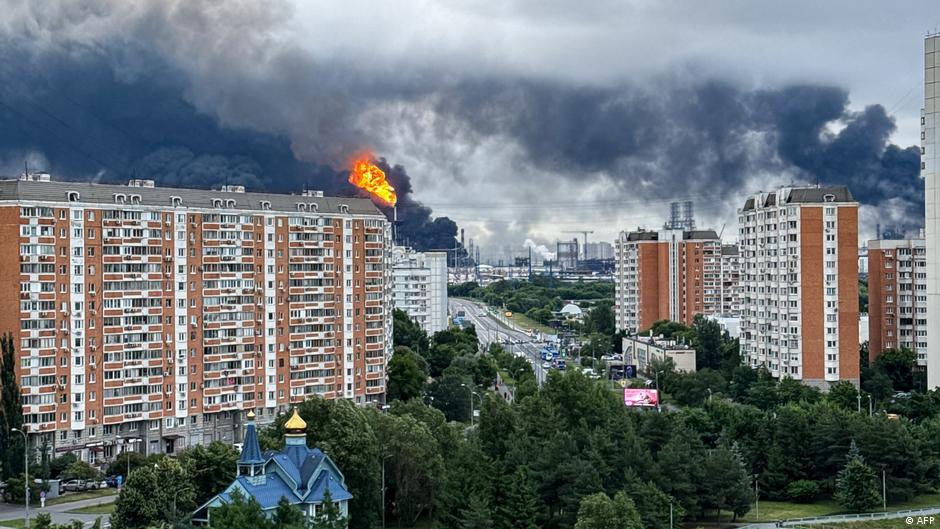





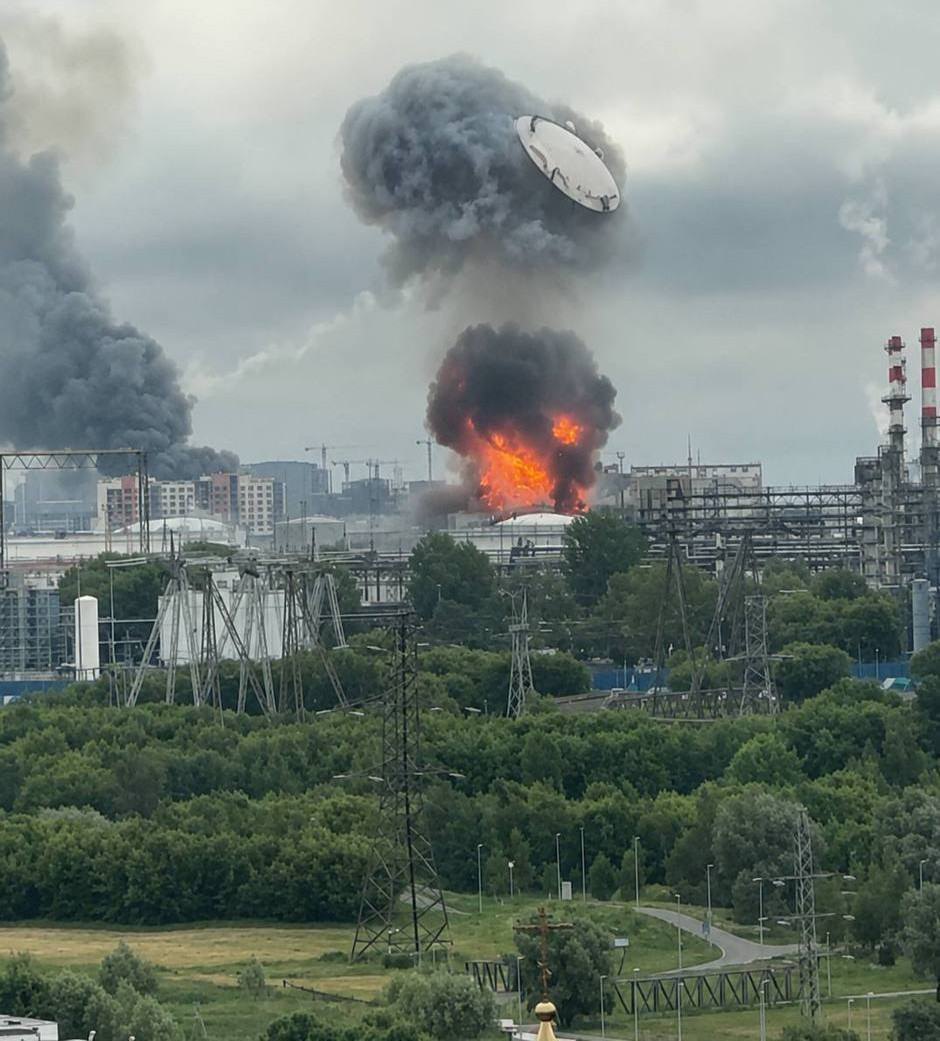
This was not a media stunt, not a TikTok-style strike, and not a spontaneous response to another attack on a film studio or a monastery. Against the backdrop of a genuine fuel crisis in Russia, Ukraine carried out a second, surgically precise strike on the Kapotnya oil refinery. While firefighters struggled to cool adjacent storage tanks and global media outlets circulated images of oil smoke clouds over the Kremlin, all repair work at the facility reportedly came to a complete halt. Moscow now faces a dilemma: fuel supplies and protection must be prioritised for the military and the capital itself, while Russian regions increasingly face shortages of petrol and diesel.
Anatomy of a finishing blow
The most striking aspect of the Moscow refinery story is the timing. Before the latest attack, the facility was already offline. On 16 June, Ukrainian drones struck the refinery and reportedly disabled the ELOU-AVT-6 primary oil-processing unit, forcing the plant into shutdown for the second time since early May, when Moscow was targeted by a large-scale wave of more than 120 long-range drones. Targeting of this facility dates back to 2024, but systematic efforts to neutralise it intensified this spring.
The refinery ceased operations (a development noted by Reuters) yet Russian authorities appeared to believe the damage was manageable. Additional air-defence systems were reportedly deployed, upgraded Pantsir systems were placed on specialised towers, and repair crews were rushed in to inspect pipelines and restore damaged infrastructure.
It was precisely at this moment — when the facility was at its most vulnerable and effectively immobilised by repair work — that a second, much larger wave of attacks followed. In military terms, it was a classic follow-up strike designed to hit a target already weakened and struggling to recover.
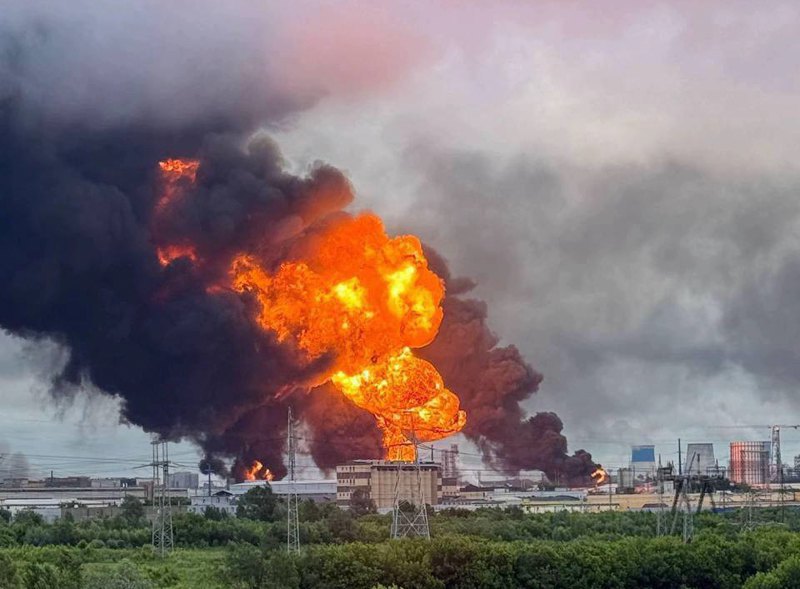
Yesterday’s drone swarm reportedly targeted secondary processing units, integrated refining facilities, and fuel storage tanks, with five major fires recorded. In practical terms, if operators had hoped to rely on existing fuel stocks and secondary processing capacity while repairing the primary refining unit damaged on 16 June, those options have now also been severely affected. The attack is said to have damaged both fuel reserves and sophisticated equipment used for deep refining processes.
The vulnerability of Moscow’s air-defence shield
A unique art form is the breach of the Moscow security establishment by piston-powered drones. Allowing such a swarm to reach a permanent strategic facility 15 kilometres from the Kremlin – which was already on high alert following the first attack – spells the end for the entire air defence system. Russian developers of ‘Pantsir’ variants designed to combat UAVs might as well throw away their degrees. Officially, there are no longer any safe places in the Russian Federation (until they invest billions in the scarce interceptor drones). Perhaps the Far East is an exception, but even there, if necessary, a lorry with dismantled UAVs in its trailer could reach the area.
And now the key question for their economy is: how do they fix this? Even if they urgently find imported components that are subject to sanctions (and you’d have to search for them across all the bombed-out factories in the European part of Russia) — that’s only half the problem. It is far more difficult to find a scarce team of high-altitude welders who would agree to climb onto a high-pressure column, fully aware that the plant has become a regular target from which no interception systems can protect it.
Read alsoRussia’s oil paralysis: why today's crisis is omly a warm-up for a disaster
Of course, if Ukraine had Taurus or Tomahawk missiles equipped with conventional 500-kg warheads, very little would remain of facilities such as Kapotnya beyond a crater. Western restrictions have limited the speed with which such targets can be neutralised. However, the current reality, according to this assessment, is that even relatively inexpensive piston-engine drones carrying around 100 kg of explosives are imposing significant costs on Russia’s economy. Ukraine is making maximum use of the tools available to it.
Economic calculation: the ripple effect
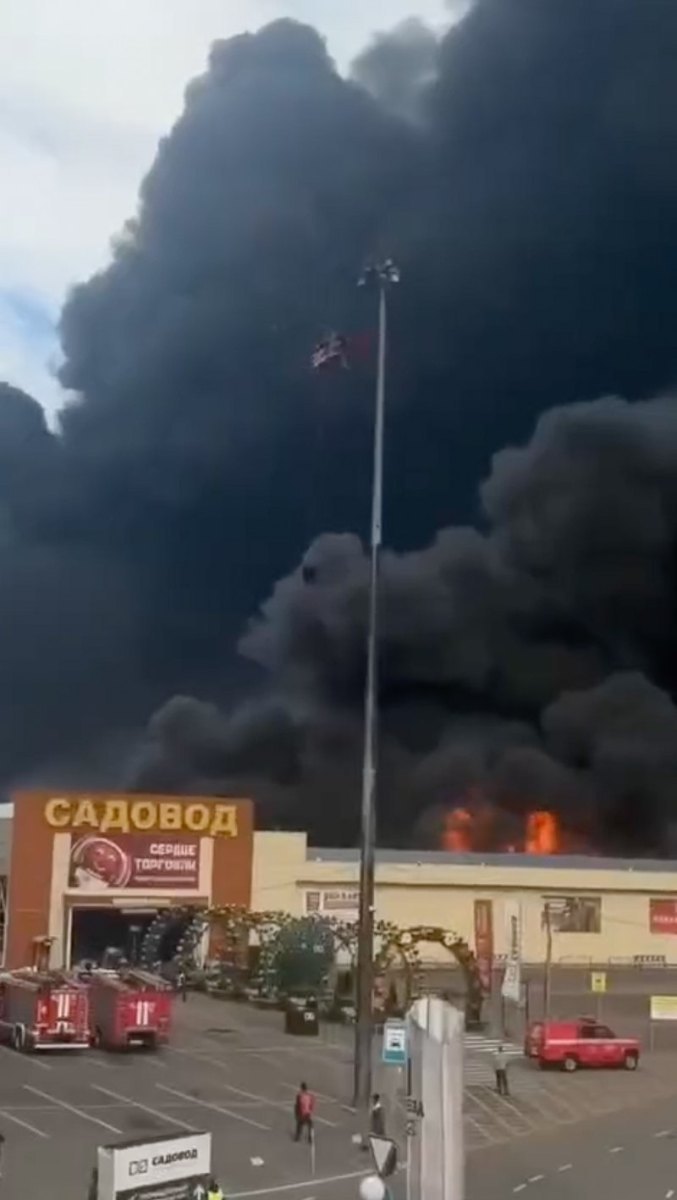
The broader objective remains the same: to create sustained pressure on Russia’s fuel supply system by targeting critical bottlenecks. Direct losses — whether from hundreds of cancelled flights under the “Carpet” aviation security plan or damage to commercial facilities such as the Sadovod market — are considered secondary effects. The primary goal is to strike infrastructure whose disruption produces long-lasting ripple effects across logistics networks and the wider economy.
The economic calculations are substantial.
Loss of revenue. Kapotnya reportedly processed around 30,000 tonnes of crude oil per day into high-octane petrol, diesel fuel, and aviation kerosene. At wholesale prices, that represents product output worth an estimated $15–20 million per day. A month-long shutdown could therefore remove roughly half a billion dollars from the turnover of the refinery’s operator, and any extended outage would further increase those losses.
Logistical bottlenecks. With Kapotnya out of operation, a significant share of fuel consumed by the Moscow metropolitan area must be transported from elsewhere. Supplies would need to be redirected from refineries in regions such as Ryazan, Yaroslavl, or Nizhny Novgorod — facilities that have themselves faced disruptions in recent years. This increases pressure on Russia’s railway system, requiring additional tanker wagons, higher transport costs, and longer delivery times. As a result, the cost of supplying fuel to Moscow rises across the board.

Main conclusion
The dual strike on Kapotnya ultimately undermines the internal stability of Russia’s system. The Kremlin is being pushed into a difficult macroeconomic dilemma: in attempting to alleviate fuel shortages in the capital while simultaneously ensuring supplies for military forces, it will be forced to draw resources away from the regions. Regional fuel stations will come under increasing strain, logistics costs across Russia will rise, and the government will have to spend billions of federal rubles in subsidies to prevent broader social unrest.
By disabling key oil-refining nodes, Ukraine temporarily disrupts the supply chain and deepens shortages across the regions. At the same time, it effectively removes critical parts of Russia’s economic infrastructure, forcing the system to consume itself internally and pay an increasingly high price for each additional day of operation. This is a summer they are likely to remember for a long time.