






Maradona, Fellini, The Talking Heads
Paolo Sorrentino was born in Naples in 1970. Until the age of 16, he enjoyed a happy and carefree life in a large, loving and prosperous family. Everything changed in 1986, when his parents died from carbon monoxide poisoning at their mountain cottage. Paolo was supposed to be there as well, but chose to stay behind to watch Diego Maradona play football. The Argentine star had recently moved from Barcelona to Napoli, the club in Sorrentino’s hometown. The director still believes that Maradona saved his life, a sentiment he explores in the semi-autobiographical film The Hand of God (2021).
Initially, Sorrentino attempted to follow in his father’s footsteps by studying economics and business. However, he soon realised that, apart from attending football matches, filmmaking was the only pursuit that truly interested him.
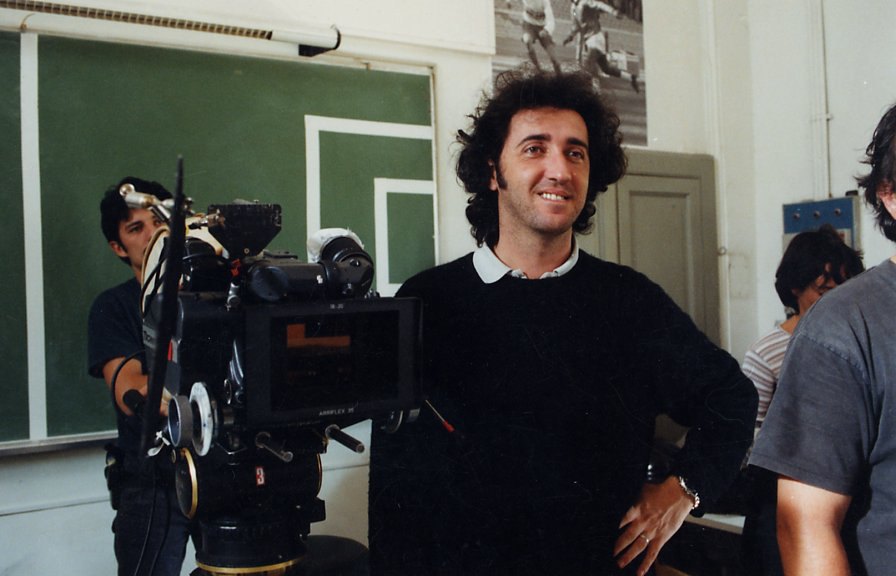
It was 1991, and Italian cinema was in a dire state. During the early 1980s, mass television production had overtaken many traditional Italian film genres, including giallo (thriller-horror) and poliziotteschi (hard-hitting police action films), effectively crippling the domestic film industry. Incidentally, former Italian Prime Minister and media magnate Silvio Berlusconi profited considerably from this transformation. Sorrentino would later devote a film to him — Silvio (2018). At the time, however, the aspiring filmmaker worked on numerous productions in virtually every role except that of director, whilst preparing his first short film, which he was only able to complete in 1998.
The 2000s proved far more successful. As the Italian film industry began to recover, Sorrentino directed one film after another, steadily refining his style. By the second half of the decade, he had become a recognised figure in Italian cinema, although international acclaim still eluded him.
That changed in 2013 with the release of The Great Beauty, which earned Sorrentino an Academy Award, a Golden Globe and several European Film Awards. Whilst critics initially compared him to Pier Paolo Pasolini and later to Luchino Visconti, The Great Beauty confirmed that Federico Fellini had been the most significant influence on his work. Sorrentino has never concealed this influence. From Fellini, he inherited a fascination with eccentric characters, grotesquely staged scenes, visually sumptuous imagery, and a constant interplay between existential reflections on the meaning of life and elements of magical realism.
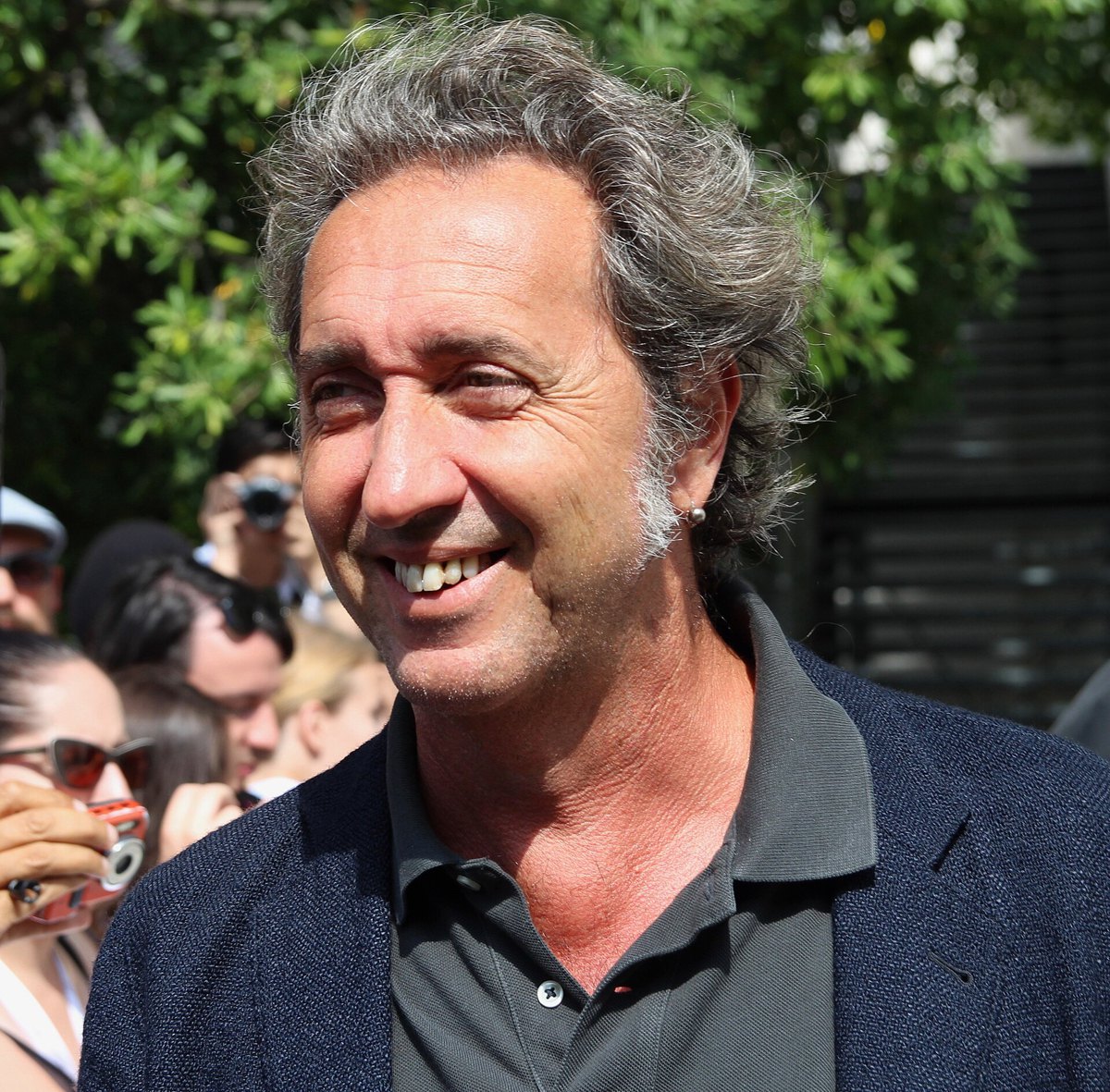
Yet whilst Fellini emerged from the tradition of Italian auteur cinema, Sorrentino is unmistakably a postmodern filmmaker. When discussing his influences, he consistently cites Fellini, Maradona and the band Talking Heads. Lead singer David Byrne even performed the song ‘This Must Be the Place’ in Sorrentino’s film This Must Be the Place (2011). The director’s postmodern sensibility is perhaps most vividly displayed in the series The Young Pope (2016). In one memorable scene, the head of the Roman Catholic Church selects his attire to the soundtrack of LMFAO’s ‘I’m Sexy and I Know It’, whilst the Vatican Secretary of State requests that God’s name not be taken in vain during a discussion about Diego Maradona.
The Great Beauty: Roman twilight
The Great Beauty cemented Sorrentino’s status as a world-renowned filmmaker and established him as the leading figure of contemporary Italian cinema. The film’s plot deliberately echoes Federico Fellini’s La Dolce Vita. In Fellini’s masterpiece, the protagonist, Marcello Rubini (Marcello Mastroianni), is a young bohemian journalist living amid the splendour of Rome whilst dreaming of writing a novel. In Sorrentino’s film, the protagonist, Jep Gambardella (played by the director’s long-time collaborator Toni Servillo, who has appeared in many of his films), is an ageing bohemian journalist and writer who has produced only a single novel in his lifetime. Sorrentino appears to be engaging in a dialogue with Fellini, presenting a story that suggests literary success alone would not have brought fulfilment to Mastroianni’s character.
The Great Beauty opens with a scene in which an Asian tourist faints at the overwhelming beauty of Rome. The city itself is a distinct and vital character in both Fellini’s and Sorrentino’s work. The interplay between Rome’s splendour and decay creates a unique universe where beauty reveals itself at every turn — in the smiles of women, elegant sculptures and landscapes that have endured through millennia of history across the Seven Hills. Throughout the film, Sorrentino uses his protagonist’s journey to explore a central question: what is beauty?
Youth: a cursed friendship
Following the success of The Great Beauty, expectations for Sorrentino’s next project were exceptionally high. The result was Youth, featuring two acclaimed actors, Michael Caine and Harvey Keitel.
The story unfolds at an exclusive Alpine resort in Switzerland. At its centre are two friends in their eighties. Film director Mick, surrounded by a group of young screenwriters, is attempting to create his final masterpiece, whilst composer Fred is struggling with a creative crisis and a strained relationship with his daughter.
In The Great Beauty, dozens of eccentric characters serve to reveal new dimensions of beauty to Servillo’s protagonist. In Youth, Sorrentino employs a similar technique, populating the luxury resort with an even broader gallery of unusual figures, from a famous footballer with a tattoo of Karl Marx covering his entire back — an unmistakable reference to Maradona — to a child prodigy who restores a disillusioned actor’s faith in himself. Each character contributes to the film’s exploration of ageing and lost youth.
Keitel’s character attempts to preserve his youth through constant immersion in youthful company. By contrast, Caine’s character refuses to acknowledge that his greatest problem lies in his rejection of the modern world, which he regards as vulgar and superficial. As the story progresses, their positions gradually reverse. By the end of the film, it is Keitel’s character who remains trapped in the past, whilst Caine’s character comes to recognise the enduring value of the youth he has lost.
La grazia: the price of mercy
After Youth, Sorrentino’s career entered a less successful period. The television series The Young Pope, starring Jude Law, became a major success, but his feature film career appeared to lose momentum. Although Sorrentino remained an internationally recognised filmmaker and a regular presence at major film festivals, he no longer enjoyed the same level of acclaim he had achieved in the mid-2010s. Many critics considered Silvio to be overly long at 156 minutes and largely predictable. Sorrentino later directed the deeply personal The Hand of God for Netflix, but this melancholic and autobiographical work, often compared to Fellini’s Amarcord, also received a mixed critical response. His penultimate feature, Parthenope (2024), attracted similar criticism, with reviewers arguing that Sorrentino’s pursuit of visual perfection came at the expense of narrative development.
In 2025, however, the Venice Film Festival opened with Sorrentino’s latest film, La grazia. The ironic drama stars Toni Servillo as a fictional Italian president approaching the end of his term in office and facing a series of profound moral decisions. He must determine the fate of three decrees. One concerns the legalisation of euthanasia, whilst the other two involve requests for presidential pardons: in one case, a man murdered his wife; in the other, a woman killed her husband.
La grazia embodies many of the qualities that have earned Sorrentino international recognition. The film combines the beauty of Rome with the grotesque spectacle of state ceremonies, recalling the atmosphere of The Great Beauty. President Mariano De Santis, much like Pope Pius XIII in The Young Pope, succumbs to personal weaknesses that seem incompatible with the dignity of his office. At the same time, like Fred in Youth, he struggles with a crisis of fatherhood and a complicated relationship with his daughter.
In his characteristic manner, Sorrentino uses La grazia to explore a profoundly philosophical theme — in this case, the very nature of grace itself. The film also demonstrates that the director remains an exceptional filmmaker, capable of engaging and moving audiences across countries and continents.