






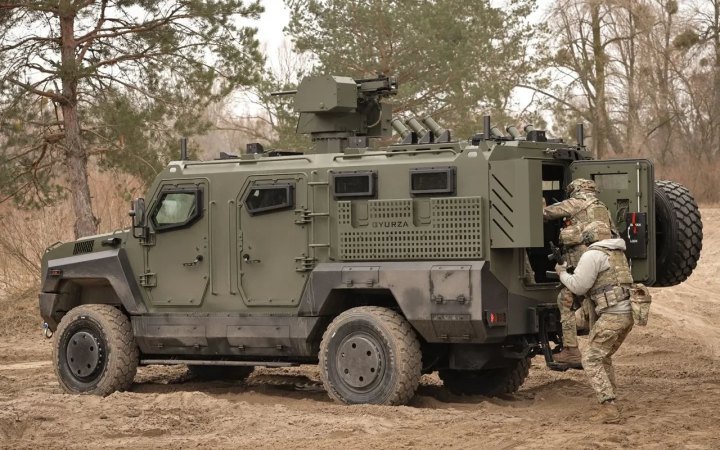
Vepr (unmanned ground robotic complex)
The first versions of the system have been operating on the front line since 2024, carrying out logistics and evacuation missions. Ukrainian developers note that the platform has been significantly upgraded to meet current battlefield requirements, based on feedback from military personnel.
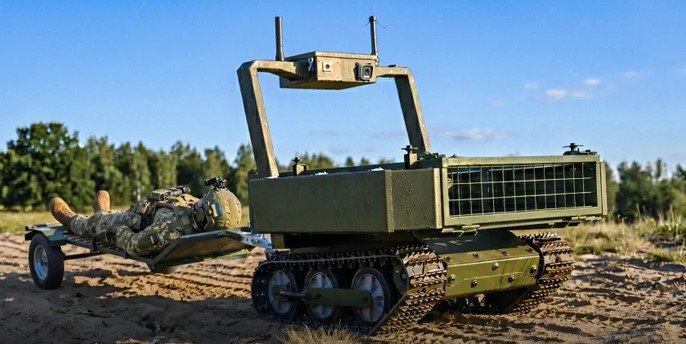
According to the Ministry of Defence of Ukraine, the Vepr system has a combat weight of around 350 kg and is capable of transporting ammunition or military supplies of a similar weight. It can also evacuate 1–2 wounded personnel at a time. The platform reaches speeds of over 7.5 km/h, with batteries reportedly providing a range of up to 40 km per charge. The complex is equipped with digital cameras and supports multiple communication channels, including analogue, ELRS, Starlink, and LTE.
Vepr can be used for remote mine clearance, as a kamikaze strike platform, and for the evacuation of damaged vehicles or other ground assets from the battlefield.
“Gyurza-2” armoured vehicle
An upgraded version of the Ukrainian UAT.GYURZA-02 armoured vehicle, featuring increased payload capacity and integrated software for environmental monitoring using artificial intelligence.
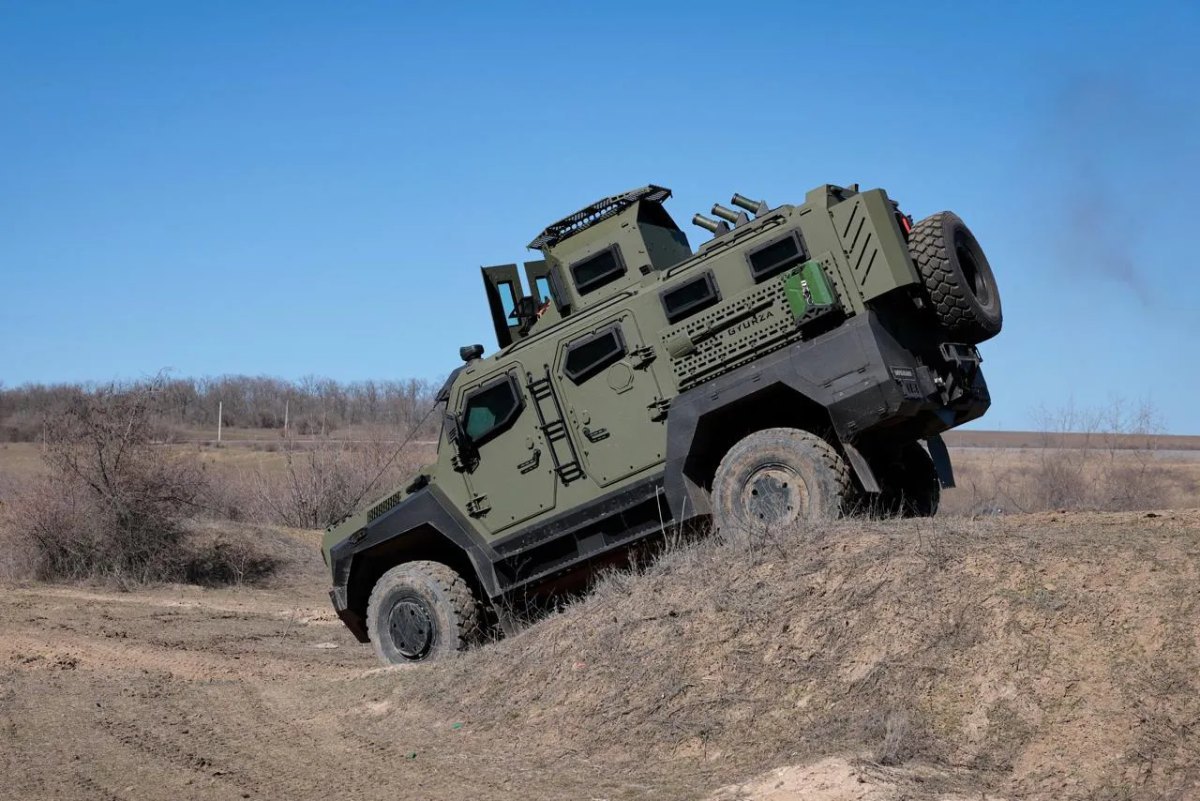
According to the Ministry of Defence, improved suspension and upgraded tyres have enhanced off-road mobility and survivability in combat conditions. The armoured hull is equipped with full perimeter anti-fragmentation protection. Its mine protection level allows it to withstand an explosion equivalent to 8 kg of TNT under the vehicle.
The payload capacity has increased to 2.5 tonnes, with a maximum speed of 110 km/h.
The vehicle is equipped with air ventilation, heating and air conditioning systems, an autonomous fuel heater, fire suppression systems for both the engine compartment and troop section, a night-vision suite, and a situational awareness system based on four external cameras with internal monitoring screens.
The upgraded armoured vehicle is available in two configurations — with a rotating weapons turret or without one.
NEO-1 demining robot
The NEO-1 robotic hardware-software complex is designed for remote detection of explosive ordnance and was developed specifically in response to requests from frontline units.
According to the Ministry of Defence, its advantages include a simple operational interface, both automatic and manual control modes, integrated cameras, compact size, and low weight. The system enables mine clearance with minimal risk to operators and can be used not only by инженер units but also by any military formation requiring demining capability.
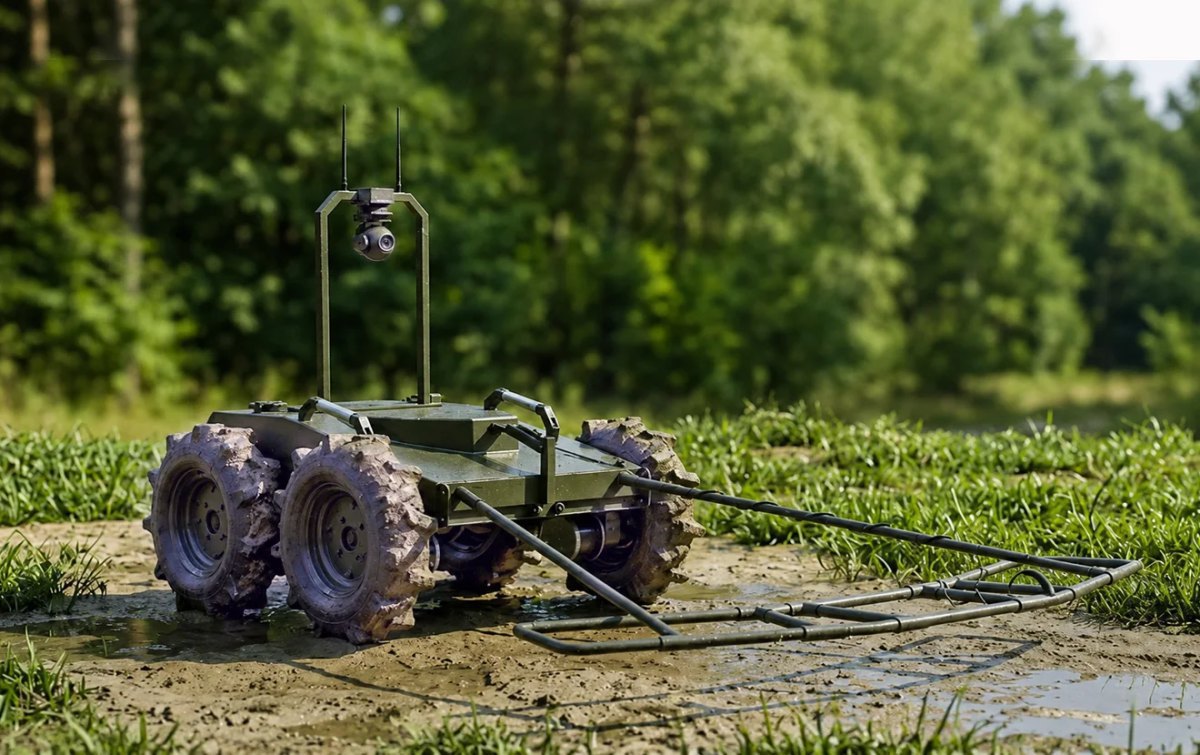
The NEO-1 system can also perform logistical missions. It is capable of transporting up to 70 kg of cargo or towing a loaded cart weighing up to 120 kg.
The robot weighs around 60 kg, meaning two soldiers can lift it from a pickup truck or remove it from a vehicle trunk. Its operating speed is up to 7 km/h, with battery capacity providing up to 8 hours of autonomous work. The control range is up to 500 metres (optionally extendable to 3 km).
NEO-1 is equipped with a wide-spectrum, multi-channel pulse metal detector with automatic adaptation to soil type. It can detect ferrous metals, gold, silver, OZM-72 anti-personnel mines, TM-series anti-tank mines in metal casings, MON-type anti-personnel fragmentation mines, PMN-2 low-metal-content mines, artillery shells, and other explosive objects. It also features a mode for filtering out small metallic debris and adjustable audio feedback.
“Sova” armoured vehicle
Developed and manufactured by a Ukrainian company based on the South African Mbombe platform concept, the MAC OWL “Sova” armoured vehicle is reported by the Ministry of Defence to provide a very high level of crew protection, capable of withstanding blasts equivalent to up to 10 kg of TNT. It features heavy side armour and is adapted for the installation of a dome-type electronic warfare system against FPV drones.
Depending on configuration, it weighs between 14.2 and 15 tonnes. It is powered by an 8.9-litre, 450 hp turbo-diesel engine — described as the most powerful among Ukrainian special-purpose armoured vehicles.
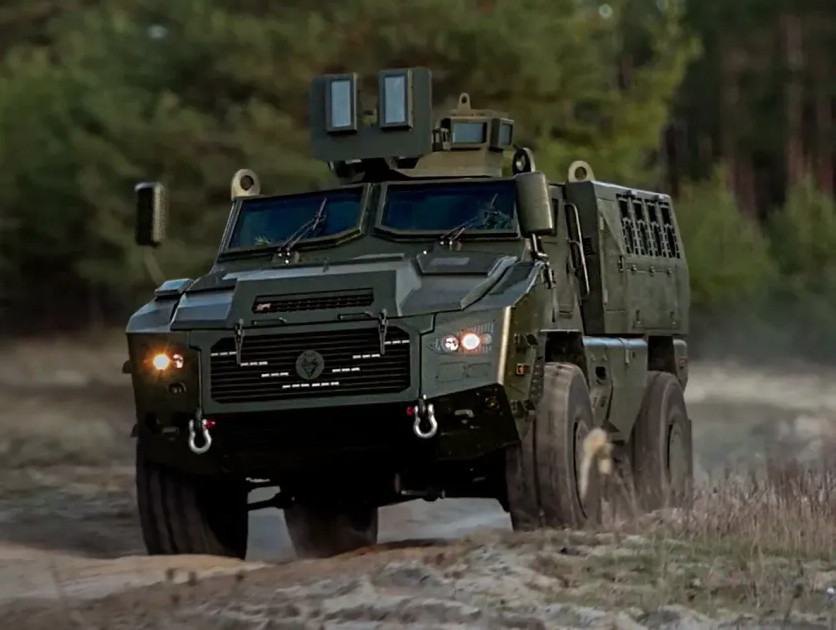
The vehicle’s overall height does not exceed 2.8 metres, while ground clearance is 45 cm — comparable to that of heavy military transport trucks.
It is classified as an MRAP (Mine Resistant Ambush Protected) vehicle, designed specifically to withstand mines and ambush attacks. The cabin accommodates a two-person crew and 6–8 troops.
The armoured vehicle is equipped with an independent hydro-pneumatic suspension system, ensuring a smoother ride, and a rear folding ramp with a servo drive, enabling faster troop deployment.
WOLFSTORM electric motorcycle
A lightweight and low-visibility transport platform designed for combat conditions. Its main reported advantages include near-silent operation, no thermal signature, and the ability to carry two fully equipped soldiers.
According to the Ministry of Defence of Ukraine, the WOLFSTORM weighs 105 kg, reaches speeds of up to 80 km/h, and can cover up to 100 km on a single charge. A full battery recharge takes around four hours, and the battery can be quickly swapped. The motorcycle can carry loads of up to 200 kg.
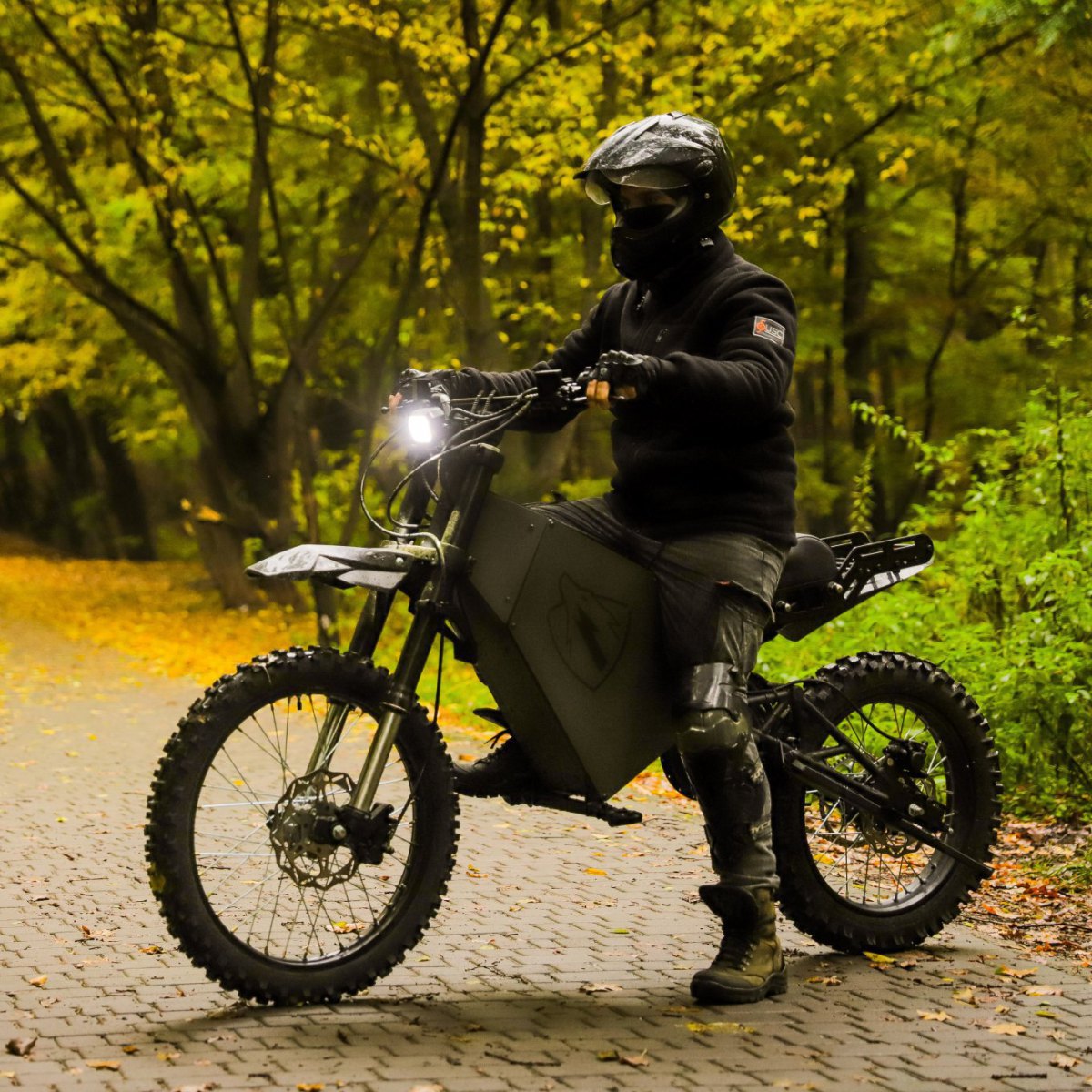
The motor is positioned in the centre of the frame, which is said to improve balance and provide more stable performance on difficult terrain. The system does not require complex preparation before deployment, features a simple modular design, and can withstand temperature fluctuations and harsh weather conditions.
The Ministry of Defence of Ukraine notes that motorcycles remain one of the most in-demand types of transport at the front. They are used for reconnaissance, сапper units’ operations, cargo delivery, casualty evacuation, drone crew transport, patrolling, and site security. This year, the Defence Procurement Agency signed contracts for the delivery of 1,500 motorcycles to the Armed Forces of Ukraine — three times more than last year.
Read alsoDefence Ministry codifies new military technologies, including drone-launched mine system and Stinger training simulator