







The centre has been up and running for three months. What exactly has been achieved during this time?
We have launched strategic projects that are transforming the Defence Forces into an AI-driven army (an army in which artificial intelligence optimises data analysis, decision-making and the neutralisation of the enemy at all levels — Ed.). The aim is to stop the enemy on three fronts: in the air, on the ground and in the economic sphere.
There are two key areas when we talk about an AI-driven army. The first is data-driven decision-making. AI enables us to process large volumes of data as quickly and effectively as possible and to understand how best to use this information for the benefit of our troops. For example, it can be used to model and predict situations that may arise on the battlefield.
The second area concerns the direct use of AI on the battlefield as an element of kinetic strike capability. AI is involved throughout the entire kill chain (the sequence of steps from target detection to destruction — Ed.), from the initial stage of identification through to engagement and the assessment of its effectiveness.
In these areas, A1 is implementing specific projects aimed at enhancing data analysis through AI. As we are still in the development phase, it is too early to publicly disclose the precise areas of focus.
Do both the first and second areas involve collaboration with the military and with manufacturers?
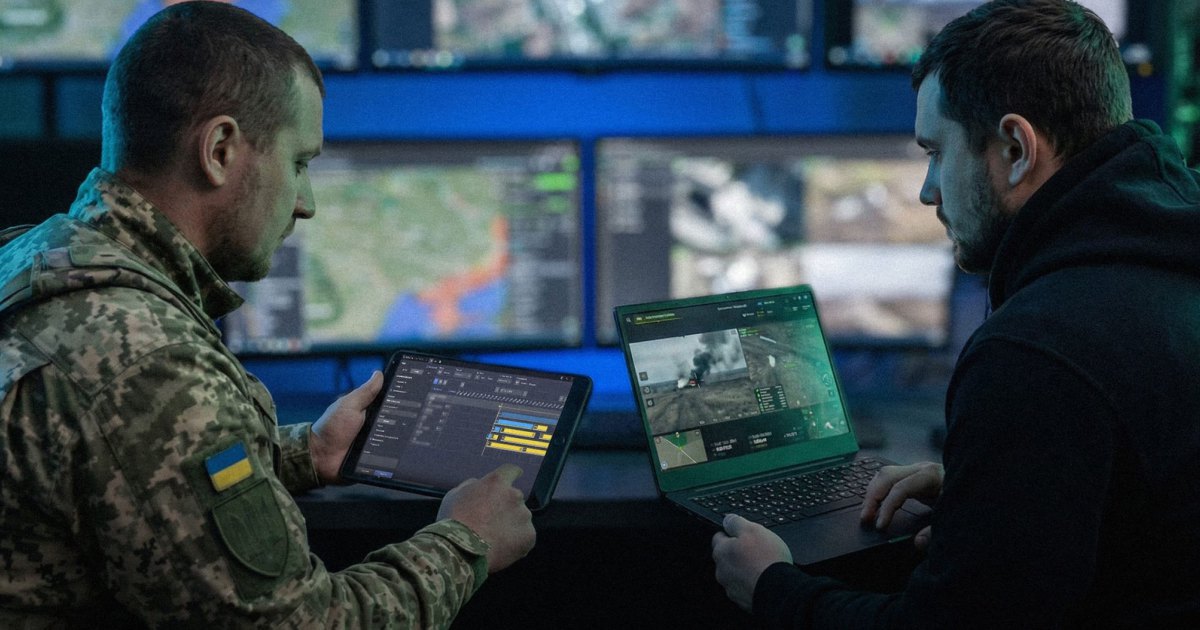
Primarily with the military. Everything we create has two clear objectives: to save the lives of our soldiers and to make their work on the front line as effective as possible. We identify key challenges and develop targeted technological solutions to address them. Moreover, it is the units themselves that test the solutions we develop. We work closely with the military at all levels of command, from the strategic and operational levels down to the tactical level.
How difficult is it to recruit a team? Generally speaking, there is currently a shortage of personnel in the defence sector. How are you coping with this?
I would not say it is difficult. We are doing everything possible to maximise our resources and attract new team members. We are seeing a high level of interest from people who want to join us.
We have an in-house development team (our own team of developers — Ed.) as well as an R&D (research and development — Ed.) division. There is a core team currently working on the highest-priority projects, and we are continuing to expand the number of these projects.
Speaking of the successful development of AI technology in the military sphere, what goal do you envisage in a year’s time? What result would allow us to say that Ukraine is leading the way in this field?
We have one overarching goal — to win this war. There is a clear objective: to eliminate 50,000 Russian personnel per month. We need to understand the extent to which AI contributes to this, and how it enables us to achieve results more quickly, more effectively and with fewer casualties on our side.
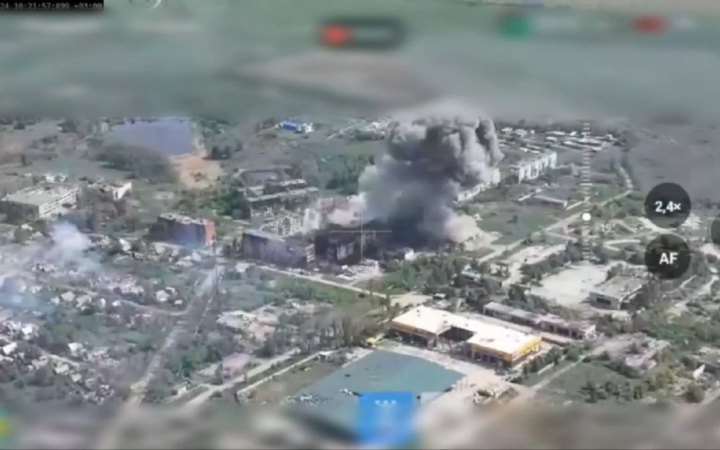
It is through these metrics that we assess the impact of our work on the current situation. If the kill chain is accelerated and the accuracy of strikes increases — reducing the time required to complete the kill chain and correspondingly improving effectiveness — then AI is genuinely delivering value.
And do you understand how you will measure this?
We are currently working on this with the relevant units. We need to determine how this can be measured comprehensively across the entire process.
Manufacturers of equipment that relies on AI systems often say that military personnel are sometimes reluctant to share data because they are unsure whether they are authorised to do so. Do they have any cause for concern in this regard?
Any matters relating to information are regulated by law. Data is also a specific type of information. As long as it falls within the scope of your duties and the level of responsibility associated with your access rights, there should be no concerns.
If you are referring to support for manufacturers, this function is carried out by the state through the Brave1 cluster. As for providing data to manufacturers, Brave1 has launched the Brave1 Dataroom platform, where companies can train and test their AI models. The Ministry of Defence also operates the Avengers initiative. These are the two principal channels through which specific datasets are made available.
More broadly, the Delta team is responsible for aggregating and structuring large datasets. The system provides functionality that enables interaction with combat data and supports more effective mission planning and execution.
We also work with data, but always in accordance with established procedures and current legislation.
So are you, in a sense, competitors to the private sector, which is also working on certain initiatives and products?
On the contrary, A1 complements the ecosystem of private companies and government initiatives. We are a team with strong AI expertise that understands, from the government’s perspective, how to implement this technology as quickly as possible because we are integrated into these processes from within.
Ukrainian companies regularly approach us, and we work closely with them.
There is no need to reinvent the wheel when something is already working effectively on the market. Our task is either to strengthen existing initiatives or to create and fill gaps where no solutions currently exist.
At A1, we are ready to work with companies to jointly develop products, share expertise and pilot solutions more rapidly, because we are engineers first and foremost.
In percentage terms, are foreign companies or Ukrainian ones more active at the moment?
Both Ukrainian and foreign companies are actively involved. Ukraine already has many outstanding teams with extensive expertise. After all, where can one gain the greatest defence expertise today, not only in AI but across the sector as a whole? That, in itself, answers the question.
Foreign companies are also reaching out because they want access to this expertise.
Please list the tasks that AI currently handles most successfully, and those where there are still practical challenges.
AI is already being used successfully to process large datasets, particularly in operational planning.
One rapidly developing area is computer vision, particularly what is known as ‘last-mile delivery’ (a system for guiding a drone to its target during the final stage of flight — Ed.). This is currently one of the most prominent use cases on the market, enabling targets to be engaged even in electronic warfare conditions.
Another area is the use of AI in interceptor drones, as well as in target acquisition and engagement. AI is also being applied in ground-based robotic systems and automated weapon turrets. All of these technologies already have examples of successful practical deployment (recently, Defence Minister Mykhaylo Fedorov stated that a participant in the Brave1 programme had created a system that automates 95 per cent of Shahed interceptions).
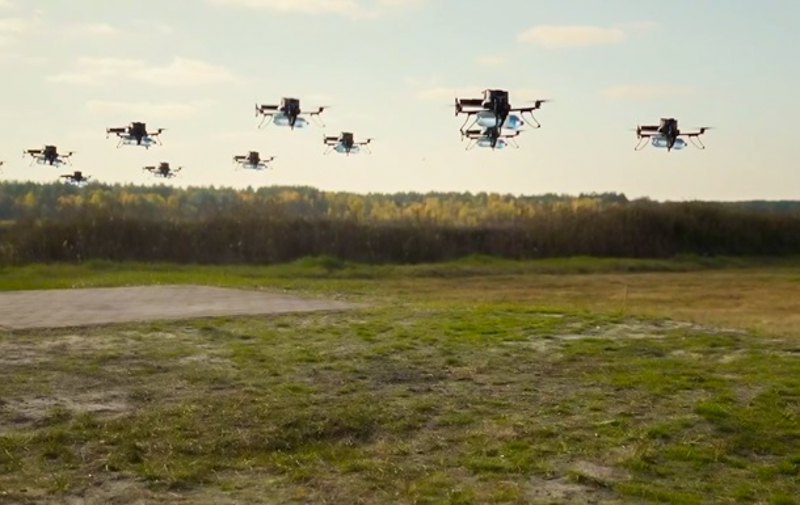
There are also pilot projects involving drone swarms in which the technology is demonstrating its effectiveness, although further development is still required.
At the same time, AI must continue to evolve in the area of large-scale data processing and generating insights that support faster decision-making.
The technological future of the military sector lies in operational systems capable of delivering a comprehensive and near real-time understanding of the battlefield, drawing conclusions and proposing solutions. It is akin to a digital twin of the battlefield, through which commanders can understand the situation at the front, plan operations and determine which assets should be deployed for specific missions.
The next step is to translate these plans into assets capable of operating autonomously on the ground. In other words, it is a vast interconnected system functioning as a single organism. This is what the kill chain of the future should look like.
To what extent can we talk about 100 per cent autonomy? Or, as you say, is it a case of automated data processing, with a human still making the final decision?
The question is not how to achieve 100 per cent automation. The question is in which scenarios, and under what level of risk, 100 per cent automation can be applied. A machine, just like a human, is capable of making mistakes.
So the key issue is the cost of that autonomy?
Essentially, yes. We need to be extremely cautious about the situations in which we allow systems to operate with complete autonomy. For example, if you clearly understand that the enemy is advancing from a specific direction, and you have a turret capable of automatically recognising any object, and you are absolutely certain that no friendly forces are present in that area, then such a turret can operate autonomously. However, if civilians may be present, the challenge becomes how to manage and mitigate those risks.
Therefore, the most effective approach — and the one we are currently pursuing — is the ‘human-in-the-loop’ model (a model requiring human interaction — Ed.). In this approach, AI provides recommendations, but the final decision is made by a human, informed by those recommendations.
The technical challenge lies in ensuring that systems on the battlefield can interact seamlessly with one another. I see the objective as creating algorithms that enable tasks to be carried out as accurately as possible within the parameters of a mission defined by a human operator.
As with any technology, AI must be used appropriately.
You mentioned automation in various processes, not just combat-related ones. What about procurement and the day-to-day operations of military units?
We call it a ‘bureaucracy killer’ (a system that eliminates red tape — Ed.). Military personnel need to focus on the highest-priority tasks. Everything related to paperwork should be automated. Naturally, this raises questions about trust in AI. That is why it is important for these systems to be able to justify and explain their outputs at a technical level.
So is there a chance that officers will have fewer reports to complete and more time for practical work?
Yes. This is a genuine pain point for officers — reporting requirements and the completion of various standardised documents. It is important to streamline these processes.
Where in the defence sector has the potential of artificial intelligence been overestimated? Where were promises made that it would work brilliantly, but things did not pan out?
Today, the focus should not be solely on hardware but also on software — specifically, operating systems that enable decision-making based on large volumes of data. There is considerable potential for growth in this area, particularly given that Ukraine possesses the world’s largest dataset on modern warfare.
It is easy to observe a broader global trend, especially in the defence sector: both governments and private companies are seeking to gain a competitive and security advantage by enhancing existing systems through AI.
Effective data management is a force multiplier. Imagine not merely striking a target, but being able to identify which chain of Russian targets is the most strategically important to neutralise. This is about gaining an advantage across all levels of command.
Manufacturers often express the view that some units are sceptical about technology — the attitude being, ‘I’d rather do it myself; a tried-and-tested method is more reliable.’ What is your view on this? And what should be done about units that have neither the desire nor the capacity to implement new solutions?
The same principle applies here as in the civilian business sector: the product must address the user’s real pain points — in our case, those of the military and the Ministry of Defence. As soon as a finished product delivers tangible results and there are visible success stories, other units will most likely want to adopt it as well. Scepticism tends to arise when people have not yet seen how AI can solve their practical challenges.
In the AI industry, there is an ironic expression: ‘AI for AI’s sake.’ This does not work in the military sphere. Technology must simplify processes, not complicate them, and it must clearly address operational or management tasks.
The units we work with, by contrast, demonstrate strong demand and a clear need for technological solutions. In many cases, these teams even possess their own R&D capabilities, which significantly accelerates the implementation process.
I imagine there are not very many such units.
The number of units involved is sufficient for our current R&D projects. However, we are open to working with anyone willing to invest in the development of AI.
Ukrainian players in the sector often warn that we must not allow our adversaries to overtake us in this technology. I am sure you are also monitoring developments on their side. What is the current situation on the battlefield regarding the use of AI?
Of course, everyone is moving towards AI because of its enormous potential, particularly in the defence sector. It is often compared to the Manhattan Project (the code name for the US nuclear weapons development programme — Ed.).
Russia is also investing in technological development. Let me put it this way: we are focused on strengthening our own capabilities, cooperating with partner countries and our military units, and doing so as quickly as possible.