






FIM-92 Stinger laser simulator
This Ukrainian-made simulator is designed to train operators of the American FIM-92 Stinger man-portable air defence systems (MANPADS), which have been in service with the Ukrainian Armed Forces since the first days of the Russian Federation’s full-scale invasion. Using an infrared homing head, the Stinger locks onto the heat signature of a Shahed drone’s engine and destroys the target.
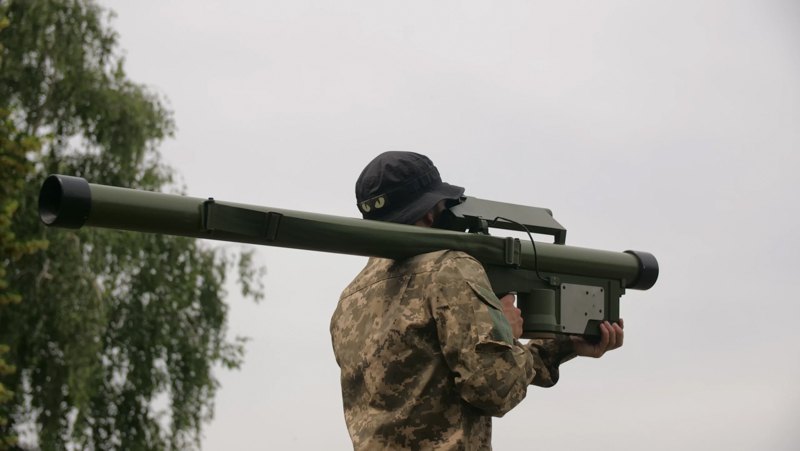
During training, military personnel use simulators to study the system’s components and assemblies, missiles, cooling units and power supply units. The use of simulators helps reduce these costs. The system fully replicates the dimensions, weight and operational algorithm of a combat MANPADS, allowing operators to practise the full cycle of actions: target detection, acquisition, tracking, firing and engagement.
Unmanned aerial vehicles are used as training targets, simulating UAVs, cruise missiles, aeroplanes and helicopters. The simulator records the accuracy of the operator’s actions, including target detection speed, guidance accuracy and correct execution of the launch procedure.
The system can be deployed within 10 minutes and is designed for use in field conditions in all weather.
UGV Ivy
The Ivy unmanned ground robotic system is an autonomous platform equipped with a retractable 10-metre mast.
It can operate as a communications node, carry repeaters and electronic warfare systems, and perform reconnaissance and surveillance missions.
According to its developers, the system can operate autonomously for up to four days in ambush mode. It weighs 1,000 kg, has an operational range of 40 km, and can reach a speed of 12 km/h.
The system is already being used by combat units on the front line. The UB82D will soon be available for purchase by military units using ‘e-Points’ on the Brave1 Market.
UB82D drone with integrated 82 mm mine
The unmanned aerial system is designed to engage personnel, unarmoured vehicles and firing positions from the air.
The system consists of a UB82D FPV drone built on a 10-inch frame and equipped with an integrated 82 mm mine. It combines the warhead and control system into a single unit, enabling deployment without additional equipment.
This is the second drone with an integrated warhead developed by Ukrainian Armoured Vehicles LLC. The first was based on a 60 mm mine and is currently in use on the front line. The UB82D follows the same operational concept but carries a larger warhead.
The UAV system includes 250 UB82D drones, a ground control station, an external antenna, a control panel, a case containing a monitor and repeater, and a charger.
The system is already available for direct procurement and will soon be offered on the DOT-Chain Defence and Brave1 Market platforms under the ‘e-Points’ programmes.
The first AB12TC airship
The Ukrainian company Aerobavovna has classified the AB12TC unmanned aerial system as an airship-type complex.
According to the developer, it is capable of lifting and carrying payloads of up to 5 kg at altitudes ranging from 100 to 700 metres and can operate continuously for up to 72 hours in field conditions.
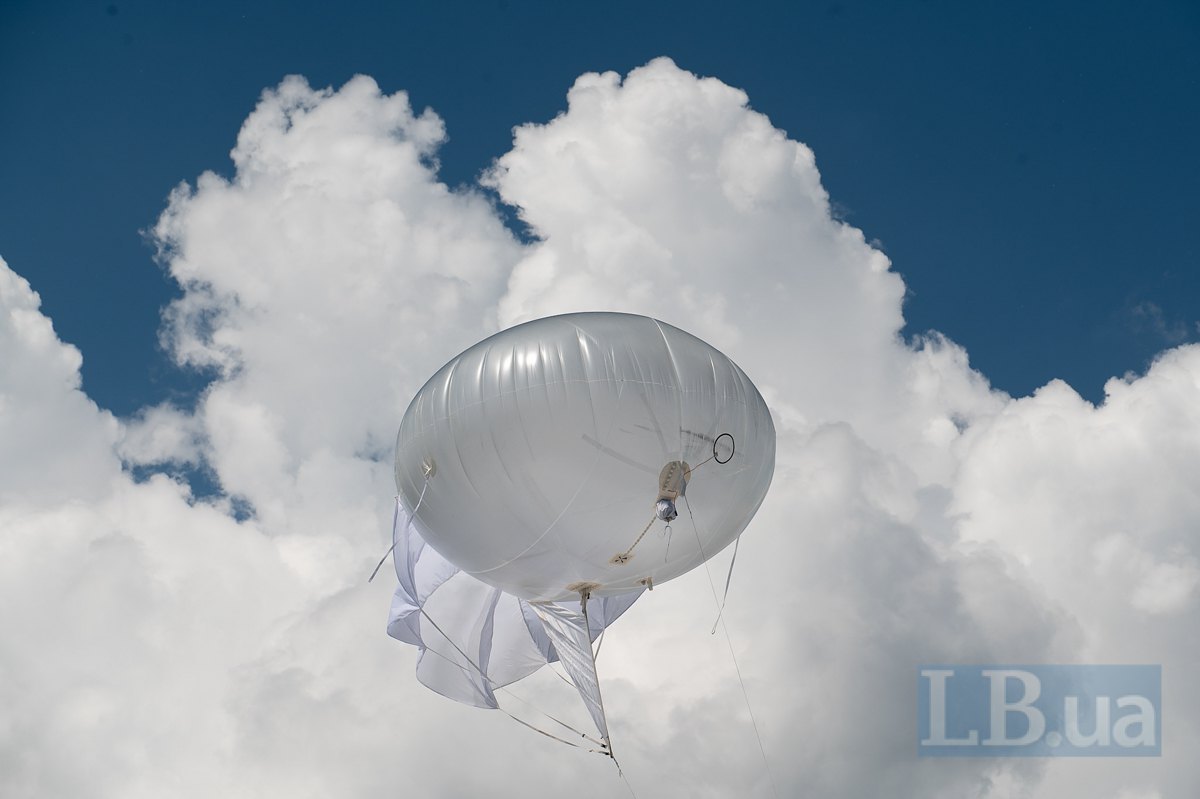
The system is designed to carry digital and analogue communications repeaters, control systems, and video transmission equipment for FPV drones, UAVs and other unmanned systems. It can also serve as a platform for strike drones in standby mode. The airship supports the HIMERA B1, SILVUS StreamCaster 4600, L3Harris RF-7800, MPU5, Motorola SRL1000 and Lybid K-2RTR communication systems.
More than 50 of these airship systems have already been delivered to units of the Armed Forces of Ukraine, the Special Operations Forces and the National Guard.
Air Baby EW-resistant interceptor drone
Earlier, manufacturer Strix Air announced the launch of mass production, published the drone’s specifications and released footage of its first interceptions of Shahed drones. In May, the interceptor drone completed the certification process.
The company states that resistance to electronic warfare measures has been achieved through dual-frequency control enabled by the Strix Beta communication system.
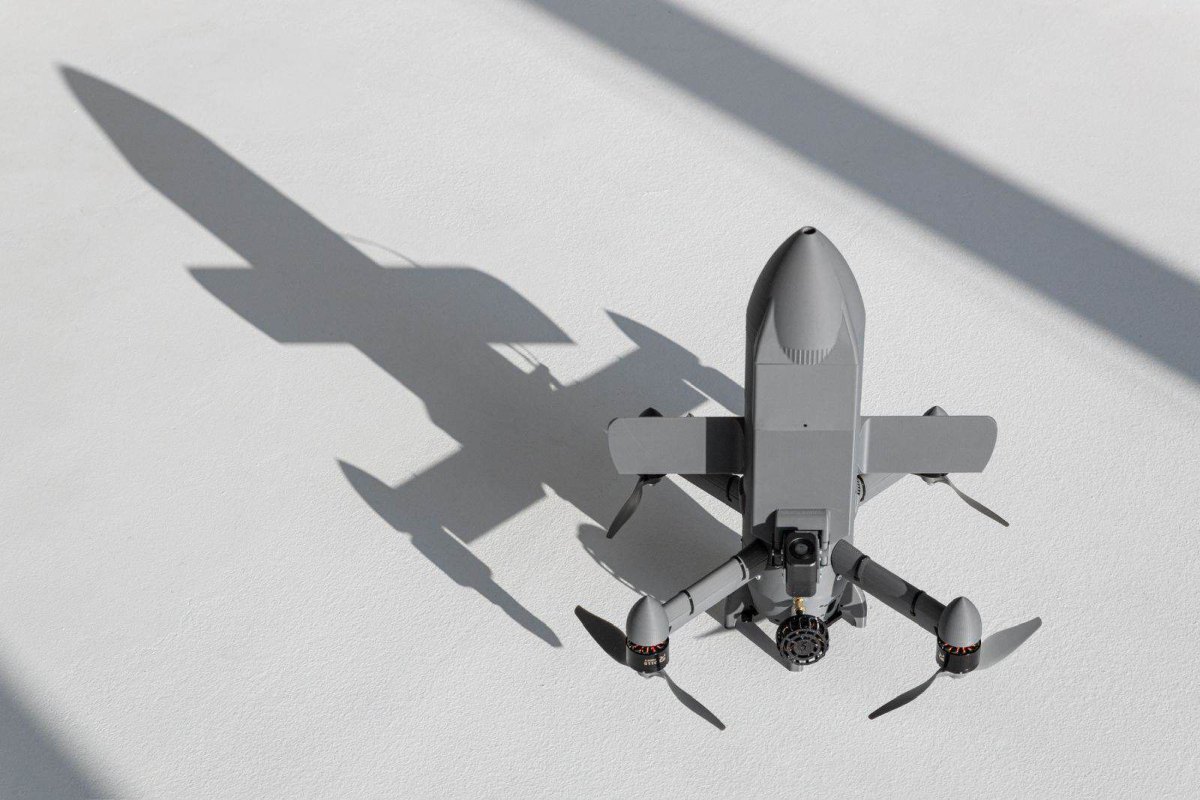
Air Baby interceptor drones have been deployed in combat operations since February 2026 and currently rank 10th in the “Army Bonus+” interception rating.
The drone is operated by the 59th Separate Assault Brigade of Unmanned Systems Steppe Predators, the Da Vinci Wolves unit, the 17th Special Operations Centre, the Strix unit of the State Border Guard Service, and other formations.
In addition, the Ministry of Defence has unveiled the first guided aerial bomb, the Equalizer
The system is an indigenous development by Ukrainian engineers, supported by an early-stage grant from Brave1. On 18 May 2026, Defence Minister Mykhaylo Fedorov announced the creation of Ukraine’s first guided aerial bomb and released footage of its testing. Development of the weapon took 17 months.
The developer, DG Industry, reported that the bomb is highly durable and capable of withstanding significant overloads. According to the company, this ensures reliable operation and allows pilots to retain full freedom of manoeuvre without imposing additional flight restrictions.
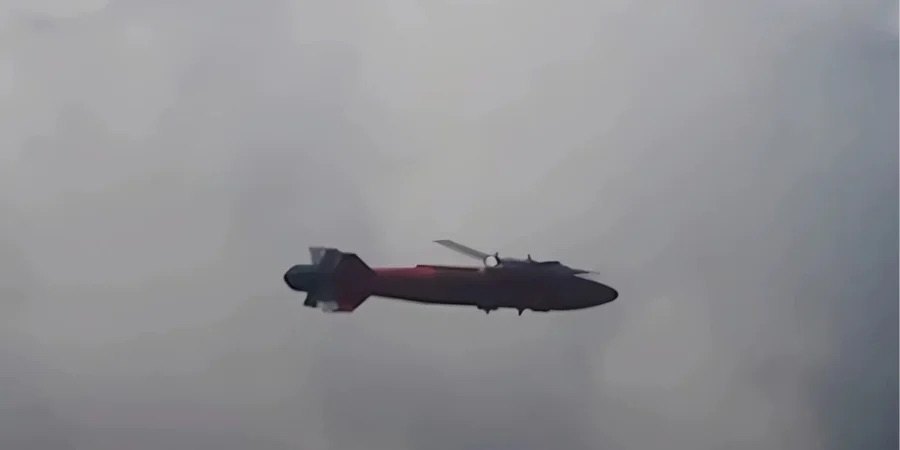
The guided aerial bomb carries a 250 kg warhead and is capable of striking fortifications, command posts and other targets at distances of several tens of kilometres. The Ministry of Defence has already procured the first experimental batch. Pilots are currently practising combat scenarios and exploring additional operational applications.
The first combat deployment is expected in the near future.
We previously reported in more detail on the Equalizer.